






Plot Explained Spoilers guaranteed!
Plot Explained

Browse by genre

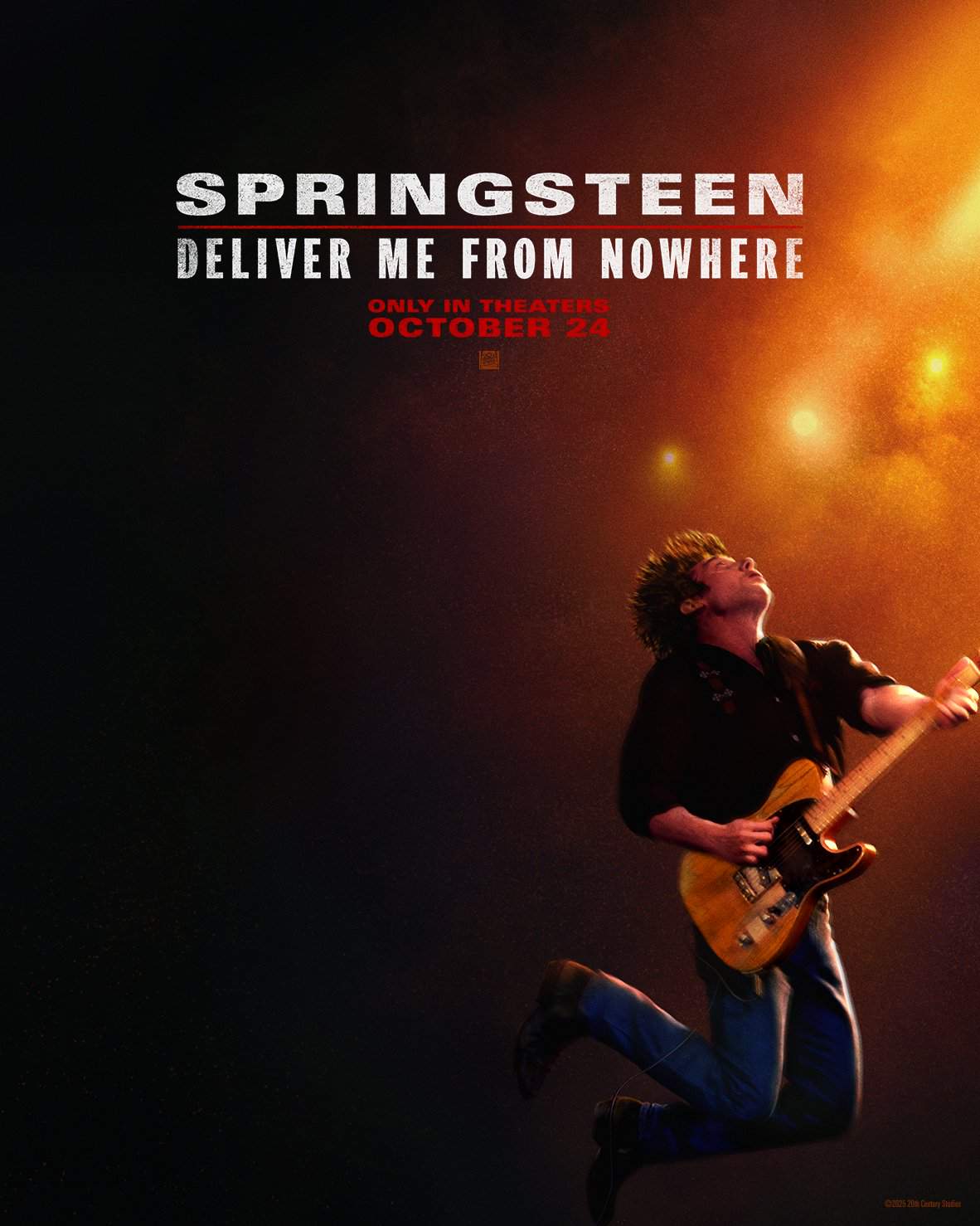
Springsteen: Deliver Me from Nowhere (2025) movie poster

Timeline

Springsteen: Deliver Me from Nowhere (2025) Timeline Explained – Every Event in Order

Release, runtime and language
2025 · 2 h
Echo score 62
JustWatch #4,494 84
Directed by
Scott Cooper
Starring
Marc Maron, Harrison Gilbertson, Jayne Houdyshell, Stephen Graham, Gaby Hoffmann, Jeremy Strong
Budget
$55M

Chronicles the making of Bruce Springsteen’s 1982 album Nebraska when he was on the brink of fame, wrestling with success and the ghosts of his past. Recorded on a 4‑track recorder in his New Jersey bedroom, the album marked a stark acoustic shift. The documentary blends interviews and archival footage, showing the tension between commercial expectations and his personal vision, capturing the record’s raw, haunting atmosphere.

On this page (6)
  1. 1 Where to watch
  2. 2 Events in order (14)
  3. 3 Timeline questions answered
  4. 4 Movie threads
  5. 5 Movies like Springsteen: Deliver Me from Nowhere
  6. 6 Every angle

Where to watch

Where to Watch Springsteen: Deliver Me from Nowhere (2025)

Where can you watch Springsteen: Deliver Me from Nowhere? Stream, rent or buy it in the US, including on Hulu, Amazon Video and Apple TV Store: current JustWatch availability with up-to-date prices.

Streaming availability powered by JustWatch

14 events in order · contains spoilers

Springsteen: Deliver Me from Nowhere Timeline: Events in Chronological Order

Every key event of Springsteen: Deliver Me from Nowhere (2025) in order, scene by scene, with when and where it takes place. Use it to untangle flashbacks, time jumps and parallel storylines, to refresh your memory before the sequel or to find the exact scene you are thinking of.

  1. End of The River Tour and move to a quiet house

    In 1981, Bruce Springsteen finishes The River Tour and retreats to a quiet house near Freehold, New Jersey. His manager Jon Landau rents a home in Colts Neck to lie low from fame. This downtime becomes the seedbed for a stark, personal period in his music.

    When
    1981
    Where
    Colts Neck, New Jersey
  2. Bruce buys his first new car

    Bruce purchases his first new car, a Chevrolet Camaro, as he settles into the Colts Neck house. The modest purchase mirrors his grounded, working-class mindset during this transitional phase. It foreshadows the unvarnished style that will define Nebraska.

    When
    1981
    Where
    Colts Neck, New Jersey
  3. Meeting Faye Romano at the Stone Pony

    Playing with local bands at the Stone Pony in Asbury Park, he meets Faye Romano, an old classmate’s younger sister. Their growing connection unfolds as fame intensifies and the songwriting process begins to take shape. This encounter foreshadows the intimate, blue-collar perspective of his future songs.

    When
    1981
    Where
    Asbury Park, New Jersey
  4. Pressure to deliver another hit and starting the demo

    With Hungry Heart already a top-ten hit, the label pressures Bruce for another hit album. He proposes trimming studio costs by preparing a self-made demo. This DIY approach signals a move toward raw, unpolished sound.

    When
    1981
    Where
    Colts Neck, New Jersey
  5. Family tensions and artistic inspiration

    Bruce’s fraught relationship with his father, Douglas, an alcoholic with mental health struggles, colors his new material. He defends his mother Adele and recalls family memories as inspiration. Reading Flannery O’Connor and watching Badlands fuels him to write songs in a killer’s voice.

    When
    1981
    Where
    Colts Neck, New Jersey
  6. Bedroom studio and the four-track setup

    Bruce enlists guitar tech Mike Batlan to convert the bedroom into a makeshift studio with a four-track recorder. They work in tight, intimate space to shape the demo’s sound. The environment emphasizes a down-to-earth, blue-collar ethos.

    When
    1981
    Where
    Colts Neck, New Jersey
  7. Songwriting from memory and personal history

    Bruce writes a collection of stark, somber songs drawn from his childhood and his father’s history. The music grows darker and more personal as he records largely on his own. The result is an intensely authentic, unvarnished disk.

    When
    1981-1982
    Where
    Colts Neck, New Jersey
  8. Handoff of the demo and the private doubts

    Mike brings Jon Landau the only copy of the completed demo, and Jon confides in his wife about the songs’ unexpectedly darker nature. The industry senses a risky, deeply personal project. The demo becomes the anchor for the album’s direction.

    When
    early 1982
    Where
    Colts Neck, New Jersey
  9. Adele calls for help; the move toward NYC recording

    Living in California, Adele calls Bruce asking for help with his increasingly erratic father. Bruce visits his father and then heads to New York City to record with the E Street Band. The NYC sessions mark a transition from a DIY demo to a fuller studio process.

    When
    1982
    Where
    New York City
  10. Recording at the studio; Born in the U.S.A. tracks

    In New York, they lay down tracks including Born in the U.S.A., but Bruce remains unhappy with the full-band sound. Tension grows between artistic vision and commercial expectations. He fights to preserve the stripped-down feel that first defined the music.

    When
    1982
    Where
    New York City
  11. Nebraska emerges from the raw demo; no singles

    After two weeks, Bruce cannot recapture his acoustic vision and decides to shelve the potential singles. Jon chooses to use Bruce’s raw demo unchanged, turning it into the Nebraska album. The decision keeps Nebraska's intimate, raw voice intact.

    When
    1982
    Where
    New York City
  12. Cross-country move to Los Angeles and breakdown

    With the label uneasy, Bruce tells Faye he is moving to Los Angeles alone. A mental breakdown follows during the cross-country drive, and Matt helps him reach a new home in LA. Jon urges him to seek professional help, and Bruce begins therapy.

    When
    1982-1983
    Where
    Los Angeles, California
  13. Ten months later: back on tour and family visit

    Bruce returns to touring with Jon’s support, ten months after the LA breakdown. His proud parents visit and reconnect with him; Douglas asks to sit on his lap, signaling a fragile moment of reconciliation. The arc closes on a note of personal healing, even as the commercial success looms.

    When
    1983
    Where
    United States (on tour)
  14. Nebraska’s success and Born in the U.S.A.’s rise

    Nebraska reaches number three on the charts, validating the stark, personal approach. The earlier shelved hits are released on the next album, Born in the U.S.A., propelling Bruce to global superstardom. The epilogue notes continued treatment for depression as his career soars.

    When
    1982-1984
    Where
    Worldwide

Last updated: December 04, 2025 at 15:32

Was this helpful?

Timeline questions answered

Springsteen: Deliver Me from Nowhere Timeline Explained: Your Questions Answered

When does it happen, and why in that order? The questions people ask about the chronology of Springsteen: Deliver Me from Nowhere (2025): time jumps, flashbacks, cause and effect between scenes and the correct order of events, each answered with spoilers.

Q1

Why did Bruce decide to record Nebraska as a solo acoustic demo?

After the commercial success of The River Tour and the hit single "Hungry Heart," Bruce wanted to trim studio costs by preparing a rough demo himself. However, the deeper motivation was artistic, he felt the stripped-down, unvarnished sound better captured the raw, personal truth he was exploring in his songwriting. Reading Flannery O'Connor and watching Badlands sparked his fascination with darker impulses, pushing him to write songs in a killer's voice that felt authentically connected to his own childhood and his father's troubled legacy.

Foreshadowing: The timeline shows Bruce buying his first new car, a Chevrolet Camaro, which mirrors his grounded, working-class mindset and foreshadows the unpolished, authentic approach that would define Nebraska.

  • acoustic demo
  • Nebraska recording
  • Bruce Springsteen
  • four-track recorder
  • artistic vision
Q2

What caused Bruce's mental breakdown during the move to Los Angeles?

Bruce suffered a mental breakdown during his cross-country drive to Los Angeles. The pressure stemmed from multiple sources: the intense creative tension between artistic integrity and commercial expectations, his difficult relationship with his mentally ill father Douglas, the strain of abandoning his relationship with Faye Romano, and the overwhelming burden of his rising fame. After telling Adele he was moving to LA alone, the emotional weight of these conflicts collapsed during the journey, and Matt Delia helped carry him to his new home.

Foreshadowing: Earlier scenes establish Bruce's growing emotional burden through his father's instability and his mother's desperate call for help with Douglas.

  • mental breakdown
  • Bruce Springsteen
  • depression
  • Los Angeles
  • emotional collapse
Q3

Why did Jon Landau support releasing the raw demo instead of polished tracks?

Jon Landau believed strongly in Bruce's artistic vision. After hearing the demo's unexpectedly dark, deeply personal songs, he confided to his wife Barbara that the raw quality was the album's greatest strength. When Bruce rejected the full-band studio versions of the songs, Jon backed his decision to treat the original demo as the final record, sacrificing radio-friendly singles for artistic honesty. He also defended this choice to record executive Al Teller, who objected to the lack of singles and the absence of a public image on the cover.

Foreshadowing: Jon had been quietly weighing opportunities beyond music, including potential movie roles, showing his strategic thinking about Bruce's career direction.

  • Jon Landau
  • Nebraska album
  • artistic integrity
  • raw demo
  • record deal
Q4

What was the conflict between Bruce and his father Douglas?

Bruce's relationship with his father Douglas was deeply troubled, Douglas struggled with alcoholism and mental health issues that cast a heavy shadow over Bruce's life and work. The tension came to a head when Bruce once defended his mother Adele with a baseball bat against Douglas's erratic behavior. This fraught relationship directly influenced the dark, somber tone of Nebraska's songs, as Bruce drew from his childhood memories and his father's complicated legacy to write intensely personal material.

Foreshadowing: Timeline events show Bruce reading Flannery O'Connor and watching Badlands, which fueled his darker creative direction tied to these family tensions.

  • Douglas Springsteen
  • father-son relationship
  • alcoholism
  • family tension
  • Nebraska themes
Q5

Why did Bruce leave Faye Romano?

Bruce told Faye he was moving to Los Angeles alone, and she tearfully accused him of avoiding his fears. His decision to leave was driven by his inability to reconcile his personal life with the demands of his career and artistic vision. The relationship with Faye and her daughter Haley represented a grounding, normal existence that conflicted with the intense, consuming nature of his music and the psychological toll of his creative process.

Foreshadowing: Their meeting at the Stone Pony and growing connection represented the blue-collar, grounded perspective that would inform Nebraska's intimate sound.

  • Faye Romano
  • relationship
  • love interest
  • leaving
  • fear
Q6

Why did Bruce reject the full-band studio versions of the Nebraska songs?

Bruce recorded "Born in the U.S.A." and other tracks with the E Street Band in New York City, but he remained uneasy with the full-band studio texture. He sensed that the polished sound didn't mirror the raw truth of his acoustic vision. After two weeks, he decided to pause the planned singles and focus on preserving the core sound of the original demos. The stark intimacy of the four-track recordings felt more authentic to the songs' emotional content.

Foreshadowing: The bedroom studio setup in Colts Neck established the intimate, unvarnished sound that Bruce was determined to maintain.

  • E Street Band
  • studio recording
  • Born in the U.S.A.
  • acoustic vs full-band
  • artistic vision
Q7

What inspired Bruce to write darker songs in a killer's voice?

Reading Flannery O'Connor's dark fiction and watching the film Badlands sparked Bruce's fascination with darker impulses and morally complex characters. These influences, combined with his troubled relationship with his father and memories of his working-class upbringing in New Jersey, pushed him toward writing songs from the perspective of killers and desperate characters. This approach resulted in the stark, somber songs that defined Nebraska's haunting atmosphere.

Foreshadowing: Timeline events explicitly connect these literary and film influences to Bruce's creative shift toward darker subject matter.

  • Flannery O'Connor
  • Badlands film
  • killer voice
  • songwriting inspiration
  • dark themes
Q8

What was the significance of Bruce buying a Chevrolet Camaro?

Bruce purchased his first new car, a Chevrolet Camaro, while settling into the Colts Neck house. This modest purchase mirrored his grounded, working-class mindset during this transitional phase of his career. The timeline suggests it foreshadowed the unvarnished, authentic style that would define Nebraska, theCamaro represented a tangible connection to his blue-collar roots and the straightforward, no-frills approach he would take with the album's production.

Foreshadowing: The timeline explicitly links this purchase to the unpolished style that defined Nebraska.

  • Chevrolet Camaro
  • first new car
  • working class
  • blue collar
  • symbolism
Q9

What was the industry reaction to Nebraska's raw sound?

Record executive Al Teller expressed dismay at the absence of singles and the lack of a public-facing image on the album cover. The industry was accustomed to polished, radio-ready productions, and the stark four-track recordings represented a significant departure from commercial expectations. However, Jon Landau stood by Bruce's artistic gamble, supporting the decision to preserve the album's raw intimacy despite the risk to commercial performance.

Foreshadowing: This tension between artistic integrity and commercial expectations runs throughout the narrative, building to the album's release.

  • Al Teller
  • record executive
  • industry reaction
  • commercial vs artistic
  • Nebraska release
Q10

Why was the album called Nebraska?

The album took its name from the state of Nebraska, though the connection to Springsteen's actual recording location is indirect. The stark, desolate quality of the songs, characterized by themes of desperation, crime, and broken dreams, aligned with the imagery of the American Midwest. The name reflected the album's cold, haunting atmosphere and the bleak perspective of the characters in songs like "Nebraska" and "Atlantic City."

  • album title
  • Nebraska
  • naming
  • American Midwest
  • desolate atmosphere
Q11

How did Nebraska impact Bruce Springsteen's career?

Nebraska reached number three on the charts, validating Bruce's artistic gamble and proving that raw, personal music could achieve commercial success. The album's stark approach established a new creative direction that distinguished him from mainstream pop. The shelved hits from the earlier sessions eventually appeared on Born in the U.S.A., propelling him to global superstardom. However, this success came with personal costs, Bruce continued treatment for depression, and the emotional toll of this period remained with him.

Foreshadowing: Timeline events show the immediate commercial validation and the long-term career trajectory established by this creative choice.

  • career impact
  • chart success
  • Born in the U.S.A.
  • superstardom
  • commercial success
Q12

What was Mike Batlan's role in creating Nebraska?

Mike Batlan was Bruce's guitar technician whom he enlisted to convert a bedroom in the Colts Neck house into a makeshift studio equipped with a four-track recorder. He played a crucial technical role in setting up the recording environment that allowed Bruce to capture the raw, intimate demos. Mike also delivered the only copy of the finished demo, a single cassette, to Jon Landau, making him an essential figure in preserving the original recordings that became the album.

Foreshadowing: The timeline shows this bedroom studio as the birthplace of Nebraska's signature sound.

  • Mike Batlan
  • four-track recorder
  • bedroom studio
  • demo tape
  • technical role
Q13

What was the reconciliation moment between Bruce and his father?

Ten months after Bruce's mental breakdown and move to Los Angeles, his parents visited him while he was on tour. This visit brought a rare moment of reconciliation with his father Douglas, who asked to sit on Bruce's lap, a fragile gesture signaling a tentative healing in their troubled relationship. The encounter represented a significant emotional milestone, though the narrative notes this reconciliation was fragile and came after significant personal struggle.

Foreshadowing: Earlier scenes establish the depth of their conflict through Bruce defending his mother and the emotional burden of his father's illness.

  • reconciliation
  • father-son
  • Douglas Springsteen
  • tour visit
  • healing

Movie threads

More Movies Like Springsteen: Deliver Me from Nowhere, by Mood & Story

Curated lists built around what makes Springsteen: Deliver Me from Nowhere tick: the same mood, the same kind of story or the same emotional payoff. Each list explains why these movies belong together.

Movies about tortured artists like Springsteen: Deliver Me from Nowhere

Stories of creators wrestling with inner demons to produce raw, personal art. If you were captivated by the raw depiction of Bruce Springsteen's creative struggle, explore more movies like Springsteen: Deliver Me from Nowhere. This collection features similar stories about musicians, writers, and artists wrestling with their demons and the pressures of fame to create their most personal work.

  • introspective
  • somber
  • raw
  • haunting
  • contemplative
  • lonely
  • Tone: melancholic, raw
  • Pacing: slow, contemplative
Why these movies?

The story pattern: These narratives follow a creator at a critical juncture, often isolated and under pressure. The central conflict is internal—a battle against depression, addiction, or past trauma—which fuels the creative act. The plot revolves around the tension between pure artistic vision and commercial expectations, culminating in the birth of a work that is as unsettling as it is brilliant.

Why they belong together: Movies are grouped here based on their deep dive into the psychology of creation. They share a melancholic tone, a heavy emotional weight, and a focus on the solitary, sometimes bleak, process of transforming personal struggle into art that resonates with haunting honesty.
Slow burn melancholic dramas like Springsteen: Deliver Me from Nowhere

Quiet, reflective stories that immerse you in a character's heavy emotional world. Fans of the reflective, somber pace of Springsteen: Deliver Me from Nowhere will appreciate these similar movies. This selection highlights character-driven dramas with a slow burn pacing and a melancholic tone, perfect for viewers seeking a thoughtful and emotionally resonant cinematic experience.

  • slow burn
  • melancholic
  • introspective
  • contemplative
  • somber
  • raw
  • Tone: melancholic, introspective
  • Pacing: slow burn, deliberate
Why these movies?

The story pattern: The narrative structure is often straightforward, focusing on a linear character study. The drama stems from internal conflicts and subtle interpersonal tensions rather than high-stakes action. The journey is introspective, leading to a resolution that is typically bittersweet or ambiguous, reflecting the complex realities of life.

Why they belong together: These films are united by their deliberate pacing and dominant melancholic mood. They create a cohesive, immersive vibe defined by introspection, a heavy emotional core, and a focus on authentic human struggle, making them ideal for viewers seeking a thoughtful, atmospheric experience.

If you liked this

Movies Like Springsteen: Deliver Me from Nowhere

Similar movies to Springsteen: Deliver Me from Nowhere: the same genre, themes or kind of story. Each one comes with its own plot summary, timeline and ending explained.

Browse all movie summaries

Every angle

Springsteen: Deliver Me from Nowhere (2025) Explained: Plot, Ending, Timeline & Characters

Everything about Springsteen: Deliver Me from Nowhere in one place: what happens in the plot summary, the timeline in chronological order, the characters and meaning, the ending explained and a spoiler-free summary. What's After the Movie adds the cast, box office and post-credit scenes.

Coming soon on iOS and Android

The Plot Explained Movie Summary App

Plot summaries, endings explained and timelines on your phone. Catch up on any movie in minutes, save your favorites and never miss a twist again.

Be the first to know when we launch. Your email stays private, always.

Learn more about the app