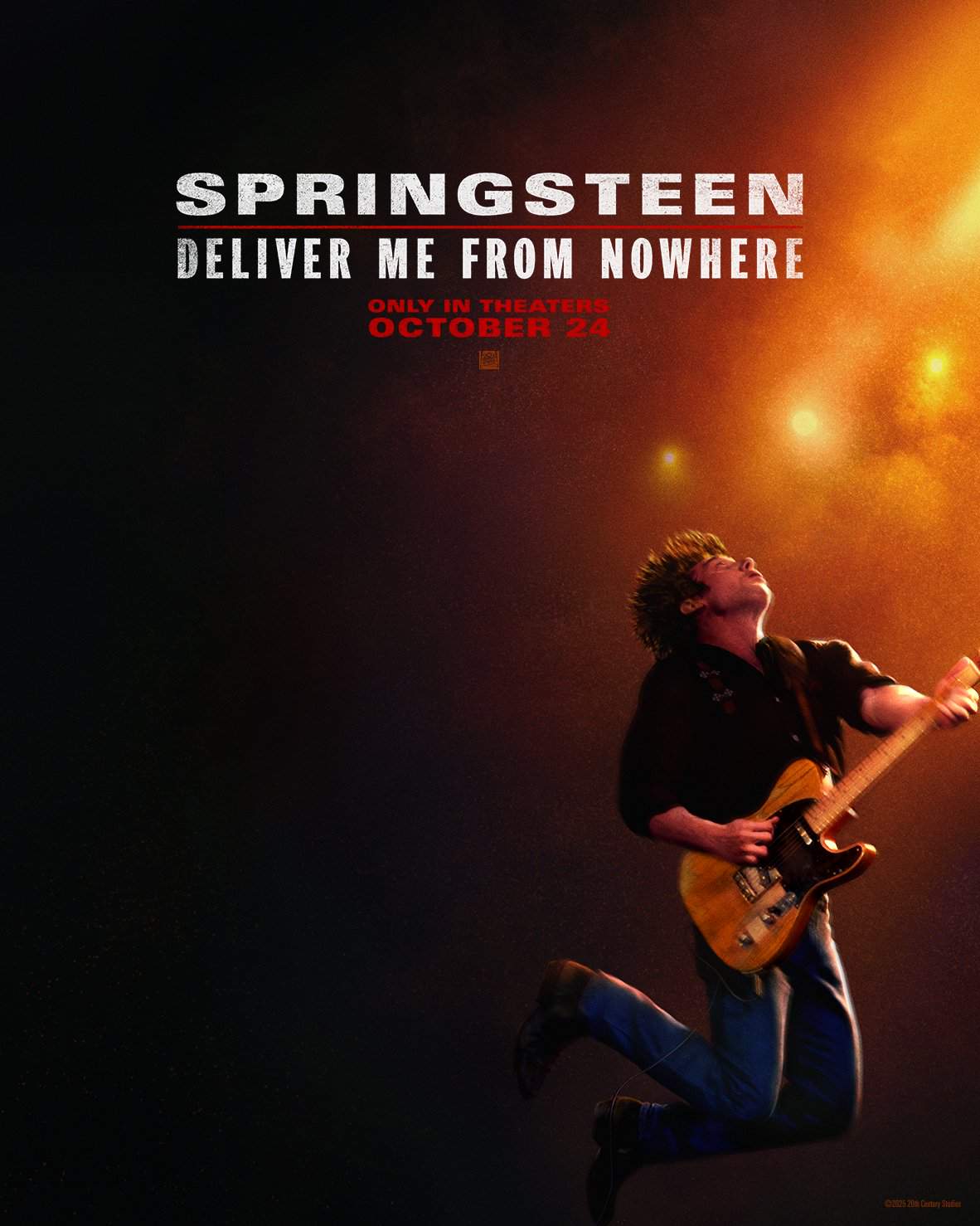
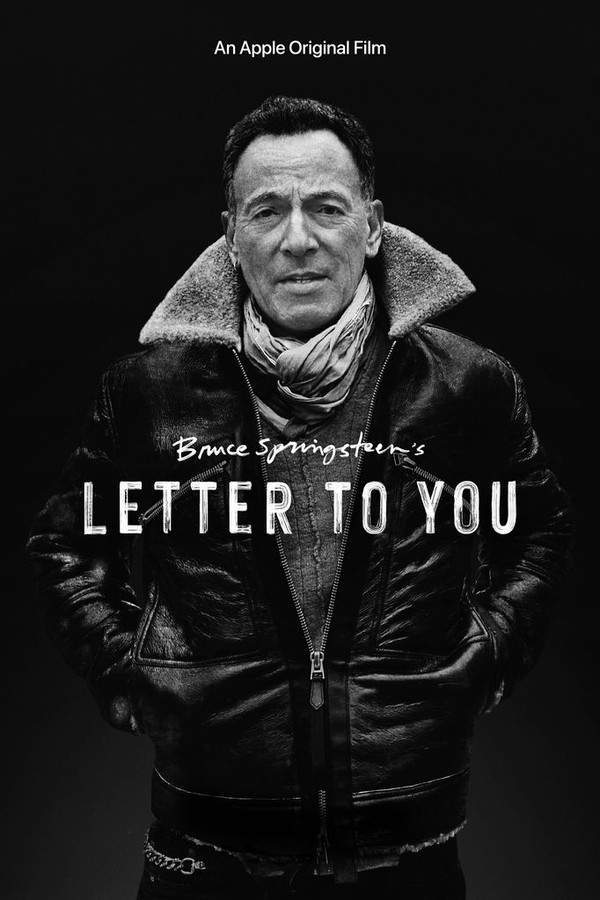
In 1981, Bruce Springsteen wraps The River Tour and, to escape the glare of fame, is guided by his manager and producer Jon Landau to a quiet house near Freehold, New Jersey. Matt Delia, his trusted friend and mechanic, drives him to the Colts Neck retreat where Bruce buys his first new car, a Chevrolet Camaro, and begins tinkering with music again while playing with local bands at the Stone Pony. There, he meets Faye Romano, an old classmate’s younger sister, and grows close to her and her young daughter Haley. The rising momentum of the River era places new pressure on him as his label anticipates another hit album.
With the success of his top-ten single "Hungry Heart" and mounting expectations, Bruce proposes trimming studio costs by assembling a rough demo himself. His relationship with his father, Douglas Springsteen, a man wrestling with alcohol and mental health issues, casts a heavy shadow over his life and work, a tension that once pushed him to defend his mother, Adele Springsteen, with a baseball bat. Reading Flannery O’Connor and catching Badlands on TV sparks a fascination with darker impulses, nudging him toward writing a song in the killer’s voice and taking [Faye Romano] on a date to Asbury Park. The mood at the house shifts as Bruce enlists his guitar technician, Mike Batlan, to convert a bedroom into a makeshift studio equipped with a four-track recorder to shape the new demo.
As his creative world deepens, Bruce grows closer to Faye and her daughter Haley, letting the stark, somber songs take shape with a blunt, blue-collar sensibility drawn from his own childhood and the complicated legacy of his father. Meanwhile, Jon keeps an eye on opportunities beyond the music, weighing the potential for a movie role against Bruce’s devotion to the songs. The work takes on a life of its own as Bruce records the tracks largely unaccompanied, choosing an imperfect, unvarnished sound that feels true to his vision.
[Mike Batlan] delivers the only copy of the finished demo—a single cassette—to Jon, who confides in his wife, Barbara Landau, about the unexpectedly darker, deeply personal songs. In California, Adele calls Bruce to help with the increasingly erratic Douglas, and the pressure mounts as Bruce heads to New York City to record, reuniting with the E Street Band. They lay down several tracks, including the incendiary "Born in the U.S.A.," but Bruce remains uneasy with the full-band studio texture, sensing it doesn’t mirror the raw truth of his acoustic vision. After two weeks, he decides to pause the planned singles and focuses on preserving the core sound of the demos.
Jon supports Bruce’s instinct to let the music speak for itself, steering the decision to treat the raw demo as the new record, a bold move that sacrifices radio-friendly hits in favor of artistic honesty. The album Nebraska comes together using older equipment to recreate the demo tape as a vinyl master, a choice that preserves the stark intimacy of the performances. Record executive Al Teller expresses dismay at the absence of singles and the absence of a public-facing image on the cover, but Jon stands by Bruce’s artistic gamble.
Bruce then tells Adele that he is moving to Los Angeles alone, and Faye tearfully accuses him of avoiding his fears. He suffers a mental breakdown during the cross-country drive, yet Matt Delia helps carry him toward a new home in LA. Ten months later, Bruce is back on tour with Jon’s support, and a visit from his proud parents brings a rare moment of reconciliation. The epilogue reveals Nebraska reaching number three on the charts, while the shelved hits eventually appear on Born in the U.S.A., propelling him to global superstardom as he continues treatment for depression. The story leaves Bruce entwined with his art and his past, forever marked by the choice to keep the album’s stark honesty intact.