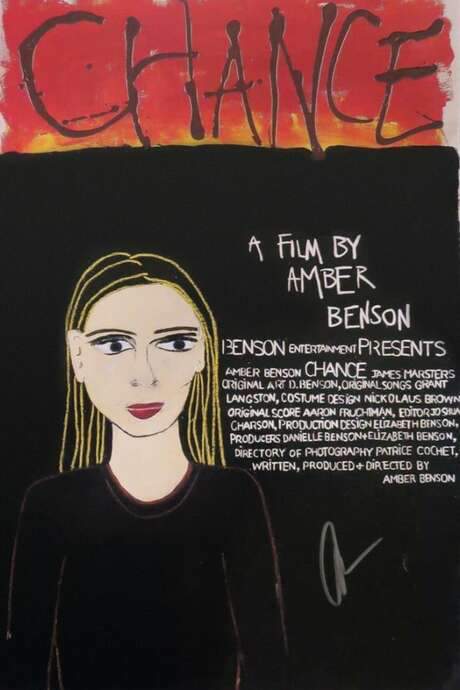
Rene, Jennifer Hardy CK, a Ryerson University film student, is deep in the grapple of finishing a thesis project that feels bigger than her. Her focal point is a feature film within her thesis called Spice It Up, a bold premise about seven 17-year-old girls who fail their final year of high school and decide to enlist in the Canadian Armed Forces. The project is not just a story on screen; it’s a mirror held up to Rene’s own struggle to complete something meaningful while feeling seen in the process.
The film’s structure mirrors Rene’s editing desk: it intercuts scenes from the in-film Spice It Up with her ongoing efforts to lock picture, creating a tangled tapestry of fiction and reality. As her work progresses, she travels from one office to another, facing a chorus of condescending notes from professors and peers who see her film as disjointed or emotionally tonal in ways they don’t know how to validate. The critiques are sharp and varied, each adviser pushing in a different direction.
One professor urges Rene to pare down the sprawling, large cast and focus on a single character to anchor the narrative. Another suggests transforming the feature-length film into a web series, exploring how a leaner, episodic format might better accommodate the material. A third scholar attempts to map the characters to philosophical doctrines, inviting Rene to align her storytelling with a particular intellectual framework. These conversations are not merely about editing; they’re about the purpose of art, the limits of academic polish, and what it takes to bring a story to life when the creator’s control feels constantly renegotiated.
Through this galvanizing pressure, Rene undergoes a process of soul searching. She tests different approaches, reassessing tone, scope, and the relationships she’s trying to portray on screen. The goal becomes not just finishing a film, but crafting something coherent from a constellation of ideas, images, and performances that may resist easy categorization. The narrative keeps a patient, observant pace, emphasizing the labor involved in shaping a vision when the path forward keeps shifting.
Despite her best efforts, the plan to reunite the original cast and shoot new scenes to fill in the perceived gaps hits a quiet, devastating snag. On the momentous day when renewal should begin, only one actress returns. She delivers the stark news that she and the entire cast have quit the project. In a stark, intimate moment, Rene captures the actress’s exit, hoping that the footage—however incomplete—might still offer something salvageable. The scene becomes more than just a setback; it becomes a test of resilience, creativity, and the willingness to let a film become what it will be under imperfect conditions.
What remains on screen is a meditation on the stubbornness and fragility of creative pursuit. The meta-layer of a student filmmaker wrestling with authority, pacing, and the logistics of a large ensemble becomes a study in perseverance. The narrative never shies away from the discomfort of unfinished work, yet it also reveals the stubborn spark that keeps a project alive: the idea that a story can survive disruption and still speak with honesty about ambition, doubt, and the human hunger to connect through art. In the end, the film reflects not just Rene’s journey, but the broader truth that finishing something meaningful often requires embracing ambiguity and finding a way to carry the flame forward, even when the original cast and plans have fallen away.