



















Plot Explained Spoilers guaranteed!
Plot Explained

Browse by genre

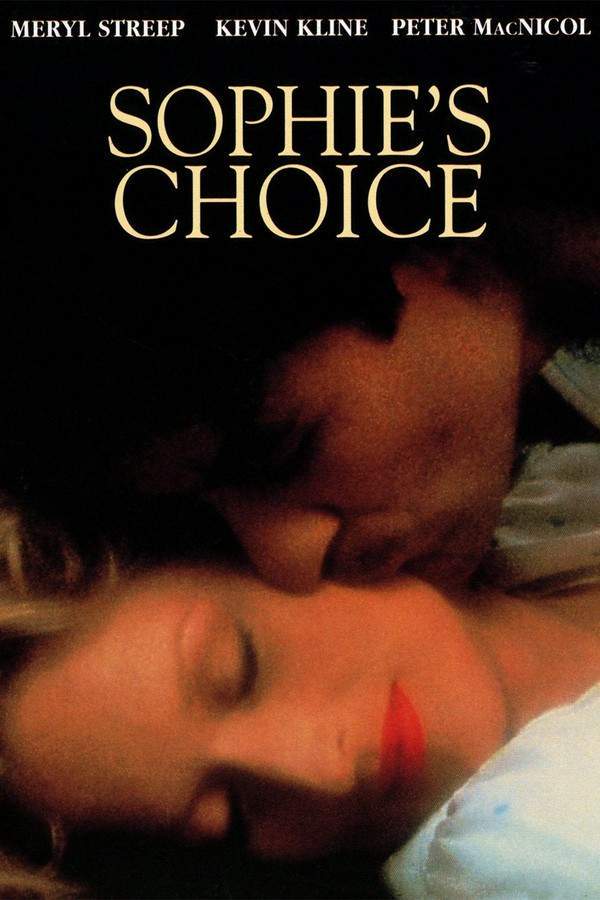
Sophie's Choice (1982) movie poster

Timeline

Sophie's Choice (1982) Timeline Explained – Every Event in Order

Release, runtime and language
1982 · 150 min · English
JustWatch #23,450 1
Directed by
Alan J. Pakula
Starring
Meryl Streep, Kevin Kline, Peter MacNicol

In 1940s Brooklyn, a young aspiring writer nicknamed Stingo seeks inspiration and befriends Sophie, a Polish immigrant haunted by a tragic past. As their bond deepens, Sophie reluctantly shares her experiences as a Holocaust survivor, revealing a story of devastating loss and impossible choices. Through fragmented flashbacks, Stingo witnesses the profound impact of trauma and the enduring strength of the human spirit, while grappling with the ethical dilemma of documenting Sophie's painful memories.

On this page (6)
  1. 1 Where to watch
  2. 2 Events in order (14)
  3. 3 Timeline questions answered
  4. 4 The book behind the movie
  5. 5 Movie threads
  6. 6 Every angle

Where to watch

Where to Watch Sophie's Choice (1982)

Where can you watch Sophie's Choice? Stream, rent or buy it in the US, including on fuboTV, Peacock Premium and Peacock Premium Plus: current JustWatch availability with up-to-date prices.

Streaming availability powered by JustWatch

14 events in order · contains spoilers

Sophie's Choice Timeline: Events in Chronological Order

Every key event of Sophie's Choice (1982) in order, scene by scene, with when and where it takes place. Use it to untangle flashbacks, time jumps and parallel storylines, to refresh your memory before the sequel or to find the exact scene you are thinking of.

  1. Stingo Moves to Brooklyn

    In 1947, Stingo, a young writer from the American South, relocates to post-WWII Brooklyn. The vibrant yet challenging atmosphere of the city serves as a backdrop for his burgeoning writing career and personal relationships.

    When
    1947
    Where
    Brooklyn
  2. Meeting Sophie and Nathan

    Stingo forms a close bond with Sophie Zawistowski, a striking Polish immigrant, and her enigmatic lover Nathan Landau. This companionship quickly becomes a deep exploration of love, trauma, and the scars left by the past.

  3. Sophie's Tattoo and Painful Past

    During an intimate evening, Sophie reveals the deep-seated pain in her identity, symbolized by the serial number tattoo on her forearm, a harrowing reminder of her survival in the Holocaust. Stingo grows increasingly curious about her troubled history.

  4. Revealing the Suicide Attempt

    As their trust deepens, Sophie discloses her traumatic experiences, including a suicide attempt following her liberation from Auschwitz. Her revealing scars on her wrists illustrate the immense psychological toll her past has taken on her.

  5. Uncovering Hidden Truths

    Stingo's visit to an acquaintance who knew Sophie's father unveils a shocking truth about her past. He learns that Sophie has harbored secrets about her family's dark legacy, particularly related to her father's stature as a Jewish-hating Polish professor.

  6. Sophie's Conflict in the Ghetto

    Sophie finds herself in a Jewish ghetto, confronting the painful legacies of her family and the choices that haunt her. This intense experience pushes her to seek redemption amidst the horrors that surround her.

    Where
    Jewish ghetto
  7. Entanglement with New Lover and the Resistance

    Sophie becomes involved with a new lover, Józef, and the Resistance leader, Wanda. Despite the urgency of their mission to fight oppression, Sophie’s motherly instincts prevent her from fully committing to their dangerous endeavors.

  8. Tragedy Strikes with Józef's Death

    A tragic turn takes place as the Gestapo kills Józef, a devastating loss for Sophie. Soon after, she faces another horrifying ordeal, being detained and sent to Auschwitz with her children, carrying the weight of survival with her.

    Where
    Auschwitz
  9. Horrific Choices at Auschwitz

    Upon arriving at Auschwitz, Sophie is forced to confront unspeakable choices as her children are separated from her. Desperate to save her son, she pleads with a Commandant, but her efforts lead to an endless cycle of dread and loss.

    Where
    Auschwitz
  10. Nathan Proposes Marriage

    In the present timeline, Nathan’s marriage proposal to Sophie creates a tense love triangle with Stingo. This turmoil pushes Sophie back to Stingo during Nathan’s volatile moments, further complicating their relationships.

  11. The Heart-Wrenching Choice

    The climax reveals the ultimate trauma that Sophie endured during the Holocaust—a choice between her children imposed by a Nazi officer. It’s a devastating moment where she cries out, pleading for mercy but ultimately making a heart-wrenching decision.

    Where
    Auschwitz
  12. The Last Night Together

    After sharing a heartfelt night together, Stingo awakens to find Sophie gone, leaving him bewildered. A note reveals her return to Nathan, marking the beginning of Stingo’s heartbreak and confusion.

  13. The Tragic End

    Stingo learns of Sophie and Nathan’s tragic deaths, which resounds with profound sorrow. He reflects on their relationship and the painful memories echoed through Nathan’s book of poetry, reciting a poignant farewell.

  14. Stingo Leaves Brooklyn

    The film concludes with Stingo departing Brooklyn, burdened with memories of Sophie. As he drives away, her image haunts him, leaving an indelible mark on his life amidst the fading city.

    Where
    Brooklyn

Last updated: November 03, 2024 at 11:36

Was this helpful?

Timeline questions answered

Sophie's Choice Timeline Explained: Your Questions Answered

When does it happen, and why in that order? The questions people ask about the chronology of Sophie's Choice (1982): time jumps, flashbacks, cause and effect between scenes and the correct order of events, each answered with spoilers.

Q1

Why did Sophie choose her daughter over her son at Auschwitz?

Sophie was forced to make an impossible choice when a Nazi officer ordered her to select which child would be taken to the gas chamber. In a moment of desperate anguish, she screamed 'Take my little girl!', not because she loved her daughter more, but because her son Jan was sick and she believed he might survive longer in the camp's conditions. The choice haunted her for the rest of her life, as both children were ultimately murdered regardless of her selection.

Foreshadowing: Earlier in the film, Sophie repeatedly tries to protect Jan, even pleading with a Commandant to allow him into the Lebensborn program, showing her desperate maternal instinct to save her son.

  • auschwitz
  • holocaust
  • children
  • choice
  • survival
Q2

Why did Sophie return to Nathan after being with Stingo?

Sophie returned to Nathan despite her night with Stingo because she felt an overwhelming sense of guilt and unworthiness. Having survived the Holocaust while her children did not, Sophie believed she did not deserve happiness with someone as innocent as Stingo. Nathan's own trauma and instability mirrored her own damaged state, making their destructive relationship feel like the only kind of love she deserved.

Foreshadowing: Throughout the film, Sophie oscillates between Nathan and Stingo, always returning to Nathan despite his abuse, reflecting her deep-seated belief that she merits only suffering.

  • nathan
  • stingo
  • relationship
  • guilt
  • return
Q3

What was Sophie's relationship with her father?

Sophie's father was a Polish professor who harbored intense anti-Semitic beliefs and actively condemned Jewish people to death. This devastating truth emerged when Stingo investigated her past. The revelation added another layer of Sophie's profound guilt, she was the daughter of a man responsible for murdering the very people she later tried to save in the Jewish ghetto, creating an unbearable internal conflict about her own identity and complicity.

Foreshadowing: Sophie's reluctance to fully reveal her family history and her intense emotional reactions when discussing her father hinted at darker secrets buried in her past.

  • father
  • professor
  • anti-semitic
  • polish
  • secret
Q4

Why did Sophie and Nathan commit suicide?

Sophie and Nathan's double suicide was the tragic culmination of their intertwined traumas. Nathan, already mentally unstable and obsessed with the Holocaust, could not cope with the reality of Sophie's past and his own inability to save her from her suffering. Sophie, already destroyed by survivor's guilt and the loss of her children, saw no path to healing. Together, they chose to end their mutual torment, believing death was preferable to continuing to live with their unbearable pain.

Foreshadowing: Nathan's increasingly erratic behavior and threats of suicide, combined with Sophie's declaration that she cannot escape the past, foreshadowed their tragic end.

  • suicide
  • death
  • tragic ending
  • nathan
  • stingo
Q5

What was the Lebensborn program and why did Sophie beg for Jan to join?

The Lebensborn program was a Nazi initiative to segregate and 'Germanize' racially acceptable children from occupied territories. When Sophie's son Jan fell ill with an epidemic at Auschwitz, she desperately pleaded with a Commandant to allow him entry into this program, believing it was the only chance for his survival. Her maternal desperation drove her to beg the very people responsible for her imprisonment to save her child, illustrating the impossible moral compromises survivors were forced to make.

Foreshadowing: Sophie's frantic attempts to save Jan throughout the timeline showed her relentless drive to protect her children by any means necessary.

  • lebensborn
  • nazi
  • jan
  • auschwitz
  • survival
Q6

Why was Nathan so obsessed with the Holocaust?

Nathan's obsessive fixation on the Holocaust stemmed from underlying mental illness that manifested as a distorted fascination with Jewish suffering. While he claimed deep empathy for victims, his obsession became increasingly disturbing and erratic. He projected his own psychological anguish onto Sophie's trauma, using her suffering as a focal point for his unresolved emotional conflicts, ultimately driving him toward instability and violence.

Foreshadowing: Nathan's intense conversations about the Holocaust and his收集 of related materials hinted at his unhealthy psychological investment in the tragedy.

  • nathan
  • holocaust
  • obsession
  • mental illness
  • trauma
Q7

What did Sophie lie about regarding her past?

Sophie maintained several painful deceptions throughout her relationship with Stingo. The most significant was her concealment of her father's true nature as a virulently anti-Semitic Polish professor who had actively contributed to Jewish deaths. She also minimized and distorted details about her own choices at Auschwitz. These lies stemmed from shame, Sophie felt responsible for both her father's actions and her own survival at the cost of her children's lives.

Foreshadowing: Sophie's evasiveness when discussing her family background and her emotional volatility when pressed for details suggested she was hiding shameful truths.

  • lies
  • father
  • secret
  • past
  • shame
Q8

Why did Sophie attempt suicide after being liberated from Auschwitz?

Sophie attempted suicide shortly after being liberated from Auschwitz because the overwhelming guilt of surviving while her children were murdered became unbearable. Despite physical freedom, she was trapped by survivor's guilt and the psychological damage of the Holocaust. The scars on her wrists from this suicide attempt became visible markers of her internal torment, representing her failed attempt to escape the psychological prison created by her experiences.

Foreshadowing: The film opened with Sophie revealing her tattoo and scars, establishing early on that her liberation brought no peace.

  • suicide
  • scars
  • auschwitz
  • liberation
  • guilt
Q9

What happened to Sophie's children at Auschwitz?

Sophie's children, Jan and Eva, were both murdered at Auschwitz. Upon arrival, she was forced to choose who would be taken to the gas chamber, and she selected her daughter to go first, a choice that haunts her throughout the film. Her son Jan was later taken during the epidemic, and despite Sophie's desperate attempts to save him through the Lebensborn program, both children were ultimately lost. This central tragedy defines Sophie's entire existence in the film.

Foreshadowing: Sophie's frantic pleading with the Commandant and her desperate attempts to keep her children together foreshadowed the futility of her efforts.

  • children
  • jan
  • eva
  • auschwitz
  • murdered
Q10

Why did Sophie believe she didn't deserve happiness with Stingo?

Sophie believed she didn't deserve happiness with Stingo because she was consumed by survivor's guilt and the belief that she had betrayed her children by living. Having chosen her daughter at Auschwitz and lost both children, Sophie felt that her survival was inherently wrong, that she should have died with her children rather than lived to experience joy. This profound self-hatred made her return repeatedly to Nathan, whose own darkness mirrored her own sense of worthlessness.

Foreshadowing: Sophie's repeated statements about not being able to escape the past and her belief that she carries the weight of her children's deaths revealed her deep conviction that she had forfeited any right to happiness.

  • guilt
  • survival
  • happiness
  • stingo
  • self-worth

Movie threads

More Movies Like Sophie's Choice, by Mood & Story

Curated lists built around what makes Sophie's Choice tick: the same mood, the same kind of story or the same emotional payoff. Each list explains why these movies belong together.

Character studies of trauma like in Sophie's Choice

Intimate portraits of individuals haunted by devastating past experiences. If you were captivated by the deep psychological exploration in Sophie's Choice, you'll find similar movies here. These films focus on intimate, unflinching portraits of characters grappling with devastating past trauma, using memory and dialogue to unravel complex emotional wounds.

  • harrowing
  • introspective
  • somber
  • oppressive
  • psychological
  • tragic
  • Tone: dark, melancholic, introspective
  • Pacing: slow, deliberate, character-driven
Why these movies?

The story pattern: Stories in this thread are driven by a central character's internal struggle with a traumatic past. The plot often unfolds non-linearly, revealing memories piece by piece as the character attempts to process, conceal, or confess their pain, leading to a cathartic or tragic resolution.

Why they belong together: These films are grouped together for their primary focus on a character's psychological landscape in the aftermath of trauma. They share a slow, deliberate pacing that allows for deep emotional immersion and a tone that is often dark, melancholic, and intensely introspective.

Bleak historical dramas with moral dilemmas like Sophie's Choice

Stories set against dark historical backdrops where survival forces horrific decisions. For viewers seeking movies like Sophie's Choice that explore devastating moral choices within a dark historical context. These similar dramas are set against war and genocide, focusing on the psychological toll of survival and the guilt that follows impossible decisions.

  • tragic
  • oppressive
  • harrowing
  • somber
  • historical
  • war
  • Tone: bleak, tragic, oppressive
  • Pacing: slow, steady, weighty
Why these movies?

The story pattern: The narrative pattern involves a protagonist facing an ethical nightmare with no good options, forced to make a decision that will forever define their life. The story examines the aftermath of this choice, the psychological guilt, and the struggle to find meaning or redemption in a world shattered by historical violence.

Why they belong together: These films share a specific combination of a grim historical setting, a central narrative focused on an agonizing moral dilemma, and a consistently bleak tone leading to a sorrowful or tragic conclusion. The experience is defined by its high emotional intensity and profound thematic weight.

Every angle

Sophie's Choice (1982) Explained: Plot, Timeline & Characters

Everything about Sophie's Choice in one place: what happens in the plot summary, the timeline in chronological order, the characters and meaning and a spoiler-free summary. What's After the Movie adds the cast, box office and post-credit scenes.

Coming soon on iOS and Android

The Plot Explained Movie Summary App

Plot summaries, endings explained and timelines on your phone. Catch up on any movie in minutes, save your favorites and never miss a twist again.

Be the first to know when we launch. Your email stays private, always.

Learn more about the app