Plot Explained Spoilers guaranteed!
Plot Explained

Browse by genre

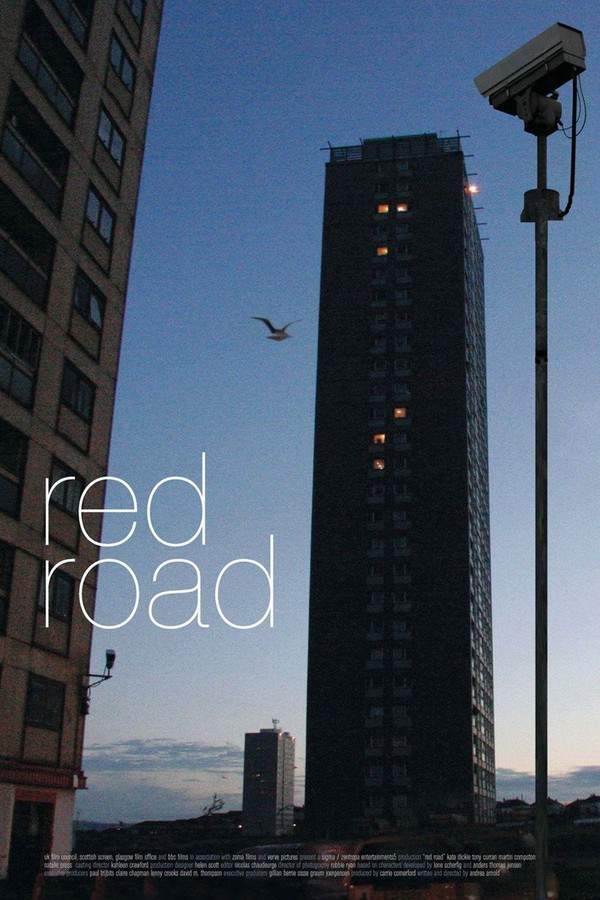
Red Road (2007) movie poster

Plot Summary

Red Road (2007) Plot Summary Explained

Release, runtime and language
2007 · 113 min · English
Directed by
Andrea Arnold

In the underbelly of Glasgow, surveillance operative Jackie becomes increasingly preoccupied with Clyde, a former convict. Her routine observations evolve into a deliberate pursuit as she engineers a meeting. As their paths converge, Jackie’s actions expose a tangled story of longing, a quest for atonement, and the ambiguous nature of right and wrong, all set against a backdrop of hidden truths and intense psychological suspense.

On this page (6)
  1. 1 Where to watch
  2. 2 What happens: full plot
  3. 3 Plot questions answered
  4. 4 Movie threads
  5. 5 Movies like Red Road
  6. 6 Every angle

Where to watch

Where to Watch Red Road (2007)

Where can you watch Red Road? Stream, rent or buy it in the US, including on Kanopy: current JustWatch availability with up-to-date prices.

Streaming availability powered by JustWatch

Full plot summary · contains spoilers

What Happens in Red Road: Full Plot Summary

The whole story of Red Road (2007) explained, from the opening scene to the final frame: every key event, every twist and what it all adds up to. Read it as a quick recap before the sequel, to check a scene you missed, or to finally understand what really happened.

In a Glasgow setting dominated by surveillance and uneasy quiet, Jackie Morrison works the night shift as a CCTV operator, watching the Red Road Flats and the lives that unfold within and around them. She lives alone and keeps a careful distance from romance, even as she engages in casual encounters with a married man named Avery. The film charts a careful, creeping tension as Jackie's routine gaze on the city gradually turns inward, centered on one man who catches her attention.

The object of Jackie's fixation is Clyde Henderson, a recently released prisoner who has earned early freedom for good behavior but knows his confidence can unravel with a single misstep. From the moment Jackie recognizes him on the monitor, she begins a quiet, persistent pursuit—tracking his movements, gathering fragments of his life from the edges of the frame, and letting the incidentals of his day-to-day existence pull her in. Clyde’s life, which seems ordinary at first—an ex-con trying to move forward—takes on a new, dangerous texture through Jackie's disciplined curiosity.

Her investigation leads her to a cafe where Clyde is seen and then to the apartment he shares with another ex-con named Stevie, where a party signals a social life that feels both plausible and perilous. Jackie manages to slip inside the party, moving among guests with a careful blend of boldness and restraint, exchanging looks with a nervous, intoxicated Clyde. They share a dance, a moment of almost intimate possibility, but Jackie exits the room under a self-imposed constraint, leaving a spark of unresolved tension in her wake. The next clues appear as she spots Clyde at a local bar, where he steps between a fight and the other patrons with a surprising calm. The night continues as Clyde invites Jackie back to his apartment, hinting at a longer history and a daughter he regrets losing touch with.

In the apartment, the conversation deepens in a way that unsettles the viewer: Clyde opens up about his daughter, a fragile thread to a past he cannot fully repair, and the two of them become physically intimate. Yet the moment of closeness collapses into a planned turning point as Jackie, after seeking refuge in the emotional distance of the room, reemerges to cast a shadow over the memory of consent—she strikes Clyde in the face with a stone and escapes into the city’s watchful eye. The aftermath is swift and stark: police identify Clyde as the rapist, and the cameras document the arrest as Jackie looks on, a mix of fear and detachment marking her face. A new, silent tension unfolds as Clyde’s daughter approaches the apartment block, a sign that the past cannot remain severed.

The story then pivots to a confrontation from Stevie’s side. He gains entry to Jackie’s home and questions the motive behind the accusation, forcing Jackie to reveal a devastating secret: Clyde had killed her husband and daughter in a car accident. The revelation shifts the moral weight of the entire sequence, and Jackie chooses to withdraw the rape accusation, a decision that ripples through every relationship tied to the event. Clyde is released, and the two characters face each other again with old scores and new truths laid bare.

When Jackie finally confronts Clyde after his release, the exchange is less about guilt and more about the ruin left in its wake. Clyde speaks of the road traffic accident that took Jackie's husband and daughter, describing how he lost control of the car, a confession that reframes their earlier encounter in the apartment. Jackie speaks of the final words she uttered to her daughter, words that now echo with regret, and she tells Clyde that his daughter had tried to reach him on the day of his arrest. The film closes on a cautious, unresolved note as they part ways, each carrying the heavy residue of choices made, consequences endured, and the sense that the city’s surveillance system only magnifies the distance between people who might have connected but end up separated by secrets and tragedy.

What lingers is a portrait of a city under constant observation, where the line between observer and observed blurs, and a single night reveals how private pain can collide with public accountability. The characters move through rooms and rooms of memory—cafes, bars, apartments—each space revealing another layer of motive, consequence, and unspoken regret. This is a story that feels both intimate and clinical, a study in how a single sequence of decisions can ripple outward to alter the course of lives tied together by circumstance, guilt, and the fragile hope for some form of redemption.

Last updated: November 22, 2025 at 15:57

Was this helpful?

Plot questions answered

Red Road Plot Explained: Your Questions Answered

The questions people ask most about Red Road (2007): what happens in the confusing scenes, why the characters do what they do, the twists, hidden details and what the ending means. Each answer contains spoilers.

Q1

Why does Jackie become fixated on Clyde?

Jackie recognizes Clyde from her CCTV monitors and begins tracking him because he is the man who killed her husband and daughter in a road traffic accident. Her surveillance of him is not casual curiosity but a calculated plan to get close to the man responsible for her family's death, though this crucial motivation remains hidden from both Clyde and the audience until later in the film.

Foreshadowing: Early scenes show Jackie living a solitary life with no apparent emotional connection, hinting at unresolved grief beneath her routine.

  • Jackie
  • Clyde
  • obsession
  • surveillance
  • CCTV
  • fixation
Q2

Why does Jackie frame Clyde for rape?

After sleeping with Clyde, Jackie attacks herself with a stone to create evidence of assault, framing him for rape. This is her calculated revenge, knowing he is a recently released prisoner, she understands that a rape accusation would likely return him to prison, fulfilling her desire for retribution for killing her husband and daughter.

Foreshadowing: Jackie's calm, methodical tracking of Clyde throughout the film establishes her as capable of patient, deliberate planning.

  • Jackie
  • Clyde
  • rape accusation
  • frame
  • revenge
  • prison
Q3

What does Clyde reveal about the car accident?

Clyde confesses to Jackie that he lost control of the car in a road traffic accident, which killed her husband and daughter. This revelation comes during their final confrontation after his release, reframing all of Jackie's earlier actions as a quest for vengeance rather than random obsession.

Foreshadowing: Clyde's mentions of regret and his lost connection with his own daughter hint at his awareness of the damage his actions have caused.

  • Clyde
  • car accident
  • death
  • confession
  • road traffic
Q4

Why does Jackie withdraw the rape accusation?

After Stevie confronts Jackie and she reveals that Clyde killed her family, she chooses to withdraw the false rape accusation. This decision stems from the moral complexity of her situation, while Clyde caused her immense loss, she recognizes that keeping him imprisoned on false charges would not bring her family back, and his daughter has tried to reach him.

Foreshadowing: Stevie's appearance at Jackie's home signals a turning point where hidden truths will surface.

  • Jackie
  • withdraw accusation
  • release
  • Stevie
  • confession
Q5

Why does Clyde's daughter matter in the story?

Clyde mentions losing touch with his daughter, revealing his regret and desire for redemption. During the final confrontation, Jackie tells Clyde that his daughter tried to reach him on the day of his arrest, adding emotional weight to their exchange and highlighting how his actions continue to impact multiple families, including his own.

Foreshadowing: Clyde's revelation about his daughter in the apartment establishes this emotional thread early.

  • Clyde
  • daughter
  • family
  • regret
  • arrest
Q6

Why does Stevie confront Jackie about the accusation?

Stevie, Clyde's roommate and fellow ex-con, gains entry to Jackie's home to demand why she falsely accused Clyde. This confrontation forces Jackie to reveal her true motive, Clyde killed her husband and daughter, exposing the personal tragedy underlying her actions and shifting the moral weight of the entire situation.

Foreshadowing: Stevie's presence at the party and his involvement in the bar fight establish him as someone connected to Clyde who might seek answers.

  • Stevie
  • confrontation
  • Jackie
  • accusation
  • truth
Q7

What is Jackie's relationship with Avery?

Avery is a married man with whom Jackie has casual sexual encounters. Their relationship exists outside any emotional connection, Jackie keeps romantic involvement at a distance, maintaining her solitary lifestyle while using physical intimacy as a distraction from her grief and obsession with Clyde.

Foreshadowing: Jackie's detached approach to her encounters with Avery contrasts sharply with the intensity of her pursuit of Clyde.

  • Avery
  • Jackie
  • relationship
  • affair
  • married
Q8

How does the CCTV surveillance shape the story?

The CCTV system serves as both Jackie's tool and a narrative metaphor. As an operator, she uses the cameras to track Clyde, but the constant observation also creates a sense that private actions are never truly private. Jackie watches Clyde's arrest on the very monitors she operates, blurring the line between observer and observed.

Foreshadowing: The opening scenes establish Jackie as a watcher, setting up the power dynamic that defines her relationship with Clyde.

  • CCTV
  • surveillance
  • watching
  • observer
  • monitor
  • Jackie
Q9

Why is Clyde a former convict?

Clyde is a recently released prisoner who earned early freedom for good behavior. Though the film does not specify his original crime, his status as an ex-con is central to Jackie's plan, knowing that another conviction would likely return him to prison, she strategically frames him for rape, exploiting his vulnerable legal position.

Foreshadowing: Jackie's discovery that Clyde could be sent back to jail for misbehavior motivates her entire approach.

  • Clyde
  • prison
  • ex-convict
  • released
  • conviction
Q10

What happens when Jackie confronts Clyde after his release?

After Clyde is released following Jackie's withdrawal of the rape accusation, they meet outside his apartment. The confrontation is less about guilt and more about shared ruin, Clyde confesses to losing control of the car, Jackie reveals her last words to her daughter were harsh, and she tells him his daughter tried contacting him. They part ways with no resolution, each carrying the weight of their losses.

Foreshadowing: The tension built throughout the film reaches its natural breaking point once all secrets are exposed.

  • Jackie
  • Clyde
  • confrontation
  • release
  • final
  • loss

Movie threads

More Movies Like Red Road, by Mood & Story

Curated lists built around what makes Red Road tick: the same mood, the same kind of story or the same emotional payoff. Each list explains why these movies belong together.

Thrillers about obsessive surveillance like Red Road

Where watching becomes an obsession, blurring the lines between observer and participant. If you liked the voyeuristic tension and moral ambiguity of Red Road, this thread features other movies where characters use surveillance to cross ethical boundaries. These films explore the psychological cost of obsession and the blurred lines between justice and revenge, offering similar slow-burn thrillers with heavy emotional weight.

  • voyeuristic
  • tense
  • unsettling
  • obsessive
  • claustrophobic
  • morally ambiguous
  • Tone: dark, tense, psychologically complex
  • Pacing: slow, deliberate
Why these movies?

The story pattern: The narrative typically begins with a detached observer—a security guard, a neighbor, an investigator—who becomes dangerously fixated on a subject. As they delve deeper, their professional or personal distance collapses, drawing them directly into the conflict. The story escalates through a series of unethical choices, leading to a confrontation that forces a reckoning with their own motives and the damage they've caused.

Why they belong together: Movies in this thread share a core premise of watching as a central, active plot device. They are united by a dark, tense tone, a slow-burn pacing that builds psychological unease, and a deep exploration of themes like obsession, guilt, and the corruption that comes from wielding power over others unseen.

Movies about grief and revenge like Red Road

Stories where profound loss fuels a quest for vengeance that leads to a painful reckoning. For viewers who appreciated the heavy emotional core of grief and the complex quest for atonement in Red Road, this collection features similar dramas and thrillers. These movies follow protagonists driven by loss, exploring the bleak and psychologically traumatic path of revenge that leads to a bittersweet or ambiguous resolution.

  • grieving
  • somber
  • tense
  • unsettling
  • heavy
  • psychological trauma
  • Tone: dark, somber, melancholic
  • Pacing: slow, character-driven
Why these movies?

The story pattern: The narrative is triggered by a catastrophic personal loss that sends the protagonist into a tailspin. Their grief manifests as a relentless, often self-destructive, mission to confront the person they hold responsible. The plot unfolds as a psychological unraveling, where the line between victim and aggressor blurs, leading to an ending that acknowledges the shared humanity and pain of all involved, without providing easy answers.

Why they belong together: These films are grouped by their central emotional engine: a deep, debilitating grief that propels the entire story. They share a heavy emotional weight, a dark tone, and a focus on the psychological trauma of loss. The pacing is often slow and deliberate, mirroring the character's tortured process, and endings tend toward the bittersweet or bleak, reflecting the irreversible nature of their trauma.

If you liked this

Movies Like Red Road

Similar movies to Red Road: the same genre, themes or kind of story. Each one comes with its own plot summary, timeline and ending explained.

Browse all movie summaries

Every angle

Red Road (2007) Explained: Plot, Timeline & Characters

Everything about Red Road in one place: what happens in the plot summary, the timeline in chronological order, the characters and meaning and a spoiler-free summary. What's After the Movie adds the cast, box office and post-credit scenes.

Coming soon on iOS and Android

The Plot Explained Movie Summary App

Plot summaries, endings explained and timelines on your phone. Catch up on any movie in minutes, save your favorites and never miss a twist again.

Be the first to know when we launch. Your email stays private, always.

Learn more about the app