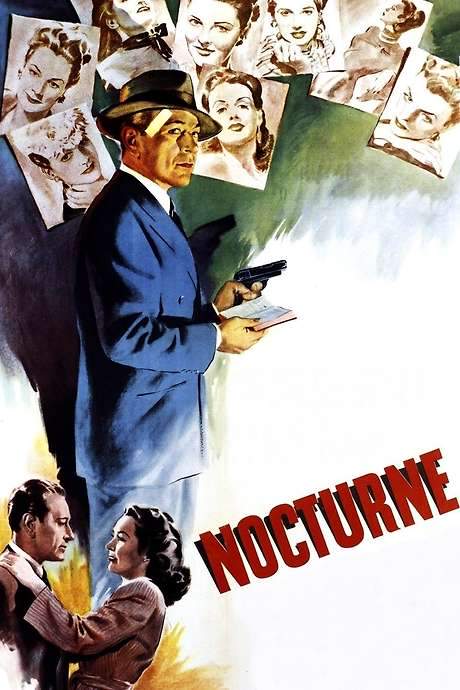
Alison Courtland, Claudette Colbert, a wealthy New Yorker, wakes up with no memory on a train bound for Boston and quickly faces the mystery of how she ended up so far from home. When she phones her husband, Richard W. Courtland, Don Ameche, the police overhear that she has threatened him with a gun, a clue that deepens the tension surrounding her already fragile state. The incident sets off a tense web of deceit that threads through money, trust, and danger, as Alison fumbles through a sequence of alarming discoveries about the people closest to her.
On a return journey, Bruce Elcott, Robert Cummings, is instantly drawn to Alison, and it becomes clear that he knows someone in her circle well—one of her good friends—a detail that hints at the larger network of connections and motives swirling around her. This fragile new interest unfolds against a backdrop of a family spiraling toward catastrophe, where appearances mask a more sinister plot aimed at control and betrayal.
Back in New York, Richard W. Courtland engineers a plan to force Alison into seeking help from a psychiatrist, setting in motion a carefully constructed illusion designed to isolate her from reality. The supposed doctor who is to treat Alison arrives, but the unsettling truth surfaces: the clinician is not Dr Rhinehart, but Charles Vernay, a photographer hired by Richard. Vernay, who is entangled with another woman, Daphne, is determined to push Alison toward a fatal outcome and to clear the path for Richard’s inheritance. Vernay’s presence reveals the first crack in the mansion of lies that binds this couple and their circle together, exposing the dangerous chess game Richard has begun to play.
As the plot thickens, Vernay’s real role comes into sharper relief: he is both the instrument of manipulation and a pawn in Richard’s broader plan to sever Alison from her wealth. The stakes rise when Vernay’s extramarital affair with Daphne is disclosed, intensifying the urgency of keeping Alison from realizing the truth behind the “treatment” she’s receiving. Richard’s scheme escalates to drugging Alison and coercing her into taking drastic actions, all while Vernay’s own motives flicker between allegiance to Richard and a growing awareness that the scheme may collapse under its own weight.
The tension culminates when Bruce Elcott arrives at a critical moment and intercepts the danger. He finds Alison on the brink—apparently under hypnosis—poised to leap from a balcony. Elcott’s timely intervention prevents a tragedy in the moment, and his intervention also leads him to uncover Vernay’s manipulation, exposing the web of deceit that has dragged Alison into a perilous trap. This confrontation between truth and illusion underscores the precarious balance of power, wealth, and vulnerability that defines Alison’s world and the people who inhabit it.
As Vernay realizes the conspiracy has unravelled, he takes decisive action and shoots Richard in a decisive, brutal moment of reckoning. The chase that follows ends tragically for Vernay as he tumbles through a skylight during the pursuit, a dramatic fall that seals his fate. In the aftermath of these revelations and violence, Elcott’s presence marks a hopeful turn; with the danger behind them, Alison and Elcott find space to begin anew together, free from the coercive schemes that sought to control her life.
In this tight, morally charged thriller, the threads of love, greed, and manipulation pull Alison into a perilous game where trust is scarce and every ally could be a potential foe. The performances—anchored by Alison Courtland’s perilous journey and the entwined loyalties of Richard, Vernay, Daphne, and Bruce—navigate a labyrinth of motives with a restrained, steady pace that emphasizes character psychology over spectacle. The movie maintains a cool, calculating tone as it builds toward a final reckoning, where betrayal is exposed, danger is confronted, and a fragile peace begins to take hold for Alison and Elcott.