Year: 1979
Runtime: More mins
Language: Marathi
Director: Jabbar Patel
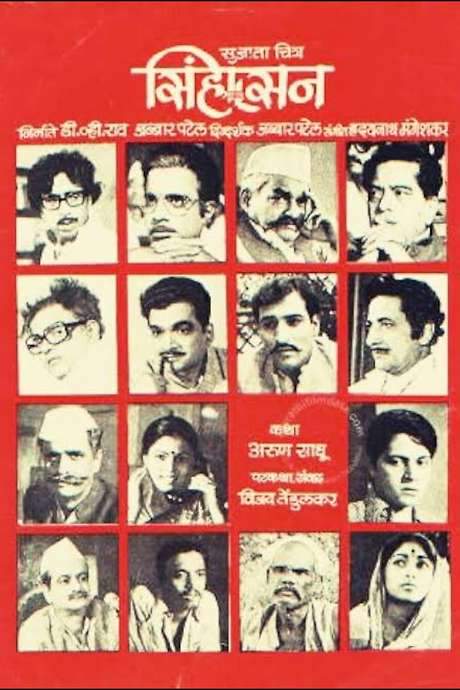
The film follows a fierce contest for the chief‑minister’s seat as the incumbent faces a rival from within his own party, with political intrigue unfolding behind the scenes through the eyes of a journalist. Directed by Jabbar Patel and drawn from Arun Sadhu’s novels Mumbai Dinank and Simhasan, this early Indian political drama features Arun Sarnaik, Shriram Lagoo and Nilu Phule.
Warning: spoilers below!
Haven’t seen Sinhasan yet? This summary contains major spoilers. Bookmark the page, watch the movie, and come back for the full breakdown. If you're ready, scroll on and relive the story!
Explore the full timeline and setting of Sinhasan (1979). Follow every major event in chronological order and see how the environment shapes the story, characters, and dramatic tension.
Last updated: October 04, 2025 at 16:14
Meet the key characters of Sinhasan (1979), with detailed profiles, motivations, and roles in the plot. Understand their emotional journeys and what they reveal about the film’s deeper themes.
Last updated: October 04, 2025 at 16:14
Explore the central themes of Sinhasan (1979), from psychological, social, and emotional dimensions to philosophical messages. Understand what the film is really saying beneath the surface.
Last updated: October 04, 2025 at 16:14
Browse frequently asked questions about Sinhasan (1979) focused on characters, relationships, themes, symbols, setting, and story context. This movie info FAQ gives spoiler-aware explanations for character arcs, world details, and thematic interpretation so readers can better understand what the film is really about.
The film is set in Mumbai, portrayed as a bustling urban landscape where money, influence, and politics intersect. Maharashtra's legislative atmosphere provides the stage for power plays, backroom political maneuvering, and public unrest.
The events unfold in the late 1970s, a period marked by political cynicism in post-Emergency India. This era of backroom deals, media pressure, and intense legislative sessions defines the atmosphere for the power struggles depicted.
The film centers on a fierce battle for control among the state's leaders. The Chief Minister fights to hold his position while rivals maneuver to replace him through horse-trading and party factions. The power dynamics reveal how decisions are driven by self-interest rather than public welfare.
A journalist exposes hidden networks of phone tapping and political favors, showing how media can both influence and expose corruption. The film questions whether truth can survive within a system built on secrecy, using news cycles and sensational revelations to shift power balances.
The political machine exacts a personal toll on both public figures and ordinary people. Extramarital affairs, family tensions, and the mental strain of constant scheming are shown as collateral damage. The protagonist's descent into insanity underscores the human price of governance gone awry.
Digu Tipnis is a relentless, principled journalist who uncovers the network of telephone tapping and corruption at the heart of Maharashtra politics. His investigations illuminate how the common man bears the brunt of elite scheming and power games.
Arun Sarnaik is the Chief Minister under immense pressure from anonymous informers and intra-party intrigues. His authority is tested as rivals seek to win over MLAs to topple him, while his health and resolve waver under the strain. He represents the fragility of political incumbency.
Sriram Lagoo is a shrewd faction leader within the CM's party who fights to consolidate his grip on power. He maneuvers for numerical strength in the assembly, balancing alliances and betrayals while protecting his own position, embodying the pragmatic brutality of realpolitik.
D'casta is a bold union leader who challenges smugglers and political bosses. He leverages organized labor to confront darker elements of the system, shaping negotiations from the wings of the political stage.
The film has a dominantly tense tone with a pervasive sense of anxiety driven by high-stakes political maneuvering. The ending is bleak, characterized by the protagonist's fracturing reality, leaving the message that ambition corrodes accountability with little hope for change.
Discover curated groups of movies connected by mood, themes, and story style. Browse collections built around emotion, atmosphere, and narrative focus to easily find films that match what you feel like watching right now.
Unflinching stories that dissect the rot within political systems and the price of power.If you liked the tense, cynical power struggle in Sinhasan, explore more movies that dissect political corruption, media scrutiny, and backroom deals. These films share a heavy emotional weight and a bleak outlook on the human cost of ambition within complex systems.
The narrative pattern follows a high-stakes power struggle, often within a government or institution, where an observer investigates the corrupt mechanisms at play. The journey typically involves uncovering layers of deception and moral decay, leading to a conclusion that offers little hope for systemic change, emphasizing the personal disillusionment of the characters.
Movies in this thread are grouped by their shared focus on political intrigue, their tense and cynical tone, and their complex depiction of systemic failure. They create a gripping, oppressive mood through steady pacing and high emotional intensity, delivering a sobering view of power.
Gripping tales where a journalist's pursuit of truth reveals a dark and disillusioning reality.For viewers who appreciated the journalist's perspective in Sinhasan, this thread gathers films where media scrutiny exposes harsh truths. These stories are characterized by a steady, complex narrative, a tense atmosphere, and a heavy emotional journey that often ends on a bleak note.
The narrative follows a journalist's investigation as the central driving force. As they dig deeper, they uncover layers of conspiracy and moral compromise, facing pressure and threats. The arc is typically one of growing disillusionment, where exposing the truth comes at a great personal cost and rarely leads to meaningful change.
These films share a common protagonist archetype and narrative engine: the investigative journalist. They are united by a mood of anxious suspense, a complex plot structure, and a thematic focus on the conflict between truth-seeking and powerful, corrupt systems, resulting in a heavy, often bleak viewing experience.
Don't stop at just watching - explore Sinhasan in full detail. From the complete plot summary and scene-by-scene timeline to character breakdowns, thematic analysis, and a deep dive into the ending - every page helps you truly understand what Sinhasan is all about. Plus, discover what's next after the movie.
Read a complete plot summary of Sinhasan, including all key story points, character arcs, and turning points. This in-depth recap is ideal for understanding the narrative structure or reviewing what happened in the movie.
Track the full timeline of Sinhasan with every major event arranged chronologically. Perfect for decoding non-linear storytelling, flashbacks, or parallel narratives with a clear scene-by-scene breakdown.