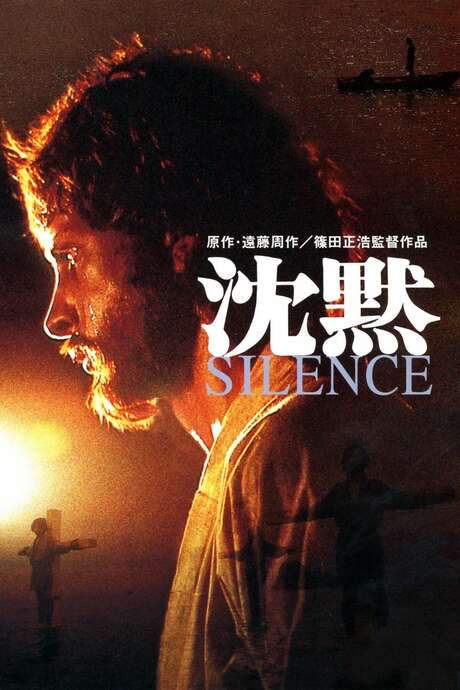
Silence

Silence

Year: 1971

Runtime: 129 mins

Language: Japanese

Director: Masahiro Shinoda

DramaHistory

Two Jesuit priests encounter persecution when they travel to Japan in the 17th century to spread Christianity and search for their mentor.

Warning: spoilers below!

Haven’t seen Silence yet? This summary contains major spoilers. Bookmark the page, watch the movie, and come back for the full breakdown. If you're ready, scroll on and relive the story!

Timeline & Setting – Silence (1971)

Explore the full timeline and setting of Silence (1971). Follow every major event in chronological order and see how the environment shapes the story, characters, and dramatic tension.

Time period

17th century

Set during the Tokugawa shogunate, when Christianity was banned and foreigners were tightly controlled. Christians faced public humiliation, torture, and pressure to renounce their faith. The era is defined by secrecy, state surveillance, and the risk of apostasy.

Location

Nagasaki, Japan

The story unfolds primarily in Nagasaki, a port city in 17th-century Japan. It features fishing villages and urban centers where authorities hunt for hidden Christians. The setting highlights the clash between a cloistered, harsh regime and a discreet, persecuted faith.

🗺️ Historical Japan 🗡️ Religious persecution 🧭 Isolationist policy

Last Updated: October 04, 2025 at 15:59

Main Characters – Silence (1971)

Meet the key characters of Silence (1971), with detailed profiles, motivations, and roles in the plot. Understand their emotional journeys and what they reveal about the film’s deeper themes.

Sebastião Rodrigues (Rodrigo) – David Lampson

A Portuguese Jesuit priest who travels to Japan to proselytize and search for Ferreira. He begins as confident and occasionally patronizing, but the brutal reality of persecution forces him to confront the limits of faith under torture. Over time, his resolve is tested as he witnesses suffering and faces the demand to recant.

🕯️ Jesuit priest ⚖️ Persecution 🧭 Faith under pressure

Francisco Garrpe (Garrpe) – Don Kenny

The other Jesuit priest, more cautious and compassionate toward the persecuted Christians. He shares Rodrigo's mission but is wary of the dangers they face. His perspective shifts as he witnesses the consequences of the regime's crackdown and the fragility of faith under coercion.

🕯️ Jesuit priest 🗡️ Persecution 🧭 Faith under pressure

Kichijiro (Mako)

A fisherman who helps smuggle the priests into Japan but is marked by recurring treachery and guilt. He seeks forgiveness yet repeatedly yields to fear and pressure, embodying the struggle between self-preservation and faith. His actions haunt the narrative as a complex study of repentance.

🪙 Betrayal 🧭 Survival 🕯️ Guilt

Kiku (Shima Iwashita)

The wife of a Christian samurai who recants under pressure to spare her family. Her choice illustrates the social and personal costs of staying faithful in a hostile environment. She represents the human consequences of the broader conflict between faith and state.

🗡️ Pressure 🕊️ Faith under threat 🧭 Family

Inoue Chikugonokami (Eiji Okada)

Nagasaki magistrate who orchestrates the crackdown on Christianity. He engages in private dialogue with Rodrigo, illustrating the conflict between law, duty, and personal conscience. His actions reveal how state power seeks to control faith through coercion and public spectacle.

🗡️ Authority ⚖️ Law vs Faith 🕯️ Persecution

Cristóvão Ferreira (Tetsuro Tamba)

A former Jesuit who has apostatized and works under Inoue as an intellectual opponent of Christianity. His arguments about inculturation and the state of faith in Japan challenge Rodrigo's beliefs. He embodies the tragedy of faith compromised for worldly advantage.

🕯️ Apostasy 🧭 Intellectual critique 🗺️ Cultural clash

Interpreter (Rokk-toura)

The linguistic mediator who translates the clash between Japanese officials and Christian prisoners. He helps shape Rodrigo's understanding of the proceedings and the pressure to renounce. His role highlights how language can influence power dynamics and personal decisions.

🗣️ Language 🧭 Mediation 🕊️ Cultural tension

Last Updated: October 04, 2025 at 15:59

Major Themes – Silence (1971)

Explore the central themes of Silence (1971), from psychological, social, and emotional dimensions to philosophical messages. Understand what the film is really saying beneath the surface.

🕊️ Faith vs State

Rodrigo's conviction is tested as the state demands renunciation of Christianity. The authorities frame faith as a private matter that threatens social order. The contrast between spiritual truth and political power drives the core conflict of the story. The characters wrestle with whether belief can survive under institutional pressure.

🩸 Suffering

The narrative centers on the brutal toll of persecution, with Christians tortured and forced to endure public shaming. Rodrigo and Garrpe confront the pain of witnessing others suffer for their beliefs. Suffering becomes a measure of faith and a test of personal resolve. The endurance of pain is presented as a battleground for spiritual integrity.

🤝 Guilt & Betrayal

Kichijiro's treachery under pressure exposes the fragility of loyalty in extremis. The film weighs forgiveness against memory, as Rodrigo grapples with betrayal and the burden of absolution. Trust is fragile in a world of coercion, and each character weighs what it costs to stay true. The interplay of guilt and mercy underscores the human cost of conviction.

Last Updated: October 04, 2025 at 15:59

Mobile App Preview

Coming soon on iOS and Android

The Plot Explained Mobile App

From blockbusters to hidden gems — dive into movie stories anytime, anywhere. Save your favorites, discover plots faster, and never miss a twist again.

Sign up to be the first to know when we launch. Your email stays private — always.

Explore Movie Threads

Discover curated groups of movies connected by mood, themes, and story style. Browse collections built around emotion, atmosphere, and narrative focus to easily find films that match what you feel like watching right now.

Movies about a crisis of faith like Silence

Characters pushed to their spiritual limits by relentless oppression and doubt.If you were captivated by the profound spiritual struggle in Silence, this collection features movies where characters grapple with their beliefs under extreme pressure. These films explore themes of doubt, martyrdom, and ideological conflict, offering similarly heavy and thought-provoking journeys for viewers who appreciate deep moral and spiritual dilemmas.

spiritual crisismorally complexoppressiveharrowingmeditativeexistential dreadideological conflict

Narrative Summary

Narratives in this thread typically follow a protagonist or group whose core beliefs are systematically challenged by an oppressive external force. The journey is internal, focusing on the psychological erosion of faith through scenes of debate, temptation, and confrontation, often leading to a pivotal moment of choice between martyrdom and compromise.

Why These Movies?

Movies are grouped here because they share a central focus on the internal battle of faith. They possess a dark, somber tone, high emotional weight, and often feature bleak endings that reflect the cost of ideological conflict, creating a cohesive experience of spiritual and moral anguish.


Slow burn historical dramas with bleak endings like Silence

Austere period pieces where dread builds slowly through systemic cruelty.For viewers who appreciated the slow, harrowing buildup and austere setting of Silence, this section highlights similar historical dramas. These movies focus on psychological torment and systemic oppression, unfolding at a deliberate pace to maximize emotional impact. They are ideal for those seeking serious, heavy stories about human endurance in dark chapters of history.

oppressivesomberaustereharrowinglonelyhistoricalpsychological tormentslow burn

Narrative Summary

The narrative pattern involves immersing the audience in a meticulously recreated but grim historical period. The conflict is not fast-paced action but a slow, grinding pressure applied by an inhuman system. The story unfolds through a series of escalating moral and physical trials that break down the protagonists, emphasizing atmosphere and psychological depth over plot twists.

Why These Movies?

These films are united by their combination of a historical setting, a slow, deliberate pacing that builds dread, and a focus on the horrors of institutional oppression. They share a dark tone, high emotional weight, and a visually austere style that creates a consistently somber and oppressive viewing experience.

Unlock the Full Story of Silence

Don't stop at just watching — explore Silence in full detail. From the complete plot summary and scene-by-scene timeline to character breakdowns, thematic analysis, and a deep dive into the ending — every page helps you truly understand what Silence is all about. Plus, discover what's next after the movie.

Silence Summary

Read a complete plot summary of Silence, including all key story points, character arcs, and turning points. This in-depth recap is ideal for understanding the narrative structure or reviewing what happened in the movie.

Silence Summary

Silence Timeline

Track the full timeline of Silence with every major event arranged chronologically. Perfect for decoding non-linear storytelling, flashbacks, or parallel narratives with a clear scene-by-scene breakdown.

Silence Timeline

Silence Spoiler-Free Summary

Get a quick, spoiler-free overview of Silence that covers the main plot points and key details without revealing any major twists or spoilers. Perfect for those who want to know what to expect before diving in.

Silence Spoiler-Free Summary

More About Silence

Visit What's After the Movie to explore more about Silence: box office results, cast and crew info, production details, post-credit scenes, and external links — all in one place for movie fans and researchers.

More About Silence

Similar Movies to Silence

Discover movies like Silence that share similar genres, themes, and storytelling elements. Whether you’re drawn to the atmosphere, character arcs, or plot structure, these curated recommendations will help you explore more films you’ll love.