Plot Explained Spoilers guaranteed!
Plot Explained

Browse by genre

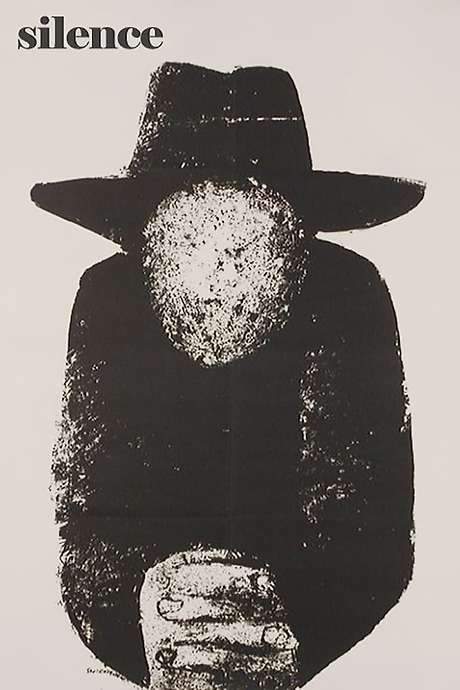
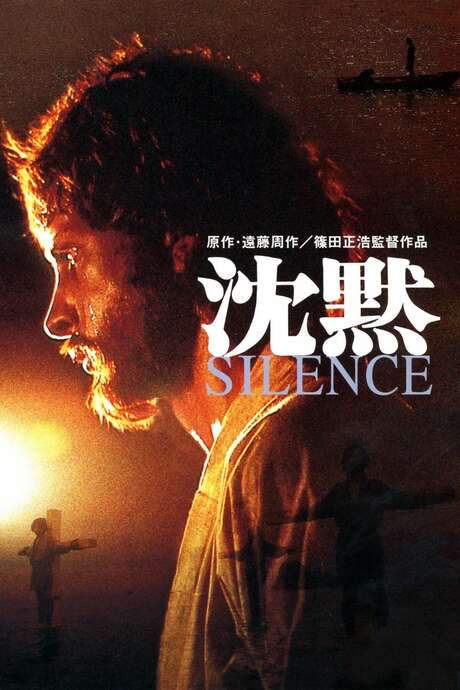
Silence (1971) movie poster

Timeline

Silence (1971) Timeline Explained – Every Event in Order

Release, runtime and language
1971 · 129 mins · Japanese
Directed by
Masahiro Shinoda
Starring
MAKO, Shima Iwashita, Yoshio Inaba, Taiji Tonoyama, Yoshiko Mita, Masaya Takahashi

Two Jesuit priests encounter persecution when they travel to Japan in the 17th century to spread Christianity and search for their mentor.

On this page (6)
  1. 1 Events in order (13)
  2. 2 Timeline questions answered
  3. 3 The book behind the movie
  4. 4 Movie threads
  5. 5 Movies like Silence
  6. 6 Every angle

13 events in order · contains spoilers

Silence Timeline: Events in Chronological Order

Every key event of Silence (1971) in order, scene by scene, with when and where it takes place. Use it to untangle flashbacks, time jumps and parallel storylines, to refresh your memory before the sequel or to find the exact scene you are thinking of.

  1. Mission to Japan and search for Ferreira

    Rodrigo and Garupe arrive in Japan to proselytize despite a formal ban on Christianity. They vow to continue their mission and search for their mentor Ferreira, whom they fear is imprisoned. The two priests face a fragile welcome from persecuted Christians while recognizing the danger ahead.

    Where
    Nagasaki region, Japan
  2. Warm reception from persecuted Christians in Kichijiro's village

    They are overwhelmed by the warmth and hospitality of the persecuted Japanese Christians they meet in the village of Kichijiro. The locals offer shelter and small comforts, including cravings for home-cooked food. The welcome provides a brief sense of hope before the reality of danger closes in.

    Where
    Kichijiro's village, Japan
  3. Detachment arrives, separation and return to danger

    A detachment of Japanese officials and samurai arrives in search of the missionaries, forcing the two priests to reconsider their presence. Most of their flock are taken into custody or tortured for refusing to betray their faith. The two priests attempt to leave, but they become separated; Kichijiro later joins Rodrigo.

    Where
    Nagasaki region, Japan
  4. Rodrigo captured; 300 silver coins cast to Kichijiro

    Inoue's men capture Rodrigo in Nagasaki and publicly brand him as a target of the crackdown. They throw 300 pieces of silver at Kichijiro, a Judas-like gesture that haunts him for his previous betrayal. The silver is later spent by Kichijiro seeking emotional support.

    Where
    Nagasaki, Japan
  5. Rodrigo's trial and the public humiliation of Christians

    Rodrigo is taken to Nagasaki for trial while the authorities force a Christian samurai family to witness public humiliation and threats for practicing their faith. The wife Kiku recants under pressure, and the husband is executed for defiance. The scene underscores the crushing power of the regime and the cost of faith.

    Where
    Nagasaki, Japan
  6. Kichijiro seeks forgiveness in the holding cell

    Inside the holding cell, Kichijiro, guilt-ridden, sneaks to Rodrigo and asks for forgiveness for betraying the faith. Rodrigo grapples with mercy and the weight of his friend's betrayal, illustrating the personal toll of persecution. The moment foreshadows the deeper decisions still to come.

    Where
    Holding cell, Nagasaki
  7. Private talk: Inoue challenges faith; Rodrigo responds

    Inoue invites Rodrigo to a private talk, attempting to persuade him that Catholicism has no place in Japan. Rodrigo defends the universal truth of the Church, arguing that the happiness of people and the conscience of the state cannot be separated. The exchange highlights a clash between faith and political power, with Inoue wavering but bound by law.

    Where
    Private room in Nagasaki
  8. Garupe's capture and death at sea

    Rodrigo learns that Garupe has been captured with his Japanese companions and is to witness apostasy. Garupe resists, dives into the sea to help the drowning, and is killed by spears as he fights to save others. His sacrifice underscores the brutal choices faced by the priests.

    Where
    Sea near Nagasaki
  9. Ferreira revealed as Lord Sawano; apostasy urged

    Rodrigo is brought to see Ferreira, who is revealed as Lord Sawano and has apostatized, working as an astronomy scholar under Inoue. Sawano urges him to renounce the Church, claiming Christianity cannot take root in Japan. Rodrigo rebukes him, insisting on the sincerity of Saint Xavier's mission.

    Where
    Buddhist temple (Nagasaki)
  10. Rodrigo endures torture in the pit

    Rodrigo is imprisoned and hung upside down in a pit, with a small incision behind his ear to drain blood. Sawano explains that other recanted believers have been hung nearby for hours. Rodrigo endures the torment and clings to his belief in aid for those who suffer.

    Where
    Prison pit, Nagasaki
  11. The fumi-e test and Peter's denial echo

    An interpreter brings a fumi-e before Rodrigo and urges him to step on it to prove his renunciation. Rodrigo complies, and a rooster crows twice—an echo of Saint Peter's denial. The moment marks his public capitulation to the regime.

    Where
    Prison courtyard
  12. Rodrigo becomes a samurai and marries Kiku

    After stepping on the fumi-e, Rodrigo is allowed to live as a samurai and is given Kiku as his wife, taking the name Sanemon Okada. Ferreira becomes Lord Sawano, reflecting Rodrigo's private betrayal in public life. The transformation underscores the painful costs of faith under persecution.

    Where
    Nagasaki, Japan
  13. Ending image: Kichijiro's quiet survival

    The film closes with a quiet image of Kichijiro sweeping the surroundings, symbolizing a fragile, uneasy survival for those left behind. The broader questions about faith, endurance, and the costs of truth remain in tension with state power.

    Where
    Nagasaki, Japan

Last updated: October 09, 2025 at 11:16

Was this helpful?

Timeline questions answered

Silence Timeline Explained: Your Questions Answered

When does it happen, and why in that order? The questions people ask about the chronology of Silence (1971): time jumps, flashbacks, cause and effect between scenes and the correct order of events, each answered with spoilers.

Q1

Why did Ferreira abandon his faith and work for the Japanese authorities?

Ferreira spent decades trying to spread Christianity in Japan and witnessed relentless persecution of converts. After experiencing what he describes as the 'swamp' of Japanese soil where Christianity cannot take root without rotting, he concluded that his missionary work had been futile. He adopted the name Sawano and became an astronomy scholar serving Inoue, believing that renouncing his faith was the only pragmatic path forward in a country where the Church was fundamentally unwanted.

  • ferreira
  • sawano
  • apostasy
  • betrayal
  • persecution
Q2

Why did Rodrigo step on the fumi-e?

Rodrigo stepped on the fumi-e (a sacred image used to test Christian faith) because he was being coerced to save others. The Japanese authorities had made it clear that his continued refusal would result in more torture and death of the hidden Christians he had come to serve. While physically compromised and facing relentless pressure, he made the painful choice to publicly renounce his faith, though the film leaves ambiguous whether this was pure capitulation or a strategic sacrifice.

  • fumi-e
  • rodrigo
  • denial
  • apostasy
  • torture
  • betrayal
Q3

Why did Kiku recant her faith while her husband was executed?

Kiku was forced to watch her husband being tortured and executed for refusing to renounce his faith. Under this extreme psychological pressure and threat of immediate death, she recanted to save herself. The scene demonstrates the brutal effectiveness of the authorities' strategy: making believers choose between their faith and the lives of their loved ones.

  • kiku
  • recant
  • execution
  • christian family
  • pressure
Q4

How did Garupe die?

Garupe was captured along with his Japanese Christian companions and faced a grim choice: watch them be executed for refusing to apostatize, or renounce his faith to save them. Rather than renounce, Garupe broke free, dove into the sea to rescue the drowning believers, and was speared to death by the authorities while attempting to save others. His sacrifice represents the ultimate test of faith leading to martyrdom.

  • garupe
  • drowning
  • sacrifice
  • martyrdom
  • execution
Q5

Why did Kichijiro keep betraying the priests while also asking for forgiveness?

Kichijiro was a weak man traumatized by witnessing his family's slaughter for practicing Christianity. His betrayal of the priests (receiving 300 silver coins like Judas) was driven more by shame and survival instinct than greed. He repeatedly sought Rodrigo's forgiveness because his conscience haunted him, he could not live with the weight of his betrayals, yet he lacked the strength to remain faithful under torture.

  • kichijiro
  • betrayal
  • forgiveness
  • silver coins
  • weakness
Q6

What is the significance of the rooster crowing twice after Rodrigo steps on the fumi-e?

The rooster's crow directly echoes Saint Peter's denial of Jesus three times before the rooster crows. When Rodrigo steps on the fumi-e, a rooster crows twice, symbolizing his parallel moment of denying Christ. This biblical reference underscores the film's exploration of human weakness under pressure and the tragedy of faith failing under torture.

  • rooster
  • peter
  • denial
  • fumi-e
  • biblical
  • symbolism
Q7

Why did Rodrigo become a samurai and marry Kiku after apostatizing?

After stepping on the fumi-e, Rodrigo was effectively a broken man. The authorities integrated him into the system by making him a samurai and giving him the name Sanemon Okada (taking Kiku as his wife). This was not a reward but a form of psychological and social annihilation, he was forced to become part of the oppressive machinery he had fought against, living a comfortable life built on his betrayal of faith.

Foreshadowing: Earlier, Ferreira had taken the name Sawano when he apostatized, foreshadowing this same pattern of identity erasure.

  • rodrigo
  • samurai
  • kiku
  • marriage
  • assimilation
  • betrayal
Q8

What was Inoue's argument against Christianity in Japan?

Inoue argued that Catholicism was an unwanted foreign force in Japan, comparing it to a disruptive concubine that unsettles the conscience of the state. He believed the faith had no place in Japanese society and threatened the social order. While he privately acknowledged some validity in Rodrigo's arguments about universal truth, he remained bound by shogunal law to eradicate Christianity.

  • inoue
  • argument
  • faith
  • state
  • concubine
  • foreign
Q9

Why was Rodrigo hung upside down in a pit during his torture?

Rodrigo was suspended upside down in a pit with a small incision behind his ear to drain blood, a torture designed to cause immense pain without quick death. This method was used to break believers who refused to recant. Sawano explained that others who had refused to step on the fumi-e endured the same fate for hours, making Rodrigo's eventual capitulation even more tragic.

  • torture
  • pit
  • upside down
  • blood
  • pain
  • persecution
Q10

Why does God not intervene to save the suffering believers?

The film presents this as the central theological crisis. Throughout the narrative, prayers go unanswered, believers are tortured and martyred, and Rodrigo experiences only silence from God. The film does not resolve this question but suggests that the absence of divine intervention forces believers to choose faith without the comfort of proof, making their martyrdom either tragically pointless or profoundly heroic.

  • god
  • silence
  • suffering
  • faith
  • intervention
  • absence
Q11

What did Ferreira mean when he called Japan a swamp for Christianity?

Ferreira argued that attempting to plant Christianity in Japanese soil would cause it to rot, just as seedlings placed in a swamp would decay. He believed the cultural, political, and spiritual environment of Japan was fundamentally incompatible with Catholicism, not because the Japanese were incapable of faith, but because the attempt to inculturate Christianity would corrupt its core teachings.

  • ferreira
  • swamp
  • inculturation
  • corruption
  • japan
Q12

What was the significance of the 300 silver coins given to Kichijiro?

The 300 pieces of silver mirror the biblical payment Judas received for betraying Jesus. The Japanese authorities deliberately cast this money at Kichijiro as a Judas-like gesture, symbolizing his betrayal of the priests. The silver haunted Kichijiro, who later spent it on a prostitute seeking emotional comfort, further illustrating his moral degradation.

  • silver
  • coins
  • judas
  • betrayal
  • kichijiro
  • money

Movie threads

More Movies Like Silence, by Mood & Story

Curated lists built around what makes Silence tick: the same mood, the same kind of story or the same emotional payoff. Each list explains why these movies belong together.

Movies about a crisis of faith like Silence

Characters pushed to their spiritual limits by relentless oppression and doubt. If you were captivated by the profound spiritual struggle in Silence, this collection features movies where characters grapple with their beliefs under extreme pressure. These films explore themes of doubt, martyrdom, and ideological conflict, offering similarly heavy and thought-provoking journeys for viewers who appreciate deep moral and spiritual dilemmas.

  • spiritual crisis
  • morally complex
  • oppressive
  • harrowing
  • meditative
  • existential dread
  • Tone: dark, somber, morally complex
  • Pacing: slow, meditative
Why these movies?

The story pattern: Narratives in this thread typically follow a protagonist or group whose core beliefs are systematically challenged by an oppressive external force. The journey is internal, focusing on the psychological erosion of faith through scenes of debate, temptation, and confrontation, often leading to a pivotal moment of choice between martyrdom and compromise.

Why they belong together: Movies are grouped here because they share a central focus on the internal battle of faith. They possess a dark, somber tone, high emotional weight, and often feature bleak endings that reflect the cost of ideological conflict, creating a cohesive experience of spiritual and moral anguish.


Slow burn historical dramas with bleak endings like Silence

Austere period pieces where dread builds slowly through systemic cruelty. For viewers who appreciated the slow, harrowing buildup and austere setting of Silence, this section highlights similar historical dramas. These movies focus on psychological torment and systemic oppression, unfolding at a deliberate pace to maximize emotional impact. They are ideal for those seeking serious, heavy stories about human endurance in dark chapters of history.

  • oppressive
  • somber
  • austere
  • harrowing
  • lonely
  • historical
  • Tone: bleak, oppressive, austere
  • Pacing: slow, deliberate
Why these movies?

The story pattern: The narrative pattern involves immersing the audience in a meticulously recreated but grim historical period. The conflict is not fast-paced action but a slow, grinding pressure applied by an inhuman system. The story unfolds through a series of escalating moral and physical trials that break down the protagonists, emphasizing atmosphere and psychological depth over plot twists.

Why they belong together: These films are united by their combination of a historical setting, a slow, deliberate pacing that builds dread, and a focus on the horrors of institutional oppression. They share a dark tone, high emotional weight, and a visually austere style that creates a consistently somber and oppressive viewing experience.

If you liked this

Movies Like Silence

Similar movies to Silence: the same genre, themes or kind of story. Each one comes with its own plot summary, timeline and ending explained.

Browse all movie summaries

Every angle

Silence (1971) Explained: Plot, Timeline & Characters

Everything about Silence in one place: what happens in the plot summary, the timeline in chronological order, the characters and meaning and a spoiler-free summary. What's After the Movie adds the cast, box office and post-credit scenes.

Coming soon on iOS and Android

The Plot Explained Movie Summary App

Plot summaries, endings explained and timelines on your phone. Catch up on any movie in minutes, save your favorites and never miss a twist again.

Be the first to know when we launch. Your email stays private, always.

Learn more about the app