Plot Explained Spoilers guaranteed!
Plot Explained

Browse by genre

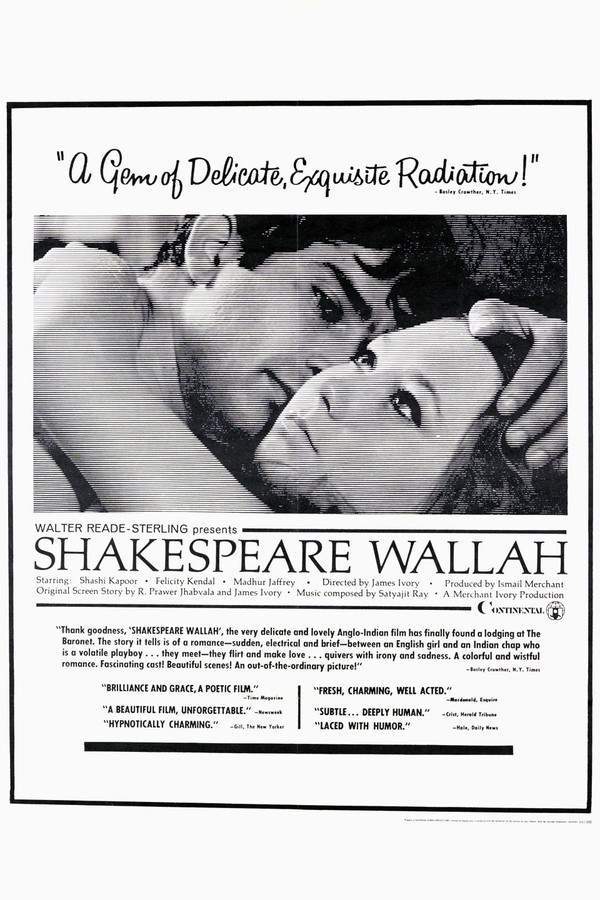
Shakespeare Wallah (1966) movie poster

Timeline

Shakespeare Wallah (1966) Timeline Explained – Every Event in Order

Release, runtime and language
1966 · 122 min · English
Loading streaming availability…
Directed by
James Ivory
Starring
Shashi Kapoor, Felicity Kendal, Geoffrey Kendal, Jim D. Tytler, Laura Liddell, Pinchoo Kapoor

As India's British colonial era comes to an end, a touring Shakespearean theatre company grapples with its relevance in the face of Bollywood's rising popularity. The story follows the actors as they navigate changing times and personal relationships. A romance blossoms between Lizzie and Sanju, but their connection is challenged by societal pressures and individual aspirations. Meanwhile, the passionate Manjula pursues her own path, adding complexity to the group’s dynamic.

On this page (6)
  1. 1 Where to watch
  2. 2 Events in order (14)
  3. 3 Timeline questions answered
  4. 4 Movie threads
  5. 5 Movies like Shakespeare Wallah
  6. 6 Every angle
Loading streaming availability…

14 events in order · contains spoilers

Shakespeare Wallah Timeline: Events in Chronological Order

Every key event of Shakespeare Wallah (1966) in order, scene by scene, with when and where it takes place. Use it to untangle flashbacks, time jumps and parallel storylines, to refresh your memory before the sequel or to find the exact scene you are thinking of.

  1. Introduction to the Performers

    The film opens with a vibrant introduction to a group of British performers who are passionate about bringing Shakespeare to life. Their enthusiasm sets the tone for the colorful narrative that follows, showcasing their commitment to theatrical art in a new cultural environment.

  2. Setting in Post-Colonial India

    As the performers take center stage, we are immersed in the vibrant landscape of post-colonial India. This setting is significant as it highlights the amalgamation of Eastern and Western influences in arts and culture, creating a rich backdrop for the unfolding drama.

    Where
    Post-Colonial India
  3. Tony and Carla's Leadership

    Tony Buckingham and his wife Carla navigate the challenges of leading their diverse troupe through various rural towns. Their leadership is pivotal in maintaining harmony within the group while ensuring that the essence of Shakespearean performances captivates the local audiences.

  4. Lizzie's Romantic Struggle

    The film intricately weaves a romantic subplot featuring Lizzie Buckingham, Tony's daughter. She faces an emotional dilemma as she navigates her feelings for both Sanju and the Bollywood star Manjula, reflecting the complexities of love in a multicultural context.

  5. The Art of Performance

    The troupe performs a variety of Shakespearean plays, captivating audiences with their interpretations. Each performance not only entertains but also serves as a bridge for cultural exchange, showcasing the richness of both British and Indian theatrical traditions.

  6. Lizzie and Sanju's Connection

    As Lizzie develops a bond with Sanju, their relationship begins to flourish amidst the backdrop of the theatrical performances. Their interactions reveal the cultural blending and emotional conflicts stemming from their distinct backgrounds and aspirations.

  7. Bollywood Influences

    The enchanting presence of Manjula introduces elements of Bollywood, adding another layer to the cultural tapestry. Her influence on both Lizzie and Sanju showcases how the film intertwines different artistic expressions from varied traditions.

  8. Homage to Real-Life Connections

    The storyline pays a heartfelt homage to the real-life romance between actors Shashi Kapoor and Jennifer Kendal. This intertextual layer enriches the narrative, intertwining the historical with the fictional in a deeply resonant manner.

  9. Geoffrey Kendal's Legacy

    The film takes inspiration from Geoffrey Kendal's contributions as an actor-manager, emphasizing his role in establishing Shakespearean theater in India. His efforts during the 1940s and 1950s laid the groundwork for future theatrical endeavors.

    When
    1940s-1950s
    Where
    India
  10. Cultural Blending

    The narrative examines the blending of Eastern and Western influences through the lens of art and love. This cultural fusion is depicted as both beautiful and complex, reflecting the characters' struggles and triumphs in their personal and artistic lives.

  11. The Impact of Marriage

    Jennifer Kendal's marriage to Shashi Kapoor exemplifies the lasting impact of cross-cultural relationships on the film industry. Their partnership symbolizes the interconnectedness of different artistic heritages, enriching the cinematic landscape.

  12. Lizzie's Journey

    Throughout the story, Lizzie embarks on a personal journey of self-discovery, wrestling with her affections and identity. Her experiences reveal the broader themes of love, choice, and the search for belonging within a rapidly changing cultural environment.

  13. The Final Performance

    As the film reaches its climax, the troupe prepares for a pivotal performance that symbolizes their collective efforts. This event not only highlights their artistic dedication but also serves as a culmination of Lizzie's emotional journey.

  14. Legacy and Reflection

    The film concludes with reflections on the legacies left by the Kendal family in the theater and film industries. It honors their contributions while encouraging a deeper understanding of the cultural dialogues that have shaped the arts in India.

Last updated: November 17, 2024 at 22:36

Was this helpful?

Timeline questions answered

Shakespeare Wallah Timeline Explained: Your Questions Answered

When does it happen, and why in that order? The questions people ask about the chronology of Shakespeare Wallah (1966): time jumps, flashbacks, cause and effect between scenes and the correct order of events, each answered with spoilers.

Q1

Why does Lizzie Buckingham struggle with her feelings for both Sanju and Manjula?

Lizzie's dilemma stems from the cultural complexity of her situation. She develops a genuine connection with Sanju, an Indian man, but Manjula's magnetic presence as a Bollywood star creates additional emotional confusion. Manjula represents both the allure of Indian cinema and a rival for attention, making Lizzie's feelings tangled between romantic interest in Sanju and admiration/envy of Manjula's charisma.

Foreshadowing: Earlier scenes show Lizzie watching Manjula's performances with fascination before her bond with Sanju deepens.

  • lizzie buckingham
  • sanju
  • manjula
  • love triangle
  • romantic confusion
Q2

Why is the Shakespearean theatre company struggling in post-colonial India?

The company's decline reflects the broader cultural shift as India gains independence. British artistic traditions lose their privileged status, while Bollywood and local entertainment rise in popularity. The troupe's commitment to Elizabethan English theatre feels increasingly out of step with a nation reclaiming its own cultural identity.

Foreshadowing: The opening scenes already show smaller audiences in rural towns compared to the vibrant Bollywood performances.

  • shakespeare
  • post-colonial india
  • theatre company
  • bollywood
  • declining relevance
Q3

Why can't Lizzie and Sanju be together despite their connection?

Their relationship faces barriers from differing cultural backgrounds and societal expectations. Lizzie is British, raised in a colonial context, while Sanju represents a new India asserting its identity. The film suggests that while genuine affection exists between them, the social and cultural divide creates complications that are not easily overcome.

Foreshadowing: The troupe's performances highlight the cultural distance between the British actors and their Indian audiences.

  • lizzie
  • sanju
  • cross-cultural relationship
  • barriers
  • society
Q4

How does Manjula affect the relationship between Lizzie and Sanju?

Manjula's presence introduces a third element to the romantic dynamic. As a celebrated Bollywood star, she commands attention from both Lizzie and Sanju. For Lizzie, Manjula represents both an object of admiration and a rival. For Sanju, she represents the glamorous new Indian cinema that contrasts with the fading British theatre. This creates tension and jealousy that complicates the developing bond between Lizzie and Sanju.

Foreshadowing: The timeline notes Manjula's influence on both Lizzie and Sanju separately.

  • manjula
  • lizzie
  • sanju
  • love triangle
  • bollywood star
Q5

What happens to the theatre company at the end of the movie?

The film concludes with the troupe performing one final time, symbolizing both their dedication to art and the passing of an era. While the exact fate is not detailed in the summary, the bittersweet tone suggests the company faces an uncertain future as their relevance in changing India diminishes, though their artistic legacy remains significant.

Foreshadowing: The final performance serves as the climax, representing culmination of the troupe's journey.

  • theatre company
  • ending
  • final performance
  • legacy
  • fate
Q6

What is the relationship between the film and the real Kendal family?

The film is directly inspired by Geoffrey Kendal, who led an actual travelling Shakespearean theatre company called "Shakespeareana" in India during the 1940s and 1950s. The love story between Sanju and Lizzie mirrors the real-life romance between Shashi Kapoor and Jennifer Kendal, who later married. The film pays tribute to the Kendal family's significant contributions to Indian theatre and film.

Foreshadowing: The meta notes explicitly mention this is based on real events and the homage to real-life connections.

  • geoffrey kendal
  • shashi kapoor
  • jennifer kendal
  • real life story
  • inspiration
Q7

Why is the setting of post-colonial India important to the story?

The post-colonial setting is central because it explains the theatre company's existential crisis. As India establishes its independence, British cultural institutions lose their automatic authority. The film uses this backdrop to explore themes of displacement, cultural transition, and the tension between preserving tradition and embracing new identities.

Foreshadowing: The timeline explicitly identifies the setting as a key element that highlights cultural amalgamation.

  • post-colonial india
  • cultural change
  • setting
  • historical context
  • transition
Q8

What makes the ending of Shakespeare Wallah bittersweet?

The bittersweet conclusion reflects both loss and growth. The theatre company faces obsolescence as their traditional art form loses relevance, representing an ending of an era. However, characters also find personal growth through their experiences, the romantic connections, cultural understanding, and artistic dedication leave lasting impacts even as the specific chapter closes.

Foreshadowing: The meta notes establish the bittersweet tone as a key characteristic from the beginning.

  • ending
  • bittersweet
  • conclusion
  • loss
  • growth
  • resolution
Q9

What does Lizzie's personal journey reveal about her character development?

Lizzie's journey represents her search for identity across cultural boundaries. She grapples with romantic feelings while questioning where she belongs, in the fading world of British theatre or in the emerging new India around her. Her emotional struggles reflect the broader theme of finding one's place during times of cultural transition.

Foreshadowing: The timeline describes her journey as one of self-discovery throughout the narrative.

  • lizzie buckingham
  • character development
  • self discovery
  • identity
  • cultural identity
Q10

How does the film depict the blending of Eastern and Western influences?

The film portrays cultural blending through the juxtaposition of Shakespearean theatre and Bollywood, the interactions between British performers and Indian audiences, and the cross-cultural romantic relationships. This fusion is shown as both beautiful and complex, creating new forms of artistic expression while also generating confusion and conflict for characters navigating different worlds.

Foreshadowing: The timeline identifies cultural blending as a central theme running throughout the narrative.

  • cultural blending
  • eastern western
  • artistic exchange
  • tradition
  • modernity

Movie threads

More Movies Like Shakespeare Wallah, by Mood & Story

Curated lists built around what makes Shakespeare Wallah tick: the same mood, the same kind of story or the same emotional payoff. Each list explains why these movies belong together.

Movies about fading eras like Shakespeare Wallah

Stories that wistfully observe the end of an era with grace and melancholy. This section features movies like Shakespeare Wallah that explore the end of an era with a wistful and melancholic tone. If you appreciated the story of a Shakespearean troupe navigating a changing India, you'll find similar bittersweet dramas about cultural shifts, artistic decline, and personal adaptation to a new world.

  • nostalgic
  • melancholic
  • thoughtful
  • wistful
  • genteel
  • elegiac
  • Tone: melancholic, bittersweet, wistful
  • Pacing: slow, contemplative
Why these movies?

The story pattern: Narratives in this thread typically follow individuals or groups whose identities are tied to a world that is becoming obsolete. The central conflict is not against a villain, but against the tide of time and change. The journey involves grappling with irrelevance, preserving dignity, and finding a place in a new order, often culminating in a bittersweet resolution that acknowledges both loss and the possibility of new beginnings.

Why they belong together: These movies are grouped together because they share a specific mood of gentle melancholy and a thematic focus on cultural or artistic transition. They are characterized by a slow, contemplative pace, medium emotional weight, and a tone that balances the sadness of endings with the elegance of a dignified farewell.
Bittersweet romance movies like Shakespeare Wallah

Romantic relationships challenged by societal divides and personal aspirations. Discover movies with romantic stories similar to the Lizzie and Sanju relationship in Shakespeare Wallah. If you liked the complex, cross-cultural romance challenged by societal expectations, you'll find other films exploring passionate but troubled love affairs with a thoughtful, bittersweet feel and medium emotional weight.

  • romantic
  • bittersweet
  • thoughtful
  • wistful
  • complex
  • yearning
  • Tone: romantic, bittersweet, complex
  • Pacing: steady, character-driven
Why these movies?

The story pattern: The narrative pattern involves two characters from different worlds drawn together by a genuine connection. Their love is tested not just by internal doubts, but by the weight of external expectations, tradition, and the practicalities of their separate lives. The story explores the sacrifices and compromises required, often leading to an ending that is emotionally resonant but not necessarily conventionally happy, reflecting the real-world complexities of such relationships.

Why they belong together: These films are united by their focus on romance as a source of both profound connection and deep conflict. They share a bittersweet tone, medium intensity, and a pace that allows for the nuanced development of the relationship and the social forces acting upon it. The emotional journey is characterized by yearning, difficult choices, and a mature perspective on love.

If you liked this

Movies Like Shakespeare Wallah

Similar movies to Shakespeare Wallah: the same genre, themes or kind of story. Each one comes with its own plot summary, timeline and ending explained.

Browse all movie summaries

Every angle

Shakespeare Wallah (1966) Explained: Plot, Timeline & Characters

Everything about Shakespeare Wallah in one place: what happens in the plot summary, the timeline in chronological order, the characters and meaning and a spoiler-free summary. What's After the Movie adds the cast, box office and post-credit scenes.

Coming soon on iOS and Android

The Plot Explained Movie Summary App

Plot summaries, endings explained and timelines on your phone. Catch up on any movie in minutes, save your favorites and never miss a twist again.

Be the first to know when we launch. Your email stays private, always.

Learn more about the app