Plot Explained Spoilers guaranteed!
Plot Explained

Browse by genre

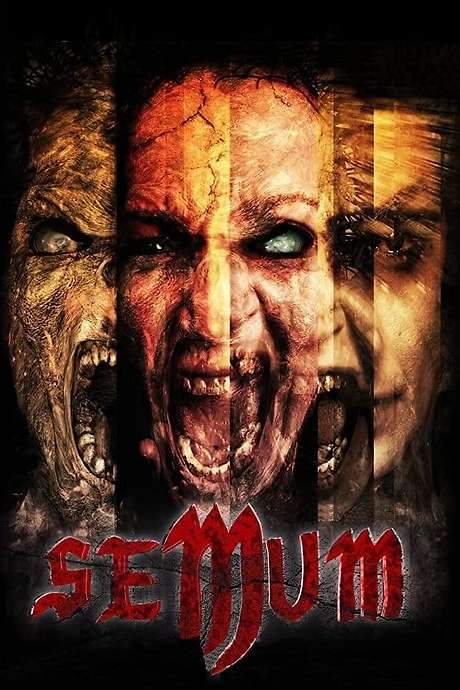
Semum (2008) movie poster

Timeline

Semum (2008) Timeline Explained – Every Event in Order

Release, runtime and language
2008 · 117 mins · Turkish
Loading streaming availability…
Directed by
Hasan Karacadağ
Starring
Bahtiyar Engin, Sefa Zengin, Hakan Meriçliler, Cem Kurtoğlu, Levent Sülün, Yıldırım Öcek

Director Hasan Karadağ set out to establish a Turkish‑Islamic horror template, presenting “Semum” as its inaugural example. The film follows a woman in İzmir who becomes the focus of a demonic possession, starring Ayça İnci, Burak Hakki and Cem Kurtoglu. Karadağ likens the work to “The Exorcist” and compares İnci’s performance to Linda Blair’s, aiming to elevate Turkish horror beyond previous, unsatisfactory efforts.

On this page (6)
  1. 1 Where to watch
  2. 2 Events in order (12)
  3. 3 Timeline questions answered
  4. 4 Movie threads
  5. 5 Movies like Semum
  6. 6 Every angle
Loading streaming availability…

12 events in order · contains spoilers

Semum Timeline: Events in Chronological Order

Every key event of Semum (2008) in order, scene by scene, with when and where it takes place. Use it to untangle flashbacks, time jumps and parallel storylines, to refresh your memory before the sequel or to find the exact scene you are thinking of.

  1. Move into the new house

    Twenty-seven-year-old Canan and her husband Volkan have just moved into a large, new house. At first their life seems to settle into a quiet routine, but Canan starts noticing strange, unexplained occurrences around the home. The new house becomes the uneasy cradle of the film's creeping sense of danger.

    When
    early
    Where
    Canan's house
  2. Strange phenomena begin

    Canan begins to experience unusual phenomena that she cannot explain—a sense of presence, odd noises, and small disturbances she cannot account for. The events feel increasingly personal, targeting her daily life and sense of safety. The house becomes a space of growing dread as these experiences intensify.

    When
    early
    Where
    Canan's house
  3. Possession begins

    Gradually, Canan's behavior shifts as a mysterious force takes control of her body. The changes are alarming and visible, with Semum becoming the driving presence behind her actions. Volkan watches helplessly as his wife is pulled further into this unseen influence.

    When
    early-mid
    Where
    Canan's house
  4. Life and marriage unravel

    Canan's life and their marriage begin to deteriorate under the demon's grip. Normal routines unravel as her personality darkens and trust between the couple erodes. The home that once held their future now feels like a battleground against an unseen foe.

    When
    mid
    Where
    Canan's house
  5. Demon’s oppression centers the first part

    The first part of the film centers on Canan's life being ruined by the mysterious demon. Her dawning fear becomes a public nightmare, affecting her work, social life, and sense of self. The narrative uses her escalating misery to frame the demon as the antagonist of Part I.

    When
    mid
    Where
    Canan's house
  6. Transition to metaphysical questions

    The film begins transitioning into metaphysical questions as it moves beyond ordinary haunting. Conversations hint at religious and existential frameworks for understanding evil. The shift prepares the audience for deeper debates rather than simple exorcism.

    When
    late
  7. Hoca appears and frames the struggle spiritually

    A Hoca appears and frames the struggle in spiritual terms, presenting God as a source of guidance. He introduces faith, prayer, and moral order as possible responses to the demon's possession. This scene marks a turning point toward theological consideration rather than purely supernatural events.

    When
    late
    Where
    Hoca's setting
  8. Demon identified with Islamic tradition

    The demon is connected to Islamic tradition, identified as ʿAzāzīl, an alternate name for Satan (Iblīs). The Hoca explains this lineage to frame Semum within a cosmology of good and evil. The audience is invited to view the haunting through a religious lens rather than only fear.

    When
    late
    Where
    Hoca's setting
  9. Discussions on faith, evil, God, and Devil

    Discussions explore how faith, free will, and divine justice intersect with Canan's affliction. The dialogue delves into whether suffering is a test, a warning, or a struggle against an internal nemesis. The metaphysical questions challenge the characters to redefine what is truly happening to Canan.

    When
    late
    Where
    Hoca's setting
  10. Religious interventions and hope

    Religious interventions appear as characters seek relief through prayer, study, and guidance from the Hoca. The attempts mix ritual with personal fear as the family grapples with the demon's grip. The scenes emphasize faith as a potential counterforce against evil.

    When
    late
    Where
    Canan's house and Hoca's setting
  11. Intensified struggle and transformation

    The struggle intensifies as Semum tightens its control over Canan's body. The transformation becomes more pronounced, blurring the line between illness and possession. Volkan and the Hoca confront the demon in hopes of freeing her, though the outcome remains uncertain.

    When
    late
    Where
    Canan's house and Hoca's setting
  12. Ending with philosophical reflections

    The film closes with philosophical reflections rather than a definitive exorcism. It leaves viewers considering the nature of evil, God, and human agency within an Islamic framework. The ending ties the personal horror to broader metaphysical questions raised throughout the narrative.

    When
    end
    Where
    Canan's house and Hoca's setting

Last updated: February 17, 2026 at 19:57

Was this helpful?

Timeline questions answered

Semum Timeline Explained: Your Questions Answered

When does it happen, and why in that order? The questions people ask about the chronology of Semum (2008): time jumps, flashbacks, cause and effect between scenes and the correct order of events, each answered with spoilers.

Q1

Why does the demon target Canan in Semum?

The demon Semum targets Canan seemingly without an explicit explanation in the film. The possession begins shortly after she and her husband Volkan move into their new house, suggesting the location may have attracted the entity. The film does not provide a clear reason for why Canan specifically is chosen, leaving this aspect ambiguous and focusing more on the consequences of the possession rather than its cause.

Foreshadowing: The strange phenomena begin immediately after they move into the new house, hinting that the location itself may be significant.

  • canan possession
  • demon target
  • why canan
Q2

How does Semum take control of Canan's body?

Semum gradually takes control of Canan's body through a progressive possession that starts with subtle signs, strange sounds, shadows, and an unexplained chill, before escalating to full control of her actions and speech. The demon's influence manifests as visible behavioral changes that her husband Volkan notices, eventually replacing Canan's personality with Semum's presence. The transformation becomes more pronounced over time, blurring the line between illness and supernatural possession.

Foreshadowing: Early strange phenomena gradually become more intense, showing the demon's increasing hold on Canan.

  • possession process
  • how demon controls
  • semum takes over
Q3

Who is Mikail Hoca and what role does he play?

Mikail Hoca is a religious teacher who enters the narrative in the second half of the film to address Canan's possession through spiritual rather than medical means. He frames the struggle in Islamic theological terms, discussing the nature of God, good and evil, and connecting the demon to Islamic tradition. His role is to offer faith, prayer, and moral guidance as possible responses to the possession, shifting the film from supernatural horror to metaphysical inquiry about faith and human agency.

Foreshadowing: The film transitions to metaphysical questions before Hoca appears, preparing viewers for religious content.

  • mikail hoca
  • religious teacher
  • islamic exorcism
Q4

What is ʿAzāzīl's connection to Semum?

The film connects Semum to ʿAzāzīl, a name from Islamic tradition associated with Satan (Iblīs). The Hoca explains this lineage to frame the possession not merely as a personal affliction but as part of a larger spiritual contest between divine power and malevolent forces. This connection situates the horror within Islamic cosmology, presenting Canan's ordeal as a manifestation of the eternal struggle between good and evil.

Foreshadowing: The demon's identity is established early as a malicious spiritual entity operating beyond human understanding.

  • azazil
  • islamic satan
  • iblis
  • demon identity
Q5

Does Volkan help Canan or abandon her during possession?

Volkan remains present throughout Canan's possession, watching helplessly as the demon increasingly takes control of his wife. The summary indicates he and the Hoca confront the demon in hopes of freeing her, suggesting he attempts to help rather than abandon her. However, the marriage is described as deteriorating under the demon's grip, with trust between the couple eroding as Canan's behavior changes dramatically.

Foreshadowing: The marriage unraveling is established early as the demon's influence spreads.

  • volkan husband
  • canan husband
  • marriage under attack
Q6

What happens to Canan at the end of Semum?

The film ends with philosophical reflections rather than showing a definitive exorcism or cure. Canan's fate remains ambiguous, she is still under the demon's control when the film closes. The ending leaves viewers considering the nature of evil, God, and human agency within an Islamic framework, rather than providing closure through successful religious intervention.

Foreshadowing: The intensifying struggle in the late timeline suggests the demon's hold only strengthens.

  • canan ending
  • does she survive
  • exorcism outcome
Q7

How does the movie portray Islamic exorcism practices?

Semum portrays Islamic religious intervention through prayer, study, and guidance from Mikail Hoca as potential counterforces against the demon. The film emphasizes faith as a response to possession rather than depicting dramatic exorcism rituals commonly seen in Western horror. The approach is more theological, focusing on discussions about God, free will, and divine justice rather than physical confrontation with the demon.

Foreshadowing: Religious interventions appear as characters seek relief through prayer and guidance from the Hoca.

  • islamic exorcism
  • religious ritual
  • prayer against demon
Q8

Is Semum based on a true story or real Islamic folklore?

Director Hasan Karadağ stated that Semum is an independent work, though it draws from Islamic folklore about demons and possession. The film specifically references ʿAzāzīl, a name appearing in Islamic tradition associated with Satan. While the director compared the film to The Exorcist, he emphasized creating a Turkish-Islamic horror template rather than adapting a specific true story.

Foreshadowing: The demon's connection to Islamic tradition suggests cultural and religious sources influenced the narrative.

  • true story
  • islamic folklore
  • based on real events
Q9

What does the ending of Semum mean thematically?

The ending presents a balance between atmosphere and idea, leaving viewers with philosophical reflections rather than resolution. It ties the personal horror of Canan's possession to broader metaphysical questions about faith, morality, and the nature of evil. The film invites viewers to consider what it means to hold onto humanity when faced with forces beyond one's control, emphasizing the interplay between belief systems and confronting the unknown.

Foreshadowing: The film's shift toward metaphysical questions early signals the ending's reflective nature.

  • ending meaning
  • thematic conclusion
  • philosophy
Q10

Why does Semum focus so much on religious discussions instead of horror?

The film deliberately shifts from domestic horror to theological discourse in its second half, using Canan's personal ordeal to explore larger questions about faith, goodness, and the nature of evil through an Islamic lens. Director Hasan Karadağ intended to establish a Turkish-Islamic horror template that goes beyond simple scares. The religious discussions serve to contextualize the possession within a spiritual framework, inviting viewers to understand fear through belief rather than just experiencing supernatural terror.

Foreshadowing: The transition to metaphysical questions occurs mid-film, setting up the theological focus.

  • religious themes
  • islamic horror
  • faith vs evil

Movie threads

More Movies Like Semum, by Mood & Story

Curated lists built around what makes Semum tick: the same mood, the same kind of story or the same emotional payoff. Each list explains why these movies belong together.

Relentless supernatural possession horror movies like Semum

Stories where an evil entity systematically takes control of a person's life. If you liked Semum, explore more movies about demonic possession where evil slowly overwhelms its victim. These films feature intense religious battles, psychological disintegration, and escalating supernatural horror.

  • terrifying
  • oppressive
  • malevolent
  • religious horror
  • psychological torment
  • body horror
  • Tone: dark, terrifying, oppressive
  • Pacing: steady escalation
Why these movies?

The story pattern: These stories typically follow a linear progression where a seemingly normal person becomes targeted by a supernatural entity, leading to increasingly severe symptoms of possession that strain relationships and require extreme spiritual intervention.

Why they belong together: Movies in this thread share a focus on the methodical destruction of a person through possession, creating a deep sense of dread and emphasizing the battle between ancient evil and fragile faith.

Claustrophobic psychological horror films similar to Semum

Films that trap characters in confined spaces of escalating psychological terror. Explore movies like Semum that feature intense psychological horror and claustrophobic atmospheres. These films focus on mental breakdown, supernatural threats, and strained relationships under pressure.

  • claustrophobic
  • unsettling
  • anxious
  • psychological horror
  • mental breakdown
  • supernatural threat
  • Tone: unsettling, anxious, dark
  • Pacing: steady, deliberate
Why these movies?

The story pattern: These stories typically unfold in limited settings where characters face internal and external terror, blending psychological disintegration with supernatural elements to create overwhelming tension.

Why they belong together: These films share a focus on creating oppressive, confined atmospheres where psychological terror blends with supernatural threats, maintaining high tension throughout.

If you liked this

Movies Like Semum

Similar movies to Semum: the same genre, themes or kind of story. Each one comes with its own plot summary, timeline and ending explained.

Browse all movie summaries

Every angle

Semum (2008) Explained: Plot, Timeline & Characters

Everything about Semum in one place: what happens in the plot summary, the timeline in chronological order, the characters and meaning and a spoiler-free summary. What's After the Movie adds the cast, box office and post-credit scenes.

Coming soon on iOS and Android

The Plot Explained Movie Summary App

Plot summaries, endings explained and timelines on your phone. Catch up on any movie in minutes, save your favorites and never miss a twist again.

Be the first to know when we launch. Your email stays private, always.

Learn more about the app