Plot Explained Spoilers guaranteed!
Plot Explained

Browse by genre

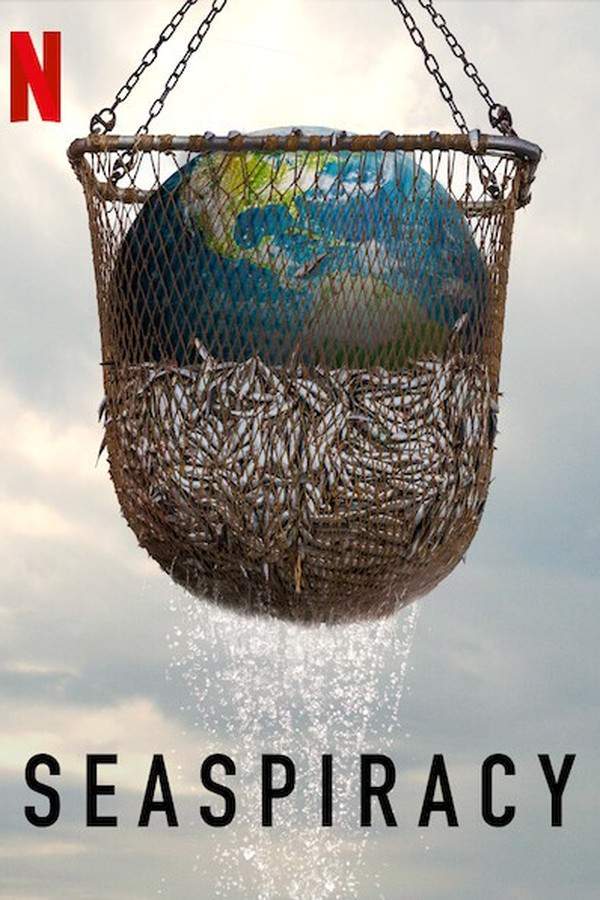
Seaspiracy (2021) movie poster

Timeline

Seaspiracy (2021) Timeline Explained – Every Event in Order

Release, runtime and language
2021 · 89 min · English
Echo score 70
Loading streaming availability…
Directed by
Ali Tabrizi
Starring
Alistair Allan, Dianna Cohen, Dominique Barnes, Jonathan Balcombe, Lamya Essemlali, Maria-Jose Cornax

Filmmaker Ali Tabrizi investigates the environmental impact of commercial fishing in this documentary. Initially intending to explore the beauty of the ocean, he instead uncovers disturbing truths about overfishing, plastic pollution, and the damage inflicted upon marine ecosystems. The film examines the fishing industry’s practices and their consequences for vulnerable sea life, questioning commonly held beliefs about sustainability and conservation efforts.

On this page (5)
  1. 1 Where to watch
  2. 2 Events in order (16)
  3. 3 Movie threads
  4. 4 Movies like Seaspiracy
  5. 5 Every angle
Loading streaming availability…

16 events in order · contains spoilers

Seaspiracy Timeline: Events in Chronological Order

Every key event of Seaspiracy (2021) in order, scene by scene, with when and where it takes place. Use it to untangle flashbacks, time jumps and parallel storylines, to refresh your memory before the sequel or to find the exact scene you are thinking of.

  1. The journey begins

    Filmmaker Ali Tabrizi sets out as both narrator and protagonist, embarking on an investigation into the true state of the world's oceans. As an ocean advocate, he begins documenting his discoveries, sharing key pieces of information at the same moment the viewer learns them. This framing device builds narrative momentum and suspense throughout the film.

  2. Learning of collapsing ocean populations

    Early in the film, Tabrizi confronts the devastating collapse of whale, shark, dolphin, and sea turtle populations. The scale of the destruction becomes a central motivator for his deepening investigation. Statistics reveal that various fish species have suffered more than 90% wild population loss.

  3. Following the plastics narrative

    Tabrizi initially explores the environmental movement's focus on small consumer plastics, such as straws. He finds that campaign groups like the Plastic Pollution Coalition have heavily promoted this consumer-facing message. This focus, he discovers, has obscured far larger problems in the ocean.

  4. Uncovering the ghost nets crisis

    The film reveals that plastic waste from fishing gear, known as ghost nets, is a far greater source of ocean plastic than consumer items like straws. Alongside this, the devastation of bycatch comes into focus as a massive, underreported killer of marine life. The environmental groups' emphasis on straws is exposed as having obfuscated the true scale of the problem.

  5. Questioning 'dolphin-safe' labels

    Tabrizi investigates whether so-called dolphin-safe products can actually be trusted. His scrutiny centers on the Earth Island Institute, the organization responsible for certifying dolphin-safe tuna. The film suggests that environmental organizations have been unable to define or effectively implement dolphin-safe standards.

  6. Witnessing the Taiji dolphin drive hunt

    Tabrizi travels to southern Japan to document the infamous Taiji dolphin drive hunt. The film captures the brutal reality of the hunt, with animation used to depict scenes of violence. The sequence reveals how dolphins are driven into coves and slaughtered.

    Where
    Taiji, Japan
  7. Documenting whaling in the Faroe Islands

    The investigation continues north to the Faroe Islands, where traditional whaling hunts take place. Tabrizi and his crew film the practice despite the danger of confronting local participants. The sequence adds to the film's global portrait of large-scale marine mammal killing.

    Where
    Faroe Islands
  8. Scrutinizing sustainability certifications

    The film examines whether 'sustainable seafood' labels can be effective or even meaningfully defined. The Marine Stewardship Council comes under particular criticism for certifying fisheries as sustainable. Tabrizi argues that these organizations have failed to implement genuine sustainability standards.

  9. Facing danger from the industry

    At various moments, Tabrizi and his crew appear to face imminent peril from local authorities and corrupt fishing industry players. Some of this action is captured through hidden camera techniques, revealing confrontations that could not be filmed openly. The escalating tension underscores how much is at stake in exposing the industry's practices.

  10. Sailing with Sea Shepherd in West Africa

    The film features an extended section documenting the work of the Sea Shepherd Conservation Society, an American group focused on direct action at sea. Along the coast of West Africa, Tabrizi joins efforts to expose illegal fishing practices in Liberian waters. The investigation also documents the exploitation of workers in the region's fishing industry.

    Where
    Liberia, West Africa
  11. Exposing modern slavery at sea

    The investigation turns to Thailand, where modern slavery conditions on fishing vessels are examined in depth. Tabrizi interviews several survivors of forced labor at sea, sharing their harrowing firsthand accounts. The segment connects seafood supply chains directly to severe human rights abuses.

    Where
    Thailand
  12. Touring Asian fish markets

    Tabrizi visits fish markets in Thailand and China to trace the scale of global seafood commerce. The markets serve as a window into the vast demand driving both overfishing and labor exploitation. The footage reinforces the links between consumer demand and the abuses documented throughout the film.

    Where
    Thailand and China
  13. Exploring fish farming in Scotland

    The possibility of aquaculture as a solution to collapsing wild fish stocks is introduced, prompting a trip to Scotland. Tabrizi tours salmon aquaculture farms to evaluate whether farmed fish could relieve pressure on wild populations. The visit, however, raises serious concerns rather than offering reassurance.

    Where
    Scotland
  14. Rejecting aquaculture as the answer

    Following the Scotland trip, the film dismisses fish farming as an untenable solution. Problems with sourcing feed for farmed fish, along with the prevalence of disease and coastal degradation, undermine the industry's promises. Aquaculture, the film concludes, merely creates new problems instead of solving old ones.

    Where
    Scotland
  15. Confronting the 2048 prediction

    The film delivers one of its most sobering claims: global oceans could be essentially devoid of fish by 2048. Combined with statistics showing over 90% wild population loss in various fish species, the projection drives home the urgency of the crisis. The message that stopping fish consumption is the solution remains consistent throughout the film.

  16. Reaching the conclusion

    Tabrizi closes the film with the central argument that has been built throughout the investigation: the cessation of fish consumption is the solution to collapsing fish stocks and human exploitation. Every strand of evidence, from ghost nets to slavery at sea, points toward the same conclusion. The film ends by urging viewers to see their seafood choices as the most direct lever for change.

Last updated: November 21, 2026 at 03:12

Was this helpful?

Movie threads

More Movies Like Seaspiracy, by Mood & Story

Curated lists built around what makes Seaspiracy tick: the same mood, the same kind of story or the same emotional payoff. Each list explains why these movies belong together.

From wonder to ecological dread like in Seaspiracy

Beautiful discoveries give way to disturbing evidence, urgent warnings, and a bleak reckoning. Explore movies like Seaspiracy that begin with natural beauty before exposing pollution, ecological collapse, and cruelty. If you liked Seaspiracy, these similarly dark, high-intensity stories use investigation and vivid imagery to turn wonder into an urgent, emotionally heavy warning for audiences confronting humanity's damage.

  • ecological dread
  • ominous
  • somber
  • urgent
  • bleak
  • disturbing
  • Tone: dark, somber, ominous
  • Pacing: variable, alternating reflective and urgent
Why these movies?

The story pattern: The journey typically opens with curiosity and visual wonder. Evidence then accumulates, transforming the subject into a source of dread; investigative detours and confrontations sharpen the danger. By the end, personal discovery has expanded into a systemic warning, with limited hope and a bleak sense of urgency.

Why they belong together: They share a dark, somber register, high intensity, and a variable rhythm that alternates reflective passages with urgent discoveries. Each uses disturbing evidence to collapse an initial sense of beauty or normalcy, while the bleak ending leaves the ecological stakes unresolved.


Investigations exposing hidden exploitation like in Seaspiracy

Investigative cameras and human testimony expose coercion, cruelty, and corruption behind trusted industries. Find movies like Seaspiracy that expose the human and animal costs hidden inside powerful industries. If you enjoyed Seaspiracy's disturbing investigative footage and modern-slavery material, these similarly dark films combine corporate scrutiny, worker exploitation, and bleak calls for action against unchecked systems.

  • investigative
  • exploitative systems
  • corporate corruption
  • human cost
  • disturbing
  • urgent
  • Tone: dark, grim, urgent
  • Pacing: variable, investigative and escalating
Why these movies?

The story pattern: An investigator or dissenting insider begins with a narrow question, gathers visual and testimonial evidence, and encounters obstruction or threats. Each revelation widens the focus from individual wrongdoing to an entire exploitative system, culminating in advocacy, warning, or a bleak call to change.

Why they belong together: These films share grim suspense, disturbing subject matter, and a confrontational progression from evidence to exposure. Hidden-camera sequences, human suffering, and institutional obstruction create moral urgency, while high intensity and bleak resolutions make the critique feel immediate rather than abstract.

If you liked this

Movies Like Seaspiracy

Similar movies to Seaspiracy: the same genre, themes or kind of story. Each one comes with its own plot summary, timeline and ending explained.

Browse all movie summaries

Every angle

Seaspiracy (2021) Explained: Plot, Ending, Timeline & Characters

Everything about Seaspiracy in one place: what happens in the plot summary, the timeline in chronological order, the characters and meaning, the ending explained and a spoiler-free summary. What's After the Movie adds the cast, box office and post-credit scenes.

Coming soon on iOS and Android

The Plot Explained Movie Summary App

Plot summaries, endings explained and timelines on your phone. Catch up on any movie in minutes, save your favorites and never miss a twist again.

Be the first to know when we launch. Your email stays private, always.

Learn more about the app