Plot Explained Spoilers guaranteed!
Plot Explained

Browse by genre

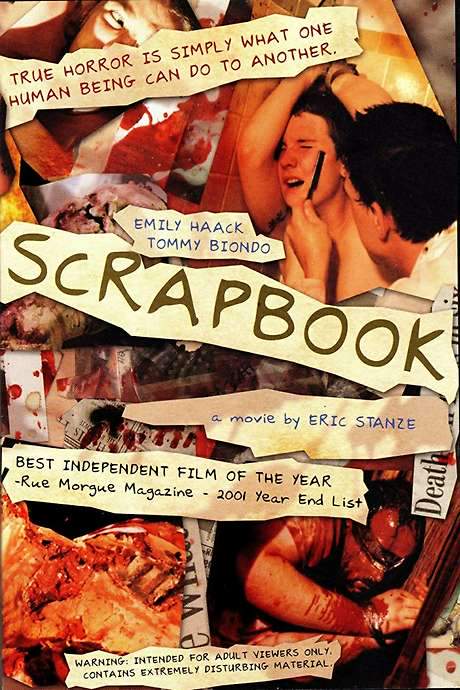
Scrapbook (2000) movie poster

Plot Summary

Scrapbook (2000) Plot Summary Explained

Release, runtime and language
2000 · 95 mins · English
Directed by
Eric Stanze
Starring
Emily Haack, Tommy Biondo

Clara is kidnapped by killer Leonard, who documents his crimes in a scrapbook of Polaroids, clothing fragments and the victims’ own written accounts. Subjected to brutal abuse, she must write her testimony. Realizing Leonard’s obsession with the scrapbook, she tries to outwit him by manipulating entries, hoping the pages become her chance to survive.

On this page (5)
  1. 1 What happens: full plot
  2. 2 Plot questions answered
  3. 3 Movie threads
  4. 4 Movies like Scrapbook
  5. 5 Every angle

Full plot summary · contains spoilers

What Happens in Scrapbook: Full Plot Summary

The whole story of Scrapbook (2000) explained, from the opening scene to the final frame: every key event, every twist and what it all adds up to. Read it as a quick recap before the sequel, to check a scene you missed, or to finally understand what really happened.

Clara is abducted by Leonard and kept in a large, run-down trailer in a remote stretch of nowhere. The space is cluttered with photos and body parts from his past victims, and at the heart of it all sits a scrapbook—a chilling collection where he forces each captive to record the horrors he inflicts. He makes clear that her session will be her “last chapter” and openly dreams of turning the book into a source of fame and fortune.

A blunt flashback reveals the shadows of Leonard’s childhood. A sister appears in a troubling, half-naked scene, and when she notices him, she pulls him into her room where she oversteps boundaries. The moment is broken by the entrance of a young man who reacts with disgust and violence, dragging Leonard downstairs to face a brutal assault that marks him deeply. That early history foreshadows the cruelty he later administers as an adult.

Back in the present, Clara endures a brutal cycle of beatings, rape, and various abuses as she searches for a way to survive. Leonard keeps her close inside the trailer, and the walls—adorned with past victims’ relics—become a gallery of his crimes. The scrapbook becomes her most dangerous tool, a map she must learn to read if she is to outmaneuver him. He grows fixated on finishing the book and the chance it might bring him money, power, and notoriety, a goal he clings to as tightly as his control over Clara.

Inside a dimly lit room, Leonard drags Clara to a space where the words “I’m winning” are scrawled across the wall, likely in blood, signaling his belief in his own victory. The assault intensifies as he assaults and degrades her, using every method he has at his disposal.

Clara slowly realizes that knowledge drawn from the scrapbook could pivot the balance of power. She begins to play along enough to gain small concessions—food, clothes, a sliver of security—while carefully plotting an escape. She pretends to capitulate to his desires and uses that moment to gain the upper hand, tying his arms and legs to the cot with duct tape after pretending to wish to become intimate. Then she turns the table, stabbing the soles of his feet with a knife and snapping photographs of his pain to add to the scrapbook—a personal record she intends to weaponize.

Throughout this grim confrontation, Clara’s resolve hardens as she documents the aftermath and uses it to unsettle Leonard’s confidence. The tension escalates as she edges closer to breaking free, all while the notebook serves as both a trophy and a tool. In the final moments, Clara gathers her courage, seizes the opportunity she has crafted, and walks away from the house, leaving the horrors behind. The film closes on her silhouette fading into the distance, a survivor who has transformed her captivity into a path toward freedom, with the scrapbook bearing the weight—and the truth—of what she endured.

Last updated: October 09, 2025 at 15:17

Was this helpful?

Plot questions answered

Scrapbook Plot Explained: Your Questions Answered

The questions people ask most about Scrapbook (2000): what happens in the confusing scenes, why the characters do what they do, the twists, hidden details and what the ending means. Each answer contains spoilers.

Q1

Why does Leonard force his victims to write in the scrapbook?

Leonard forces his victims to document their own abuse in the scrapbook because he believes it will make him famous and wealthy. He sees the book as his ticket to notoriety, envisioning it as a published work that would bring him money, power, and recognition. The scrapbook serves as both a trophy collection and his twisted vision of a legacy.

  • scrapbook
  • motivation
  • fame
  • legacy
  • documenting crimes
Q2

What is Leonard's childhood backstory in the film?

The film reveals Leonard was abused as a child by a sister figure who engaged in inappropriate behavior with him. When a young man discovered them, he brutally assaulted Leonard downstairs, leaving psychological scars that foreshadow his own violent behavior as an adult. This traumatic childhood establishes the cycle of abuse that shapes his actions as a kidnapper and torturer.

Foreshadowing: The opening flashback shows Leonard as a child experiencing abuse, which directly parallels the abuse he inflicts on Clara.

  • childhood
  • abuse
  • flashback
  • trauma
  • cycle of violence
Q3

How does Clara manipulate Leonard to survive?

Clara realizes that Leonard's obsession with the scrapbook is his weakness. She begins playing along with his demands, gaining small concessions like food and clothes while studying his patterns. She strategically seeds doubt and control through the scrapbook itself, using his fixation against him as a psychological tool to shift the power dynamic in her favor.

  • manipulation
  • survival
  • power dynamic
  • psychological warfare
  • scrapbook
Q4

What is the 'I'm winning' room that Leonard takes Clara to?

Leonard drags Clara into a room where the words "I'm winning" are scrawled on the wall, likely written in blood. This room represents his delusion of victory and control over his victims. It serves as the setting for some of his most brutal assaults, symbolizing his warped belief that he is conquering and defeating those he captures.

  • i'm winning room
  • blood
  • control
  • brutality
  • setting
Q5

How does Clara escape from Leonard?

Clara pretends she wants to become intimate with Leonard, then uses the ruse to tie his arms and legs to the cot with duct tape. Once immobilized, she stabs him in the feet with a knife and takes photographs of his pain, adding them to the scrapbook to weaponize it against him. With Leonard incapacitated, she gathers the evidence and walks away to freedom.

  • escape
  • duct tape
  • stabbing
  • revenge
  • freedom
Q6

Why does Leonard believe the scrapbook will make him famous?

Leonard is delusional about his own notoriety. He genuinely believes that publishing the victims' written accounts of their torture will attract attention and bring him wealth. He views the scrapbook not as evidence of his crimes but as a marketable product that will secure his place in the world, completely detached from the reality that it damns him.

  • delusion
  • fame
  • money
  • notoriety
  • publication
Q7

Why does Clara stab Leonard in the feet specifically?

Clara targets Leonard's feet with the knife as a deliberate choice to inflict pain while maintaining a safe distance from him. The feet are vulnerable and painful without being immediately fatal, allowing her to document his suffering through photographs while keeping herself out of his reach. This also prevents him from chasing her once she leaves.

  • feet
  • stabbing
  • pain
  • strategy
  • documentation
Q8

Why does Leonard start giving Clara food and clothes?

Leonard gradually eases his grip on Clara because her calculated manipulation through the scrapbook begins to work. By seeding doubt and control in their dynamic, she makes him uncertain and more cautious. This psychological shift causes him to provide small concessions, not out of compassion but because her behavior has planted seeds of doubt about his absolute control.

  • control
  • manipulation
  • suspicion
  • food
  • clothing
Q9

How does Clara use the scrapbook against Leonard?

Clara weaponizes the scrapbook by adding photographs of Leonard in pain to the very book he created to glorify his crimes. By documenting his suffering alongside the victims' accounts, she turns his trophy into evidence against him. The scrapbook becomes both the tool of her oppression and the instrument of her liberation, carrying the truth of what happened.

  • evidence
  • photographs
  • weapon
  • revenge
  • documentation
Q10

What happens to Leonard at the end of the film?

At the end, Leonard is left tied to the cot with stab wounds in his feet, incapacitated and unable to stop Clara. She takes the scrapbook filled with evidence of his crimes and walks away from the trailer into freedom. The film closes on her silhouette fading into the distance as a survivor who turned his own tools against him.

  • leonard fate
  • incapacitated
  • left behind
  • freedom
  • survival
Q11

What does the ending signify about Clara's journey?

The ending signifies Clara's transformation from victim to survivor. By weaponizing the scrapbook and walking away, she reclaims her power and takes with her the evidence of Leonard's crimes. Her silhouette fading into the distance represents hope and liberation from the horrors she endured, marking a clear victory despite the film's overwhelming darkness.

  • ending
  • freedom
  • hope
  • survival
  • liberation
Q12

What is the significance of showing Leonard's childhood abuse?

The childhood flashbacks establish that Leonard was himself a victim of abuse, suggesting his actions as a serial killer stem from a cycle of trauma. The film implies that the abuse he suffered as a child directly shaped his violent behavior as an adult, providing psychological context for his cruelty while never excusing it.

  • cycle of abuse
  • childhood trauma
  • psychology
  • causes of violence
  • backstory

Movie threads

More Movies Like Scrapbook, by Mood & Story

Curated lists built around what makes Scrapbook tick: the same mood, the same kind of story or the same emotional payoff. Each list explains why these movies belong together.

Psychological survival stories like Scrapbook

Stories where a captive uses psychological cunning to turn the tables. This collection features movies like Scrapbook, where characters must survive captivity through mental agility and cunning. If you enjoyed the strategic battle of wits in Scrapbook, you'll find similar tense, character-driven thrillers about turning psychological manipulation into a tool for escape.

  • claustrophobic
  • tense
  • psychological
  • manipulative
  • survivalist
  • oppressive
  • Tone: dark, tense, psychologically charged
  • Pacing: steady, focused
Why these movies?

The story pattern: The narrative follows a character trapped in a confined space, subjected to psychological and physical domination. The core of the story is their realization that direct confrontation is futile, leading them to a more subtle strategy of manipulation and psychological warfare to orchestrate their escape.

Why they belong together: Movies in this thread share a focus on the intellectual and psychological aspects of survival. They create tension through a battle of wits, where the power dynamic slowly shifts as the victim uses their captor's own obsessions or methods against them.

Grim survival horror with hopeful endings like Scrapbook

Stories of extreme suffering that culminate in a hard-won, hopeful victory. Explore movies similar to Scrapbook that balance intense, graphic horror with a ultimately hopeful conclusion. If you liked the brutal journey culminating in Clara's escape, these films offer a comparable vibe of enduring extreme suffering to achieve a hard-won, cathartic victory.

  • brutal
  • grim
  • oppressive
  • survival
  • cathartic
  • hopeful
  • Tone: dark, grim, ultimately hopeful
  • Pacing: steady, relentless
Why these movies?

The story pattern: The narrative structure is a linear descent into brutality, focusing on the protagonist's suffering and their sheer will to survive. The emotional arc is a steep climb from despair to a pivotal moment of reclaiming power, resulting in an ending that provides a stark, hopeful contrast to the preceding darkness.

Why they belong together: These films are grouped by their unique emotional blend: they are unafraid to be intensely grim and disturbing, yet they provide a clear, hopeful resolution. This creates a specific viewing experience where the darkness serves to make the final victory feel earned and profoundly impactful.

If you liked this

Movies Like Scrapbook

Similar movies to Scrapbook: the same genre, themes or kind of story. Each one comes with its own plot summary, timeline and ending explained.

Browse all movie summaries

Every angle

Scrapbook (2000) Explained: Plot, Timeline & Characters

Everything about Scrapbook in one place: what happens in the plot summary, the timeline in chronological order, the characters and meaning and a spoiler-free summary. What's After the Movie adds the cast, box office and post-credit scenes.

Coming soon on iOS and Android

The Plot Explained Movie Summary App

Plot summaries, endings explained and timelines on your phone. Catch up on any movie in minutes, save your favorites and never miss a twist again.

Be the first to know when we launch. Your email stays private, always.

Learn more about the app