Plot Explained Spoilers guaranteed!
Plot Explained

Browse by genre

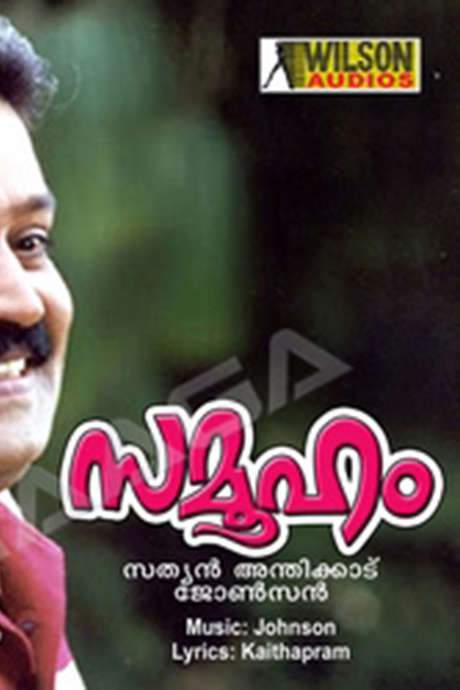
Samooham (1993) movie poster

Plot Summary

Samooham (1993) Plot Summary Explained

Release, runtime and language
1993 · More mins · Malayalam
Directed by
Sathyan Anthikad
Starring
Rajan P Dev, Suhasini Maniratnam, Bindu Panicker, Sudheesh, Suresh Gopi, Vineeth Radhakrishnan

The film revolves around a middle class Malayalee girl and her childhood lover. Problems arise in their relationship when she begins her rise to power.

On this page (6)
  1. 1 Where to watch
  2. 2 What happens: full plot
  3. 3 Plot questions answered
  4. 4 Movie threads
  5. 5 Movies like Samooham
  6. 6 Every angle

Where to watch

Where to Watch Samooham (1993)

Where can you watch Samooham? Stream, rent or buy it in the US, including on Sun Nxt: current JustWatch availability with up-to-date prices.

Streaming availability powered by JustWatch

Full plot summary · contains spoilers

What Happens in Samooham: Full Plot Summary

The whole story of Samooham (1993) explained, from the opening scene to the final frame: every key event, every twist and what it all adds up to. Read it as a quick recap before the sequel, to check a scene you missed, or to finally understand what really happened.

Sudhakaran runs his paddy field with steady efficiency, keeping the cultivation organized even when some workers seem reluctant or unskilled. He cares deeply about his land and the people who depend on it, and his practical leadership underpins much of the film’s social texture.

Rajalakshmi is the daughter of a Sakavu who is known for being a tireless party activist. A senior party member, portrayed by Balan Poduval, consistently nudges Rajalakshmi toward political ambition, shaping her path even as she wrestles with self-doubt. Their long-standing bond with Sudhakaran is rooted in a childhood friendship that turns into a complex romance as the political arena encroaches on private loyalties.

Rajalakshmi’s public speaking moments reveal a fragile, emotional side: when asked to address a crowd, she often cries, and at one turning point she bluntly tells the people not to vote for her. Yet this vulnerability paradoxically helps her win support and, against expectations, she becomes an MLA. The film uses this arc to explore the tension between personal authenticity and public perception in politics.

When a wave of violence strikes the vulnerable—goons burn down huts belonging to poor families—the community seeks help from Rajalakshmi. She travels to the burnt area and then to the police station, urging the authorities to arrest those responsible. The police resist, and a confrontation spills into the streets as Rajalakshmi leads a protest in front of the minister’s car. The clash with the police underscores the fraught relationship between activism and state power.

Johnny, the son whose father died in the earlier fire attack, has already filed a case against the criminals. The political pressure cooker intensifies when Krishnamurti, defeated in an election, orders the attack that results in Johnny’s murder. The next day’s rumor—Johnny’s suicide due to financial burdens—sparks further outrage, but Rajalakshmi refuses to accept the easy explanation and demands accountability.

Udayan, who witnesses the crime, steps forward to corroborate Rajalakshmi’s version of events. His testimony strengthens the call for a formal investigation, and the case begins to migrate toward a higher level of scrutiny with the involvement of the CBI. The atmosphere grows tense as the political stakes climb and the line between political adversaries and criminal conspirators becomes increasingly blurred.

The investigation exposes the reach of the criminals, and the nation’s top investigators close in. The case also reveals a brutal crime—the gang’s assault on Rajalakshmi’s sister, Radhika—a brutal act that galvanizes public opinion against Krishnamurti, the man blamed for the electoral defeat and the violence that followed. The arrest of the chief goon who killed Johnny and his confession further solidify the prosecution’s case.

In court, the evidence pieces together with the help of a newspaper article written by Pavithran, which presents compelling facts that corroborate the charges. The courtroom drama builds toward a decisive moment: Krishnamurti is finally ordered to face punishment, and he is taken away in handcuffs.

As Krishnamurti exits the courthouse, he forcibly dispatches his rage by firing at Pavithran in front of the crowd, a violent act that underscores the film’s theme of cycles of vengeance and accountability. A confrontational clash ensues between Krishnamurti’s goons and Sudhakaran’s group, including Majeed, ultimately ending in a hard-won victory for Sudhakaran and his allies.

In the aftermath, Sudhakaran confronts his own earlier judgments about Rajalakshmi. He apologizes for having mistaken her political drive as mere power hunger and, recognizing the genuine intent to serve the people, pledges his full support for her political career. The conclusion reaffirms a shared commitment to helping their community, balancing personal affection with public responsibility.

The film’s world is populated by a strong, grounded ensemble, including Balan Poduval in a pivotal guiding role, and Pavithran as a catalyst for crucial revelations. The story navigates themes of loyalty, integrity, and the complicated dance between ambition and service, all set against the texture of rural life and political upheaval. The ending leaves viewers with a nuanced portrait of partnership in the public sphere, where personal bonds are tested, redefined, and ultimately reinforced in the name of the greater good.

Last updated: October 09, 2025 at 14:06

Was this helpful?

Plot questions answered

Samooham Plot Explained: Your Questions Answered

The questions people ask most about Samooham (1993): what happens in the confusing scenes, why the characters do what they do, the twists, hidden details and what the ending means. Each answer contains spoilers.

Q1

Why does Rajalakshmi win the election after telling people not to vote for her?

Rajalakshmi's tearful admission not to vote for her paradoxically works in her favor because voters perceive her vulnerability and honesty as authenticity. In a political landscape often filled with empty promises, her emotional honesty creates sympathy and trust. This authentic response to pressure, combined with party support, leads to her unexpected victory against more experienced candidates.

Foreshadowing: Earlier in the film, Rajalakshmi is shown as emotionally fragile when speaking publicly, which foreshadows her unique approach to campaigning.

  • rajalakshmi election victory
  • political ascent
  • voting
  • mlla
Q2

Why does Krishnamurti order Johnny's murder?

Krishnamurti murdered Johnny because Johnny had filed a case against the goons who burned down the huts, directly implicating Krishnamurti's political network in the violent attack. As a defeated candidate, Krishnamurti was already desperate to maintain his political grip, and Johnny's legal action threatened to expose his criminal connections, so he ordered the killing to silence the witness.

Foreshadowing: Johnny's father died in the earlier fire attack, establishing the pattern of violence that escalates with Johnny's murder.

  • johnny murder
  • krishnamurti
  • election defeat
  • assassination
Q3

Why do Krishnamurti's goons assault Rajalakshmi's sister Radhika?

Krishnamurti's goons assault Radhika as a retaliatory tactic to intimidate Rajalakshmi and derail her political campaign. The assault is meant to silence her by targeting a family member, demonstrating the lengths Krishnamurti will go to protect his political interests. The brutal act instead galvanizes public opinion against him and strengthens the case for his prosecution.

Foreshadowing: The escalating violence against the community, from hut burnings to murder, establishes the pattern of criminal intimidation.

  • radhika assault
  • sister
  • krishnamurti goons
  • intimidation
Q4

What triggers the CBI investigation into the case?

The CBI investigation is ordered after Udayan, who witnessed Johnny's murder, comes forward to corroborate Rajalakshmi's version of events. His testimony, combined with mounting evidence including the arrest and confession of the chief goon who killed Johnny, creates enough political pressure to escalate the case beyond local authorities to the national level.

Foreshadowing: Udayan witnessing the crime is established earlier, and his delayed revelation creates the turning point for the investigation.

  • cbi investigation
  • johnny case
  • udhayan witness
  • escalation
Q5

Why does Sudhakaran initially criticize Rajalakshmi's political ambitions?

Sudhakaran misinterprets Rajalakshmi's entry into politics as mere power hunger rather than genuine public service. Coming from a rural background and valuing straightforward labor, he fails to understand the complexities of political activism and the sacrifices required. His misunderstanding stems from viewing her political drive through the lens of personal ambition rather than community service.

Foreshadowing: Early scenes show Sudhakarans focus on paddy field management and traditional values, setting up his initial resistance to politics.

  • sudhakaran misunderstanding
  • rajalakshmi politics
  • ambition
  • reconciliation
Q6

What happens to Pavithran after the court verdict?

After the court orders Krishnamurti's punishment, Krishnamurti grabs a gun outside the courthouse and shoots Pavithran in a final act of desperation. Pavithran, who wrote the crucial newspaper article exposing Krishnamurti's crimes, becomes the victim of his violent retaliation. This act triggers the climactic confrontation between Krishnamurti's goons and Sudhakaran's group.

Foreshadowing: Pavithran's role as a journalist who documents the crimes is established earlier as key evidence in the case.

  • pavithran shot
  • krishnamurti shoots
  • newspaper article
  • verdict aftermath
Q7

Why is Johnny's death initially reported as suicide?

Johnny's murder is misreported as suicide to cover up the true cause and protect the criminals responsible. The rumor suggests financial burdens drove Johnny to kill himself, attempting to discredit both Johnny's character and the case he filed. Rajalakshmi refuses to accept this false narrative and demands accountability, insisting the truth about the murder be recognized.

Foreshadowing: The earlier fire attack on Johnny's family establishes the pattern of violence and cover-ups.

  • johnny suicide misreport
  • cover up
  • media
  • rumor
Q8

What is Udayan's role in the investigation?

Udayan serves as the key witness who saw Krishnamurti's goons murder Johnny. His testimony corroborates Rajalakshmi's account of events and strengthens the case against the politician. By coming forward, Udayan enables the escalation to a CBI investigation and provides the direct evidence needed to pursue justice beyond local corruption.

Foreshadowing: Udayan's presence at the crime scene is mentioned as the investigation unfolds.

  • udhayan witness
  • murder testimony
  • cbi case
Q9

What connects Krishnamurti's election loss to the violence?

Krishnamurti's defeat in the election directly triggers his orchestration of violence against the poor community. Losing political power means losing the protection and influence that came with his position, so he orders the hut burnings and subsequent murders to reignite fear and regain control. His criminal network operates to restore his political standing through intimidation.

Foreshadowing: The timeline establishes that Krishnamurti's attack follows his electoral defeat.

  • election defeat
  • krishnamurti
  • hut burning
  • retaliation
Q10

How does the final confrontation between Krishnamurti's goons and Sudhakaran end?

After Krishnamurti shoots Pavithran outside the court, his goons clash with Sudhakaran and Majeed in a violent confrontation. The fight ends with Krishnamurti's complete defeat - his political and criminal empire collapses, and he is taken away in handcuffs. Sudhakaran and his allies emerge victorious, though the victory comes after significant loss and trauma.

Foreshadowing: The buildup through Johnny's murder, Radhika's assault, and the court case all lead to this final clash.

  • final fight
  • krishnamurti defeat
  • sudhakaran victory
  • goons clash

Movie threads

More Movies Like Samooham, by Mood & Story

Curated lists built around what makes Samooham tick: the same mood, the same kind of story or the same emotional payoff. Each list explains why these movies belong together.

Movies about justice crusaders like Samooham

Ordinary individuals rise against formidable systems of corruption and power. If you liked Samooham's story of a character confronting powerful corrupt forces, you'll find similar movies here. These films feature determined heroes fighting for social justice, often at great personal cost, in tense and emotionally charged political or legal dramas.

  • tense
  • gritty
  • determined
  • suspenseful
  • grounded
  • emotional
  • Tone: tense, gritty, determined
  • Pacing: steady, event-driven
Why these movies?

The story pattern: Stories in this thread typically follow a protagonist's journey from an ordinary life to becoming a key figure in a major conflict. They involve uncovering conspiracies, facing threats, and rallying support, culminating in a high-stakes showdown—like a trial or public confrontation—where systemic wrongs are challenged.

Why they belong together: These movies are grouped by their shared focus on a high-intensity, morally driven battle against corruption. They blend the personal stakes of the protagonist with a broader social conflict, creating a tense, gritty, and emotionally heavy viewing experience where the outcome is hard-won and often bittersweet.

Movies where ambition tests romance like Samooham

Intimate relationships strained by the heavy demands of power and responsibility. For viewers who enjoyed the romantic conflict in Samooham, this section features films where a character's rise to power or dedication to a cause severely tests their most important personal relationship, leading to emotional drama and bittersweet resolutions.

  • emotional
  • tense
  • romantic conflict
  • bittersweet
  • heavy
  • grounded
  • Tone: tense, emotional, bittersweet
  • Pacing: steady, character-driven
Why these movies?

The story pattern: The narrative pattern involves a protagonist gaining influence or taking on a leadership role, which consumes their time and alters their priorities. This shift creates conflict with a lover or partner who feels neglected or disagrees with the path taken, leading to an emotional struggle between love and duty.

Why they belong together: These films are connected by their exploration of a specific emotional conflict: the sacrifice of personal happiness for public service or ambition. They share a heavy emotional weight, a tense atmosphere, and often conclude with a bittersweet acknowledgment that personal fulfillment and great responsibility are difficult to reconcile.

If you liked this

Movies Like Samooham

Similar movies to Samooham: the same genre, themes or kind of story. Each one comes with its own plot summary, timeline and ending explained.

Browse all movie summaries

Every angle

Samooham (1993) Explained: Plot, Timeline & Characters

Everything about Samooham in one place: what happens in the plot summary, the timeline in chronological order, the characters and meaning and a spoiler-free summary. What's After the Movie adds the cast, box office and post-credit scenes.

Coming soon on iOS and Android

The Plot Explained Movie Summary App

Plot summaries, endings explained and timelines on your phone. Catch up on any movie in minutes, save your favorites and never miss a twist again.

Be the first to know when we launch. Your email stays private, always.

Learn more about the app