Plot Explained Spoilers guaranteed!
Plot Explained

Browse by genre

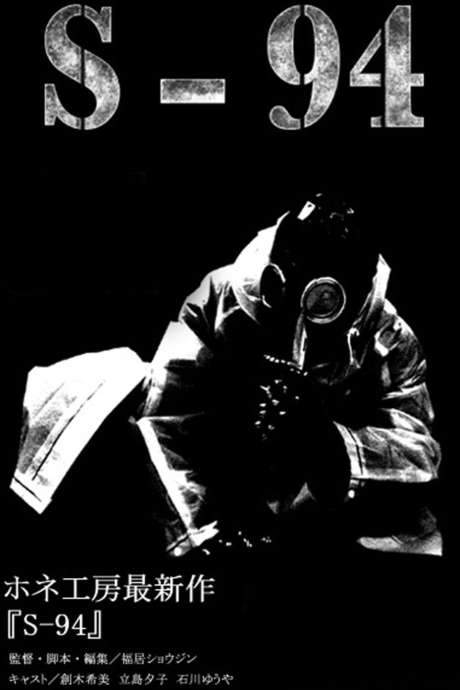
S-94 (2009) movie poster

Plot Summary

S-94 (2009) Plot Summary Explained

Release, runtime and language
2009 · 30 mins · Japanese
Directed by
Shozin Fukui
Starring
Yuya Ishikawa, Yuko Tatsushima, Nozomi Hatsuki

In 2010 a deadly virus called S‑94 eradicates almost all of humanity. Two women are the only survivors, living together in isolation. One is driven to stay alive, the other is consumed by suicidal despair. Their equilibrium shatters when a radio broadcast reveals a third survivor, and they soon begin to fight over him despite a bleak future.

On this page (5)
  1. 1 What happens: full plot
  2. 2 Plot questions answered
  3. 3 Movie threads
  4. 4 Movies like S-94
  5. 5 Every angle

Full plot summary · contains spoilers

What Happens in S-94: Full Plot Summary

The whole story of S-94 (2009) explained, from the opening scene to the final frame: every key event, every twist and what it all adds up to. Read it as a quick recap before the sequel, to check a scene you missed, or to finally understand what really happened.

Set in 2010 Japan, a deadly virus has decimated the population, leaving only a few survivors. In a secluded underground bunker, two women, Mai and Ice, struggle to endure the new reality: Mai remains hopeful about the future and the possibility of carrying on the species, while Ice is overwhelmed by despair and fears dying alone.

After Mai discovers Ice unconscious following a suicide attempt, she uses a radio to try to reach the outside world, hoping someone will answer their call for help. The desperate act to contact help underlines the fragile line between survival and isolation, and the tension inside the bunker grows as fear and fatigue erode trust between the two women. The atmosphere tightens into a claustrophobic mood, where small gestures carry outsized weight and every decision feels like a matter of life and death.

The attempt to reach the world does not alter the grim circumstances, and a violent rift erupts when Ice attacks with the tube of a gas mask, aiming to kill both of them in a final bid for control and release from the dire situation.

A man responds to the radio, and Mai brings him into the shelter. The newcomer is Shuma, a survivor who carries antibodies that allow him to breathe the open air without immediate danger. He is welcomed into the underground refuge, and Ice, resentful toward Mai’s decision to bring him in, initiates sex with Shuma with the intent of murdering him. She succeeds in killing him and also kills Mai afterward, leaving the bunker to a new, disturbing power dynamic.

Ice then finds herself surrounded by shirtless men in the bunker, and Shuma suddenly jumps at her, shouting that those are “the new types.”

> "the new types"

The situation spirals further as the group’s brittle order collapses, and the film closes on a stark, brutal note: Ice is cannibalized by the others, marking a grim end to the survivors’ attempt at coexistence and forcing a reckoning with what humanity looks like when infection, fear, and scarcity rewrite social rules.

Last updated: March 05, 2026 at 18:40

Was this helpful?

Plot questions answered

S-94 Plot Explained: Your Questions Answered

The questions people ask most about S-94 (2009): what happens in the confusing scenes, why the characters do what they do, the twists, hidden details and what the ending means. Each answer contains spoilers.

Q1

Why does Ice kill Shuma after being with him?

Ice uses seduction as a tactic to get close to Shuma so she can kill him. She is resentful of Mai for bringing a stranger into their shelter and views Shuma's arrival as a threat to their fragile dynamic. Rather than sharing the bunker with another person, Ice chooses to eliminate him, seeing murder as the only way to maintain control over their isolated world.

Foreshadowing: Earlier, Ice's suicidal despair and fatalistic outlook foreshadows her willingness to use lethal violence as an escape from the situation.

  • ice
  • shuma
  • murder
  • seduction
  • killing
  • motive
Q2

Why does Ice kill Mai after killing Shuma?

After killing Shuma, Ice eliminates Mai to remove any remaining witness and potential rival. With both survivors dead, Ice gains complete control over the bunker and its resources. The act represents the complete collapse of their relationship and the final descent into isolation and primal survival instincts.

Foreshadowing: The tension between the two women, established from the opening, escalates as their opposing perspectives on hope versus despair create irreconcilable conflict.

  • ice
  • mai
  • killing
  • murder
  • bunker
  • conflict
Q3

What are the "new types" Shuma warns about?

The "new types" appears to refer to the other men who appear in the bunker after Shuma's death. Shuma's warning suggests these are either infected individuals with a different strain of the virus or survivors who have evolved into something beyond normal humanity. The phrase implies a new stage of human adaptation or mutation caused by the S-94 virus.

Foreshadowing: Shuma's earlier claim about having antibodies that allow him to breathe open air hints that the virus is creating different categories of survivors.

  • new types
  • shuma
  • mutants
  • infection
  • virus
  • survivors
Q4

Why does Ice attack Mai with the gas mask tube?

Ice attacks Mai with the gas mask tube in a desperate attempt to kill both of them. Overwhelmed by despair and the unbearable reality of their situation, Ice sees death as the only release. The attack represents her final break from hope, choosing to end everything rather than continue enduring the suffocating isolation.

Foreshadowing: Ice's earlier suicide attempt establishes her willingness to choose death over continued survival in the bunker.

  • ice
  • attack
  • mai
  • gas mask
  • violence
  • despair
Q5

Why does Mai bring Shuma into the bunker?

Mai brings Shuma inside because his radio response represents the first potential connection to the outside world since the virus outbreak. His claim of having antibodies means he could potentially help them survive on the surface or find other survivors. Mai's hope for the future drives her to welcome him, believing he could be their pathway to escaping the bunker.

Foreshadowing: Mai's persistent optimism about continuing humanity and finding a way forward contrasts with Ice's fatalism throughout the story.

  • mai
  • shuma
  • bunker
  • antibodies
  • survival
  • hope
Q6

Why does Ice try to commit suicide in the bunker?

Ice attempts suicide because she is consumed by despair and hopelessness about the post-apocalyptic future. The weight of living in isolation with no certainty of rescue or future meaning becomes unbearable. Her suicide attempt demonstrates how the combination of fear, fatigue, and nihilism erodes the will to survive.

Foreshadowing: The opening establishes Ice as the character defined by fatalism and despair, contrasting with Mai's hopeful outlook.

  • ice
  • suicide
  • despair
  • hopelessness
  • mental state
Q7

What causes the conflict between Mai and Ice?

The conflict between Mai and Ice stems from their fundamentally opposite responses to the apocalypse. Mai clings to hope for the future and the possibility of rebuilding humanity, while Ice is overwhelmed by fatalism and fear of dying alone. Their opposing worldviews create mounting tension as they struggle to coexist in the confined space of the bunker, leading to mutual resentment and ultimately violence.

Foreshadowing: The initial character setup clearly establishes their contrasting perspectives on survival.

  • mai
  • ice
  • conflict
  • tension
  • opposing views
  • survival
Q8

How does the radio broadcast lead to Shuma?

After finding Ice unconscious from her suicide attempt, Mai uses the bunker's radio to broadcast a desperate call for help, hoping someone outside might respond. Shuma hears this transmission and answers, revealing he has survived in the outside world due to antibodies against the S-94 virus. His response creates the turning point that introduces a third person into their isolated dynamic.

Foreshadowing: The radio call marks the shift from internal isolation to external connection, fundamentally changing the story's trajectory.

  • radio
  • broadcast
  • shuma
  • signal
  • transmission
Q9

How does Shuma return after being killed?

The narrative suggests Shuma's reappearance may be a hallucination or a psychological moment experienced by Ice in her final moments. However, given the sci-fi context of the virus creating different 'types' of survivors, it could also imply Shuma either survived somehow or his consciousness persists in some form. The ambiguity reinforces the film's unsettling atmosphere.

Foreshadowing: The earlier mention of Shuma carrying antibodies that allow survival in open air hints at unusual biological or post-infection states.

  • shuma
  • return
  • death
  • hallucination
  • survival
  • ambiguity
Q10

Why are there shirtless men in the bunker with Ice?

The men appear in the bunker after Ice kills Mai and Shuma, suggesting other survivors have found their way into the shelter. The bunker, originally a place of refuge, becomes a new gathering point for survivors. The shift represents a brutal power vacuum where the previously established social order collapses under the pressure of scarcity and primal survival instincts.

Foreshadowing: The earlier tension and violence within the bunker establish a pattern where extreme conditions break down social structures.

  • ice
  • men
  • bunker
  • survivors
  • power vacuum
Q11

Why does cannibalism happen at the end of the movie?

The cannibalism occurs as the ultimate expression of survival instinct overcoming civilization. With resources depleted, the outside world still dangerous from the virus, and social order collapsed, the remaining survivors resort to eating Ice to survive. The brutal act demonstrates how extreme isolation, fear, and scarcity completely rewrite human behavior and moral boundaries.

Foreshadowing: The escalating violence throughout the film, from Ice's suicide attempt to her murders, shows the progressive breakdown of human restraints.

  • cannibalism
  • survival
  • violence
  • desperation
  • collapse

Movie threads

More Movies Like S-94, by Mood & Story

Curated lists built around what makes S-94 tick: the same mood, the same kind of story or the same emotional payoff. Each list explains why these movies belong together.

Claustrophobic Survival Horror Movies Like S-94

Stories of survivors trapped together, where the greatest threat comes from within. If you liked the tense, confined horror of S-94, explore these movies about survivors trapped together. These films focus on psychological breakdown, desperate power struggles, and the bleak reality of surviving in isolation, often with a heavy, oppressive atmosphere.

  • claustrophobic
  • oppressive
  • despairing
  • tense
  • psychological
  • isolated
  • Tone: bleak, tense, oppressive
  • Pacing: steady, methodical
Why these movies?

The story pattern: The narrative typically follows a small, isolated group of survivors facing an external existential threat (like a virus or disaster). The primary conflict shifts from external survival to internal psychological warfare, as characters' sanity, morals, and alliances fracture under the strain. The story arc is a steady descent into paranoia, violence, and often a tragic, hopeless conclusion.

Why they belong together: These films are grouped for their shared setting of extreme confinement and their intense focus on psychological horror over action. They share a bleak tone, high emotional weight, and a pacing that builds dread through character interaction and mounting tension rather than jump scares.

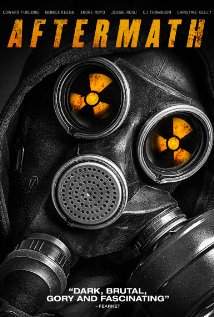
Bleak Post-Apocalyptic Character Studies Like S-94

In a ruined world, the last people on Earth fight not monsters, but each other. Fans of the grim human drama in S-94 will find similar stories here. These movies explore the psychological toll and brutal conflicts among the last survivors after the world has ended, prioritizing character study over action and featuring heavy emotional weight and bleak outcomes.

  • bleak
  • despairing
  • grim
  • tense
  • psychological
  • hopeless
  • Tone: bleak, dark, despairing
  • Pacing: steady, character-driven
Why these movies?

The story pattern: These narratives begin after society has collapsed. With the initial survival scramble over, the story centers on a microcosm of humanity—often just two or three characters—as they navigate a dead world. The conflict is intensely interpersonal, driven by clashing ideologies (hope vs. nihilism, survival vs. morality), scarce resources (often symbolized by another person), and the crushing weight of being possibly the last of humankind.

Why they belong together: They are linked by their shared focus on the 'aftermath' phase of an apocalypse, prioritizing intimate character drama over large-scale action. They uniformly possess a bleak or dark tone, straightforward yet heavy narratives, and explore themes of isolation, despair, and what it means to be human when nothing is left.

If you liked this

Movies Like S-94

Similar movies to S-94: the same genre, themes or kind of story. Each one comes with its own plot summary, timeline and ending explained.

Browse all movie summaries

Every angle

S-94 (2009) Explained: Plot, Timeline & Characters

Everything about S-94 in one place: what happens in the plot summary, the timeline in chronological order, the characters and meaning and a spoiler-free summary. What's After the Movie adds the cast, box office and post-credit scenes.

Coming soon on iOS and Android

The Plot Explained Movie Summary App

Plot summaries, endings explained and timelines on your phone. Catch up on any movie in minutes, save your favorites and never miss a twist again.

Be the first to know when we launch. Your email stays private, always.

Learn more about the app