Plot Explained Spoilers guaranteed!
Plot Explained

Browse by genre

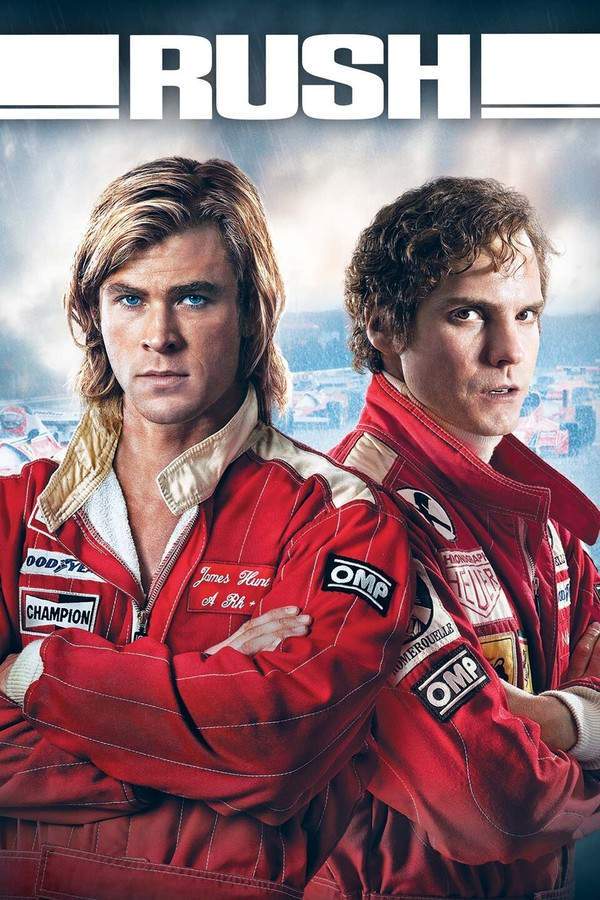
Rush (2013) movie poster

Plot Summary

Rush (2013) Plot Summary Explained

Release, runtime and language
2013 · 123 min · English
Loading streaming availability…
Directed by
Ron Howard
Starring
Chris Hemsworth, Olivia Wilde, Daniel Brühl
Budget
$38M

During the 1970s, Formula 1 racing saw a fierce rivalry develop between James Hunt, a charismatic British driver, and Niki Lauda, a precise Austrian competitor. This film explores their contrasting personalities and their relentless pursuit of victory in a dangerous sport where a single mistake can be fatal. The story follows their intense season, marked by incredible speed, daring maneuvers, and the constant threat of disaster as they push the boundaries of performance and risk everything for the ultimate prize.

On this page (6)
  1. 1 Where to watch
  2. 2 What happens: full plot
  3. 3 Plot questions answered
  4. 4 Movie threads
  5. 5 Movies like Rush
  6. 6 Every angle
Loading streaming availability…

Full plot summary · contains spoilers

What Happens in Rush: Full Plot Summary

The whole story of Rush (2013) explained, from the opening scene to the final frame: every key event, every twist and what it all adds up to. Read it as a quick recap before the sequel, to check a scene you missed, or to finally understand what really happened.

James Hunt (Chris Hemsworth) and Niki Lauda (Daniel Brühl) are two exceptionally talented race car drivers whose fierce rivalry first ignites in 1970 at a thrilling Formula Three race held at the Crystal Palace circuit in England. During this race, both drivers encounter a mishap that leads to their cars spinning out, but ultimately, Hunt emerges victorious. Hunt is characterized as a brash and confident Englishman, famously known for his pre-race tradition of vomiting, while Lauda presents a stark contrast as a calm and calculating technical mastermind, achieving excellence through precision.

After enduring tension with his wealthy industrialist father, who pressures him to take on the family business, Lauda secures a significant bank loan to join the BRM Formula One team. In this role, he meets teammate Clay Regazzoni for the first time. Lauda, while acting as a technical consultant, implements modifications that enhance the car’s speed by an impressive two seconds, much to the astonishment of the team owner. His determination leads him to demand a place on the race team, compelling the owner to allow him to race alongside Regazzoni.

On a parallel path, Hunt participates in Formula One with his newly established team, Hesketh Racing. In due time, Lauda makes the move to join Scuderia Ferrari and secures his first championship in 1975. Following a financial struggle that causes Hesketh to shut down, Hunt manages to step into a driving position with McLaren after Emerson Fittipaldi's departure from the team. During this thrilling period, Hunt also marries the glamorous supermodel Suzy Miller (Olivia Wilde), while Lauda finds romance with socialite Marlene Knaus.

As the 1976 Formula One season unfolds, Lauda dominates the initial races, while Hunt faces challenges in catching up. Hunt claims victory at the Spanish Grand Prix, only to be disqualified after the post-race inspection reveals his car's width is non-compliant. With McLaren struggling to meet regulatory standards, Hunt's circumstances deteriorate further when Suzy's affair with Richard Burton becomes public. After finalizing his divorce, Hunt regains his competitive spirit, and due to a reversal of his disqualification in Spain, he re-enters the championship race.

Lauda, meanwhile, marries Marlene in a private ceremony but begins to grapple with concerns about the impact of his marriage on his racing career. At the German Grand Prix, he fervently requests the F1 committee to cancel the race due to treacherous rain conditions at the perilous Nürburgring, but his request is rejected following Hunt's persuasive argument that suggests Lauda is merely concerned about the championship points.

As both drivers brave the rain-soaked race, they begin on rain tires—a decision that proves costly as the track dries quickly. A catastrophic failure occurs halfway through the third lap when a suspension arm in Lauda’s Ferrari breaks, launching his car into an embankment before it is engulfed in flames. Lauda is rescued from the wreckage but sustains severe injuries, including third-degree burns and internal damage. Over the next six weeks, he is treated while Hunt capitalizes on his absence, dominating the races.

In a dramatic turn, Lauda defies medical advice and returns to racing at the Italian Grand Prix, finishing fourth despite the hurdles he faces. The season culminates at the Japanese Grand Prix under tumultuous weather, with Hunt's steadfast comeback pulling him within three points of Lauda. Lauda unexpectedly retires from the race to prioritize time with Marlene, compelling Hunt to finish third to clinch the championship title. After a hard-fought battle, Hunt’s efforts pay off, allowing him to surpass Lauda by a mere point and secure the championship victory.

Following the season, Hunt revels in his newfound fame, engaging in a hedonistic lifestyle while Lauda develops an interest in aviation. During a conversation at a private airfield in Bologna, Lauda suggests to Hunt that he should prepare for the upcoming racing season, but soon realizes that Hunt has nothing more to prove. Hunt continues to race until his retirement in 1979 and later transitions to a career as a motorsport commentator until his untimely passing in 1993 at the age of 45.
Last updated: November 08, 2024 at 05:35

Was this helpful?

Plot questions answered

Rush Plot Explained: Your Questions Answered

The questions people ask most about Rush (2013): what happens in the confusing scenes, why the characters do what they do, the twists, hidden details and what the ending means. Each answer contains spoilers.

Q1

What caused Niki Lauda's crash at the Nürburgring?

Lauda's crash was caused by a suspension arm breaking on his Ferrari midway through the third lap. The track had dried quickly after rain, but both he and Hunt had started on rain tires. The broken suspension sent his car into an embankment, where it caught fire. Lauda suffered third-degree burns and internal injuries, requiring six weeks of treatment.

Foreshadowing: Earlier in the film, Lauda had requested the race be cancelled due to dangerous weather conditions, which was rejected.

  • niki lauda crash
  • nurburgring 1976
  • formula 1 accident
  • ferrari crash
Q2

Why did Niki Lauda want to cancel the German Grand Prix?

Lauda requested the race be cancelled because of treacherous rain conditions at the Nürburgring, which he considered one of the most dangerous tracks. He believed the weather made racing unsafe. The F1 committee rejected his request after Hunt argued that Lauda was only concerned about losing championship points.

Foreshadowing: This decision directly leads to Lauda's catastrophic crash later in the race.

  • niki lauda german grand prix
  • nurburgring rain
  • race cancellation
Q3

How did James Hunt win the championship by only one point?

The 1976 championship came down to the Japanese Grand Prix. Lauda unexpectedly retired from the race early to prioritize time with his wife Marlene, despite dangerous conditions. Hunt needed to finish third to win the title and achieved exactly that, finishing one point ahead of Lauda in the final standings.

Foreshadowing: Earlier in the season, Lauda had expressed concerns about his marriage affecting his racing focus.

  • james hunt championship 1976
  • f1 title victory
  • one point difference
Q4

Why did Niki Lauda retire from the Japanese Grand Prix?

Lauda retired from the race because he chose to prioritize his relationship with his wife Marlene over continuing in dangerous weather conditions. After experiencing his near-fatal crash earlier that season, he decided life was more important than the championship title. This decision handed the title to Hunt.

Foreshadowing: Lauda's marriage to Marlene earlier in the film had made him question his priorities between racing and personal life.

  • lauda retires japan
  • niki lauda quit race
  • 1976 japanese gp
Q5

Why was James Hunt disqualified at the Spanish Grand Prix?

Hunt won the Spanish Grand Prix but was disqualified after post-race inspection revealed his car's width did not meet regulatory standards. This setback significantly impacted his championship standing at a critical point in the season.

Foreshadowing: The disqualification came during a difficult period for Hunt, who was also dealing with personal issues including his wife's public affair.

  • hunt disqualified spain
  • spanish grand prix 1976
  • car width violation
Q6

How did James Hunt make a comeback in the 1976 season?

Hunt capitalised on Lauda's absence after the Nürburgring crash. During the six weeks Lauda was recovering, Hunt dominated multiple races. Additionally, his earlier disqualification in Spain was later reversed, which restored his points and kept him in championship contention.

Foreshadowing: Hunt's victory at the Spanish Grand Prix (before disqualification) showed he could match Lauda when his car performed correctly.

  • james hunt comeback
  • 1976 season comeback
  • hunt dominates races
Q7

Why did Niki Lauda return to racing so quickly after his crash?

Lauda defied medical advice and returned to racing at the Italian Grand Prix just six weeks after his crash, finishing fourth. His determination to return was driven by his competitive nature and refusal to give up on the championship, despite his severe injuries including third-degree burns.

Foreshadowing: This decision reflects Lauda's calculated, precision-focused personality established throughout the film.

  • lauda returns racing
  • italian grand prix 1976
  • lauda comeback
Q8

What happened to James Hunt's marriage to Suzy Miller?

Hunt married supermodel Suzy Miller, but their marriage fell apart when Suzy's affair with actor Richard Burton became public. The scandal coincided with Hunt's professional struggles, including his car disqualification in Spain, creating a turbulent period in his personal life.

Foreshadowing: The film establishes Hunt's hedonistic lifestyle, which put strain on his relationships.

  • james hunt wife
  • suzy miller
  • hunt divorce
  • richard burton affair
Q9

How did the rivalry between Hunt and Lauda begin?

Their rivalry began at a Formula Three race at Crystal Palace in England in 1970. Both drivers experienced a mishap that sent their cars spinning out, but Hunt ultimately won the race. This first encounter established their contrasting approaches: Hunt as the brash, confident winner, and Lauda as the calm, calculating technical mastermind.

Foreshadowing: The film uses their first meeting to set up the central theme of opposing personalities and racing styles.

  • hunt lauda rivalry
  • crystal palace 1970
  • first race
Q10

Why did Niki Lauda need a bank loan to join Formula One?

Lauda faced pressure from his wealthy industrialist father who wanted him to take over the family business rather than pursue racing. To escape this pressure and fund his racing career, Lauda secured a significant bank loan, which allowed him to join the BRM Formula One team as both a driver and technical consultant.

Foreshadowing: This financial independence set Lauda on the path to Ferrari and his first championship.

  • niki lauda father
  • lauda bank loan
  • brm formula one
Q11

How did James Hunt die?

James Hunt retired from racing in 1979 and became a motorsport commentator. He died in 1993 at the age of 45 from a heart attack. His death came years after his championship victory and marked the end of a larger-than-life career in Formula One.

  • james hunt death
  • hunt died 1993
  • f1 driver death

Movie threads

More Movies Like Rush, by Mood & Story

Curated lists built around what makes Rush tick: the same mood, the same kind of story or the same emotional payoff. Each list explains why these movies belong together.

Movies about fierce rivalries like Rush

Intense stories of two competitors whose lives are defined by their battle for supremacy. If you liked the intense competition between Hunt and Lauda in Rush, explore other movies about high-stakes rivalries. These films capture the drama, mutual obsession, and personal sacrifice that define the greatest professional adversaries in sports, business, or the arts.

  • competitive
  • adrenaline-fueled
  • intense
  • dramatic
  • high-stakes
  • career-defining
  • Tone: tense, dramatic
  • Pacing: fast, driven
Why these movies?

The story pattern: Stories in this thread typically follow two formidable figures locked in a contest that defines an era or industry. The narrative often contrasts their methods and worldviews, using their rivalry to explore broader themes of ambition, excellence, and the price of greatness. The climax is usually a decisive, high-pressure confrontation.

Why they belong together: Movies are grouped here for their central focus on a duel-like narrative structure and the compelling character dynamics between rivals. They share a tense, competitive mood and often feature heavy emotional weight as the characters risk everything for victory.

Movies with bittersweet victories like Rush

Stories where achieving the goal comes with a profound and lasting personal cost. Fans of Rush's ending, where championship glory is tempered by personal chaos and life-altering perspective, will appreciate these movies. Discover similar stories where the climax is a triumph that carries the heavy weight of sacrifice, loss, or moral compromise.

  • bittersweet
  • somber
  • tragic
  • redemptive
  • dramatic
  • costly victory
  • Tone: bittersweet, somber
  • Pacing: fast, culminating
Why these movies?

The story pattern: The narrative pattern involves a relentless drive toward a clear goal, but the journey is marked by severe trials—often a tragic accident, personal betrayal, or moral dilemma. The climax delivers the expected victory, but the resolution focuses on the emptiness or changed priorities that result, emphasizing that the cost was as important as the achievement.

Why they belong together: These films are united by their emotionally complex endings that blend success with sorrow. They share a heavy emotional weight and explore the theme that true victory often requires an irreversible personal payment, creating a poignant and thought-provoking conclusion.

If you liked this

Movies Like Rush

Similar movies to Rush: the same genre, themes or kind of story. Each one comes with its own plot summary, timeline and ending explained.

Browse all movie summaries

Every angle

Rush (2013) Explained: Plot, Timeline & Characters

Everything about Rush in one place: what happens in the plot summary, the timeline in chronological order, the characters and meaning and a spoiler-free summary. What's After the Movie adds the cast, box office and post-credit scenes.

Coming soon on iOS and Android

The Plot Explained Movie Summary App

Plot summaries, endings explained and timelines on your phone. Catch up on any movie in minutes, save your favorites and never miss a twist again.

Be the first to know when we launch. Your email stays private, always.

Learn more about the app