Plot Explained Spoilers guaranteed!
Plot Explained

Browse by genre

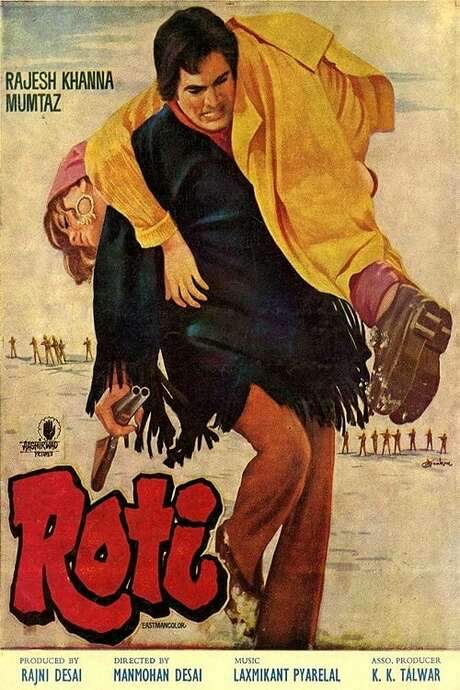
Roti (1974) movie poster

Timeline

Roti (1974) Timeline Explained – Every Event in Order

Release, runtime and language
1974 · 149 mins · Hindi
Loading streaming availability…
Directed by
Manmohan Desai
Starring
Pinchoo Kapoor, Om Prakash, Rajesh Khanna, Jagdeep, Nirupa Roy, Sujit Kumar

An escaped criminal finds refuge with the family of a man he killed accidentally.

On this page (6)
  1. 1 Where to watch
  2. 2 Events in order (15)
  3. 3 Timeline questions answered
  4. 4 Movie threads
  5. 5 Movies like Roti
  6. 6 Every angle
Loading streaming availability…

15 events in order · contains spoilers

Roti Timeline: Events in Chronological Order

Every key event of Roti (1974) in order, scene by scene, with when and where it takes place. Use it to untangle flashbacks, time jumps and parallel storylines, to refresh your memory before the sequel or to find the exact scene you are thinking of.

  1. Mangal Singh's death sentence

    Mangal Singh, a career criminal, is finally sentenced to be hanged for the murder he committed to obtain roti. The verdict comes after years on the run, as law and order close in on him. The looming execution sets the stakes for the rest of the story.

    Where
    Courtroom
  2. Suraj plots Mangal's jail escape

    While in prison, the underworld don Suraj hatches a plan to spring Mangal. A vigilant police inspector keeps constant watch, closing in on every move. The plan triggers a high-stakes chase that drives the entire escape.

    Where
    Prison
  3. Escape on the train

    Mangal makes his break on a moving train and seizes the moment to disappear from custody. To secure his escape, he throws a fellow passenger, Shravan Kumar, off the train. Shravan's fall marks the first irreversible consequence of Mangal's flight.

    Where
    Railway train
  4. Shravan Kumar's death

    Shravan Kumar dies on the journey, his loss reverberating through Shravan's family and the village. The tragedy haunts Mangal as he continues to drift from past to present. The incident foreshadows the moral reckoning to come.

    Where
    Railway
  5. Mangal reaches a Northern Indian village and becomes a teacher

    Mangal arrives in a small village in Northern India and, with Bijli's help, becomes a school teacher. He adopts the alias Ramu, a friend of Shravan, to keep his past hidden. The new life offers a chance at redemption but preserves a hidden danger.

    Where
    Northern India village
  6. Mangal lives with Shravan's blind parents

    He moves into Shravan's blind parents' home and embeds himself in their family life. Lalaji and Malti remain unaware that their guest is the man who killed their son, allowing a fragile peace to form. The lie begins to weigh on him as the past presses in.

    Where
    Shravan's parents' home
  7. Bijli falls in love with Mangal

    Bijli, a restaurateur in the village, falls in love with the newly minted teacher. Her affection grows as he helps the community and he wrestles with the truth he guards. The romance becomes a central emotional thread of the story.

    Where
    Village
  8. Inspector Jagdish Raj arrives and reveals Shravan's death

    Inspector Jagdish Raj arrives to track down Mangal and reveals key details to Shravan's parents. He informs them about Shravan's death caused by Mangal, shattering the illusion that the teacher is harmless. The revelation destabilizes Mangal's carefully constructed facade.

    Where
    Village
  9. Mangal learns the truth about Shravan's parents

    Mangal realizes that Shravan’s parents are the ones he killed during his escape. The revelation forces him to confront his past and choices. The moral reckoning begins as hidden guilt resurfaces and he must decide how to face the consequences.

    Where
    Village
  10. Reunion and liberation of Shravan's house

    Mangal helps reunite Lalaji's long-lost daughter with the family, which somehow frees Shravan's house from its painful past. This act of restitution marks a turning point in the community's response to trauma. The village witnesses a rare moment of healing.

    Where
    Village
  11. Pilgrimage with Shravan's parents and Bijli

    With Bijli, Mangal leads Shravan's parents on a holy pilgrimage. During the journey, he encounters the living Shravan again, forcing the group to confront the cycle of violence. The path becomes a symbolic journey of redemption.

    Where
    Pilgrimage route
  12. Mercy over vengeance

    After the reunion, Mangal pardons Shravan and arranges his escape from the pursuing police, while Bijli follows. The act signals a move from vengeance toward mercy, albeit with moral ambiguity. The choice underscores the complexity of redemption.

    Where
    Pilgrimage route
  13. Suraj shoots Bijli; Suraj dies in a snow avalanche

    In the pursuit, Suraj shoots Bijli, a moment of violence that follows the earlier romance and sacrifices. Shortly afterward, Suraj is killed in a snow avalanche, removing a dangerous pursuer from the story. The snowbound terrain amplifies the tragedy.

    Where
    Snowy mountains
  14. Bijli dies and Mangal is shot by Inspector Sujit

    Bijli dies as the pursuit continues, and Mangal is shot by Inspector Sujit during the final confrontation. The officer confronts Mangal with the weight of his crimes and his refusal to surrender without a plea for mercy. The narrative threads converge in a grim finale.

    Where
    Snowy mountains
  15. Final moment: Mangal dies; plea for roti

    As he lies dying, Mangal holds a gun without cartridges and asks that no one be deprived of roti. The scene caps his arc from criminal to reluctant protector, living with the consequences of his choices. The film ends on a somber note, underscoring a quiet plea for basic sustenance for all.

    Where
    Snowy field

Last updated: February 18, 2026 at 23:47

Was this helpful?

Timeline questions answered

Roti Timeline Explained: Your Questions Answered

When does it happen, and why in that order? The questions people ask about the chronology of Roti (1974): time jumps, flashbacks, cause and effect between scenes and the correct order of events, each answered with spoilers.

Q1

Why did Mangal kill a man for roti?

Mangal committed murder out of desperate hunger. The film establishes that he killed a man simply to obtain roti (bread), a brutal act that haunts him throughout the story as he faces execution. This original crime sets the entire tragedy in motion and explains why he carries such deep guilt.

  • mangal
  • roti
  • murder
  • hunger
  • crime
Q2

Why did Mangal throw Shravan off the train?

Mangal threw Shravan off the moving train purely as a means to escape police custody. He needed to clear a path to freedom and viewed Shravan as an obstacle to his survival. This act of desperation ultimately killed Shravan and created the central moral burden Mangal carries throughout the film.

  • mangal
  • shravan
  • train escape
  • police pursuit
Q3

Why did Mangal become a teacher in Shravan's village?

After escaping, Mangal used Bijli's help to adopt a new identity as Ramu and become a teacher in the village where Shravan's parents lived. He sought a life of ordinary purpose to escape his criminal past, but his choice to specifically live with the family of the man he killed created the story's central emotional conflict.

Foreshadowing: The timeline establishes Mangal's escape route before he settles in the village.

  • mangal
  • ramu
  • teacher
  • village
  • bijli
Q4

How did Shravan's blind parents not recognize Mangal?

Shravan's parents, Lalaji and Malti, were blind, which allowed Mangal to live among them undetected. They knew their guest as Ramu, a friend of their late son, and had no way to visually identify him as the man responsible for Shravan's death.

  • lalaji
  • malti
  • blind
  • identity
  • deception
Q5

Why did Bijli fall in love with Mangal?

Bijli, a local restaurateur, fell in love with Mangal after seeing his transformation from a fugitive into a gentle teacher who helped the community. His kindness and growing sense of responsibility appealed to her, despite her awareness of his dangerous past.

  • bijli
  • love
  • mangal
  • teacher
  • redemption
Q6

Why did Mangal help reunite Lalaji's daughter?

Mangal helped reunite Lalaji's long-lost daughter with the family as an act of restitution for killing their son. This act of healing somehow freed Shravan's house from its painful past and marked a turning point in the story's moral arc.

  • lalaji
  • daughter
  • reunion
  • restitution
  • healing
Q7

Why did Mangal pardon Shravan instead of seeking revenge?

During the pilgrimage, Mangal encountered the living Shravan and chose to pardon him, arranging his escape from police. This decision represented his transformation from a violent criminal seeking survival to someone choosing mercy over vengeance, embodying the film's theme of redemption.

  • shravan
  • pardon
  • mercy
  • redemption
  • forgiveness
Q8

What happened to Shravan after being thrown from the train?

The timeline reveals that Shravan actually survived the fall from the train, contrary to what Mangal and the parents believed. He later reappears during the pilgrimage, alive and confronting Mangal. This twist allows Mangal to make the choice to pardon him rather than seek revenge on someone he had wronged.

  • shravan
  • alive
  • survival
  • pilgrimage
  • reunion
Q9

Why was Mangal's gun unloaded when he died?

When Inspector Sujit shoots Mangal, he lies dying holding a gun that is inexplicably unloaded. This detail symbolizes that Mangal had already chosen a path of non-violence and redemption. The unloaded gun represents his rejection of his past criminal life and his final plea for mercy rather than combat.

  • gun
  • unloaded
  • dying
  • mercy
  • symbolism
Q10

What does the final plea for roti mean?

As Mangal dies, he clutches an unloaded gun and asks that no one be deprived of roti. This final plea returns to the film's beginning, the act of murder he committed for bread. It represents his complete arc: from a man who killed for roti to one who dies asking that basic sustenance be available to all, symbolizing both his guilt and his hoped-for redemption.

  • roti
  • bread
  • plea
  • hunger
  • redemption
  • final scene

Movie threads

More Movies Like Roti, by Mood & Story

Curated lists built around what makes Roti tick: the same mood, the same kind of story or the same emotional payoff. Each list explains why these movies belong together.

Tragic Fugitive Movies Like Roti

Criminals on the run searching for forgiveness they might never find. If you liked the desperate search for redemption in Roti, explore these other intense crime dramas about criminals on the run. These movies share a similar tragic tone, fast pacing, and heavy emotional weight, focusing on characters grappling with guilt and fate.

  • suspenseful
  • guilt-ridden
  • desperate
  • tragic
  • grim
  • moral conflict
  • Tone: dark, tragic
  • Pacing: fast, urgent
Why these movies?

The story pattern: These stories typically follow a protagonist who commits a grave mistake and flees authority, only to find themselves in a situation that offers a chance for atonement—often involving the loved ones of their victim. The narrative is driven by suspense and moral conflict, building towards an emotionally devastating finale where redemption is sought but seldom fully achieved.

Why they belong together: Movies in this thread share a core narrative of a fugitive's doomed quest for salvation. They are united by a dark, grim tone, high-stakes tension, and a profound sense of tragic inevitability. The pacing is often fast, mirroring the relentless pressure of the chase and the urgency of the protagonist's internal struggle.
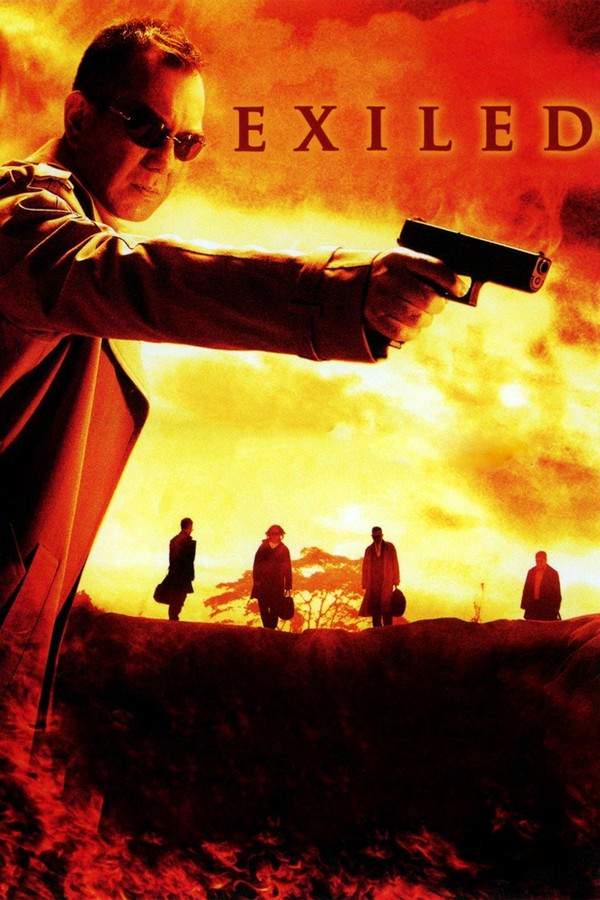
False Identity Thrillers Similar to Roti

A hidden past threatens to unravel a dangerous new life. Fans of the hidden identity premise in Roti will enjoy these suspenseful dramas. These movies feature characters living a lie, often involving crime, guilt, and the constant fear of exposure, leading to high-tension narratives with morally complex outcomes.

  • suspenseful
  • deception
  • guilt
  • paranoia
  • tense
  • moral dilemma
  • Tone: suspenseful, grim
  • Pacing: variable, building tension
Why these movies?

The story pattern: The plot hinges on the protagonist's integration into a community or family while concealing a dark secret. This creates a foundation for sustained suspense and dramatic irony, as the audience is aware of the impending threat of exposure. The story is often a slow-burning fuse, leading to an explosive climax where the truth is revealed with devastating consequences.

Why they belong together: This thread connects films through the powerful theme of deception and its psychological toll. They share a mood of relentless suspense and underlying melancholy, driven by the central character's internal guilt and the external danger of their secret being discovered. The tone is typically dark and the emotional weight is heavy.

If you liked this

Movies Like Roti

Similar movies to Roti: the same genre, themes or kind of story. Each one comes with its own plot summary, timeline and ending explained.

Browse all movie summaries

Every angle

Roti (1974) Explained: Plot, Timeline & Characters

Everything about Roti in one place: what happens in the plot summary, the timeline in chronological order, the characters and meaning and a spoiler-free summary. What's After the Movie adds the cast, box office and post-credit scenes.

Coming soon on iOS and Android

The Plot Explained Movie Summary App

Plot summaries, endings explained and timelines on your phone. Catch up on any movie in minutes, save your favorites and never miss a twist again.

Be the first to know when we launch. Your email stays private, always.

Learn more about the app