



Plot Explained Spoilers guaranteed!
Plot Explained

Browse by genre

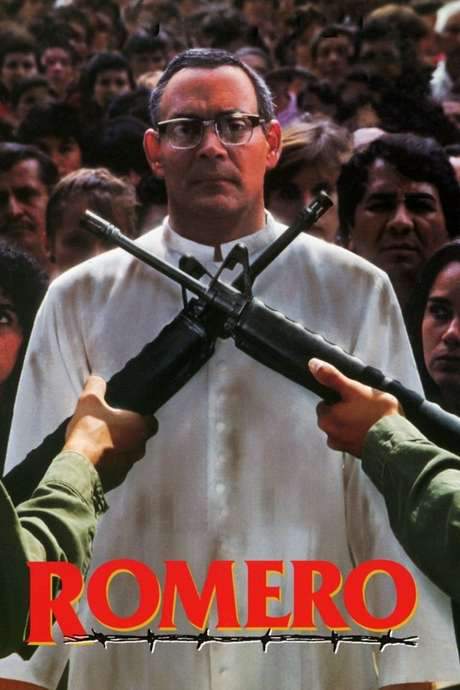
Romero (1989) movie poster

Timeline

Romero (1989) Timeline Explained – Every Event in Order

Release, runtime and language
1989 · 105 mins · English
Directed by
John Duigan
Starring
Richard Jordan, Tony Plana, Harold Gould, Damián Alcázar, Claudio Brook, Omar Rodríguez

Defending El Salvador’s poor with only the truth as his weapon, Romero follows Archbishop Oscar Romero’s journey from a quiet, apolitical priest to a courageous leader who sacrificed his life opposing social injustice and oppression. The film poignantly chronicles his transformation and unwavering stand for the Salvadoran people.

On this page (6)
  1. 1 Where to watch
  2. 2 Events in order (12)
  3. 3 Timeline questions answered
  4. 4 Movie threads
  5. 5 Movies like Romero
  6. 6 Every angle

Where to watch

Where to Watch Romero (1989)

Where can you watch Romero? Stream, rent or buy it in the US, including on Hoopla, Tubi TV and Amazon Video: current JustWatch availability with up-to-date prices.

Streaming availability powered by JustWatch

12 events in order · contains spoilers

Romero Timeline: Events in Chronological Order

Every key event of Romero (1989) in order, scene by scene, with when and where it takes place. Use it to untangle flashbacks, time jumps and parallel storylines, to refresh your memory before the sequel or to find the exact scene you are thinking of.

  1. Elevation to Archbishop of San Salvador

    The Vatican elevates Oscar Arnulfo Romero to Archbishop of San Salvador, hoping he remains apolitical. At first, Romero is cautious and wary of the government's hostility. He steps into his new role amid rising tensions and an atmosphere of fear.

    When
    1977
    Where
    San Salvador
  2. Election-day unrest and state coercion

    During the 1977 presidential election, public unrest peaks as fears of fraud spread. The military blocks a bus carrying voters to town, and when people walk to vote, soldiers attack the vans to prevent a return journey. The atmosphere is dangerous for ordinary citizens trying to participate in the vote.

    When
    1977
    Where
    El Salvador (nationwide)
  3. Assassination of Father Rutilio Grande

    The assassination of Father Rutilio Grande, a close ally of Romero and advocate for the poor, shocks the church and the country. The murder exposes the depths of state violence and deception. Romero's resolve strengthens as he begins to speak out against the regime's abuses.

    When
    1977
    Where
    San Salvador area
  4. Romero takes a public stand against the regime

    Romero shifts from cautious leadership to outspoken advocacy, using sermons and public statements to denounce human rights abuses. He confronts the government's lies and the violence faced by ordinary people. The church becomes a platform for protest and moral witness.

    When
    Late 1977
    Where
    Archdiocese of San Salvador
  5. Death squads target priests

    In response to Romero's criticisms, the military regime orders death squads to target priests and church leaders. The archdiocese becomes a focal point of repression as attacks on clergy intensify. The church stands at the frontline of the conflict.

    When
    1978
    Where
    San Salvador / Archdiocese
  6. Botched ransom and Osuna's capture

    A botched ransom attempt to rescue a pro-government hostage from guerrillas ends in failure. Following the failure, Romero learns that Father Osuna has been captured and subjected to torture. The personal cost of the conflict deepens Romero's resolve and fear for his friends.

    When
    Late 1970s
  7. Release of Osuna; boycott of inauguration

    After securing Osuna's release, Romero leads a boycott of the president-elect's inauguration. He defies the regime by saying Mass in a church the military has occupied as a barracks, turning a sacred space into a political statement. The act heightens tensions between the church and the state.

    When
    Late 1970s
    Where
    San Salvador
  8. Arrest during hostage negotiation

    Romero attempts to secure the release of a soldier hostage together with Fr. Osuna, but is arrested in the process. The arrest marks a period of intensified repression and demonstrates the regime's intolerance for negotiation. The struggle between the church and the authorities escalates.

    When
    Late 1970s
    Where
    San Salvador
  9. Fr. Osuna tortured to death

    Despite Romero's protests, Fr. Osuna is tortured to death by security forces. Romero's pleas go unheard, underscoring the regime's brutal response to dissent. The death deepens Romero's moral resolve but also personal tragedy.

    When
    Late 1970s
  10. Romero is assassinated during Mass

    Romero, who rejects the violent methods of the guerrillas, is assassinated while saying Mass and consecrating the Eucharist. The murder shocks the nation and the wider world, highlighting the brutal toll of El Salvador's civil conflict.

    When
    1980-03-24
    Where
    Catholic Church, San Salvador
  11. Closing text notes the war's toll by 1992

    The film closes with a text update: by 1992, when the Salvadorian Civil War ended, the total number of Salvadorans killed had risen to over 75,000. The statistic frames Romero's legacy within the broader national tragedy. The narrative links his martyrdom to the decades-long conflict.

    When
    1992
    Where
    El Salvador
  12. State oppression through disappearances

    The regime uses abductions, torture and disappearances to silence anyone who speaks about human rights abuses. The church becomes a refuge for dissidents, and Romero's witness amplifies those voices. The climate of fear saturates daily life in El Salvador.

    When
    Late 1970s
    Where
    El Salvador

Last updated: October 09, 2025 at 14:18

Was this helpful?

Timeline questions answered

Romero Timeline Explained: Your Questions Answered

When does it happen, and why in that order? The questions people ask about the chronology of Romero (1989): time jumps, flashbacks, cause and effect between scenes and the correct order of events, each answered with spoilers.

Q1

Why did Oscar Romero become more politically active?

The assassination of Father Rutilio Grande was the turning point that transformed Romero from a cautious, apolitical archbishop into an outspoken critic of the regime. Grande, a close ally who advocated for the poor, was murdered by death squads. This personal loss made the violence personal for Romero and convinced him that he could no longer remain silent while his people were being oppressed.

Foreshadowing: Earlier in the film, Romero is shown trying to maintain a pastoral, apolitical course even as government hostility grows around him.

  • Oscar Romero transformation
  • political activism
  • Rutilio Grande assassination
  • moral awakening
Q2

What was Father Rutilio Grande's significance to Romero?

Father Rutilio Grande was Romero's close friend and ally who openly advocated for the poor in El Salvador. His assassination by death squads in 1977 shocked Romero and marked the beginning of his moral awakening. Grande's death demonstrated that the regime's violence was not abstract but targeted those closest to Romero, compelling him to speak out.

  • Rutilio Grande
  • Romero friend
  • priest assassination
  • advocate for poor
Q3

Why did Romero reject the guerrillas' violent methods?

Romero consistently advocated for nonviolence throughout the conflict, even as he condemned the government's abuses. He believed that peaceful resistance and speaking truth to power was the morally correct approach, rejecting the violent insurgency of the Farabundo Martí National Liberation Front despite their opposition to the same regime. His nonviolent stance made him a target for both sides.

  • nonviolent resistance
  • guerrilla violence
  • FMLN
  • peaceful protest
Q4

What was the significance of Romero saying Mass in an occupied church?

Romero defied the regime by deliberately celebrating Mass in a church that the military had converted into a barracks. This act turned a sacred space into a bold political statement, asserting that religious practice could not be silenced by state occupation. It represented one of his most direct acts of resistance and further escalated tensions between the church and the government.

Foreshadowing: Earlier, Romero had begun using his sermons to publicly denounce human rights abuses.

  • military occupation
  • church as protest
  • defiance
  • Mass ceremony
Q5

Why was Father Osuna arrested and what happened to him?

Father Osuna was captured and tortured by security forces during a botched ransom attempt to rescue a pro-government hostage held by guerrillas. Later, when Romero attempted to negotiate the release of a soldier hostage, he was arrested in the process. Despite Romero's protests and appeals, Osuna was tortured to death in custody, deepening Romero's personal tragedy and moral resolve.

Foreshadowing: The timeline shows the botched ransom attempt occurring before Osuna's capture.

  • Father Osuna
  • torture
  • arrest
  • hostage negotiation
  • death in custody
Q6

Why did the Salvadoran government target priests and church leaders?

The regime targeted priests because the church had become a platform for dissent and a refuge for those opposing the dictatorship. As Romero publicly criticized human rights abuses and mobilized opposition, the military regime ordered death squads to silence church leaders who served as voices for the oppressed. The church represented an alternative power structure that threatened the government's control.

Foreshadowing: The film shows the church becoming increasingly vocal in its criticism of state violence.

  • death squads
  • church persecution
  • priests targeted
  • religious oppression
Q7

Why was Romero assassinated during Mass?

Romero was shot while consecrating the Eucharist during Mass on March 24, 1980. The timing was symbolically significant, the regime wanted to strike at the heart of his faith and ministry, killing him at the most sacred moment of Catholic worship. His assassination was the ultimate retaliation for his persistent criticism of government violence and his refusal to remain silent.

Foreshadowing: Throughout the film, Romero receives direct threats from the regime for his outspoken stance.

  • assassination 1980
  • murdered during Mass
  • martyrdom
  • Eucharist
Q8

What was the Vatican and church hierarchy's relationship with Romero?

The Vatican initially elevated Romero to archbishop hoping he would keep the church apolitical and steer it away from political entanglement. However, Romero's transformation into a vocal critic of the regime put him at odds with Vatican preferences for neutrality. Despite this tension, Romero remained committed to his path of speaking truth to power, even as it isolated him from some church authorities.

Foreshadowing: The film opens with the Vatican's decision to appoint Romero, expressing hope he would maintain a pastoral, non-political stance.

  • Vatican
  • church hierarchy
  • Rome
  • appointment
  • tension
Q9

What happened during the 1977 presidential election in El Salvador?

The 1977 election took place amid extreme public unrest and fears of fraud. The military blocked buses carrying voters to polling places, and when people attempted to walk to vote, soldiers attacked the vans to prevent their return. This violence demonstrated the regime's willingness to use deadly force to suppress dissent and ensure a fraudulent outcome.

Foreshadowing: The film opens with this election establishing the volatile atmosphere that Romero would inherit.

  • 1977 election
  • voter suppression
  • election fraud
  • military violence
Q10

How did death squads operate in El Salvador during Romero's time?

Death squads were paramilitary groups linked to the military government that abducted, tortured, and disappeared anyone who spoke out against the regime. They targeted activists, journalists, priests, and ordinary citizens who challenged the dictatorship. This campaign of terror created an atmosphere of fear designed to silence all forms of dissent.

Foreshadowing: The summary describes death squads as part of the daily reality of oppression throughout the late 1970s.

  • death squads
  • disappearances
  • torture
  • paramilitary
  • terror
Q11

What was Romero's legacy after the Salvadoran Civil War ended?

Romero's assassination in 1980 became a symbol of resistance against oppressive regimes in Latin America and worldwide. The film notes that by 1992, when the Salvadoran Civil War finally ended, over 75,000 people had been killed. Romero's transformation from cautious pastor to martyred prophet remains his enduring legacy, demonstrating the power of moral witness in the face of state violence.

  • legacy
  • 1992
  • civil war end
  • 75000 dead
  • martyrdom
  • canonization

Movie threads

More Movies Like Romero, by Mood & Story

Curated lists built around what makes Romero tick: the same mood, the same kind of story or the same emotional payoff. Each list explains why these movies belong together.

Movies about moral awakening like Romero

Ordinary individuals who find the courage to confront injustice. If you were moved by Romero's transformation, explore other films about personal moral awakenings against systems of power. These movies share a focus on character-driven journeys from apathy to action, often ending with heavy emotional weight and a powerful, tragic resonance.

  • morally urgent
  • defiant
  • sacrificial
  • somber
  • anxious
  • gripping
  • Tone: dark, morally urgent, tragic
  • Pacing: steady, character-driven escalation
Why these movies?

The story pattern: The narrative follows a linear, character-centric arc where an initially passive or complicit individual is confronted with systemic cruelty. Their internal conflict escalates as their conscience compels them to act, leading to a public defiance that puts them in direct, life-threatening conflict with the oppressive power.

Why they belong together: Movies in this thread are united by the core narrative of a singular character's ethical evolution. They share a heavy emotional weight, a steady pacing that builds tension through moral dilemmas, and a dark tone rooted in the grim reality of political or social violence.
Somber historical dramas like Romero

Gripping true stories of courage in the face of violent oppression. For viewers seeking more serious historical dramas like Romero, this list features films based on true stories of resistance. These movies share a somber, oppressive mood, high dramatic tension, and a focus on the high-stakes cost of standing up for what is right.

  • somber
  • oppressive
  • gripping
  • anxious
  • tragic
  • historically grounded
  • Tone: somber, oppressive, tragic
  • Pacing: steady, procedural
Why these movies?

The story pattern: Films in this thread are typically based on true events, unfolding with a steady, procedural pace that documents the escalation of a historical conflict. The narrative focuses on the clash between nonviolent or moral resistance and brutal state power, building inevitably towards a tragic historical outcome.

Why they belong together: These movies are grouped by their shared foundation in real-world history, their dark and somber tone, and their unflinching portrayal of political violence. They create a cohesive vibe of oppressive realism, high tension, and heavy emotional impact derived from factual tragedies.

If you liked this

Movies Like Romero

Similar movies to Romero: the same genre, themes or kind of story. Each one comes with its own plot summary, timeline and ending explained.

Browse all movie summaries

Every angle

Romero (1989) Explained: Plot, Timeline & Characters

Everything about Romero in one place: what happens in the plot summary, the timeline in chronological order, the characters and meaning and a spoiler-free summary. What's After the Movie adds the cast, box office and post-credit scenes.

Coming soon on iOS and Android

The Plot Explained Movie Summary App

Plot summaries, endings explained and timelines on your phone. Catch up on any movie in minutes, save your favorites and never miss a twist again.

Be the first to know when we launch. Your email stays private, always.

Learn more about the app