



Plot Explained Spoilers guaranteed!
Plot Explained

Browse by genre

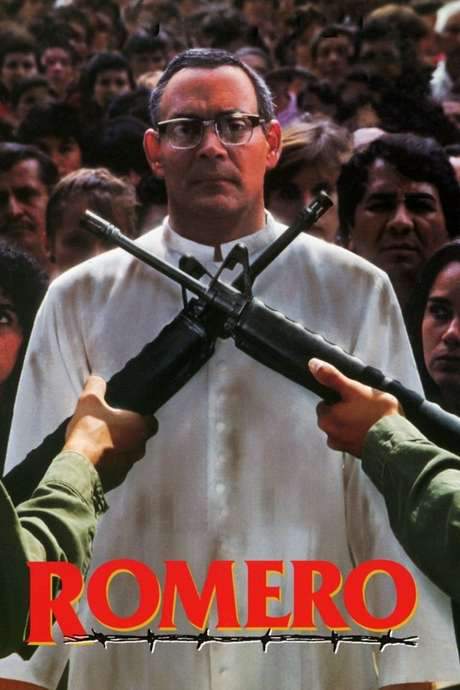
Romero (1989) movie poster

Characters & Themes

Romero (1989) Characters, Setting & Themes Explained

Release, runtime and language
1989 · 105 mins · English
Directed by
John Duigan
Starring
Richard Jordan, Tony Plana, Harold Gould, Damián Alcázar, Claudio Brook, Omar Rodríguez

Defending El Salvador’s poor with only the truth as his weapon, Romero follows Archbishop Oscar Romero’s journey from a quiet, apolitical priest to a courageous leader who sacrificed his life opposing social injustice and oppression. The film poignantly chronicles his transformation and unwavering stand for the Salvadoran people.

On this page (8)
  1. 1 Where to watch
  2. 2 Characters explained (3)
  3. 3 Where & when it takes place
  4. 4 Themes & meaning (4)
  5. 5 Character & meaning questions
  6. 6 Movie threads
  7. 7 Movies like Romero
  8. 8 Every angle

Where to watch

Where to Watch Romero (1989)

Where can you watch Romero? Stream, rent or buy it in the US, including on Hoopla, Tubi TV and Amazon Video: current JustWatch availability with up-to-date prices.

Streaming availability powered by JustWatch

3 main characters · contains spoilers

Romero Characters Explained: Who Is Who

The main characters of Romero (1989), heroes and villains: what drives them, how they change over the course of the story and what each of them reveals about the film's bigger ideas.

  • Archbishop Oscar Romero (Raúl Juliá)

    As San Salvador’s archbishop, he begins as a cautious, apolitical cleric but gradually embraces a prophetic role. His evolving stance against oppression places him in direct conflict with the regime, culminating in his assassination while celebrating Mass. The character embodies moral integrity and a willingness to risk personal safety for the vulnerable.

    • ✝️ Religious leader
    • 🕊️ Moral courage
    • 🎗️ Martyr
  • Father Rutilio Grande (Richard Jordan)

    A close ally of Romero and a vocal advocate for the poor, Grande’s martyrdom acts as a catalyst for Romero’s shift toward public dissent. His commitment to social justice and fearless critique of inequality is depicted as a driving force behind the archbishop’s eventual stand.

    • ✝️ Priest
    • 🕊️ Social justice
    • 🎗️ Martyr
  • Father Alfonzo Osuna (Alejandro Bracho)

    Osuna is a militant critic of the regime who is captured and tortured. Romero’s effort to secure his release fails, and Osuna’s death underscores the brutality of the conflict. The character embodies the cost of dissent and the risks faced by outspoken clergy.

    • ✝️ Priest
    • 🪧 Oppressed ally

Last updated: October 04, 2025 at 14:04

Was this helpful?

Setting

Where and When Does Romero Take Place?

The setting of Romero (1989): the year and time period, the places and locations, and how they shape the characters, the mood and the tension of the story.

Time period

Late 1970s

The events unfold around the 1977 presidential election and the ensuing civil strife. The regime deploys death squads and blocks voters, while guerrillas wage a harsh insurgency. The film also foreshadows the prolonged conflict that culminates in the Salvadoran Civil War, which lasts into the early 1990s.

Location

San Salvador, El Salvador

Set in San Salvador, the capital of El Salvador, the film depicts a country under a repressive, anti-communist dictatorship during the late 1970s. The city and surrounding regions are scenes of protests, militarized routes, and disappearances as the regime fights a growing guerrilla insurgency. The setting highlights a society under siege where faith institutions and civilians are increasingly targeted.

  • 🇸🇻 El Salvador
  • 🏙️ San Salvador
  • ⚔️ Political unrest

Last updated: October 04, 2025 at 14:04

Was this helpful?

4 major themes

Romero Meaning: Themes & Message Explained

What is Romero (1989) really about? The emotional, social and philosophical themes the film keeps returning to, its symbolism and the message beneath the surface.

  • Moral Courage

    Archbishop Romero begins to act on his conscience, moving from cautious silence to outspoken critique of the regime. His sermons and public statements reveal a rising willingness to place justice above political convenience. The theme centers on how personal faith can translate into public moral action amid danger.

  • State Violence

    The government’s death squads, disappearances, and political intimidation form the film’s grim backdrop. The narrative shows how state violence is used to suppress dissent and maintain power, often hitting innocent civilians and religious figures alike. It also frames violence as a mirror of the regime’s fear and fragility.

  • Nonviolent Resistance

    Despite escalating danger, Romero advocates peaceful resistance such as Mass, boycotts, and moral suasion instead of retaliation. The film portrays the power and limits of nonviolent protest when the regime refuses to concede. This theme emphasizes dignity, solidarity, and civil courage in the face of oppression.

  • Religious Authority Under Pressure

    The Vatican’s cautious stance contrasts with Romero’s exposed conscience and public advocacy. The church becomes a battleground for moral authority as faith leaders navigate political pressures, fear, and killers. The narrative examines how religious institutions can act as catalysts for justice or targets of the regime.

Last updated: October 04, 2025 at 14:04

Was this helpful?

Character & theme questions

Romero Characters & Meaning: Your Questions Answered

The questions people ask about Romero (1989): who the characters really are, their relationships, what the symbols mean, where it takes place and what the movie is really about. Each answer contains spoilers.

Q1

Where does the movie take place?

The film is set in San Salvador, the capital of El Salvador, during the late 1970s. It depicts a country under a repressive, anti-communist dictatorship where protests, militarized routes, and disappearances are common. The setting shows a society under siege where faith institutions and civilians are increasingly targeted by state violence.

  • san salvador
  • el salvador
  • setting
  • capital city
Q2

When is the movie set?

The movie takes place in the late 1970s, around the 1977 presidential election and the ensuing civil strife. The film foreshadows the prolonged conflict that would culminate in the Salvadoran Civil War, which lasted into the early 1990s. This was a period of intense political violence and state repression in El Salvador.

  • 1970s
  • time period
  • 1977
  • historical era
  • el salvador civil war
Q3

What does the film say about moral courage?

The film explores how Archbishop Oscar Romero transforms from a cautious, apolitical priest into a courageous leader who places justice above political convenience. His journey shows how personal faith can translate into public moral action amid danger. The theme highlights the cost of speaking out against oppression and the personal risks involved in taking a principled stand.

  • moral courage
  • faith
  • conscience
  • prophetic role
  • justice
Q4

How does the film portray state violence in El Salvador?

The film depicts the government’s death squads, disappearances, and political intimidation as a grim backdrop to the story. State violence is shown as a tool used to suppress dissent and maintain power, often targeting innocent civilians and religious figures. The narrative frames this violence as a mirror of the regime’s fear and fragility in the face of growing resistance.

  • death squads
  • state violence
  • repression
  • disappearances
  • political terror
Q5

What is the movie's message about nonviolent resistance?

Despite escalating danger, Romero advocates peaceful resistance through Mass, boycotts, and moral suasion rather than retaliation. The film portrays both the power and limits of nonviolent protest when the regime refuses to concede. This theme emphasizes dignity, solidarity, and civil courage in the face of oppression.

  • nonviolent resistance
  • peaceful protest
  • mass
  • boycotts
  • civil courage
Q6

How does the film depict the Catholic Church during this period?

The Vatican’s cautious stance contrasts with Romero’s exposed conscience and public advocacy. The church becomes a battleground for moral authority as faith leaders navigate political pressures, fear, and killers. The narrative examines how religious institutions can act as catalysts for justice or targets of the regime.

  • catholic church
  • vatican
  • religious authority
  • faith institutions
  • clergy
Q7

Who is Archbishop Oscar Romero in the film?

Archbishop Oscar Romero is the central figure, portrayed by Raúl Juliá. He begins as a cautious, apolitical cleric in San Salvador but gradually embraces a prophetic role against oppression. His evolving stance places him in direct conflict with the regime, ultimately leading to his assassination while celebrating Mass. The character embodies moral integrity and a willingness to risk personal safety for the vulnerable.

  • oscar romero
  • archbishop
  • raúl juliá
  • protagonist
  • martyrdom
Q8

Who is Father Rutilio Grande and why is he important?

Father Rutilio Grande, played by Richard Jordan, is a close ally of Romero and a vocal advocate for the poor. His martyrdom acts as the catalyst for Romero’s transformation from cautious silence to outspoken dissent. Grande’s commitment to social justice and fearless critique of inequality is depicted as the driving force behind the archbishop’s eventual public stand against the regime.

  • rutilio grande
  • father jordan
  • ally
  • catalyst
  • martyr
Q9

Who is Father Alfonzo Osuna?

Father Alfonzo Osuna, portrayed by Alejandro Bracho, is a militant critic of the regime who is captured and tortured. Romero’s effort to secure his release fails, and Osuna’s death underscores the brutality of the conflict. The character embodies the cost of dissent and the extreme risks faced by outspoken clergy in El Salvador during this period.

  • alfonzo osuna
  • torture
  • captured
  • cost of dissent
  • clergy risk
Q10

What was happening in El Salvador during the late 1970s?

During the late 1970s, El Salvador was under a repressive, anti-communist dictatorship. The regime deployed death squads and blocked voters while guerrillas waged a harsh insurgency. The country experienced widespread human rights abuses, including targeted assassinations of religious figures and social activists, setting the stage for the Salvadoran Civil War.

  • political context
  • dictatorship
  • guerrilla insurgency
  • death squads
  • human rights

Movie threads

More Movies Like Romero, by Mood & Story

Curated lists built around what makes Romero tick: the same mood, the same kind of story or the same emotional payoff. Each list explains why these movies belong together.

Movies about moral awakening like Romero

Ordinary individuals who find the courage to confront injustice. If you were moved by Romero's transformation, explore other films about personal moral awakenings against systems of power. These movies share a focus on character-driven journeys from apathy to action, often ending with heavy emotional weight and a powerful, tragic resonance.

  • morally urgent
  • defiant
  • sacrificial
  • somber
  • anxious
  • gripping
  • Tone: dark, morally urgent, tragic
  • Pacing: steady, character-driven escalation
Why these movies?

The story pattern: The narrative follows a linear, character-centric arc where an initially passive or complicit individual is confronted with systemic cruelty. Their internal conflict escalates as their conscience compels them to act, leading to a public defiance that puts them in direct, life-threatening conflict with the oppressive power.

Why they belong together: Movies in this thread are united by the core narrative of a singular character's ethical evolution. They share a heavy emotional weight, a steady pacing that builds tension through moral dilemmas, and a dark tone rooted in the grim reality of political or social violence.
Somber historical dramas like Romero

Gripping true stories of courage in the face of violent oppression. For viewers seeking more serious historical dramas like Romero, this list features films based on true stories of resistance. These movies share a somber, oppressive mood, high dramatic tension, and a focus on the high-stakes cost of standing up for what is right.

  • somber
  • oppressive
  • gripping
  • anxious
  • tragic
  • historically grounded
  • Tone: somber, oppressive, tragic
  • Pacing: steady, procedural
Why these movies?

The story pattern: Films in this thread are typically based on true events, unfolding with a steady, procedural pace that documents the escalation of a historical conflict. The narrative focuses on the clash between nonviolent or moral resistance and brutal state power, building inevitably towards a tragic historical outcome.

Why they belong together: These movies are grouped by their shared foundation in real-world history, their dark and somber tone, and their unflinching portrayal of political violence. They create a cohesive vibe of oppressive realism, high tension, and heavy emotional impact derived from factual tragedies.

If you liked this

Movies Like Romero

Similar movies to Romero: the same genre, themes or kind of story. Each one comes with its own plot summary, timeline and ending explained.

Browse all movie summaries

Every angle

Romero (1989) Explained: Plot, Timeline & Characters

Everything about Romero in one place: what happens in the plot summary, the timeline in chronological order, the characters and meaning and a spoiler-free summary. What's After the Movie adds the cast, box office and post-credit scenes.

Coming soon on iOS and Android

The Plot Explained Movie Summary App

Plot summaries, endings explained and timelines on your phone. Catch up on any movie in minutes, save your favorites and never miss a twist again.

Be the first to know when we launch. Your email stays private, always.

Learn more about the app