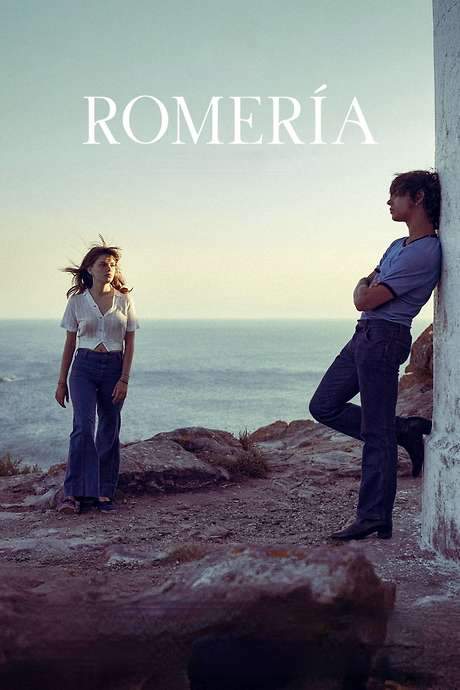
In 2004, Llúcia Garcia as Marina Piñeiro, an 18-year-old orphan, travels to Vigo for five days to uncover the truth about her biological father, who died of AIDS, and to pursue a scholarship to study film. She lands on a houseboat where she stays with her uncle Lois, his wife Denise, and their children Nuno, Basilio, and Eugene. She asks about where her parents lived; Lois insists they resided in Playa Samil, but Marina presses that they really lived in Toralla—a version later echoed by her uncle Iago and by Marina's mother's diary, which she carries with her. Throughout her stay, family members repeatedly note the striking physical resemblance between Marina and her mother, a fact that both unsettles and draws her deeper into their shared history.
During the days, she visits her Aunt Olalla, who crafts a red dress for her in a boutique before they head to the beach with Aunt Virxinia. As the news of Marina’s arrival spreads, awkward moments surface, including a tense moment when some young cousins claim Olalla warned them not to touch her, insisting, > she is sick because of her blood. The line lands with a chill, underscoring the secrecy and stigma that shadow Marina’s family. Meanwhile, Marina grows closer to Alberto Gracia as Iago, a figure the family regards with disappointment because he reminds them of Marina’s father. Tension peaks during a visit to Aunt Xulia’s cabin, where Xulia reveals that Marina’s father died in 1992, contradicting the version Marina had believed for years—that he died in 1987 when she was a baby.
When the family visits the grandparents, Marina is met with coldness from her Grandmother, while her Grandfather hands her an envelope of money to support her future film career. Marina would have preferred a scholarship, but she accepts the money nonetheless. She later learns from Nuno that her grandparents kept her father isolated and socially distant from the time he contracted AIDS until his death, a revelation that deeply colors Marina’s understanding of her roots.
That night, Marina and Nuno slip away from the houseboat. She leaves the envelope at the grandparents’ doorway and tosses old leaves into their swimming pool, then the pair join the Fiestas de Vigo. There, she encounters Iago at a bar, who explains that her father didn’t abandon her out of neglect, but because he could not resist the pull of heroin and chose to stay away before the situation worsened. Marina then walks the streets of Vigo until she reaches the port and takes a rowboat back to Toralla.
In a dreamlike sequence, Marina is transported back to 1983, arriving in Toralla and catching sight of her parents on the rooftop of the building they once shared. Her mother’s voice narrates fragments from a diary written in Catalan, revealing scenes of the couple traveling by boat, playing naked on the beach, and attending the Fiestas de Vigo while struggling with addiction. Their relationship collapses in 1986 after severe heroin withdrawal, forcing Marina’s mother to leave Vigo while pregnant with Marina.
Back in the present, Marina returns to the grandparents to sign documents proving she is her father’s daughter so she can secure the scholarship to study film in Barcelona. Her Grandmother remarks on how closely Marina resembles her father as Marina gazes out at the sea from a window. Later that afternoon, she sails on Lois’s boat with him and his family, filming dolphins that leap beside the vessel with the video camera she has used to document her Vigo journey. The voyage completes as Marina comes to terms with the family’s past, her own future in film, and the fragile, lasting bond that ties her to the sea and to Toralla.