Plot Explained Spoilers guaranteed!
Plot Explained

Browse by genre

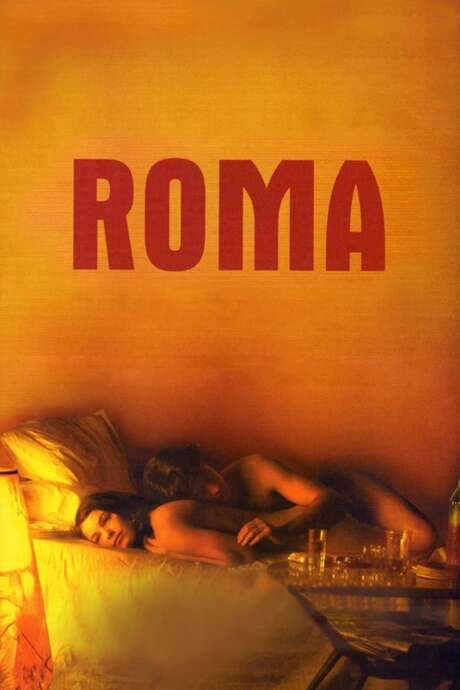
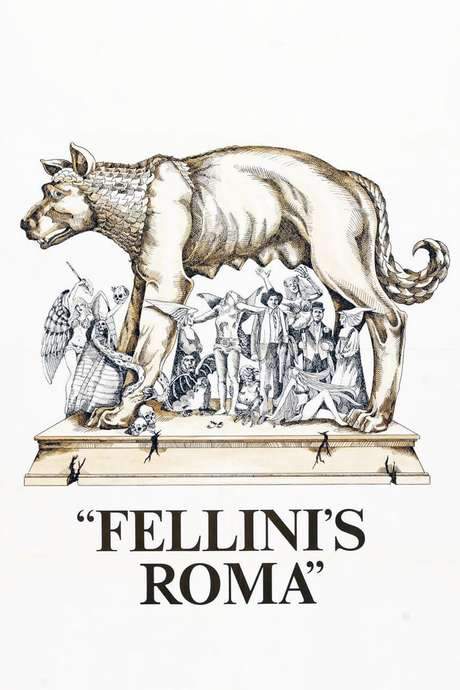
Roma (1972) movie poster

Plot Summary

Roma (1972) Plot Summary Explained

Release, runtime and language
1972 · 120 mins · Italian
Starring
Marcello Mastroianni, Federico Fellini, Alberto Sordi, Cassandra Peterson, Gore Vidal, Feodor Chaliapin Jr.

The fall of the Roman Empire 1931-1972. A virtually plotless, gaudy, impressionistic portrait of Rome through the eyes of one of its most famous citizens.

On this page (5)
  1. 1 What happens: full plot
  2. 2 Plot questions answered
  3. 3 Movie threads
  4. 4 Movies like Roma
  5. 5 Every angle

Full plot summary · contains spoilers

What Happens in Roma: Full Plot Summary

The whole story of Roma (1972) explained, from the opening scene to the final frame: every key event, every twist and what it all adds up to. Read it as a quick recap before the sequel, to check a scene you missed, or to finally understand what really happened.

Federico Fellini recounts his youth in Rome, weaving memory with the city’s vibrant, contradictory pulse. The film opens with a prolonged traffic jam that signals how the city moves through history, shifting from the Fascist-era 1930s to the mood of the 1970s. A young Fellini moves into a lively guesthouse filled with eccentric residents, run by a frail, obese landlady. He visits two brothels, one dilapidated and overcrowded, the other stylish and luxurious, and appears to fall for a woman working in the latter. The film paints a broader picture of Rome through a sequence of vivid vignettes: a cheap vaudeville theater, bustling streets, hidden tunnels, and an ancient catacomb whose frescoes are threatened by fresh air as excavators uncover it. One unforgettable moment in the vaudeville theater shows an irate patron hurling a dead cat onto the stage, a bold act of protest that lingers in memory.

The centerpiece unfolds as an extravagant liturgical fashion show staged by an elderly noblewoman, with a cardinal and other guests watching priests and nuns parade in surreal, ceremonial costumes. As the city moves toward the end, a group of young motorcyclists rides through the urban landscape, injecting a note of rebellion and life into the frame. The film closes on a quiet, melancholic note with a brief, poignant cameo by actress Anna Magnani, whom the crew met on the street during filming and who would die a few months later. The narrative blends autobiography with a dreamlike panorama of Rome, inviting viewers to read memory as a living, moving city where history, fantasy, and everyday life intersect in surprising ways.

Last updated: February 24, 2026 at 13:56

Was this helpful?

Plot questions answered

Roma Plot Explained: Your Questions Answered

The questions people ask most about Roma (1972): what happens in the confusing scenes, why the characters do what they do, the twists, hidden details and what the ending means. Each answer contains spoilers.

Q1

What is the significance of the Mussolini lookalike in the guesthouse?

The Mussolini lookalike represents how Fascist culture permeated everyday life in 1930s Rome. His presence among ordinary guests in the guesthouse shows how the line between authoritarian myth and domestic reality was blurred. Fellini uses this surreal detail to comment on how political spectacle became embedded in the fabric of daily Italian life.

  • mussolini lookalike
  • fascist era
  • guesthouse
  • political satire
Q2

What does the extravagant fashion show with priests and nuns represent?

The fashion show satirizes the theatrical nature of religious and political power in Rome. An elderly noblewoman stages this elaborate event for a cardinal, where sacred vestments become absurd costumes. Fellini critiques how the Catholic Church mixes spiritual authority with worldly spectacle, turning liturgy into performance.

  • fashion show
  • cardinal
  • priests
  • nuns
  • satire
  • church power
Q3

Why does a patron throw a dead cat onto the stage during the vaudeville show?

The irate patron hurls a dead cat as a violent protest against the poor quality of the entertainment. This shocking act represents audience frustration with cheap vaudeville and the breakdown of the performer-spectator relationship. It captures the raw, chaotic energy of Rome's underground entertainment scene.

  • dead cat
  • vaudeville theater
  • protest
  • entertainment
Q4

Why are the catacomb frescoes damaged when discovered?

The ancient frescoes decay rapidly when exposed to fresh air after centuries in darkness. This symbolizes the fragility of historical memory and how discovery itself can destroy what it aims to preserve. Fellini uses this to reflect on themes of impermanence and the difficulty of preserving the past.

  • catacombs
  • frescoes
  • preservation
  • decay
  • history
Q5

Why is Anna Magnani's cameo significant to the film's ending?

Fellini encountered Magnani on the street during filming and she appears briefly in the film. She died months later, making this an unintentional farewell. The cameo connects the film to real Roman cinema history and adds bittersweet weight to the film's meditation on time and memory.

  • anna magnani
  • cameo
  • death
  • roman cinema
  • bittersweet
Q6

What attracts the young Fellini to the prostitute at the luxurious brothel?

At the stylish brothel, Fellini becomes smitten with a prostitute, finding romance amid the city's seedier aspects. The encounter represents youthful longing and the complexity of desire in urban spaces. It reflects how the young filmmaker saw beauty and tenderness even in marginal places.

  • prostitute
  • romance
  • brothel
  • desire
  • youth
Q7

What do the motorcyclists represent in the film's final sequence?

Young motorcyclists riding through Rome in the 1970s inject rebellious energy that contrasts with earlier scenes of Fascist authority and religious ritual. They symbolize a generational shift and the changing nature of the city. Their arrival propels the film toward its uncertain, vibrant conclusion.

  • motorcyclists
  • rebellion
  • 1970s
  • generational change
Q8

Why does the film show two different brothels?

The first brothel is dilapidated and overcrowded, revealing harsh urban reality, while the second is luxurious and stylish where Fellini finds romance. This contrast paints a complete picture of Rome's sexual underworld. Together they show the spectrum of desire, poverty, and aspiration in the city.

  • brothels
  • contrast
  • red-light district
  • rome underworld
Q9

Why does the film move between different time periods without a clear story?

Roma uses an impressionistic, non-linear structure to mirror how memory actually works. Fellini shifts between his youth in the 1930s and the 1970s, creating a dreamlike collage rather than a traditional plot. This approach reflects Rome itself as a city where different eras coexist and overlap.

  • non-linear
  • memory
  • time periods
  • impressionistic structure
Q10

Why does the film open with a long traffic jam entering Rome?

The opening traffic jam sets Rome as a chaotic, living stage where movement is slow and history accumulates. Cars crawl toward the city as it shifts from the 1930s to the 1970s, establishing Rome as the true subject. The jam introduces the film's themes of urban congestion and historical layering.

  • traffic jam
  • opening scene
  • rome
  • city
  • arrival

Movie threads

More Movies Like Roma, by Mood & Story

Curated lists built around what makes Roma tick: the same mood, the same kind of story or the same emotional payoff. Each list explains why these movies belong together.

Atmospheric memory journeys like Roma

Films that wander through nostalgic and disillusioned personal histories. Discover movies like Roma that use a slow, impressionistic pace to explore memory, nostalgia, and societal change. If you enjoyed the personal and reflective feel of Roma, these films offer similar melancholic journeys through time.

  • nostalgic
  • melancholic
  • reflective
  • dreamlike
  • autobiographical
  • satirical
  • Tone: melancholic, reflective, bittersweet
  • Pacing: slow, meandering
Why these movies?

The story pattern: Narratives in this thread are often non-linear and episodic, structured as a series of vignettes or impressions rather than a conventional plot. They follow a character's—or a filmmaker's—reflective journey into the past, uncovering moments of beauty alongside disillusionment and decay.

Why they belong together: These films are grouped by their shared meditative tone, slow pacing, and focus on personal and collective memory. They create a cohesive experience by balancing nostalgic warmth with a clear-eyed view of decay and the passage of time.

Surreal satirical films like Roma

Absurd and surreal films that critique society with dark humor. Looking for movies with the surreal and satirical edge of Roma? These films use dreamlike imagery and dark humor to critique society, art, and politics, creating a uniquely thought-provoking and grotesque viewing experience.

  • satirical
  • grotesque
  • surreal
  • dreamlike
  • critical
  • absurd
  • Tone: satirical, grotesque, surreal
  • Pacing: variable, impressionistic
Why these movies?

The story pattern: Stories often lack a traditional plot, instead presenting a fragmented or allegorical portrait of a world in decline. The narrative structure is unconventional, using absurd vignettes and symbolic imagery to build a satirical argument about its subject.

Why they belong together: Movies in this thread share a commitment to using surreal and grotesque elements as tools for social commentary. They connect through a unique blend of dark humor, visual inventiveness, and a critical, often disillusioned, view of their subject matter.

If you liked this

Movies Like Roma

Similar movies to Roma: the same genre, themes or kind of story. Each one comes with its own plot summary, timeline and ending explained.

Browse all movie summaries

Every angle

Roma (1972) Explained: Plot, Timeline & Characters

Everything about Roma in one place: what happens in the plot summary, the timeline in chronological order, the characters and meaning and a spoiler-free summary. What's After the Movie adds the cast, box office and post-credit scenes.

Coming soon on iOS and Android

The Plot Explained Movie Summary App

Plot summaries, endings explained and timelines on your phone. Catch up on any movie in minutes, save your favorites and never miss a twist again.

Be the first to know when we launch. Your email stays private, always.

Learn more about the app