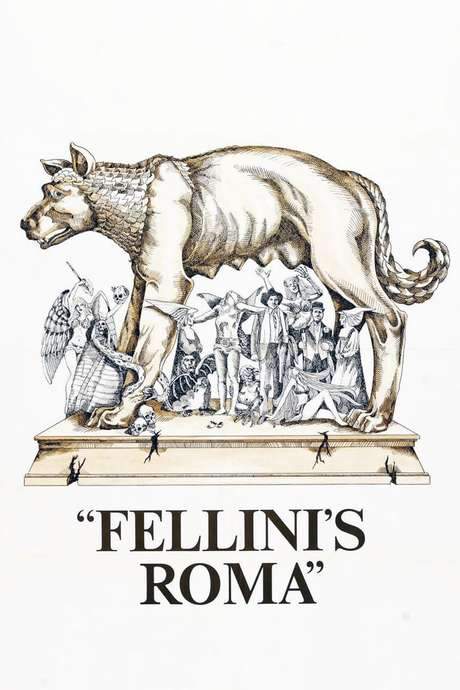
In a sweeping, almost painterly portrait of a city that never stops moving, the film captures Rome as a living museum of contradictions. From the lingering haze of the 1930s fascist streets to the restless pulse of the early 1970s, the camera drifts through traffic jams, hidden tunnels, and ancient catacombs, turning each alley and piazza into a tableau that feels both historic and immediate. The tone is deliberately impressionistic—gaudy colors clash with muted shadows, and the ordinary is rendered with a grandeur that suggests memory itself is a city of its own.
At the heart of this kaleidoscope is Federico Fellini, a young dreamer whose eyes become the audience’s guide. He settles into a bustling guesthouse run by an endearing, if slightly corpulent, landlady, sharing the cramped roof with an eclectic cast of residents whose quirks pulse like a second heartbeat beneath the city’s own rhythm. Through his perspective, the viewer is invited to wander between the private and the public, feeling the city’s texture through his youthful curiosity and occasional mischief.
The film stitches together a series of vivid vignettes that feel like moving paintings: cramped brothels that whisper of hidden desires, a dilapidated vaudeville theater where a disgruntled patron unleashes an unforgettable protest, and an extravagant liturgical fashion show where clergy parade in surreal costume under the watchful eyes of aristocracy. A pack of motorcyclists slices through the streets, injecting a flash of rebellion that mirrors the restless energy of Rome itself. Each scene is less a plot point than a brushstroke, building an atmosphere that is as intoxicating as it is disorienting.
A fleeting, poignant cameo by Anna Magnani—caught in the bustling streets as if by chance—adds a final, bittersweet note to the film’s dreamlike montage. Her brief appearance underscores the sense that Rome is a collage of fleeting encounters, where fame and anonymity, past and present, constantly intersect. The movie leaves the audience with the feeling that they have walked through a living memory, where every corner holds a story waiting to be imagined.











-HOGtBZMKH4I3HQ.jpg)