







Plot Explained Spoilers guaranteed!
Plot Explained

Browse by genre

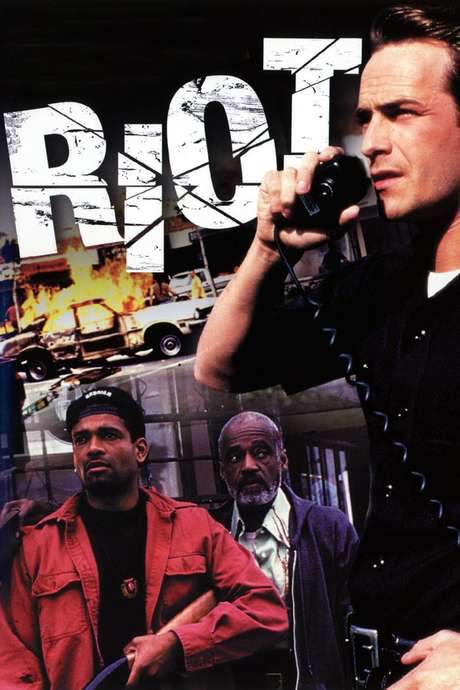
Riot (1997) movie poster

Timeline

Riot (1997) Timeline Explained – Every Event in Order

Release, runtime and language
1997 · 95 mins · English
JustWatch #17,330 5
Directed by
Richard Di Lello, David C. Johnson
Starring
MAKO, John Ortiz, Lucy Liu, Mario Van Peebles, Melvin Van Peebles, Luke Perry

In April 1992, after the controversial Rodney King verdict, Los Angeles erupts into violent unrest. The city’s streets become a battlefield, serving as the backdrop for four interwoven personal narratives that explore how ordinary lives are caught up in the chaos and tension of the riots.

On this page (6)
  1. 1 Where to watch
  2. 2 Events in order (12)
  3. 3 Timeline questions answered
  4. 4 Movie threads
  5. 5 Movies like Riot
  6. 6 Every angle

Where to watch

Where to Watch Riot (1997)

Where can you watch Riot? Stream, rent or buy it in the US, including on Cineverse, fuboTV and Fawesome: current JustWatch availability with up-to-date prices.

Streaming availability powered by JustWatch

12 events in order · contains spoilers

Riot Timeline: Events in Chronological Order

Every key event of Riot (1997) in order, scene by scene, with when and where it takes place. Use it to untangle flashbacks, time jumps and parallel storylines, to refresh your memory before the sequel or to find the exact scene you are thinking of.

  1. Verdict sparks unrest

    Following the Rodney King verdict, Los Angeles erupts in riots and unrest. The film uses four interwoven stories to show ordinary people trying to cope with fear, anger, and chaos in the city. The setting becomes a pressure cooker where personal tensions are tested against social upheaval.

    When
    Evening of the verdict
    Where
    Los Angeles, CA
  2. Father-son clash in the liquor store

    In the liquor store, the Chinese owner grapples with his assimilating teenage son. The son's non-aggressive Buddhist stance and view of his father's Old World ways are seen as weakness by the father. Their disagreement centers on how to navigate identity in a city tearing itself apart.

    When
    Night
    Where
    Liquor store
  3. Hispanic teen pursues schooling to escape his past

    The Hispanic teenager strives to stay straight and excel in school to support his family. He tries to resist gangs and his older brother's mistakes, steering toward a lawful path. The narration follows the tension between aspiration and social pressures.

    When
    Daytime
    Where
    Home and School
  4. Officer confronts personal relationship conflicts

    The white LAPD officer struggles with obligations to his girlfriend and not-quite-wife, balancing private life with the demands of law enforcement. He confronts a culture at the station that prizes aggression and a 'tough guy' mentality. His inner conflict tests his sense of duty and identity.

    When
    Night shift
    Where
    LAPD precinct
  5. Colleagues push a hardline stance

    Within the squad, a surprisingly aggressive attitude emerges from fellow officers, pressuring him to conform. He weighs whether to go along with the hardline approach or to chart a more restrained path. The tension captures the moral gray areas of policing during a riot.

    When
    Evening
    Where
    Police precinct / street patrol
  6. Middle-class Black man returns to old neighborhood

    An African American man who has moved his family into a better area revisits the storefront his father once owned. He hopes to bring good news to his mother, who carries vivid memories from the Watts riots. The visit underscores the contrast between aspiration and communal history.

    When
    Afternoon
    Where
    Old neighborhood liquor store
  7. Mother remembers Watts; seeking reassurance

    The mother reflects on the Watts riots and the losses she endured decades earlier. Her memories color her reaction to the current crisis, shaping how she guides her son and the community. Her emotional steadiness anchors the family’s responses to upheaval.

    When
    Evening
    Where
    Mother's home
  8. Intersections reveal shared tensions

    The liquor store becomes a crossroads where different generations, races, and ambitions intersect. Across the counter, each character's worries about safety, belonging, and future prospects surface. The interactions highlight how personal and collective history collide.

    When
    Evening
    Where
    Liquor store
  9. Small acts of solidarity amid chaos

    In the midst of upheaval, small acts of care emerge—a customer checks on others, a family stays together, a neighbor safeguards a storefront. These moments show resilience even when the streets tremble. They hint at bridging divides despite the rioting.

    When
    Night
    Where
    Neighborhood storefronts
  10. A test of temper and loyalty

    A confrontation near the store pushes characters to choose between self-preservation and responsibility to others. The decision has ripple effects across the four narratives. The scene crystallizes the film’s exploration of competing loyalties.

    When
    Night
    Where
    Near the liquor store
  11. Glimmers of possible reconciliation

    As the peak of the unrest passes, each character contemplates paths toward reconciliation. The son rededicates himself to his studies, the father rethinks his expectations, the officer questions his approach, and the mother remains a steady voice of memory and hope. Small resolutions feel earned amid ongoing tensions.

    When
    Post-riot aftermath
    Where
    Various: home, store, precinct
  12. The city endures; the four stories continue

    The film closes with a sense that life goes on despite scars. The four stories remain nominally separate but their choices and struggles echo across each other. The viewer is left with questions about belonging, accountability, and the possibility of change in a divided city.

    When
    Aftermath
    Where
    Los Angeles

Last updated: February 17, 2026 at 19:58

Was this helpful?

Timeline questions answered

Riot Timeline Explained: Your Questions Answered

When does it happen, and why in that order? The questions people ask about the chronology of Riot (1997): time jumps, flashbacks, cause and effect between scenes and the correct order of events, each answered with spoilers.

Q1

Why does Mr. Lee's son view his father's non-aggressive Buddhist stance as weakness?

The son sees his father's adherence to Old World customs and peaceful philosophy as out of place during the chaotic riots. In a city tearing itself apart where survival often depends on visible strength and assertion, the father's calm, non-confrontational approach reads to the son as passivity or inability to protect the family. This generational and cultural gap highlights the tension between immigrant traditions and the demands of adapting to a fractured urban landscape.

Foreshadowing: Earlier scenes establish the son's assimilation and his desire to be seen as tough in a neighborhood where vulnerability invites danger.

  • father son conflict
  • buddhism
  • generational divide
  • cultural identity
  • immigrant family
Q2

Why does Carlos reject his brother's criminal path and pursue schooling instead?

Carlos consciously chooses education as his way out of a neighborhood scarred by violence and limited opportunities. His older brother's mistakes serve as a cautionary example, and Carlos carries the weight of wanting to provide a steadier future for his current and future family. His pursuit of academic success represents a deliberate rejection of the gang lifestyle that surrounds him, driven by both family obligation and personal ambition for a different life.

Foreshadowing: The tension between aspiration and social pressure is established early when Carlos struggles with daily decisions about which path to take.

  • education
  • gang pressure
  • family obligation
  • hispanic character
  • personal responsibility
Q3

Why does Officer Ciaca struggle with his colleagues' hardline approach during the riots?

Ciaco faces pressure from fellow officers who embrace a tough, aggressive policing style that rewards bravado over restraint. His personal loyalties conflict with professional expectations, he balances obligations to his girlfriend and not-quite-wife against a department culture that prizes confrontation. The riot environment intensifies this tension, forcing him to choose between conforming to institutional norms or maintaining his own moral compass.

Foreshadowing: His internal conflict is hinted at during early scenes at the precinct where he observes but does not immediately participate in aggressive talk.

  • police culture
  • loyalty conflict
  • law enforcement
  • moral dilemma
  • personal identity
Q4

Why does Vernon's mother compare the LA riots to the Watts riots she lived through?

Mrs. Lee carries vivid memories of the Watts riots from thirty years earlier, making the current upheaval feel painfully familiar. Her lived experience of past racial violence shapes her perspective on the current crisis, giving her emotional depth and a historical context that informs how she guides her son. The comparison underscores the film's theme of generational trauma and the cyclical nature of civil unrest in Los Angeles.

Foreshadowing: The mother's recollection is seeded early when Vernon mentions bringing good news to ease her anxieties about the current unrest.

  • watts riots
  • generational trauma
  • historical memory
  • mother son relationship
  • racial injustice
Q5

How do the four separate storylines intersect and influence each other?

The four narratives constantly interact through shared spaces and small moments. The liquor store serves as a critical crossroads where different generations, races, and ambitions intersect. Characters' decisions ripple across one another, a choice made by one person affects the safety and concerns of others. The film shows how personal struggles mirror larger social currents, with each storyline illuminating aspects of the city's collective tension.

Foreshadowing: Timeline events establish the liquor store as a recurring meeting point where concerns about safety and belonging surface across characters.

  • interconnected stories
  • vignette structure
  • character intersection
  • narrative technique
  • los angeles
Q6

What triggers the confrontation near the liquor store in the film?

The confrontation emerges from the heightened tensions of the riot-affected neighborhood, where fear and suspicion drive people to make split-second decisions about self-preservation versus responsibility to others. Characters are pushed to choose between protecting themselves or risking safety for community. This moment crystallizes the film's exploration of competing loyalties, with the outcome rippling across all four narratives.

Foreshadowing: Earlier buildup shows mounting pressures on each character, creating the conditions for this eruption.

  • confrontation
  • violence
  • choice
  • survival
  • community
Q7

Why do small acts of solidarity appear amid the chaos of the riots?

Despite the widespread violence and division, characters perform quiet acts of care, a customer checks on others, a family stays together, a neighbor safeguards a storefront. These moments reveal the film's message that resilience and human connection persist even in the most fractured environments. They represent hope and the possibility of bridging divides, showing that community bonds can survive social upheaval.

Foreshadowing: The film plants seeds of kindness early, showing glimmers of connection before the peak of unrest.

  • resilience
  • community
  • hope
  • human connection
  • mutual aid
Q8

What does the film's mixed ending suggest about reconciliation and change?

The ending offers small, earned resolutions rather than complete healing. Each character contemplates paths toward reconciliation, the son rededicates to studies, the father rethinks his expectations, the officer questions his approach, and the mother remains a steady voice of memory. Yet the film does not promise unity or resolution, leaving questions about whether real change is possible in a divided city. The four stories continue separately but echo across each other, suggesting ongoing struggle rather than closure.

Foreshadowing: Each character's arc builds toward these moments of reflection but never fully resolves the larger societal tensions.

  • ending
  • reconciliation
  • hope
  • social change
  • unresolved tension
Q9

Why does Riot structure its narrative around four separate vignettes?

The four interwoven vignettes allow the film to explore how the riots affect different communities and loyalties simultaneously. Each perspective, a Chinese immigrant family, a Hispanic teen, a white police officer, and a Black middle-class man, represents distinct experiences of the same crisis. This structure emphasizes that the riots impact various groups differently while revealing subtle connections between them, painting a broader portrait of a city trying to reconnect and redefine belonging.

Foreshadowing: The opening establishes these four distinct threads immediately, showing they will intersect in unexpected ways.

  • narrative structure
  • vignettes
  • multiple perspectives
  • ensemble cast
  • storytelling technique
Q10

Why does Mr. Lee's teenage son struggle with his cultural identity during the riots?

The son is caught between his father's Old World traditions and his desire to assimilate and be accepted in a city where traditional immigrant values may be seen as weakness. The riots intensify this identity crisis, forcing him to reconcile heritage with survival instincts. His view of his father's non-aggressive Buddhist approach reflects a broader tension many children of immigrants face between respecting cultural roots and adapting to new realities.

Foreshadowing: The father's traditional ways are introduced early as points of friction in their relationship.

  • cultural identity
  • assimilation
  • immigrant experience
  • generational conflict
  • chinese american

Movie threads

More Movies Like Riot, by Mood & Story

Curated lists built around what makes Riot tick: the same mood, the same kind of story or the same emotional payoff. Each list explains why these movies belong together.

Movies like Riot: Multi-Perspective Stories of Societal Unrest

Gripping dramas that frame historical crises through intimate character viewpoints. Discover films that use interweaving narratives to explore historical crises, much like Riot. If you enjoyed the intimate, character-driven look at the LA riots, you'll find similar stories of personal struggles against a backdrop of urban chaos and societal tension.

  • tense
  • gritty
  • urgent
  • oppressive
  • socially charged
  • desperate
  • Tone: tense, gritty, socially charged
  • Pacing: variable, deliberate with bursts of chaos
Why these movies?

The story pattern: These films typically structure their narrative around several distinct characters whose paths intersect during a pivotal, city-wide crisis. The plot is less about a single hero's journey and more about capturing a mosaic of experiences, showing how tension erupts and affects people differently based on their social standing, profession, and personal circumstances.

Why they belong together: Movies in this thread are grouped by their shared approach of using a complex, interwoven narrative to explore a heavy, socially charged event. They share a tense, gritty tone, high emotional intensity, and a focus on the desperate, personal stories that emerge from collective trauma.

Gritty Social Realism Movies Similar to Riot

Unflinching portrayals of systemic injustice and urban strife. Explore other heavy dramas that tackle tough societal topics, similar to Riot. If you were engaged by its raw depiction of racial tension and urban breakdown, this list features films with the same urgent, intense, and emotionally weighty approach to social commentary.

  • gritty
  • socially charged
  • heavy
  • tense
  • bleak
  • urgent
  • Tone: tense, bleak, oppressive
  • Pacing: variable, often deliberately slow to build tension
Why these movies?

The story pattern: The narrative journey in these films is often grim and unforgiving, following characters grappling with systemic failures like poverty, racism, or corruption. The endings are rarely neat or happy, instead reflecting the complex and often unresolved nature of the issues being explored.

Why they belong together: These movies are grouped by their commitment to a tense, oppressive atmosphere and their focus on heavy themes like racial injustice and societal collapse. They prioritize emotional impact and thematic gravity over entertainment, creating a coherent vibe of urgent, distressing realism.

If you liked this

Movies Like Riot

Similar movies to Riot: the same genre, themes or kind of story. Each one comes with its own plot summary, timeline and ending explained.

Browse all movie summaries

Every angle

Riot (1997) Explained: Plot, Timeline & Characters

Everything about Riot in one place: what happens in the plot summary, the timeline in chronological order, the characters and meaning and a spoiler-free summary. What's After the Movie adds the cast, box office and post-credit scenes.

Coming soon on iOS and Android

The Plot Explained Movie Summary App

Plot summaries, endings explained and timelines on your phone. Catch up on any movie in minutes, save your favorites and never miss a twist again.

Be the first to know when we launch. Your email stays private, always.

Learn more about the app