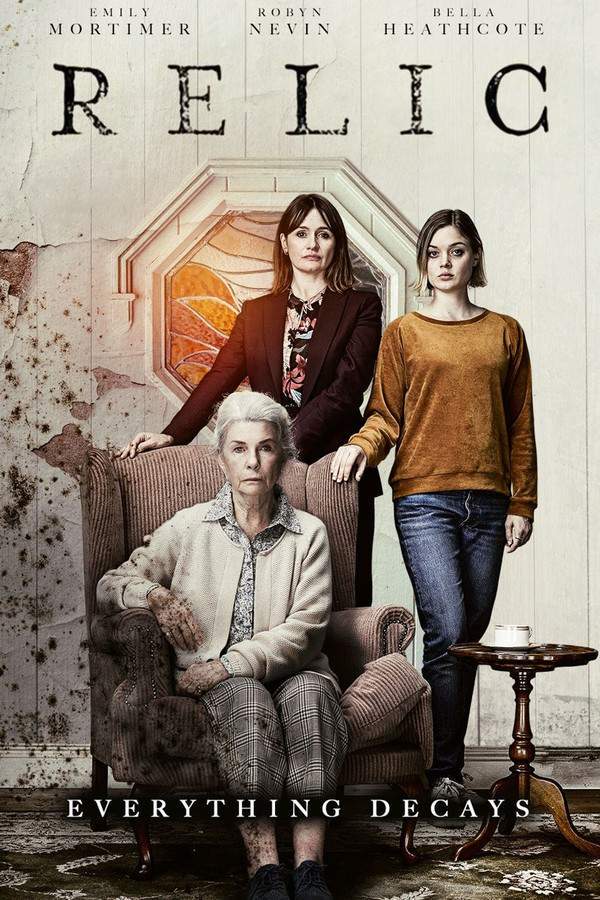
In the end, Relic reveals that Edna's deteriorating mental state is actually a manifestation of demonic possession linked to a hereditary curse that has haunted her family for generations. As her condition worsens, a black spot appears on her chest—symbolizing the demonic force inside her—that gradually expands until she sheds her skin, revealing a terrifying demonic presence beneath her human facade. This transformation signifies that Edna is no longer herself, but a vessel for an evil that has been passed down through her bloodline. The film’s haunting visuals and symbolism underscore the themes of family, trauma, and the inescapable nature of this curse.
Throughout the story, the film hints that this demonic curse primarily affects women, with the great grandfather's story adding complexity—he too suffered from dementia and was abandoned, dying alone surrounded by the same black mold that may have contributed to the family's affliction. This history of seclusion and death emphasizes the film’s message about the loneliness of aging and dying, as well as the importance of family bonds in facing these dark realities.
When Kay refuses to leave Edna’s side, despite her terrifying transformation, it highlights the central theme of loyalty and love, even amid suffering and supernatural horror. Sam’s initial hesitation, followed by her decision to stay, represents the emotional weight of caring for a loved one who is slipping away—physically, mentally, and spiritually. Her observation of the black spot on her mother’s back foreshadows her own future, suggesting that she too may become possessed someday, continuing the cycle.
Ultimately, Relic is not just a story about supernatural possession but a profound reflection on family, loss, and the dread of hereditary fate. The film’s ending connects these themes by illustrating that the curses of loneliness, death, and despair can be passed through generations, encapsulated in the haunting image of Edna’s transformation. It’s a stark reminder that some struggles—like aging and death—are inevitable, and the stories we keep inside us can become monsters if left unaddressed. The film leaves viewers with a lingering sense of the inescapable cycle of familial suffering, emphasizing the importance of presence and compassion in the face of life's darkest moments.