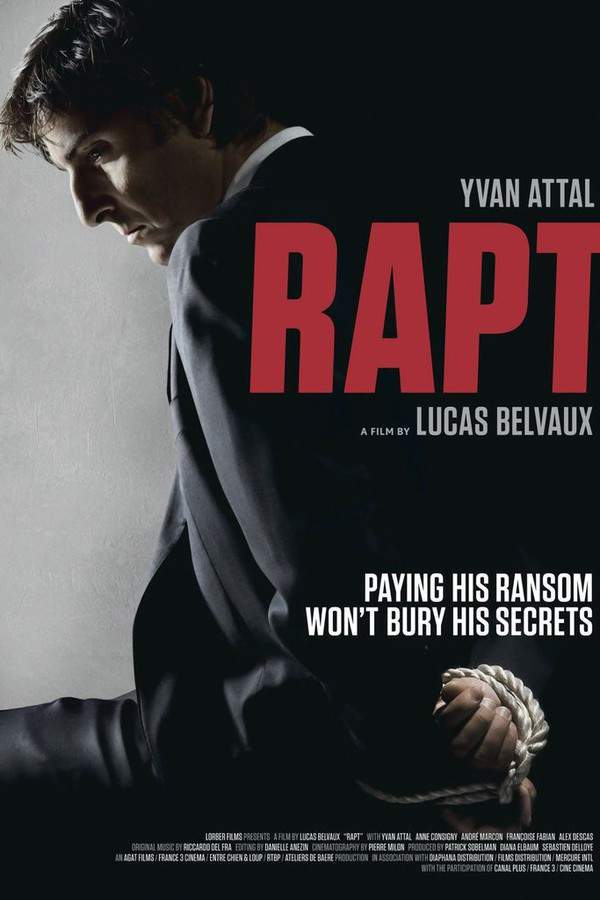
Stanislas, a wealthy and high-profile businessman, is kidnapped and held for ransom. The captors amputate one of his fingers and mail it to his company as a stark warning, demanding 50 million euros. He is kept in darkness, unwashed, with little food, and is repeatedly forced to write desperate notes to his family. The ordeal tightens its grip on everyone around him as the clock ticks and the pressure to respond grows.
The family’s world begins to fracture under the weight of the crime. His wife and teenage daughters are thrust into the glare of media attention, while his corporate associates wrestle with how to handle the situation. The financial response becomes a point of contention: his colleagues refuse to use corporate funds for the ransom, offering instead a loan that would allow him to repay roughly 20 million, a figure that stings both pride and practicality. As the ransom saga unfolds, the family and the business circle become entangled in a web of mistrust and competing loyalties, and Stanislas’s once-solid position looks increasingly precarious.
Behind the headlines, the private life of the man in danger spills into public view. Details about his mistresses and gambling losses emerge in the press, amplifying the trauma for Francoise and the two daughters. His business peers seize the moment to reassert control or to distance themselves, and even his mother voices a rebuke to Francoise, alleging shortcomings at home. The family’s instinct to protect themselves clashes with the realities of a high-stakes crisis, and the authorities find themselves navigating a fraught social landscape where reputations matter as much as evidence.
Initial attempts at delivering the ransom collide with police intervention. The family initially resists cooperating with law enforcement, but when a delivery is attempted, police surveillance disrupts the exchange. After two months, a second attempt is arranged. The exchange is again thwarted by authorities, and at least one kidnapper is taken into custody, underscoring how precarious the operation remains and how quickly the balance of power can shift.
A chilling new scheme redefines the kidnapper’s leverage. The criminals propose releasing Stanislas on the condition that he pays them in secret, but they threaten an even darker enforcement tactic: they will kill a random person to dramatize and compel his compliance if he fails to honor the agreement. The threat intensifies the pressure on him to navigate an increasingly dangerous landscape where every decision bears consequences beyond his own life.
Release and reunion bring little relief. Stanislas is released to a distraught Francoise and their two daughters, who demand full explanations for the affairs, gambling, and the long months of turmoil they endured. The sense of betrayal is palpable, and the family’s burden feels crushing as the public scrutiny continues to mount. His business allies reiterate that his damaged reputation makes a return to leadership improbable; when he resists stepping down, they warn that he will be removed. In this tense calculus, a loyal yet solitary figure among the wreckage is his loyal dog, whose simple happiness at his return offers a small, incongruent comfort.
The legal and strategic pressure tightens around him. Authorities entertain the unsettling possibility that Stanislas orchestrated the kidnapping to manipulate his gambling debts and to force a confrontation with investigators. A crucial meeting with his attorney leads to the signing of documents that sell his shares and postpone any talk of divorce, while the attorney counsels a clean break and a fresh start—wealthy, unattached, and with fewer ties to the past. Yet even as he charts a path toward a new life, a final note lands in his mailbox, reinforcing the grim demand: prepare to pay the ransom, no matter the cost.
Throughout this ordeal, the story tracks a man and a family under extraordinary pressure, caught between the demands of crime, the anxieties of public exposure, and the shifting loyalties of friends, foes, and fortune. The tension persists as the truth about motive, control, and consequence slowly unfolds, leaving questions about identity, responsibility, and what it takes to reclaim a life after being marked by a crisis of this magnitude.