Plot Explained Spoilers guaranteed!
Plot Explained

Browse by genre

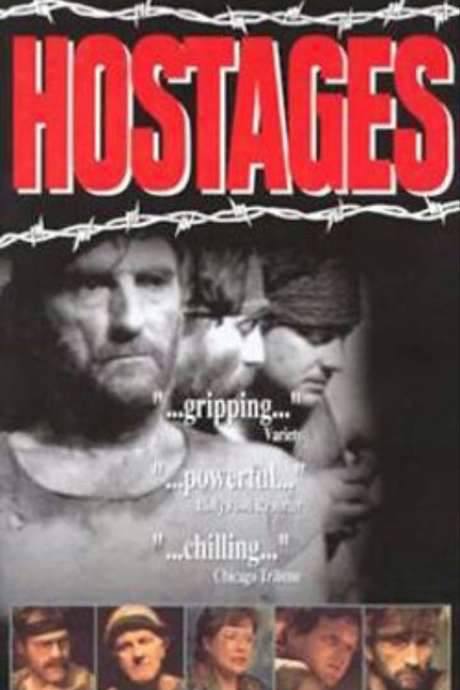
Hostages (1992) movie poster

Plot Summary

Hostages (1992) Plot Summary Explained

Release, runtime and language
1992 · 96 mins · English
Directed by
David Wheatley
Starring
Jay O. Sanders, Ciarán Hinds, Colin Firth, Kathy Bates, Harry Dean Stanton, Stephen Dillane

True account of the six men held hostage by religious extremists in Beirut during the Reagan-Bush era.

On this page (6)
  1. 1 Where to watch
  2. 2 What happens: full plot
  3. 3 Plot questions answered
  4. 4 Movie threads
  5. 5 Movies like Hostages
  6. 6 Every angle

Where to watch

Where to Watch Hostages (1992)

Where can you watch Hostages? Stream, rent or buy it in the US, including on Amazon Prime Video, fuboTV and Fawesome: current JustWatch availability with up-to-date prices.

Streaming availability powered by JustWatch

Full plot summary · contains spoilers

What Happens in Hostages: Full Plot Summary

The whole story of Hostages (1992) explained, from the opening scene to the final frame: every key event, every twist and what it all adds up to. Read it as a quick recap before the sequel, to check a scene you missed, or to finally understand what really happened.

Set against the Beirut hostage crisis, this drama blends real-world news footage with deeply human moments inside a brutal captivity. It begins with reporter John McCarthy, Colin Firth, finishing a story on Brian Keenan, Ciarán Hinds, and soon finds him swept into the same nightmare when his car is hijacked and he is stripped, blindfolded, and locked away. The film quickly shifts to the home front, where Jill Morrell, Natasha Richardson, a devoted girlfriend, seeks guidance from local officials who insist there will be no negotiations to secure his release. The same callous stance is felt by Keenan’s family in Belfast, who watch the crisis unfold with mounting fear and frustration as authorities refrain from intervention. The opening sequence deftly shows how ordinary lives are upended when politics and violence collide.

As days turn into weeks, the two men share a quiet bond in their cramped, dimly lit confines. McCarthy and Keenan endure brutal beatings, scant food, and the constant sense of darkness and isolation that comes with being kept in dirty, bug-infested cells. The emotional weight of their ordeal broadens the film’s scope, illustrating not only fear and pain but also the fragile glimmers of solidarity that develop between captives who have little else to cling to. The sense of time becomes a blur as each small moment—an extra bite of bread, a guarded conversation, a hope dashed in an instant—takes on outsized meaning.

The narrative widens further when Syria invades Beirut, and the captors relocate the men, bundling McCarthy and Keenan with other hostages. American prisoners Terry Anderson, Jay O. Sanders, Thomas Sutherland, Josef Sommer, and Frank Reed, Harry Dean Stanton, are moved and kept under tight control, their days marked by routine, fear, and the ever-present threat of violence. The captors’ insistence on keeping the hostages blindfolded whenever they enter the cells adds to the sense of powerlessness that hangs over every beat of the story. Peggy Say, Kathy Bates, Anderson’s sister, works with American officials to pry loose information and push for public visibility of the crisis, while Morrell and Keenan’s sisters press for any sign of hope from distant officials, illustrating how families rally to demand accountability and contact.

Amid the chaos surrounding a mistaken attack on an Iranian airliner, the hostages are moved again, and the two sets of prisoners occupy neighboring spaces within the same grim building. McCarthy, Keenan, and Reed share a cell, while Anderson and Sutherland are kept in another, each day a careful balance of restraint and small rebellion. The arrival of Terry Waite, a once-isolated veteran who begins regular visits, marks a turning point in the tensions of captivity; his presence brings a rare sense of dignity and humanity to a situation defined by fear and coercion. McCarthy’s captors reveal the possibility of release, and Keenan’s cautious optimism—tied to a string of almost-certain deadlines that repeatedly dissolve into delay—highlights the brittle gaps between hope and disappointment.

The film builds toward a powerful, restrained arc of release. McCarthy is moved and told that his release is imminent, a moment of fragile relief that is nonetheless tempered by mistrust in the captors’ promises. News of McCarthy’s impending return ripples through Belfast and beyond, as Jill Morrell learns of a possible end to the ordeal, and Keenan’s own release eventually materializes after a long, fraught waiting game. The core tension remains: can the personal stories survive the disconnect between official policy and human need? As the film closes, Anderson, Sutherland, Waite, and Reed are freed, their captors’ control finally loosened, while the narrative voice of Keenan overlays the final scenes, reflecting on gratitude, memory, and the enduring cost of survival.

In the end, the film offers a measured meditation on resilience and the limits of state power in moments of crisis. It recounts how families, journalists, and negotiators chase elusive answers while ordinary people endure extraordinary hardship, and it leaves viewers with a quiet but lasting impression of the human stakes at the heart of a long, painful hostage ordeal.

Last updated: December 04, 2025 at 15:33

Was this helpful?

Plot questions answered

Hostages Plot Explained: Your Questions Answered

The questions people ask most about Hostages (1992): what happens in the confusing scenes, why the characters do what they do, the twists, hidden details and what the ending means. Each answer contains spoilers.

Q1

Why did officials refuse to negotiate for the hostages' release?

Western governments, particularly the US and UK, maintained a policy of no concessions to kidnappers. Officials believed that negotiating would encourage more abductions and give terrorists leverage. This stance left families feeling abandoned as they watched their loved ones remain in captivity while authorities prioritized preventing future kidnappings over immediate rescue.

Foreshadowing: The opening scenes establish this hardline stance through news footage and the reactions of Jill Morrell and Keenan's family, setting up the central tension between policy and personal suffering.

  • negotiation
  • hostages
  • government policy
  • terrorism
  • concessions
Q2

How did McCarthy and Keenan end up in captivity together?

McCarthy was kidnapped the day after finishing a story on Keenan. After initial separation, McCarthy was moved to another building where he was placed in the same room as Keenan. The two formed a quiet bond while sharing the cramped, dimly lit confines, exchanging limited food and moments of human connection during their brutal captivity.

Foreshadowing: The film establishes their reporter-kidnapper relationship from the opening sequence, making their later meeting feel like a meaningful coincidence.

  • mccarthy
  • keenan
  • captivity
  • cell
  • bond
  • Beirut
Q3

How did the Syrian invasion affect the hostages?

When Syria invaded Beirut, the captors panicked and relocated all the hostages. They were duct-taped and moved by truck to a new location, adding them to a larger network of captives. This relocation bundled McCarthy and Keenan with American prisoners Anderson, Sutherland, and Reed, expanding the group dynamics and intensifying the already harsh conditions.

Foreshadowing: The news footage of Syrian military buildup provides early warning of the coming chaos that triggers the mass relocation.

  • syria
  • invasion
  • beirut
  • relocation
  • hostages
  • move
Q4

Why were the hostages kept blindfolded?

The captors insisted on keeping hostages blindfolded whenever guards entered the cells as a way to maintain power and control. This prevented prisoners from ever seeing their captors' faces or learning the layout of their prison, creating a constant sense of disorientation and helplessness that intensified the psychological torment.

  • blindfold
  • captivity
  • control
  • psychological
  • power
Q5

Who was Terry Waite and why were his visits significant?

Terry Waite was a veteran negotiator who had previously been isolated during his own attempt to secure hostage releases. His regular visits to the captives marked a turning point, bringing rare human contact and a sense that the outside world had not forgotten them. His presence offered dignity and hope in a situation defined by fear and coercion.

Foreshadowing: The film hints at Waite's difficult history before his visits begin, giving his appearance added weight.

  • terry waite
  • visits
  • negotiator
  • hope
  • contact
Q6

What happened when an Iranian airliner was mistakenly shot down?

The mistaken shoot-down of an Iranian airliner by the US Navy created chaos in Beirut. During the confusion that followed, captors duct-taped the hostages and moved them again toward Beirut. This event shifted the group dynamics, with McCarthy, Keenan, and Reed placed in one cell while Anderson and Sutherland remained separate.

Foreshadowing: The Iranian airliner incident is shown as a major international incident that creates the window for the relocation.

  • iranian airliner
  • shootdown
  • attack
  • move
  • confusion
Q7

How did Peggy Say work to free her brother Terry Anderson?

Peggy Say, Anderson's sister, worked tirelessly with American officials to gather information and push for public visibility of the hostage crisis. She became a relentless advocate, pressing for answers and keeping her brother's case in the public eye while families faced official inaction and silence.

Foreshadowing: The film establishes Say's determination early, positioning her as a counterpoint to the unresponsive government officials.

  • peggy say
  • terry anderson
  • sister
  • advocacy
  • family
Q8

Why did the hostages' release dates keep getting delayed?

Keenan experienced a string of almost-certain release deadlines that repeatedly dissolved into delay. The captors' promises of imminent release were often false, creating a brittle cycle of hope and disappointment. This uncertainty was part of the psychological warfare, keeping hostages emotionally unstable and unable to predict their fate.

Foreshadowing: The pattern of broken promises begins early, with each failed deadline setting up the next cycle of anticipation.

  • release
  • delay
  • promise
  • hope
  • keenan
  • disappoint
Q9

In what order were the hostages finally released?

Frank Reed was released first, followed by Brian Keenan. McCarthy was then moved to share a cell with Anderson and Sutherland, and was told his own release was imminent. The film ends with Anderson, Sutherland, Waite, and Reed being freed, while Keenan narrates over the final scenes reflecting on survival and memory.

Foreshadowing: The gradual release sequence is set up through earlier scenes of Reed's departure and McCarthy's shoulder tap indicating his impending freedom.

  • release
  • order
  • reed
  • keenan
  • mccarthy
  • anderson
  • sutherland
Q10

Why did the hostages form bonds despite their brutal conditions?

In the cramped, dark cells with scant food and constant threat of violence, even small moments became significant. An extra bite of bread, a guarded conversation, or shared hope provided outsized comfort. The hostages clung to these fragments of humanity, developing fragile solidarity as their only lifeline against the psychological devastation of confinement.

  • bond
  • solidarity
  • captivity
  • friendship
  • survival
  • hope

Movie threads

More Movies Like Hostages, by Mood & Story

Curated lists built around what makes Hostages tick: the same mood, the same kind of story or the same emotional payoff. Each list explains why these movies belong together.

Claustrophobic Survival Dramas like Hostages

True stories of endurance against brutal confinement and psychological torment. If you were gripped by the tense, real-life ordeal in Hostages, this collection features movies with similar high-stakes survival stories. These films depict characters enduring brutal confinement, showcasing resilience, friendship in adversity, and the heavy emotional weight of facing seemingly endless captivity.

  • claustrophobic
  • harrowing
  • tense
  • grim
  • anxious
  • hopeful
  • Tone: tense, grim, somber
  • Pacing: steady, relentless
Why these movies?

The story pattern: The narrative pattern follows individuals or groups suddenly stripped of their freedom, forced to endure prolonged physical and psychological hardship. The journey is linear and straightforward, charting their daily struggle, the bonds they form, and their fluctuating hope amidst a pervasive sense of dread, often leading to a bittersweet resolution.

Why they belong together: Movies are grouped here for their shared focus on the intense, claustrophobic experience of captivity. They share a high-intensity, heavy emotional weight, a consistently tense tone, and a steady pacing that mirrors the unrelenting nature of the ordeal, creating a deeply immersive and harrowing viewing experience.

Politically Charged Real-Life Ordeals like Hostages

Dramatizations of historical crises where individuals become pawns in larger conflicts. For viewers who appreciated the real-world political context of Hostages, this thread features similar movies based on true stories of individuals caught in international conflicts. These dramas blend tense personal survival with a sobering look at the political machinery and media dynamics that shape their fates.

  • somber
  • tense
  • grim
  • political
  • harrowing
  • anxious
  • Tone: tense, somber, grim
  • Pacing: steady, procedural
Why these movies?

The story pattern: These narratives typically follow a straightforward, journalistic approach to real events, charting the collision of individual lives with complex political ideologies. The plot is driven by the tension between personal hope and the slow, often frustrating, processes of diplomacy and advocacy, resulting in endings that acknowledge the cost of survival.

Why they belong together: This grouping is defined by a shared foundation in true historical events involving political conflict and captivity. The movies share a heavy emotional weight, a tense and somber tone, and a steady pacing that reflects the grim reality of the situations, offering a thoughtful yet harrowing look at recent history.
If you liked this

Movies Like Hostages

Similar movies to Hostages: the same genre, themes or kind of story. Each one comes with its own plot summary, timeline and ending explained.

Browse all movie summaries

Every angle

Hostages (1992) Explained: Plot, Timeline & Characters

Everything about Hostages in one place: what happens in the plot summary, the timeline in chronological order, the characters and meaning and a spoiler-free summary. What's After the Movie adds the cast, box office and post-credit scenes.

Coming soon on iOS and Android

The Plot Explained Movie Summary App

Plot summaries, endings explained and timelines on your phone. Catch up on any movie in minutes, save your favorites and never miss a twist again.

Be the first to know when we launch. Your email stays private, always.

Learn more about the app