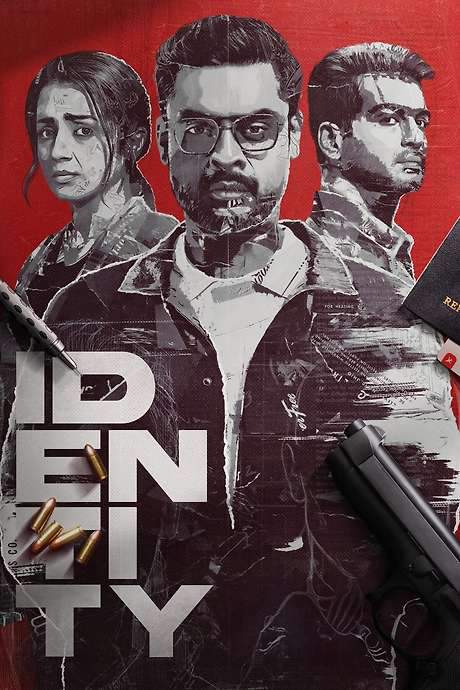
Set against the backdrop of Andhra Pradesh, the film follows Shiva, a practiced facial reconstruction artist who helps the police crack stubborn cases by drawing the faces of the unidentified and shaping the crime narrative around them. When a new case lands on his table, Shiva’s skills become the bridge between uncertainty and the truth, guiding investigators through a web of clues that only a careful eye can untangle.
The story unfolds in a backward arc, opening with a man sketching the face of a deceased person whose features are too damaged for identification. This opening scene hints at a larger puzzle, as the narrative then hops back to earlier months and to a chilling discovery: an unidentified female corpse found decomposed in Madhavaram lake, a face that resists recognition by the police. The officer in charge of the case, Rajendran, reaches out to Shiva to reconstruct the face, trusting the artist’s ability to piece together identity from fragments. Through Shiva’s careful drawings, the crime story starts to take shape, helping the authorities frame what happened and why.
Away from the official work, Shiva’s personal life carries a heavy weight. He is haunted by memories of his wife, Kavya, who died in a car accident that left him with memory gaps about their shared past. To hold onto what remains, Shiva revisits their love story through conversations with friends, relives moments by sleeping in the very car they once rode in, and continues to draw Kavya’s face in his quiet home studio. The emotional undercurrent of his memory loss adds a quiet tension to the procedural investigations, reminding viewers that the present case is entangled with the pain of the past.
In a bar where Shiva drinks with a close friend, the investigation bleeds into his personal life a climate of danger and suspicion. He encounters people who were involved in the previous case he helped document, drawing him deeper into a confrontation that tests his resolve and techniques. The bar becomes a microcosm of the larger mystery, where past actions and present pressures collide, forcing Shiva to rely on skill as much as instinct to steer through danger.
Meanwhile, the investigation takes a darker turn when a crucial clue surfaces outside the police station: a box containing two burnt legs and a half-burnt face mask, discovered by Baskar after Shiva’s ally Madhan asks for protection. The discovery is not isolated; investigators soon uncover two more boxes in other areas, one holding two burnt hands and another containing a body. The pattern suggests a deliberate, methodical approach by the killer, pushing Shiva further into the case’s core.
As the evidence piles up, [Rajendran] enlists Shiva’s help again, urging him to stay away from the case if necessary, an unusual move that underscores the strain between investigative caution and the lure of truth. Yet the missing police officer and the sudden shift in the case’s dynamics force a re-entry into the investigation. With Rajendran himself missing for two days, a new inspector, Indhuja, is assigned to take charge and press the inquiry forward. The stake rises as more murders are tied to the same modus operandi, and Shiva’s expertise becomes increasingly essential to connecting disparate clues.
The remainder of the film follows Shiva as he pieces together the chronology of events, correlating memories, drawings, and on-the-ground discoveries to reveal how the killings unfold. The narrative builds toward a climactic twist that links the victims, the recovered faces, and the emotional truth Shiva has carried with him since Kavya’s death. The resolution arrives through careful deduction and an unexpected turn of events that reframes the motive and the killer’s identity, offering a conclusion that stays true to the tone of the story and its themes of memory, recognition, and truth uncovered through patient investigation.