





Plot Explained Spoilers guaranteed!
Plot Explained

Browse by genre

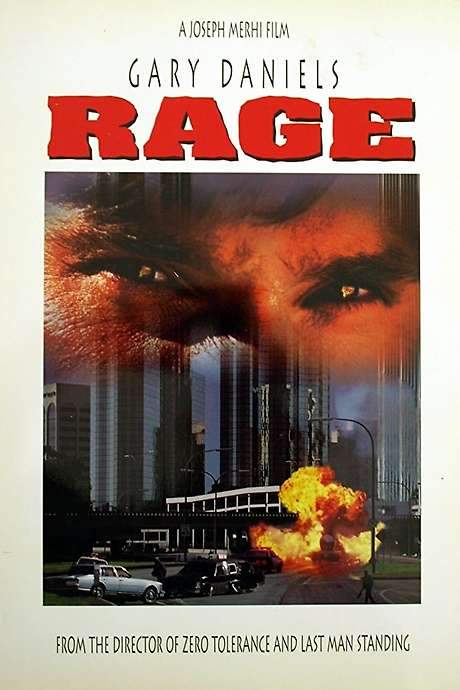
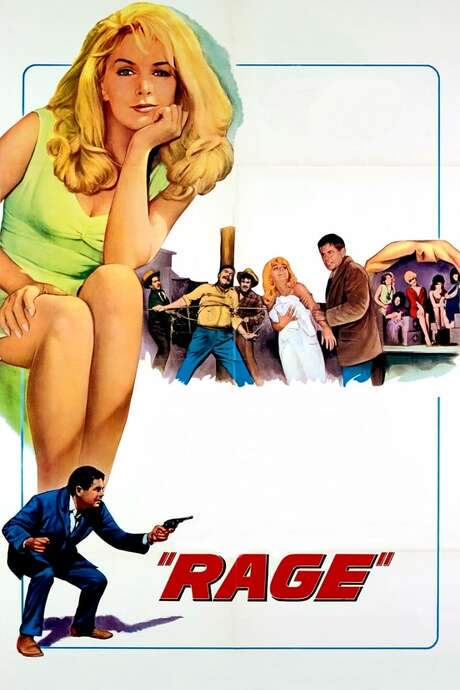
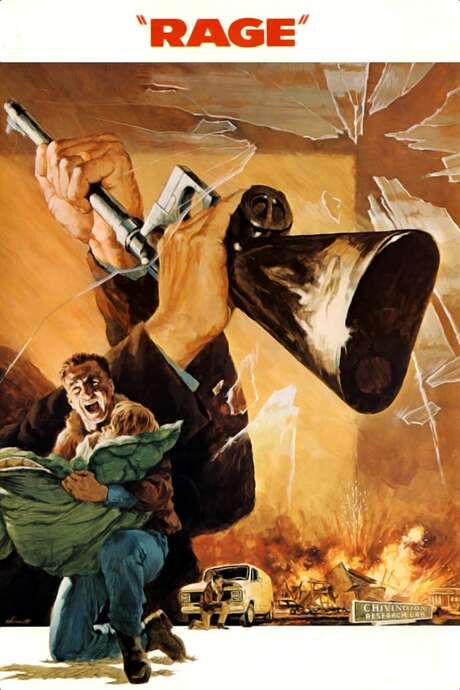
Rage (1972) movie poster

Characters & Themes

Rage (1972) Characters, Setting & Themes Explained

Release, runtime and language
1972 · 100 mins · English
Starring
Martin Sheen, Barnard Hughes, Richard Basehart, George C. Scott, Ed Lauter, Kenneth Tobey

The rancher discovers that a military‑run nerve‑gas leak, dismissed as an accident, has killed his livestock and his son. Determined to seek justice, he confronts the armed forces, only to encounter a wall of silence and a tangled conspiracy that threatens to hide the truth. His pleas fall on deaf ears, leaving the truth buried.

On this page (8)
  1. 1 Where to watch
  2. 2 Characters explained (6)
  3. 3 Where & when it takes place
  4. 4 Themes & meaning (3)
  5. 5 Character & meaning questions
  6. 6 Movie threads
  7. 7 Movies like Rage
  8. 8 Every angle

Where to watch

Where to Watch Rage (1972)

Where can you watch Rage? Stream, rent or buy it in the US, including on Amazon Video, Apple TV Store and Fandango At Home: current JustWatch availability with up-to-date prices.

Streaming availability powered by JustWatch

6 main characters · contains spoilers

Rage Characters Explained: Who Is Who

The main characters of Rage (1972), heroes and villains: what drives them, how they change over the course of the story and what each of them reveals about the film's bigger ideas.

  • Dan Logan (George C. Scott)

    Wyoming sheep rancher and devoted father who fights desperately to save his son after the nerve-agent exposure. His grief grows into a fierce, sometimes reckless pursuit of the truth, driving him toward drastic actions against those he blames for the catastrophe.

    • 👨‍👦 Family
    • 💔 Grief
    • 🔥 Vengeance
  • Maj. Holliford (Martin Sheen)

    Army Major who oversees the response to the outbreak and recognizes the Logans were exposed to MX-3. He balances duty with a willingness to manipulate information to minimize damage, revealing systemic pragmatism and moral compromise.

    • 🪖 Military
    • ⚖️ Moral Ambiguity
    • 💊 Biohazard Ethics
  • Dr. Spencer (Barnard Hughes)

    Medical researcher who participates in the cover-up while overseeing treatment. He rationalizes secrecy and continues to study the toxin, illustrating how scientific curiosity can collide with ethics under pressure.

    • 🧪 Ethics
    • 🤝 Complicity
    • 🧬 Research
  • Dr. Caldwell (Richard Basehart)

    Dan’s personal physician who defers to Holliford and Spencer, ultimately helping shield the truth from Dan. His stance highlights the tension between patient care and institutional protectiveness.

    • 🏥 Ethics
    • 🧭 Authority
    • 🕵️‍♂️ Deception
  • Chris Logan (Nicolas Beauvy)

    Dan's son who sleeps outside and is exposed to the nerve agent; his fate catalyzes the film’s tragedy and Dan’s ensuing vigilante path.

    • 👦 Family
    • 😢 Innocence
    • 💥 Tragedy
  • Dr. Walter Steenrod (Fielding Greaves)

    Scientist at Chivington Research Laboratories involved in nerve-agent development, representing the scientific establishment behind the weapon.

    • 🧬 Science
    • 🏛️ Research
    • 💼 Power

Last updated: October 04, 2025 at 15:52

Was this helpful?

Setting

Where and When Does Rage Take Place?

The setting of Rage (1972): the year and time period, the places and locations, and how they shape the characters, the mood and the tension of the story.

Time period

Early 1970s

The events are staged in a contemporary period, reflecting Cold War anxieties about chemical weapons. Rural life and government/military structures intersect in a modern, present-day setting for the era. The timeframe reinforces a sense of immediacy for the crisis and the characters' decisions.

Location

Wyoming, USA, Chivington Research Laboratories, Military Base

The story unfolds primarily on a Wyoming sheep ranch and in the nearby hospital, grounding the drama in a stark rural setting. The film also takes the characters to a secretive military research environment and a base where nerve-agent work occurs. This mix of open plains, clinical corridors, and restricted facilities underscores the contrast between everyday life and high-stakes national security.

  • 🏞️ Rural Wyoming
  • 🏥 Hospital
  • 🏢 Military Research Base

Last updated: October 04, 2025 at 15:52

Was this helpful?

3 major themes

Rage Meaning: Themes & Message Explained

What is Rage (1972) really about? The emotional, social and philosophical themes the film keeps returning to, its symbolism and the message beneath the surface.

  • Bioweapon Threat

    The nerve agent MX-3 at the center of the plot reveals how scientific advancements can become instruments of mass harm. The film examines the fragile boundary between research and weaponization, showing how easily dangerous knowledge can slip into danger for civilians. It also critiques institutional secrecy that puts public safety at risk in the name of control.

  • Grief and Vengeance

    Dan Logan’s drive to uncover the truth about his son’s fate is fueled by profound grief. The narrative traces how personal loss can spiral into violent action against those perceived to be responsible. It raises questions about whether justice can justify brutal means when institutions fail to protect the innocent.

  • Moral Ambiguity

    Duties of duty and the line between care and concealment blur as Holliford, Spencer, and Caldwell manipulate information. The characters’ actions reveal a gray area where safeguarding national interests can trample individual rights. The film invites viewers to weigh loyalty to country against ethical transparency.

Last updated: October 04, 2025 at 15:52

Was this helpful?

Character & theme questions

Rage Characters & Meaning: Your Questions Answered

The questions people ask about Rage (1972): who the characters really are, their relationships, what the symbols mean, where it takes place and what the movie is really about. Each answer contains spoilers.

Q1

Where is the movie set?

The film takes place primarily on a remote Wyoming sheep ranch, with additional scenes set in a nearby hospital and at a secretive military research base called Chivington Research Laboratories. The stark contrast between the open plains of rural Wyoming and the clinical, restricted environment of the military facility underscores the clash between everyday life and high-stakes national security.

  • wyoming ranch
  • setting
  • location
  • rural america
Q2

When does the story take place?

The events occur in the early 1970s, during the Cold War era when concerns about chemical and biological weapons were prominent. This time period grounds the story in real historical anxieties about nerve agents and weapons research, giving the narrative a sense of immediacy and political relevance.

  • 1970s
  • cold war
  • time period
  • era
  • 1972
Q3

What is the MX-3 nerve agent in the film?

MX-3 is a fictional nerve agent developed at Chivington Research Laboratories that becomes central to the plot. The film uses this bioweapon to explore how scientific research can be weaponized, highlighting the dangerous line between legitimate research and the creation of instruments of mass harm.

  • mx-3
  • nerve agent
  • bioweapon
  • chemical weapon
  • science
Q4

What does the film say about bioweapons and scientific research?

The movie examines how scientific advancements can become instruments of mass harm, critiquing the fragile boundary between research and weaponization. It shows how dangerous knowledge can slip into civilian danger and condemns the institutional secrecy that puts public safety at risk in the name of national control.

  • bioweapon
  • science ethics
  • weaponization
  • research
  • institutional secrecy
Q5

How does grief drive the story?

Dan Logan's quest to uncover the truth about his son's death is fueled by profound personal loss. The narrative traces how devastating grief can spiral into violent action against those perceived as responsible, raising questions about whether justice can justify brutal means when institutions fail to protect the innocent.

  • grief
  • vengeance
  • loss
  • justice
  • father son relationship
Q6

What moral ambiguity does the film explore?

The film presents a gray area where characters like Major Holliford, Dr. Spencer, and Dr. Caldwell manipulate information to protect national interests, often at the expense of individual rights. It invites viewers to consider the tension between loyalty to country and ethical transparency, showing how institutional pragmatism can lead to moral compromise.

  • moral ambiguity
  • ethics
  • military
  • cover-up
  • institutional betrayal
Q7

Who is Dan Logan?

Dan Logan is a Wyoming sheep rancher portrayed by George C. Scott who becomes the film's protagonist after his son Chris is exposed to a military nerve agent. Driven by grief and desperation, he transforms from a devoted father into a man willing to take drastic, often violent action against those he holds responsible for the catastrophe.

  • dan logan
  • george c scott
  • protagonist
  • rancher
  • father
Q8

Who is Major Holliford?

Major Holliford, played by Martin Sheen, is the Army Major who oversees the military response to the nerve agent outbreak. He recognizes that the Logans were exposed to MX-3 but balances his sense of duty with a willingness to manipulate information to minimize damage, representing the systemic pragmatism and moral compromise at the heart of the film.

  • major holliford
  • martin sheen
  • army
  • military
  • cover-up
Q9

What happens to Chris Logan?

Chris Logan is Dan's young son who sleeps outside on the ranch and is exposed to the nerve agent leaking from the military facility. His tragic death from the MX-3 exposure serves as the catalyst for the entire narrative, driving Dan's desperate pursuit of justice and his subsequent violent rebellion against the system.

  • chris logan
  • son
  • death
  • nerve agent
  • tragedy
  • child
Q10

How does the film portray government and military secrecy?

The film strongly critiques institutional secrecy, showing how military and medical authorities systematically bury the truth about the nerve agent leak. Dan encounters a wall of silence as he seeks justice, with officials prioritizing national security and political protection over transparency and public safety.

  • government secrecy
  • military cover-up
  • conspiracy
  • institutional failure
  • truth
Q11

What is the contrast between rural and military settings?

The film juxtaposes the open, vulnerable landscape of rural Wyoming with the secretive, clinical environment of the military research base. This contrast emphasizes how ordinary citizens are exposed to hidden dangers from institutions they cannot see or control, highlighting the power imbalance between individual vulnerability and governmental secrecy.

  • rural
  • military
  • contrast
  • setting
  • wyoming
  • facility
Q12

How does the Cold War setting affect the story?

The early 1970s Cold War setting provides the political backdrop for the film's exploration of chemical weapons research and national security priorities. This era's atmosphere of secrecy, geopolitical tension, and public fear of weapons of mass destruction allows the film to comment on how military institutions can prioritize strategic interests over civilian welfare.

  • cold war
  • 1970s
  • political context
  • chemical weapons
  • era

Movie threads

More Movies Like Rage, by Mood & Story

Curated lists built around what makes Rage tick: the same mood, the same kind of story or the same emotional payoff. Each list explains why these movies belong together.

Movies about futile revenge against the system like Rage

Grieving protagonists wage a doomed war against an uncaring system. If the grim determination of Rage resonated with you, this thread collects movies about individuals confronting powerful, faceless institutions. These stories share a heavy emotional weight, a dark tone, and a steady pacing that builds towards a bleak ending, exploring themes of grief, injustice, and the high cost of rebellion.

  • grief-stricken
  • furious
  • desperate
  • grim
  • hopeless
  • tense
  • Tone: dark, bleak, furious
  • Pacing: steady, methodical escalation
Why these movies?

The story pattern: These narratives typically begin with a catastrophic personal loss that is directly caused by a larger entity's negligence or malice. The protagonist's initial quest for truth and justice is met with silence, deception, and overwhelming force, transforming their grief into a destructive rage. The plot follows their escalating, often violent, actions against an opponent that is too large to truly defeat, culminating in their own destruction or a hollow victory.

Why they belong together: These films are grouped by their shared focus on a specific, tragic character arc: the descent from grief into a rage that consumes the protagonist. They are united by a consistently dark and hopeless tone, heavy emotional weight stemming from loss, and a plot structure that emphasizes the power imbalance between the individual and the institution.

Paranoid conspiracy thrillers with a steady pace like Rage

Ordinary people uncover a terrifying truth that powerful forces want buried. For viewers who appreciated the tense, methodical uncovering of a military cover-up in Rage, this thread features similar conspiracy thrillers. These films share a steady pacing, high tension, and a dark tone as they follow lone individuals confronting vast, secretive organizations, creating a gripping and paranoid viewing experience.

  • tense
  • paranoid
  • grim
  • desperate
  • suspenseful
  • claustrophobic
  • Tone: tense, dark, paranoid
  • Pacing: steady, building dread
Why these movies?

The story pattern: The narrative pattern involves an inciting incident that reveals a hidden crime or conspiracy. The protagonist, driven by a need for truth or justice, begins an investigation that puts them in direct conflict with a powerful, organized enemy. The story builds tension steadily through a series of discoveries, threats, and close calls, creating a sense of claustrophobia and paranoia as the protagonist realizes the extent of the conspiracy and their own vulnerability.

Why they belong together: These movies are connected by their core plot engine: the uncovering of a conspiracy. They share a specific mood blend of tension, paranoia, and grim determination. The pacing is consistently steady, allowing the dread to build methodically, and the tone is almost always dark, reflecting the serious and dangerous nature of the secrets being exposed.

If you liked this

Movies Like Rage

Similar movies to Rage: the same genre, themes or kind of story. Each one comes with its own plot summary, timeline and ending explained.

Browse all movie summaries

Every angle

Rage (1972) Explained: Plot, Timeline & Characters

Everything about Rage in one place: what happens in the plot summary, the timeline in chronological order, the characters and meaning and a spoiler-free summary. What's After the Movie adds the cast, box office and post-credit scenes.

Coming soon on iOS and Android

The Plot Explained Movie Summary App

Plot summaries, endings explained and timelines on your phone. Catch up on any movie in minutes, save your favorites and never miss a twist again.

Be the first to know when we launch. Your email stays private, always.

Learn more about the app