Plot Explained Spoilers guaranteed!
Plot Explained

Browse by genre

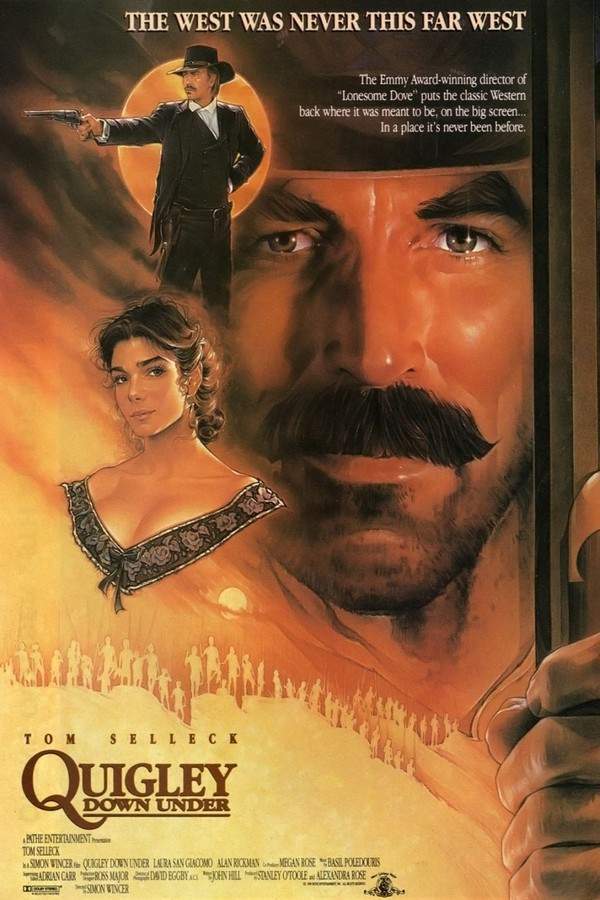
Quigley Down Under (1990) movie poster

Plot Summary

Quigley Down Under (1990) Plot Summary Explained

Release, runtime and language
1990 · 119 min · English
JustWatch #3,503 6
Directed by
Simon Wincer
Starring
Ben Mendelsohn, Alan Rickman, Laura San Giacomo, Chris Haywood, Conor McDermottroe, Jerome Ehlers

In the Australian outback of 1896, a skilled American marksman is hired for what seems like a straightforward job. However, he soon discovers the assignment involves a ruthless landowner’s scheme to displace Aboriginal people. Facing a moral dilemma amidst the harsh landscape, Quigley must grapple with his employer's deceptive nature and fight for his own survival against a dangerous adversary and a landscape that tests his resolve.

On this page (6)
  1. 1 Where to watch
  2. 2 What happens: full plot
  3. 3 Plot questions answered
  4. 4 Movie threads
  5. 5 Movies like Quigley Down Under
  6. 6 Every angle

Where to watch

Where to Watch Quigley Down Under (1990)

Where can you watch Quigley Down Under? Stream, rent or buy it in the US, including on fuboTV, MGM Plus and Philo: current JustWatch availability with up-to-date prices.

Streaming availability powered by JustWatch

Full plot summary · contains spoilers

What Happens in Quigley Down Under: Full Plot Summary

The whole story of Quigley Down Under (1990) explained, from the opening scene to the final frame: every key event, every twist and what it all adds up to. Read it as a quick recap before the sequel, to check a scene you missed, or to finally understand what really happened.

As Matthew Quigley (Ben Mendelsohn), an American cowboy renowned for his extraordinary marksmanship, responds to an unconventional advertisement, he unwittingly triggers a remarkable chain of events that will irrevocably change his life. Upon his arrival in the rugged landscapes of Australia, Quigley's sharp instincts spark a confrontation with the menacing henchmen of Marston (Alan Rickman), who are attempting to forcibly take "Crazy Cora" (Cora) into their custody. A chaotic brawl ensues, ultimately leading to a tense showdown where Quigley boldly declines an offer to use his talents to eliminate the elusive Aboriginal Australians.

Following this tumultuous encounter, Quigley is subjected to a brutal beating by Marston's lackeys, who mercilessly abandon him and Cora in the harsh Australian Outback with scant supplies. Their grim outlook transforms unexpectedly when they are rescued by the very people they had intended to harm. Cora, it turns out, originally hails from Texas, a land she once knew, witnessing first-hand the catastrophic aftermath of Comanche raids. The heart-wrenching decision of her husband to forsake her on an Australian vessel after the devastating loss of their child has left Cora deeply scarred.

As Quigley and Cora navigate through the perilous wilds, they find themselves increasingly at odds with Marston's violent associates, who ruthlessly target the Aboriginal population. In a testament to his unyielding spirit, Quigley manages to eliminate three of their attackers, prompting a desperate escape on horseback, albeit leaving Cora and a helpless infant behind. Despite this difficult choice, Quigley ensures their safety by leaving them with ample provisions before he rides off to a nearby town.

There, he meets a local German gunsmith who shares Quigley’s resentment for Marston, having suffered at his hands. This newfound ally arms him with fresh ammunition and crucial insights about Quigley’s emerging status as a hero among the Aboriginal Australians whose lives he inadvertently affects. As Marston’s men close in on Quigley amidst a raging inferno, his quick wit and marksmanship enable him to evade capture, taking down all but one of his pursuers in a daring escape through a skylight. The survivor, gravely injured, is dispatched to deliver a chilling warning: Quigley will be back.

Before embarking on his quest for revenge, Quigley returns to Cora, who has just saved their infant from voracious dingoes. Demonstrating her fierce maternal instincts, she pulls out a revolver left by Quigley to fend off the predators. Yet, in an emotional moment, she ultimately lets the child howl freely, confronting the perilous situation they’re in.

The following morning, Quigley charges into town, resolute in confronting Marston at his ranch. He commences his assault with a barrage of gunfire from an elevated position, but a cunning shot from Marston brings him to a staggering halt, leaving him vulnerable to Marston's remaining men. As Marston showcases a quick-draw technique due to Quigley’s unusual choice of gun—just a rifle—Quigley flips the script, surpassing Marston with his unique skill set. As Marston lies on the verge of death, Quigley seizes the moment to remind him of their prior exchange: > "I said I never had much use for one [a revolver]; never said I didn't know how to use it."

Marston’s devoted servant appears to return Quigley’s rifle before departing, shedding his western garb. Suddenly, an army detachment arrives, intent on capturing Quigley. However, upon noticing the gatherings of Aboriginal Australians in the vicinity, they reconsider their approach and choose to withdraw. Eventually, both Quigley and Cora manage to secure passage back to America disguised under her husband's identity, who remains wanted for his past offenses. As they stand at the wharf, Cora affectionately reminds him of a promise he gave: she must say two words before he can vocalize his feelings. With a beaming smile, she calls out, "Matthew Quigley," leading to a heartwarming embrace between the two.
Last updated: November 22, 2024 at 16:03

Was this helpful?

Plot questions answered

Quigley Down Under Plot Explained: Your Questions Answered

The questions people ask most about Quigley Down Under (1990): what happens in the confusing scenes, why the characters do what they do, the twists, hidden details and what the ending means. Each answer contains spoilers.

Q1

Why does Quigley refuse to work for Marston after arriving in Australia?

Quigley refuses because he discovers the actual job is to use his marksmanship to help Marston forcibly displace and kill Aboriginal Australians. When Marston offers him the assignment, Quigley boldly declines, stating he won't help with this scheme. This moral refusal leads Marston's men to brutally beat him and abandon him and Cora in the outback with minimal supplies.

  • marston
  • aboriginal australians
  • refusal
  • marksman
  • job
Q2

Why do the Aboriginal Australians rescue Quigley and Cora after initially fighting them?

After Quigley and Cora are abandoned in the outback by Marston's men, they are rescued by the very Aboriginal Australians they had clashed with earlier. This turn of events occurs because Quigley had defended Cora against Marston's men who were trying to kidnap her. The Aboriginal people recognize that Quigley is not their enemy, he was simply in the wrong place at the wrong time. His refusal to help Marston's campaign against them further demonstrates he is not aligned with their oppressors.

  • aboriginal australians
  • rescue
  • outback
  • redemption
Q3

Why does Quigley leave Cora and the infant behind during the escape from Marston's men?

Quigley makes the difficult decision to ride ahead to safety while leaving Cora and a vulnerable infant behind because they cannot keep up with his horse during the desperate escape. However, he ensures their safety by leaving them with ample provisions before riding off to find help in a nearby town. This choice reflects his practical survival instinct while still trying to protect them as best he could given the dire circumstances.

  • cora
  • infant
  • escape
  • provisions
  • survival
Q4

What does Quigley mean when he says he never had much use for a revolver but knows how to use it?

During the final showdown, Marston mocks Quigley for carrying only a rifle, implying he has no quick-draw capability with a revolver. Quigley responds with his famous line: "I said I never had much use for one; never said I didn't know how to use it." This reveals that Quigley is exceptionally skilled with firearms beyond what he has publicly acknowledged. He proves this by defeating Marston in their duel, demonstrating that his mastery extends to revolver combat despite his stated preference for rifles.

  • revolver
  • rifle
  • marksmanship
  • showdown
  • marston
Q5

Why does the army detachment decide not to capture Quigley after seeing the Aboriginal Australians?

An army detachment arrives at Marston's ranch intending to capture Quigley. However, when they see the gathering of Aboriginal Australians who have come to support Quigley, they reconsider and choose to withdraw. This suggests the army recognizes the situation is more complex than a simple manhunt, they see that Quigley has become an ally to the Aboriginal community and that forcibly taking him could escalate into a larger conflict with serious implications.

  • army
  • aboriginal australians
  • retreat
  • capture
Q6

Why do Quigley and Cora disguise themselves as her husband to return to America?

Quigley and Cora manage to secure passage back to America by disguising themselves under her husband's identity. The reason for this disguise is that Cora's husband is a wanted man with outstanding criminal charges. By assuming his identity, they can travel without arousing suspicion and start fresh in America. This clever solution allows them to escape the aftermath of the conflict in Australia while beginning a new life together.

  • disguise
  • america
  • husband
  • passage
  • escape
Q7

What is Cora's backstory and why was she abandoned?

Cora reveals she originally came from Texas and witnessed the devastating aftermath of Comanche raids, which killed her child. Her husband couldn't cope with this loss and made the heart-wrenching decision to abandon her on an Australian vessel, leaving her alone in a foreign land. This traumatic past creates a deep bond with Quigley, who also carries the weight of past sorrows. The shared experience of loss and abandonment forms an emotional connection between them.

  • cora
  • texas
  • comanche
  • abandoned
  • child
  • trauma
Q8

What do the two words "Matthew Quigley" mean at the end of the movie?

At the wharf before departing for America, Cora reminds Quigley of a promise he made: she must say two words before he can vocalize his feelings for her. She then calls out "Matthew Quigley", her baby's name, allowing him to finally express his love. This heartwarming moment signifies that by naming her child after him, she has already accepted him into her heart and life, giving him permission to speak his feelings. It represents their family's unification and new beginning together.

  • cora
  • baby
  • name
  • love
  • farewell
  • wharf
Q9

Why does Marston's men want to capture Crazy Cora?

Marston's men attempt to forcibly take Cora into their custody upon Quigley's arrival in Australia. While the exact reasons aren't fully detailed in the summary, Cora is described as "Crazy Cora" and appears to be someone Marston wants control over, possibly as leverage or to prevent her from interfering with his operations. Quigley's instinctive defense of her against these men sets in motion the chain of events that leads to his confrontation with Marston.

  • cora
  • marston
  • capture
  • kidnapping
Q10

Why does the German gunsmith agree to help Quigley fight Marston?

Quigley meets a German gunsmith in town who shares his deep resentment for Marston. The gunsmith has personally suffered at Marston's hands, which fuels his willingness to help Quigley. He provides Quigley with fresh ammunition, crucial intelligence about Marston's operations, and insights about Quigley's growing status as a hero among the Aboriginal Australians. This alliance gives Quigley the resources and information he needs to plan his confrontation with Marston.

  • german gunsmith
  • ammunition
  • alliance
  • marston

Movie threads

More Movies Like Quigley Down Under, by Mood & Story

Curated lists built around what makes Quigley Down Under tick: the same mood, the same kind of story or the same emotional payoff. Each list explains why these movies belong together.

Morally-Driven Westerns like Quigley Down Under

Principled heroes confront injustice in unforgiving frontier lands. If you liked Quigley Down Under, you'll enjoy these movies where a skilled outsider faces a moral dilemma against oppressive forces in a rugged setting. These films share a tense, steady-paced vibe, featuring determined heroes who fight for survival and redemption in stories similar to Quigley Down Under.

  • tense
  • determined
  • heroic
  • harsh
  • survivalist
  • redemptive
  • Tone: tense, determined
  • Pacing: steady, logical
Why these movies?

The story pattern: The narrative typically follows a linear path: a skilled outsider is hired for a job that turns out to be morally reprehensible, leading to a betrayal. This forces the hero into a survival situation, often with an unexpected ally, culminating in a final, decisive confrontation where they must use their unique skills to defeat the villain and achieve a hard-won but happy ending.

Why they belong together: Movies in this thread are grouped by their shared setting of a harsh frontier, a central moral conflict against a deceptive antagonist, and a classic hero's journey that emphasizes survival, skill, and a clear-cut victory. They consistently deliver a tense, determined mood with a steady pacing that builds logically towards a cathartic resolution.

Survival and Redemption Stories like Quigley Down Under

Damaged individuals find purpose and connection through shared hardship. Explore movies similar to Quigley Down Under where characters grappling with a painful past find redemption through a survival ordeal. These films feature a medium emotional weight, a tense tone, and a focus on forging a found family bond against a backdrop of danger, perfect if you liked the dynamic in Quigley Down Under.

  • redemptive
  • survival
  • found family
  • determined
  • lonely
  • hopeful
  • Tone: tense, redemptive
  • Pacing: steady, character-driven
Why these movies?

The story pattern: The emotional journey begins with characters who are isolated by their histories. A external threat forces them into a partnership for survival. The shared hardship becomes a catalyst for opening up, trusting again, and fighting for something beyond themselves. The narrative arc is as much about internal healing and forming a new 'family' as it is about overcoming the physical danger.

Why they belong together: These movies share a core focus on character redemption through physical trial. The experience is defined by a medium emotional weight stemming from past trauma, balanced with the hopeful development of a deep, platonic or romantic connection. The pacing is steady, allowing the relationship to develop authentically amidst tense survival scenarios.

If you liked this

Movies Like Quigley Down Under

Similar movies to Quigley Down Under: the same genre, themes or kind of story. Each one comes with its own plot summary, timeline and ending explained.

Browse all movie summaries

Every angle

Quigley Down Under (1990) Explained: Plot, Timeline & Characters

Everything about Quigley Down Under in one place: what happens in the plot summary, the timeline in chronological order, the characters and meaning and a spoiler-free summary. What's After the Movie adds the cast, box office and post-credit scenes.

Coming soon on iOS and Android

The Plot Explained Movie Summary App

Plot summaries, endings explained and timelines on your phone. Catch up on any movie in minutes, save your favorites and never miss a twist again.

Be the first to know when we launch. Your email stays private, always.

Learn more about the app