Plot Explained Spoilers guaranteed!
Plot Explained

Browse by genre

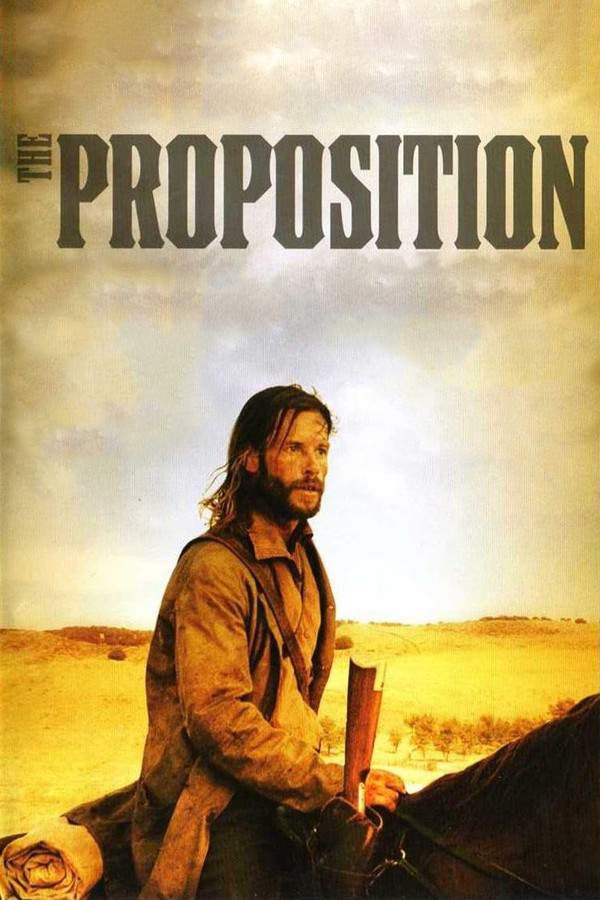
The Proposition (2006) movie poster

Plot Summary

The Proposition (2006) Plot Summary Explained

Release, runtime and language
2006 · 104 min · English
JustWatch #6,596 2
Directed by
John Hillcoat
Starring
Guy Pearce, Ray Winstone

In 1880s Australia, a ruthless lawman presents Charlie Burns with a terrible ultimatum: betray his older brother, a dangerous outlaw wanted for brutal crimes, to save his younger sibling from a horrific fate. Journeying into the harsh Outback, Charlie faces a profound moral crisis, forcing him to confront the brutal realities of justice and the inescapable cycle of violence and retribution.

On this page (6)
  1. 1 Where to watch
  2. 2 What happens: full plot
  3. 3 Plot questions answered
  4. 4 Movie threads
  5. 5 Movies like The Proposition
  6. 6 Every angle

Where to watch

Where to Watch The Proposition (2006)

Where can you watch The Proposition? Stream, rent or buy it in the US, including on Amazon Prime Video, The CW and Amazon MX Player: current JustWatch availability with up-to-date prices.

Streaming availability powered by JustWatch

Full plot summary · contains spoilers

What Happens in The Proposition: Full Plot Summary

The whole story of The Proposition (2006) explained, from the opening scene to the final frame: every key event, every twist and what it all adds up to. Read it as a quick recap before the sequel, to check a scene you missed, or to finally understand what really happened.

Set against the rugged backdrop of the Australian outback in the 1880s, this gripping film unfolds the tragic aftermath of the Hopkins family's gruesome rape and murder, an atrocity attributed to the notorious Burns brothers gang. The story kicks off in a brothel, where a chaotic shootout erupts between the police and Charlie Burns alongside his gang. The violence culminates in the obliteration of all gang members, leaving only Charlie and his younger sibling, Mikey.

In a desperate bid for justice, Captain Stanley (Ray Winstone) offers Charlie a chilling ultimatum: he and Mikey will be spared for their crimes if Charlie can manage to kill their older brother, Arthur (played by Danny Huston), a mercurial and vicious figure dubbed "The Dog Man" by local Aboriginal tribes. Failing to comply within nine days will result in Mikey's execution on Christmas Day.

As the narrative progresses, we uncover Captain Stanley's motivations—he seeks to tame the brutal Australian landscape for his frail wife, Martha (portrayed by Emily Watson), and to rectify the haunting memories of the Hopkins family, who were their friends. With a cloud of discontent growing amongst the townspeople due to Stanley's deal with Charlie, tension escalates.

Just when matters seem dire, Stanley's superior, Eden Fletcher (played by David Wenham), demands punishment for Mikey—one hundred lashes for the crimes of the Hopkins case. Stanley is horrified not only by the brutality but because this act threatens his agreement with Charlie and their safety. In a heartbreaking turn of events, Mikey endures a brutal flogging that leaves him gravely injured, leading Stanley to stand up against the mob, only to be overruled when Martha demands retribution.

While all this unfolds, Charlie embarks on a long journey to confront Arthur, grappling with his own demons. Along the way, he encounters Jellon Lamb (played by John Hurt), a bounty hunter chasing the Burns brothers, whom Charlie soon incapacitates. After a brutal confrontation with a group of Aboriginal men, Charlie awakens in Arthur's camp located in desolate caves. Despite many chances to eliminate his brother, Charlie hesitates.

Meanwhile, chaos breaks out as Sergeant Lawrence and his men perpetrate violence against a group of Aborigines, eventually leading to a deadly confrontation between them and Arthur's gang. As the narrative builds to a ferocious climax, Charlie resolves to rescue Mikey and enlists Arthur's help in a daring jailbreak. Tragically, their escape ends in heartbreak as Mikey, still reeling from the flogging, dies in Charlie's arms.

The stakes rise when Captain Stanley and Martha, who have become increasingly isolated, sit down for an unsuspecting Christmas dinner. However, the semblance of peace shatters abruptly as Arthur and Samuel burst in, unleashing chaos and brutality upon Stanley and Martha. Amid this horror, Charlie confronts the tragic consequences of their actions, ultimately choosing to honor both his brother and the bond they shared.

As the film culminates, Charlie finds Arthur succumbing to his wounds in the serene desolation of the outback. In a poignant moment, amidst the blood-red sunset, Arthur acknowledges his brother’s resolve, leaving Charlie to reflect on their shared past and uncertain future.
Last updated: November 04, 2024 at 02:04

Was this helpful?

Plot questions answered

The Proposition Plot Explained: Your Questions Answered

The questions people ask most about The Proposition (2006): what happens in the confusing scenes, why the characters do what they do, the twists, hidden details and what the ending means. Each answer contains spoilers.

Q1

Why does Captain Stanley offer Charlie Burns a deal to kill his brother?

Captain Stanley makes this deal because he faces an impossible situation. He wants to bring order to the lawless outback for his frail wife Martha and make amends for the Hopkins family, who were close friends murdered by the Burns brothers. By using Charlie to get to Arthur, Stanley hopes to eliminate the dangerous outlaw without risking more police lives in the process.

  • captain stanley
  • charlie burns
  • deal
  • arthur burns
  • motivation
Q2

Why does Charlie hesitate to kill Arthur when he finds him at the camp?

Charlie hesitates because despite Arthur being a violent criminal, he is still Charlie's older brother. Throughout their lives, Arthur protected and raised Charlie and Mikey. This familial bond conflicts violently with Charlie's need to save Mikey, creating an internal moral crisis that prevents him from pulling the trigger.

  • charlie burns
  • arthur burns
  • hesitation
  • brother
  • loyalty
  • moral dilemma
Q3

What happens to Mikey after he receives the one hundred lashes?

Mikey is severely injured from the flogging. He is barely alive when Charlie and Arthur attempt to rescue him during the jailbreak. The physical trauma is so severe that Mikey dies in Charlie's arms shortly after being freed, fulfilling the tragic consequences of the harsh colonial justice system.

  • mikey burns
  • flogging
  • lashes
  • eden fletcher
  • death
  • injury
Q4

Why does Arthur attack Captain Stanley's home on Christmas Day?

Arthur storms Stanley's home seeking revenge for the deal Stanley made with Charlie and as retaliation for the ongoing persecution of the Burns brothers. Additionally, Arthur and his gang seek to assert their power and strike fear into the colonial authorities. The attack represents Arthur's rejection of any authority and his determination to wage war against those who oppose him.

  • arthur burns
  • captain stanley
  • christmas attack
  • revenge
  • home invasion
  • martha stanley
Q5

What motivates Captain Stanley throughout the film?

Captain Stanley is driven by two interconnected motivations. First, he wants to create a civilized, orderly environment in the outback for his sickly wife Martha. Second, he seeks personal redemption for the Hopkins family massacre, who were his friends. These motivations lead him to make the controversial deal with Charlie and ultimately to resist the mob's brutality.

  • captain stanley
  • motivation
  • martha
  • hopkins family
  • redemption
  • justice
Q6

Why does Charlie decide to work with Arthur to rescue Mikey?

Charlie realizes that the original deal has collapsed after Eden Fletcher ordered Mikey's flogging. With Mikey's life clearly in immediate danger and Christmas Day approaching, Charlie sets aside his mission to kill Arthur and instead enlists his brother's help to orchestrate a jailbreak. This alliance represents Charlie choosing family loyalty over the impossible moral choice Stanley gave him.

  • charlie burns
  • arthur burns
  • jailbreak
  • mikey
  • alliance
  • rescue
Q7

How does Mikey Burns die in the film?

Mikey dies from the injuries sustained during his brutal flogging. Even though Charlie and Arthur successfully free him from the jail, the physical damage from the one hundred lashes is too severe. Mikey dies in Charlie's arms shortly after the rescue, the trauma compounded by the harsh conditions of his confinement.
  • mikey burns
  • death
  • flogging
  • jailbreak
  • injuries
  • tragic ending
Q8

What happens to Arthur Burns at the end of the film?

Arthur is wounded during the attack on Stanley's home and the subsequent chaos. Charlie finds him dying in the vast Australian outback, surrounded by the stark, beautiful landscape. In his final moments, Arthur acknowledges Charlie's resolve and the tragic path their lives have taken. He dies as the sun sets, leaving Charlie alone.

  • arthur burns
  • death
  • final scene
  • outback
  • sunset
  • conclusion
Q9

Why does Captain Stanley defend his deal with Charlie even when the townspeople object?

Stanley maintains his deal because he genuinely believes it is the most pragmatic solution to ending the violence perpetuated by the Burns brothers. He faces criticism from both his superiors and the townspeople, but he remains committed to his plan. However, his resolve is tested when Eden Fletcher overrides his authority and orders Mikey's punishment, ultimately proving Stanley's deal ineffective.

  • captain stanley
  • deal
  • townspeople
  • criticism
  • authority
  • eden fletcher
Q10

What leads to the violence between Sergeant Lawrence's men and Arthur's gang?

Sergeant Lawrence and his men commit brutal acts against local Aboriginal people, which triggers a violent confrontation with Arthur's gang. This escalation highlights the chaotic and violent nature of the colonial frontier, where multiple factions clash. The conflict also serves to show how Arthur operates outside any moral framework, attacking both authorities and Indigenous groups indiscriminately.

  • sergeant lawrence
  • aboriginal
  • violence
  • arthur gang
  • colonial violence
  • clash
Q11

Why does Charlie incapacitate Jellon Lamb during his journey?

Charlie encounters Jellon Lamb, a bounty hunter also pursuing the Burns brothers. Rather than being captured or delayed by Lamb, Charlie eliminates him to remove an obstacle in his mission to find Arthur. This act demonstrates Charlie's willingness to use violence to achieve his goal and highlights the brutal survival mentality of the outback.

  • jellon lamb
  • bounty hunter
  • charlie burns
  • confrontation
  • elimination
Q12

Why does the film end on such a bleak note with Charlie alone in the outback?

The bleak ending reflects the film's central themes of moral decay, futility, and the inescapable cycle of violence. Charlie loses both his brothers, Mikey to death and Arthur to his wounds. He is left utterly alone in the harsh, indifferent landscape, having achieved nothing but more death. This conclusion offers no redemption or hope, embodying the brutal reality of the Australian frontier.

  • bleak ending
  • isolation
  • outback
  • moral decay
  • violence
  • conclusion
  • thematic meaning

Movie threads

More Movies Like The Proposition, by Mood & Story

Curated lists built around what makes The Proposition tick: the same mood, the same kind of story or the same emotional payoff. Each list explains why these movies belong together.

Movies with bleak moral dilemmas like The Proposition

Stories where characters are forced into impossible decisions by brutal environments. If you liked the impossible choices and harsh setting of The Proposition, explore more films where characters face devastating moral tests in unforgiving worlds. These movies, like No Country for Old Men or The Road, share a focus on survival ethics and the heavy emotional toll of decisions made under extreme duress.

  • morally complex
  • brutal
  • desolate
  • grim
  • oppressive
  • foreboding
  • Tone: dark, grim, morally complex
  • Pacing: steady, deliberate
Why these movies?

The story pattern: Narratives in this thread typically follow a protagonist who is presented with a deeply consequential, morally grey ultimatum. The story unfolds as they grapple with the decision, often leading to a chain of violence and regret. The journey is less about triumph and more about the psychological corrosion and inevitable tragic consequences of their choices.

Why they belong together: These films are grouped by their shared focus on existential moral crises set against brutal backdrops. They feature a consistently dark tone, high emotional weight, and a steady, deliberate pacing that allows the gravity of the dilemma to fully sink in, resulting in a profoundly heavy viewing experience.

Grim frontier justice movies like The Proposition

Stories that explore the brutal and unforgiving nature of law and revenge on the edge of civilization. For viewers who appreciated The Proposition's take on brutal frontier law and its cycle of violence, this section features similar gritty stories. These films, such as Unforgiven or Bone Tomahawk, explore themes of revenge, corrupt justice, and the inescapable bloodshed that defines life on the lawless frontier.

  • violent
  • grim
  • oppressive
  • harsh
  • foreboding
  • revenge
  • Tone: dark, oppressive, violent
  • Pacing: steady, tension-building
Why these movies?

The story pattern: The narrative pattern involves a conflict between figures of authority and outlaws, where the methods used to establish justice are themselves violent and morally questionable. The plot often spirals towards an inevitable, bloody confrontation that offers no clear winners, only a bleak commentary on the futility of violence as a means to an end.

Why they belong together: Movies in this thread are united by their dark, oppressive tone and high intensity driven by themes of revenge and moral corruption. They share a steady pacing that builds tension towards a violent climax and often conclude with a bleak ending that underscores the cyclical nature of the conflict.

If you liked this

Movies Like The Proposition

Similar movies to The Proposition: the same genre, themes or kind of story. Each one comes with its own plot summary, timeline and ending explained.

Browse all movie summaries

Every angle

The Proposition (2006) Explained: Plot, Timeline & Characters

Everything about The Proposition in one place: what happens in the plot summary, the timeline in chronological order, the characters and meaning and a spoiler-free summary. What's After the Movie adds the cast, box office and post-credit scenes.

Coming soon on iOS and Android

The Plot Explained Movie Summary App

Plot summaries, endings explained and timelines on your phone. Catch up on any movie in minutes, save your favorites and never miss a twist again.

Be the first to know when we launch. Your email stays private, always.

Learn more about the app