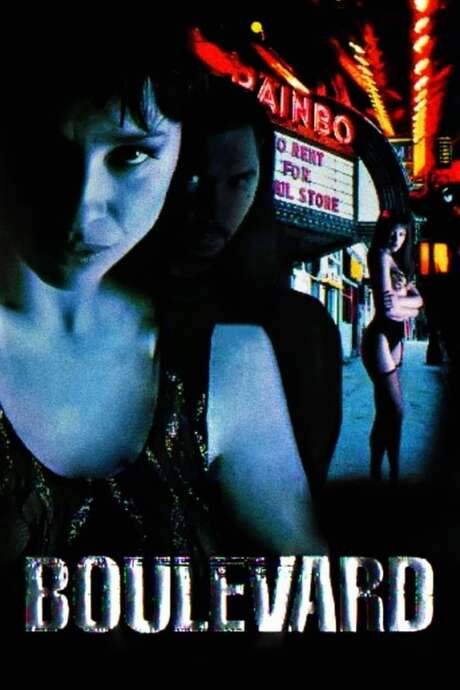
The plot threads a web of interlocking stories, where each vignette is introduced by a character who had sex with someone in the previous segment, creating a tight, tangled chain of consequences that ripple through a cityscape. The film opens with a seventeen-year-old prostitute, Lolita Hilary Swank, waiting outside a movie premiere with another teen, hoping to snag a photo of her idol, movie star Peter Blaine Peter Dobson. When her friend is yanked away by a jealous boyfriend, Lolita drifts through the streets of Los Angeles on her own, and she ends up performing a sexual favor for a man who knocks her unconscious.
That man, the driver of misfortune in the opening scenes, is Angel [Daryl Mitchell], a young man entangled in questionable criminal activity. His later attempt to flee Los Angeles after a major mistake in a drug deal puts him on a perilous path as he drags Julie Meta Golding along with him. Julie, a young waitress, consents to the illicit encounter in a stolen car, and they drive through a car wash as tension builds. After the exhilaration of the moment, Julie rethinks her plan to escape, especially when she notices a car full of men following them. She bolts from the vehicle while Angel is suddenly cut down by those men, leaving a trail of questions and consequences in her wake.
Sometime later, Julie finds work in an upscale restaurant as a waitress, where she serves Richard Chad Lowe. Richard ends up sexually assaulting her in the men’s room, a brutal turn that deepens the sense of danger threading through the night. In the next vignette, Richard has a separate encounter with Kathy Natasha Gregson Wagner, his boss’s wife, revealing a web of illicit desire that spans boundaries and loyalties. Kathy maintains a non-exclusive relationship with her husband, Bobby Bill Cusack, who is also involved with another woman on the side. The dynamics of power, consent, and secrecy swirl around them as the stories press forward.
Bobby is then propositioned by Patrick Stephen Mailer, a sexually aggressive and drug-addicted gay man who is Blaine’s closet-destined boyfriend. The threads intersect as the characters navigate need, fear, and longing, blurring the lines between guilt and necessity. The final vignette returns to the figure at the center of this tangled web, the grief-stricken Peter Blaine, who seeks both sexual favors and genuine companionship from Lolita, who remains haunted by the bruise she bears from her earlier encounter with Angel.
Throughout these interwoven episodes, the film maintains a steady, observational tone that lets the ensemble cast—through their choices, vulnerabilities, and evolving dynamics—drive the narrative forward. The result is a mosaic of desire and consequence, where each encounter propels the next, and where the past mistakes of one character echo in the actions of another. The mood is raw but restrained, never sensationalizing the trauma at its core, instead presenting a sober, interlinked tale of longing, risk, and the fragile line between connection and harm.