Plot Explained Spoilers guaranteed!
Plot Explained

Browse by genre

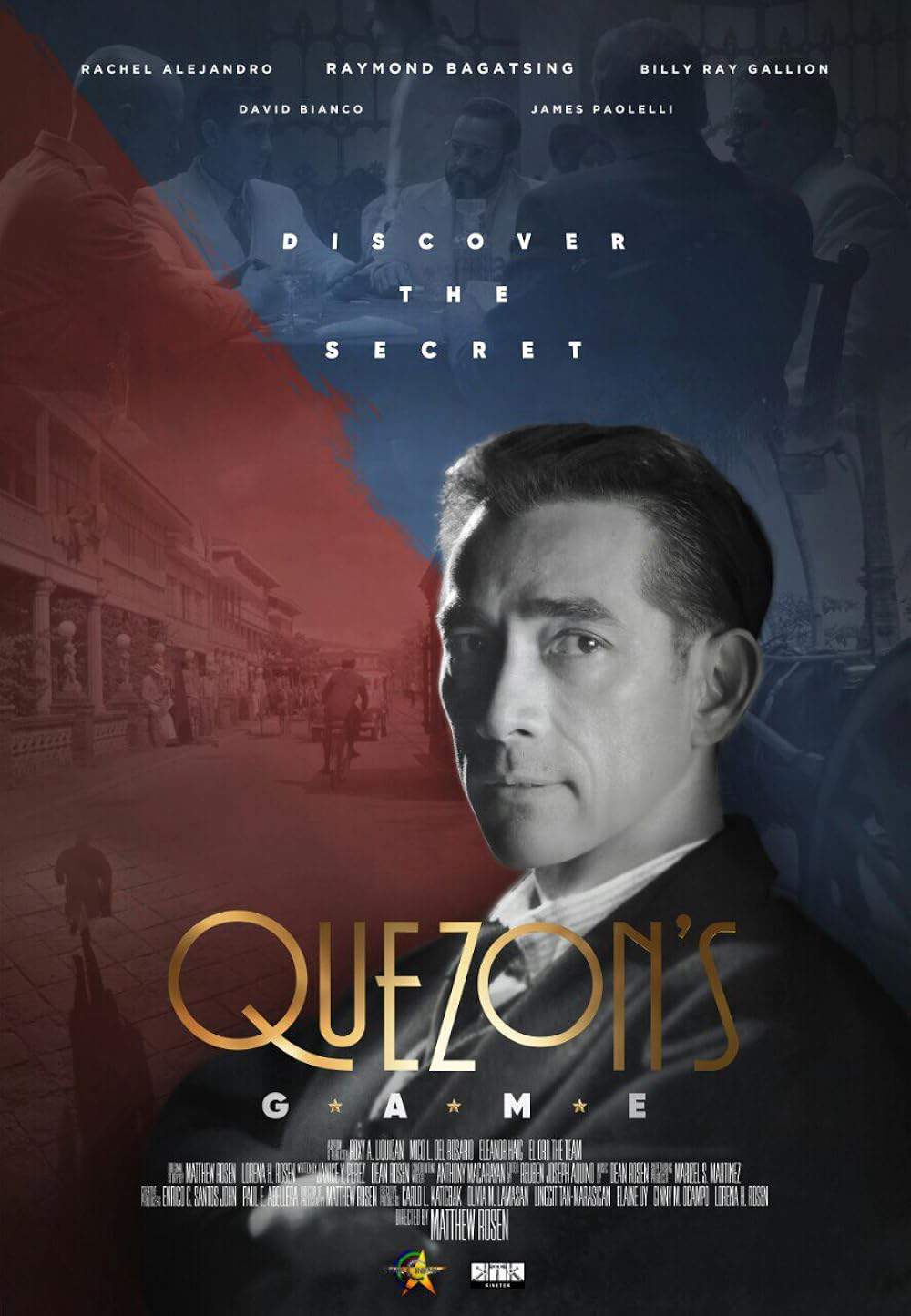
Quezon's Game (2019) movie poster

Plot Summary

Quezon's Game (2019) Plot Summary Explained

Release, runtime and language
2019 · 127 min · English
Echo score 67
Loading streaming availability…
Directed by
Matthew E. Rosen, Matthew Rosen
Starring
Billy Ray Gallion, David Bianco, James Paoleli, Jennifer Blair-Bianco, Jeremy Domingo, Kate Alejandrino
Budget
$500K

With war looming in Europe, Philippine President Manuel L. Quezon makes a daring decision to offer refuge to Jewish people escaping the horrors of Nazi persecution. Facing significant political and logistical challenges, Quezon and his team work tirelessly to provide sanctuary, demonstrating remarkable courage and compassion. This drama highlights a little-known chapter of history, showcasing the extraordinary efforts of the Philippines in defying the global crisis.

On this page (6)
  1. 1 Where to watch
  2. 2 What happens: full plot
  3. 3 Plot questions answered
  4. 4 Movie threads
  5. 5 Movies like Quezon's Game
  6. 6 Every angle
Loading streaming availability…

Full plot summary · contains spoilers

What Happens in Quezon's Game: Full Plot Summary

The whole story of Quezon's Game (2019) explained, from the opening scene to the final frame: every key event, every twist and what it all adds up to. Read it as a quick recap before the sequel, to check a scene you missed, or to finally understand what really happened.

The story unfurls at a therapeutic retreat in Saranac Lake, New York, where Manuel Quezon and his wife Aurora Quezon are captivated by a newsreel that showcases the momentous arrival of General MacArthur at Leyte, the significant liberation of Europe, and the harrowing revelations of the Holocaust. As the film reel concludes, Manuel ponders deeply, inquiring of himself, "Could I have done more?"

Fast forward to 1938 Manila, we meet Alex Frieder, a Jewish-American businessman, who receives an alarming confidential telegram from the Chinese consulate in Vienna regarding the escalating horror of the Holocaust. On this same fateful day, Consul-General Jonathan Cartwright briefs Paul McNutt, the High Commissioner to the Philippines, about the unsettling arrival of a new chief of security from the German Embassy, Lt. Ebner. This SS officer raises red flags, leading Cartwright to express his grave concerns about potential espionage. However, McNutt, dismissive of these apprehensions, insists that spies would be more clever in their approach, positing that they could appear inconspicuous in plain clothes.

At a lively gathering, Quezon seizes the moment to announce his ambitious project for the new Philippine capital, Balintawak. Alex Frieder, privately troubled by the telegram's implications, confides his urgent request for assistance in rescuing Jewish refugees to Quezon, McNutt, and Colonel Eisenhower. With a heavy heart, Quezon agrees but emphasizes the necessity of awaiting approval from the U.S. Congress regarding additional exit visas. Meanwhile, the evening unfolds with the party singer, Vera, engaging in flirtation with Quezon, leading to a tumultuous confrontation with Aurora once the festivities draw to a close. That very night, Lt. Ebner confronts German Ambassador Kaiser, demanding the display of the Nazi flag while ominously alluding to the impending Kristallnacht.

As November 1938 dawns, the newsreels grimly report the onset of the Kristallnacht and the tragic return of the MS St. Louis to Germany. Amidst this turmoil, McNutt seeks clarity from Cartwright, who informs him that approximately 200 immigration visas remain available. The urgency of the situation weighs heavily as Alex, along with Quezon, Eisenhower, and McNutt, strategizes on how to secure additional visas for the growing number of refugees. McNutt obliquely hints at the political climate, citing the challenge posed by antisemitic officials. In a bold move, Alex places an advertisement in German newspapers to attract professionals willing to contribute to Quezon’s envisioned city. In response to their requests, Eisenhower turns to General MacArthur, seeking any individual who might assist Quezon’s humanitarian efforts; however, MacArthur expresses a vehement disapproval, foreseeing imminent Japanese invasion.

During this harrowing time, McNutt strives to compile reports for President Roosevelt while Cartwright enters their deliberations, fervently objecting to the rescue plans. He argues that the influx of Jewish refugees could pose a national security threat. In a tense and pivotal moment, Aurora uncovers Manuel's deteriorating health when she discovers a blood-stained handkerchief. Despite receiving a staggering count of 10,000 names from the compiled lists, the group grapples with the ethical dilemma of exclusion without raising alarms. In a tense meeting outside the embassy, Quezon proposes bribing Kaiser for more visas, leading to a high-stakes interaction at a presidential gala, where Kaiser repels their bribe but ultimately offers a glimmer of hope by agreeing to supply the necessary exit papers. Unbeknownst to them, Lt. Ebner is covertly monitoring.

Faced with disappointment, McNutt relays the disheartening news that the U.S. Congress has categorically denied their requests for extra visas, leaving only 210 at their disposal. Alex is consumed by frustration and anguish at the failure of their mission. The subsequent day brings further tragedy when Quezon learns that the Secretary of State has scuttled all visa applications, leading him to break down in his office. His battle with tuberculosis reaches a critical juncture, yet he persists with his presidential duties against medical advice.

Manuel Quezon steps into the public eye to address deeply rooted issues of racial injustice and border control in the Philippines. The courageous stance incites protests in Manila, demanding action against the U.S. Congress's denial of visas for the refugees. Ultimately, the concerted efforts yield a result: 210 visas, along with a miraculous approval of an extra 1,000 visas, leading to an emotional arrival of Jewish refugees one fateful night in Marikina, greeted passionately by Quezon, McNutt, Alex Frieder, and their families.

In a poignant flash-forward to 1944, the film circles back as Manuel Quezon reflects on his past inquiries to Aurora, who reassures him that his legacy of action against the tide of indifference will resonate deeply within the Filipino heart.

In a moving epilogue, it is revealed that over 1,200 Jewish refugees found sanctuary thanks to their efforts, although their brave mission was cut short amid the chaos of the Japanese invasion. The fates of the Quezon family, Eisenhower, McNutt, and Alex Frieder remain uncertain as the credits roll, featuring heartfelt testimonials from the surviving refugees whose lives were forever changed.
Last updated: February 02, 2025 at 08:46

Was this helpful?

Plot questions answered

Quezon's Game Plot Explained: Your Questions Answered

The questions people ask most about Quezon's Game (2019): what happens in the confusing scenes, why the characters do what they do, the twists, hidden details and what the ending means. Each answer contains spoilers.

Q1

Why did President Quezon decide to help Jewish refugees?

Quezon was moved to act after receiving a confidential telegram from Alex Frieder detailing the horrors of the Holocaust. Though initially cautious about political implications, he agreed to support the rescue effort, emphasizing the need to wait for U.S. Congress approval for additional exit visas. His moral conviction drove him to take this risky stand despite significant political opposition.

  • manuel quezon
  • jewish refugees
  • holocaust
  • humanitarian rescue
  • alex frieder
Q2

How many Jewish refugees were saved in the film?

Over 1,200 Jewish refugees found sanctuary in the Philippines thanks to Quezon's efforts. The operation secured 210 initial visas plus an additional 1,000 visas approved later, allowing thousands to escape Nazi persecution.

  • jewish refugees
  • 1200 rescued
  • visas
  • manila
  • marikina
Q3

What was the MS St. Louis and why did it matter?

The MS St. Louis was a German ship carrying Jewish refugees that was denied entry into multiple countries and forced to return to Germany, where many passengers later died in the Holocaust. Its tragic fate highlighted the desperate situation facing Jewish refugees and underscored the urgency of Quezon's mission to provide sanctuary.

  • ms st louis
  • holocaust
  • ship
  • refugees
  • returned to germany
Q4

What was Kristallnacht and how did it affect the rescue mission?

Kristallnacht was a coordinated pogrom against Jews throughout Nazi Germany in November 1938, resulting in widespread destruction, arrests, and killings. The newsreels showing these horrors intensified the urgency for Quezon and his team to secure visas and rescue refugees before it was too late.

  • kristallnacht
  • november 1938
  • nazi persecution
  • jews
  • germany
Q5

Why was it so difficult to get additional visas for the refugees?

The U.S. Congress denied requests for extra exit visas due to antisemitic officials and political opposition. Initially only 210 immigration visas were available, while thousands needed rescue. McNutt warned that antisemitic officials posed a significant challenge to their efforts.

  • us congress
  • visas
  • immigration
  • antisemitism
  • denial
  • 210 visas
Q6

What was wrong with Quezon's health during the film?

Quezon was suffering from tuberculosis, which progressively worsened throughout the film. Aurora discovered a blood-stained handkerchief revealing his deteriorating condition. Despite his illness, he continued working against medical advice to push forward the refugee rescue mission.

  • manuel quezon
  • tuberculosis
  • health
  • blood
  • aurora quezon
Q7

What happened during the bribery attempt at the German Embassy?

Quezon proposed bribing German Ambassador Kaiser to obtain more exit visas for refugees. During a presidential gala, Kaiser rejected the bribe but agreed to provide exit papers under pressure. Unbeknownst to them, Lt. Ebner was covertly monitoring the interaction.

  • kaiser
  • ambassador
  • bribe
  • german embassy
  • lt ebner
  • exit visas
Q8

Why did General MacArthur oppose the refugee rescue efforts?

General MacArthur expressed strong disapproval of the rescue mission, forecasting that a Japanese invasion was imminent and diverting resources would be counterproductive. He refused to provide any assistance to Quezon's humanitarian efforts despite Eisenhower's request.

  • general macarthur
  • eisenhower
  • japanese invasion
  • opposition
  • military
Q9

What was the Balintawak project that Quezon announced?

Balintawak was Quezon's ambitious vision for the new Philippine capital, announced at a social gathering in 1938. The project was part of his broader national development goals, though the refugee crisis soon took priority in his efforts.

  • balintawak
  • new capital
  • philippines
  • quezon
  • manila
Q10

What did Quezon's press conference achieve?

Quezon publicly addressed racial injustice and criticized the U.S. Congress for denying refugee visas. His bold stance incited protests in Manila, building public pressure that contributed to the eventual approval of 1,000 additional visas.

  • press conference
  • manila
  • protests
  • racial injustice
  • usz congress
  • quezon
Q11

Who was Lt. Ebner and what was his role in the story?

Lt. Ebner was an SS officer serving as chief of security at the German Embassy in Manila. Consul-General Cartwright suspected him of espionage, though High Commissioner McNutt dismissed these concerns. Ebner secretly monitored the rescue operations and pressured Ambassador Kaiser regarding the Nazi flag incident.

  • lt ebner
  • ss
  • german embassy
  • manila
  • spy
  • espionage
  • cartwright
Q12

How did the Japanese invasion affect the rescue mission?

The Japanese invasion of the Philippines cut short the rescue mission, though over 1,200 refugees had already been saved. The fates of Quezon, Eisenhower, McNutt, and Alex Frieder remained uncertain as the credits rolled, highlighting the tragic interruption caused by war.

  • japanese invasion
  • philippines
  • war
  • mission ended
  • fate
  • 1944

Movie threads

More Movies Like Quezon's Game, by Mood & Story

Curated lists built around what makes Quezon's Game tick: the same mood, the same kind of story or the same emotional payoff. Each list explains why these movies belong together.

Historical rescue dramas like Quezon's Game

Stories where individuals race against time and bureaucracy to save lives. Movies like Quezon's Game that focus on urgent, fact-based rescue missions against historical backdrops. If you liked the tense political strategy and profound compassion of Quezon's Game, you'll find similar stories of courage and defiance here.

  • urgent
  • tense
  • compassionate
  • hopeful
  • dramatic
  • historical
  • Tone: tense, compassionate, bittersweet
  • Pacing: steady, methodical
Why these movies?

The story pattern: These narratives typically follow a clear, linear path towards a vital humanitarian goal. They pit compassionate protagonists against systemic indifference, political opposition, and logistical nightmares, creating a steady build of tension as the clock ticks. The journey is defined by perseverance in the face of seemingly insurmountable obstacles.

Why they belong together: Movies are grouped here based on their shared core of a historical rescue mission, their steady yet urgent pacing, and their heavy emotional weight. They blend tense political or diplomatic maneuvering with profound human empathy, resulting in a bittersyet but impactful viewing experience.

Bittersweet historical dramas like Quezon's Game

Stories where a hard-won triumph is shadowed by a larger, unresolved loss. Find movies with a bittersweet tone similar to Quezon's Game, where a powerful act of compassion is set against a backdrop of wider suffering. If you appreciated the blend of hope and sorrow in Quezon's Game, explore these stories of meaningful but incomplete victories.

  • bittersweet
  • reflective
  • solemn
  • hopeful
  • tragic
  • dramatic
  • Tone: bittersweet, heavy, reflective
  • Pacing: steady, character-driven
Why these movies?

The story pattern: The narrative pattern involves a clear, morally-driven objective that is partially achieved. The conclusion acknowledges the success but heavily underscores its limitations—be it personal cost, the scale of the ongoing crisis, or an impending doom that the victory cannot prevent. The emotional journey is one of measured hope layered with deep melancholy.

Why they belong together: These films share a specific bittersweet emotional mix, combining heavy subject matter with a core of human decency. They are united by their steady pacing, straightforward moral focus, and an ending that feels both hopeful and deeply sad, creating a resonant and thoughtful experience.

If you liked this

Movies Like Quezon's Game

Similar movies to Quezon's Game: the same genre, themes or kind of story. Each one comes with its own plot summary, timeline and ending explained.

Browse all movie summaries

Every angle

Quezon's Game (2019) Explained: Plot, Timeline & Characters

Everything about Quezon's Game in one place: what happens in the plot summary, the timeline in chronological order, the characters and meaning and a spoiler-free summary. What's After the Movie adds the cast, box office and post-credit scenes.

Coming soon on iOS and Android

The Plot Explained Movie Summary App

Plot summaries, endings explained and timelines on your phone. Catch up on any movie in minutes, save your favorites and never miss a twist again.

Be the first to know when we launch. Your email stays private, always.

Learn more about the app