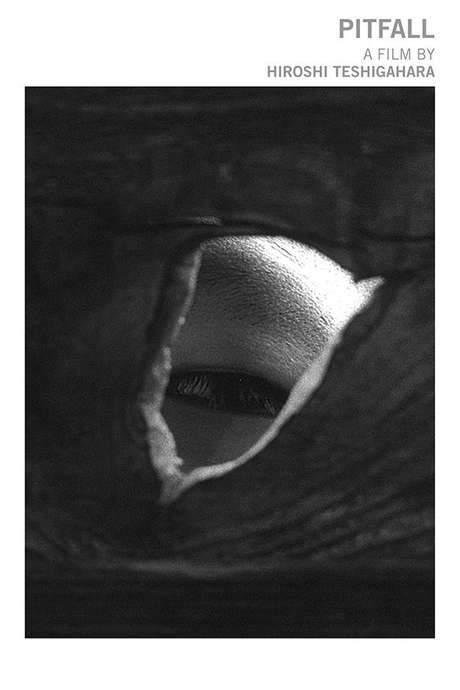
A man wanders into a seemingly deserted town with his young son in search of work. But after a bit of bad luck, he joins the town’s population of lost souls.
Find where to stream, rent, or buy Pitfall (1962) in the US with current JustWatch availability, up-to-date pricing, and platform listings for subscription, rental, and digital purchase options.
Warning: spoilers below!
Haven’t seen Pitfall yet? This summary contains major spoilers. Bookmark the page, watch the movie, and come back for the full breakdown. If you're ready, scroll on and relive the story!
Trace every key event in Pitfall (1962) with our detailed, chronological timeline. Perfect for unpacking nonlinear stories, spotting hidden connections, and understanding how each scene builds toward the film’s climax. Whether you're revisiting or decoding for the first time, this timeline gives you the full picture.
Last updated: March 05, 2026 at 18:41
Find frequently asked questions about the Pitfall (1962) timeline, including chronological order, nonlinear jumps, cause-and-effect links, and scene sequence clarifications. This timeline FAQ helps explain when key events happen, how moments connect, and why the story unfolds in that specific order.
The man in the white suit is never explicitly identified by name in the film. He appears to be a hired assassin working for the rival union faction that split from the main labor organization. He methodically orchestrates the murders, killing the miner, bribing the shopkeeper to frame Otsuka, and eliminating the shopkeeper as a witness, acting as a destabilizing force to create chaos within the union leadership.
He is first seen photographing the father and son from a cemetery, establishing his role as an observer who has been watching their movements.
The killer frames Otsuka because he bears a striking resemblance to the murdered miner. By planting evidence (the photograph) and bribing the shopkeeper to falsely identify Otsuka as the killer, the assassin creates a scapegoat. This frames an innocent union leader, sparking suspicion between the two union factions and ultimately causing Otsuka and Toyama to turn on each other.
The photo found in the murdered miner's pocket closely resembles Otsuka, a detail the killers exploit.
When Otsuka and Toyama learn that the shopkeeper has been murdered, each suspects the other of ordering the killing to silence a key witness. Driven by mutual distrust and the belief that the other is responsible for the ongoing deaths, they engage in a violent confrontation that results in both their deaths. The killer's manipulation successfully turns former allies into enemies.
The shopkeeper was bribed to frame Otsuka, making her death a convenient way to eliminate a witness who could reveal the truth.
The ghost of the murdered miner appears as a surreal, haunting presence wandering the ghost town after his death. This ghostly element serves the film's fantasy genre tone and creates an oppressive atmosphere. The ghost observes the living but cannot interact with them, symbolizing the lingering consequences of the crime and the unresolved injustices that haunt the community.
The ghost appears immediately after the murder, suggesting his spirit cannot rest until justice is done.
The shopkeeper initially helps Otsuka and his son by directing them toward the village. However, after the miner is murdered, the man in white bribes her to frame Otsuka for the crime. Later, the killer eliminates her by cutting her throat, removing the only witness who could potentially expose the conspiracy. Her death seals her complicity in the frame job.
She is the only person who interacted with both the miner and Otsuka, making her a crucial witness the killer cannot afford to leave alive.
Detectives discover a photograph in the murdered miner's back pocket that bears a striking resemblance to Otsuka. This photo is deliberately planted by the killer to strengthen the frame job. It creates a visual connection between the victim and the union leader, making Otsuka appear guilty to investigators and sowing discord within the union.
The resemblance between Otsuka and the miner is noted earlier, making the planted photo believable.
Otsuka explains that a faction within the labor movement broke away and formed a second union at another mining pit. This split represents bitter infighting within the labor organization. The rival faction hires the man in white to eliminate opposition and consolidate power, using the murders and framing as a tactic to destabilize the main union leadership.
The photo and the political tensions are introduced when detectives investigate the crime scene.
The young son witnesses the entire tragic sequence, his father's murder, the framing of an innocent man, the shopkeeper's death, and the final fight between Otsuka and Toyama. Traumatized and now orphaned, he runs toward the horizon, carrying the weight of all he's seen. His flight represents the cyclical nature of violence and the uncertain future awaiting those caught in the system's corruption.
The boy has been walking beside his father throughout the journey, steadily moving toward a tragic understanding of the adult world.
After successfully orchestrating the deaths of the miner, the shopkeeper, and both union leaders, the man in white watches the chaos from a distance with cold satisfaction. He then mounts his motorcycle and rides away, his mission complete. He escapes unscathed, remaining an enigmatic force rather than a named culprit, leaving behind a trail of ruined lives.
His first appearance on a motorcycle establishes him as a mobile, elusive threat.
Discover curated groups of movies connected by mood, themes, and story style. Browse collections built around emotion, atmosphere, and narrative focus to easily find films that match what you feel like watching right now.
Stories where ordinary lives are crushed by corrupt, inescapable systems.If you liked the bleak, systematic downfall in Pitfall, explore more movies like it. These films feature characters caught in a web of corruption and fatalism, where the system itself is the antagonist, leading to heavy, emotionally draining conclusions.
Narratives in this thread typically follow a protagonist who is initially hopeful or naive, only to be systematically broken down by a corrupt or indifferent system. The plot unfolds with a sense of predestination, where every attempt to escape or fight back only tightens the trap, culminating in a bleak resolution that underscores the power imbalance.
These movies are grouped by their shared theme of systemic oppression and a fatalistic tone. They create a cohesive experience of powerlessness and despair, appealing to viewers who appreciate grim, thought-provoking stories about the individual versus an uncaring world.
Where the spectral and the real blur into a single, sorrowful world.Discover movies similar to Pitfall that blend ghostly atmospheres with stark realism. If you were captivated by its dreamlike yet oppressive mood, these films offer a similar mix of the supernatural and the sorrowful, creating a uniquely haunting viewing experience.
Stories here use ghosts or surreal events as metaphors for unresolved trauma, collective guilt, or historical scars. The narrative is often a slow reveal, where the supernatural element illuminates a dark truth about the real world, leading to a profound sense of sadness and acceptance of a tragic past.
They are united by a unique tonal blend: the eerie unease of a ghost story fused with the emotional weight of a human drama. The supernatural serves to amplify, not distract from, the core themes of memory, loss, and melancholy, creating a coherent vibe of sorrowful mystery.
Don't stop at just watching - explore Pitfall in full detail. From the complete plot summary and scene-by-scene timeline to character breakdowns, thematic analysis, and a deep dive into the ending - every page helps you truly understand what Pitfall is all about. Plus, discover what's next after the movie.
Read a complete plot summary of Pitfall, including all key story points, character arcs, and turning points. This in-depth recap is ideal for understanding the narrative structure or reviewing what happened in the movie.
Discover the characters, locations, and core themes that shape Pitfall. Get insights into symbolic elements, setting significance, and deeper narrative meaning - ideal for thematic analysis and movie breakdowns.
Discover movies like Pitfall that share similar genres, themes, and storytelling elements. Whether you’re drawn to the atmosphere, character arcs, or plot structure, these curated recommendations will help you explore more films you’ll love.
Pitfall (1962) Plot Summary & Movie Recap
Pitfall (1962) Scene-by-Scene Movie Timeline
Pitfall (1962) Spoiler-Free Summary & Key Flow
Movies Like Pitfall – Similar Titles You’ll Enjoy
Patch Town (2015) Full Movie Breakdown
Lost & Found (2017) Detailed Story Recap
The Field (2019) Movie Recap & Themes
The Detective (2007) Detailed Story Recap
The Thief Lord (2006) Ending Explained & Film Insights
The Graveyard Story (1991) Film Overview & Timeline
The Strangeness (1985) Ending Explained & Film Insights
The Pit, the Pendulum and Hope (1983) Detailed Story Recap
The Pit and the Pendulum (1913) Story Summary & Characters
Penance Lane (2020) Movie Recap & Themes
Strange Illusion (1945) Detailed Story Recap
Rogues’ Gallery (1944) Ending Explained & Film Insights
Pitfall (1948) Movie Recap & Themes
A Strange Adventure (1932) Complete Plot Breakdown
Trouble at Timpetill (2008) Film Overview & Timeline