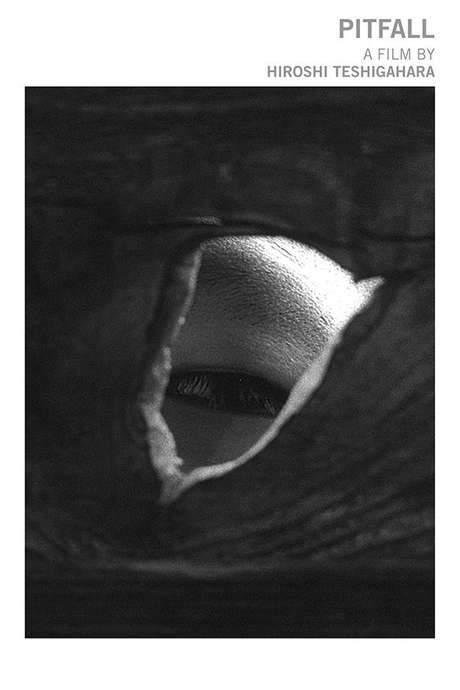
A man wanders into a seemingly deserted town with his young son in search of work. But after a bit of bad luck, he joins the town’s population of lost souls.
Find where to stream, rent, or buy Pitfall (1962) in the US with current JustWatch availability, up-to-date pricing, and platform listings for subscription, rental, and digital purchase options.
Warning: spoilers below!
Haven’t seen Pitfall yet? This summary contains major spoilers. Bookmark the page, watch the movie, and come back for the full breakdown. If you're ready, scroll on and relive the story!
Explore the full timeline and setting of Pitfall (1962). Follow every major event in chronological order and see how the environment shapes the story, characters, and dramatic tension.
Last updated: March 05, 2026 at 18:24
Meet the key characters of Pitfall (1962), with detailed profiles, motivations, and roles in the plot. Understand their emotional journeys and what they reveal about the film’s deeper themes.
Last updated: March 05, 2026 at 18:24
Explore the central themes of Pitfall (1962), from psychological, social, and emotional dimensions to philosophical messages. Understand what the film is really saying beneath the surface.
Last updated: March 05, 2026 at 18:24
Browse frequently asked questions about Pitfall (1962) focused on characters, relationships, themes, symbols, setting, and story context. This movie info FAQ gives spoiler-aware explanations for character arcs, world details, and thematic interpretation so readers can better understand what the film is really about.
The film takes place in a bleak mining camp and surrounding Kyūshū countryside village in southern Japan, later moving to a deserted ghost town and its cemetery. The harsh mining environment and isolated rural settings create a suffocating atmosphere of decay and desperation where the story's violence and betrayal unfold.
The mining camp's sense of isolation and the looming ghost town establish early that this is a world where people can disappear without consequence.
While the exact year is not explicitly stated, the film appears to be set in the post-World War II era, reflecting the economic hardship, labor unrest, and social decay that characterized Japan during the 1950s. The setting captures a transitional period when traditional mining communities faced economic collapse.
The film centers on a miner's dream of joining a union and exposes the fractures within union leadership itself. Political maneuvering, personal vendettas, and economic desperation intertwine to threaten worker solidarity. The narrative shows how power can corrupt collective causes as easily as external forces crush them, revealing the fragile nature of worker organizing in a hostile environment.
Early scenes of miners toiling in harsh conditions establish the economic desperation that fuels the union politics.
The miner's ghost haunts the living world as a presence felt but not heard by townspeople. Memory surfaces through scenes in the cemetery and the ghost town, reminding characters of past grievances and missed chances. This haunting underscores the consequences of violence and deceit that continue to echo through the community, probing questions of guilt and innocence.
The cemetery appears early as a quiet, foreboding location that later becomes central to the story's violence.
A brutal frame-up hinges on deadly mistaken identity and visual deception. The look-alike of the murdered miner becomes a tool for manipulation, while a mysterious man in a white suit orchestrates events from the shadows. The film explores how truth is constructed under pressure and who benefits from misleading narratives, showing how appearances mask brutal intent.
The physical resemblance between characters is established early, creating the foundation for the frame-up.
Otsuka is a union leader who bears an uncanny resemblance to the murdered miner. His likeness becomes the centerpiece of a frame-up, placing him at the center of police suspicion and public doubt. He strives to prove his innocence while navigating volatile labor politics and personal danger, testing the boundaries between solidarity and self-preservation.
The man in the white suit is a mysterious figure who orchestrates murder and manipulation from the shadows. His identity remains hidden throughout the film as he uses fear and deception to influence outcomes. His actions drive the plot toward tragedy and expose the fragility of truth in a world where appearances are weaponized. He ultimately escapes unscathed while all other major characters die.
The mysterious figure appears early, observing events with apparent foreknowledge of how they will unfold.
The miner's son witnesses the violent events unfolding around him and ultimately continues toward an uncertain future. His departure into the distance marks the film's lingering sense of unresolved endings. He embodies the vulnerability and resilience of a new generation caught between adult conflicts and the fallout of violence, left alone after all the adults around him perish.
The film presents a corrupt and inescapable system where characters are pawns in larger power plays. The relentless sequence of murders, betrayals, and the overarching sense of doom create an unrelenting atmosphere. The surreal, ghostly elements amplify the melancholic and oppressive tone without providing relief, culminating in an ending where the child witness is left alone and the orchestrator of chaos escapes unscathed.
The union is fractured by factional divides between leaders like Otsuka and Toyama, who struggle over legitimacy and direction for the workers. Intra-union politics in a time of economic strain lead to betrayal and manipulation. The film shows how personal vendettas and political maneuvering threaten worker solidarity, making the union as dangerous to its members as the external forces they face.
Early interactions between union members reveal tensions and competing interests that will divide them.
The cemetery serves as both a literal and symbolic stage for violence and unresolved grievances. It is where memories surface and the ghost's presence is most strongly felt. The quiet of the cemetery becomes a place where the consequences of violence and deceit echo through the community, symbolizing the burial of truth and justice.
The shopkeeper is a female civilian in the village who becomes entangled in the plot when she is bribed to frame Otsuka. She witnesses the mounting tension and is ultimately killed by the man in white. Her role demonstrates how ordinary civilians become pawns in larger power plays and how fear can corrupt judgment, highlighting the film's theme that no one is truly safe from the violence.
Discover curated groups of movies connected by mood, themes, and story style. Browse collections built around emotion, atmosphere, and narrative focus to easily find films that match what you feel like watching right now.
Stories where ordinary lives are crushed by corrupt, inescapable systems.If you liked the bleak, systematic downfall in Pitfall, explore more movies like it. These films feature characters caught in a web of corruption and fatalism, where the system itself is the antagonist, leading to heavy, emotionally draining conclusions.
Narratives in this thread typically follow a protagonist who is initially hopeful or naive, only to be systematically broken down by a corrupt or indifferent system. The plot unfolds with a sense of predestination, where every attempt to escape or fight back only tightens the trap, culminating in a bleak resolution that underscores the power imbalance.
These movies are grouped by their shared theme of systemic oppression and a fatalistic tone. They create a cohesive experience of powerlessness and despair, appealing to viewers who appreciate grim, thought-provoking stories about the individual versus an uncaring world.
Where the spectral and the real blur into a single, sorrowful world.Discover movies similar to Pitfall that blend ghostly atmospheres with stark realism. If you were captivated by its dreamlike yet oppressive mood, these films offer a similar mix of the supernatural and the sorrowful, creating a uniquely haunting viewing experience.
Stories here use ghosts or surreal events as metaphors for unresolved trauma, collective guilt, or historical scars. The narrative is often a slow reveal, where the supernatural element illuminates a dark truth about the real world, leading to a profound sense of sadness and acceptance of a tragic past.
They are united by a unique tonal blend: the eerie unease of a ghost story fused with the emotional weight of a human drama. The supernatural serves to amplify, not distract from, the core themes of memory, loss, and melancholy, creating a coherent vibe of sorrowful mystery.
Don't stop at just watching - explore Pitfall in full detail. From the complete plot summary and scene-by-scene timeline to character breakdowns, thematic analysis, and a deep dive into the ending - every page helps you truly understand what Pitfall is all about. Plus, discover what's next after the movie.
Read a complete plot summary of Pitfall, including all key story points, character arcs, and turning points. This in-depth recap is ideal for understanding the narrative structure or reviewing what happened in the movie.
Track the full timeline of Pitfall with every major event arranged chronologically. Perfect for decoding non-linear storytelling, flashbacks, or parallel narratives with a clear scene-by-scene breakdown.
Discover movies like Pitfall that share similar genres, themes, and storytelling elements. Whether you’re drawn to the atmosphere, character arcs, or plot structure, these curated recommendations will help you explore more films you’ll love.
Pitfall (1962) Plot Summary & Movie Recap
Pitfall (1962) Scene-by-Scene Movie Timeline
Pitfall (1962) Spoiler-Free Summary & Key Flow
Movies Like Pitfall – Similar Titles You’ll Enjoy
Patch Town (2015) Detailed Story Recap
Lost & Found (2017) Story Summary & Characters
The Field (2019) Detailed Story Recap
The Detective (2007) Plot Summary & Ending Explained
The Thief Lord (2006) Spoiler-Packed Plot Recap
The Graveyard Story (1991) Full Movie Breakdown
The Strangeness (1985) Plot Summary & Ending Explained
The Pit, the Pendulum and Hope (1983) Detailed Story Recap
The Pit and the Pendulum (1913) Film Overview & Timeline
Penance Lane (2020) Full Summary & Key Details
Strange Illusion (1945) Story Summary & Characters
Rogues’ Gallery (1944) Spoiler-Packed Plot Recap
Pitfall (1948) Movie Recap & Themes
A Strange Adventure (1932) Ending Explained & Film Insights
Trouble at Timpetill (2008) Full Summary & Key Details