Plot Explained Spoilers guaranteed!
Plot Explained

Browse by genre

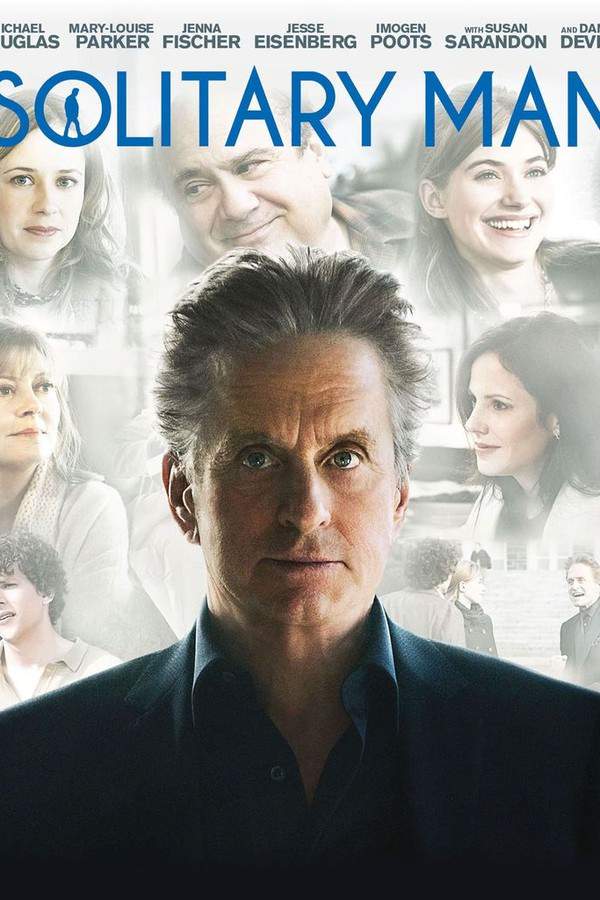
Solitary Man (2009) movie poster

Plot Summary

Solitary Man (2009) Plot Summary Explained

Release, runtime and language
2009 · 90 mins · English
Directed by
Brian Koppelman, David Levien
Starring
Richard Schiff, Jesse Eisenberg, Imogen Poots, Michael Douglas, Susan Sarandon, Gillian Jacobs
Budget
$15M

Ben, a successful car magnate, cherishes his family almost as much as his own ego. However, his relentless pursuit of business deals and a series of romantic affairs begin to unravel both his household stability and his corporate empire, sending his personal and professional worlds careening toward disaster.

On this page (5)
  1. 1 What happens: full plot
  2. 2 Plot questions answered
  3. 3 Movie threads
  4. 4 Movies like Solitary Man
  5. 5 Every angle

Full plot summary · contains spoilers

What Happens in Solitary Man: Full Plot Summary

The whole story of Solitary Man (2009) explained, from the opening scene to the final frame: every key event, every twist and what it all adds up to. Read it as a quick recap before the sequel, to check a scene you missed, or to finally understand what really happened.

54-year-old Ben Kalmen, Michael Douglas, is a powerhouse car dealer in the New York area whose confident run of success masks a deeper unease. During a routine medical check-up, a doctor flags a heart irregularity and recommends a CAT scan to get a clearer look at his ticker, hinting at a life that may be edging toward greater consequence. The moment sits at the edge of his swaggering world, a quiet reminder that time can tighten its grip even on those who feel untouchable.

Fast forward about six years, and the once-mighty dealer has fallen into a perilous tailspin. He pops pills, avoids the heart tests he was told to take, and clings to a feeling of immortality that no chart can sustain. His behavior becomes increasingly self-destructive: he lies with ease, pursues illicit affairs, endangers his marriage, and makes reckless business decisions that push him toward ruin. He is financially drained, borrowing from his daughter Susan, [Jenna Fischer], while stubbornly clinging to youth’s illusion and a lingering belief that he can outrun time. His appetite for connection proves insatiable, even as the consequences pile up around him.

Ben’s life takes a morally delicate turn when he accompanies Allyson, Imogen Poots as Allyson Karsch, the 18-year-old daughter of his girlfriend Jordon Karsch, to a college interview at a Boston campus where he once thrived as a donor and alumnus. On campus, a chance encounter with a bright, impressionable student named Daniel Cheston, Jesse Eisenberg, offers him a rare opportunity to feel valued for more than his money or status. The evening ends with a charged, impulsive moment between Ben and Allyson, a single act that will ripple through the people around him.

Back in New York, the flames of that encounter linger as Ben tries to press forward with the relationship. Allyson resists, framing the fling as a one-off experiment from a college life that is about to pull her away. She bluntly explains that she has no intention of letting this become more than a fleeting moment, and her honesty frays the edges of Ben’s plan to keep living on his own terms. The fallout arrives quickly: Jordon, furious and betrayed, severs contact with Ben and withdraws the financial support he relies on to launch a new auto dealership. The loss stings, and a sense of isolation settles in as Ben confronts eviction and the fragility of his fragile, luxurious world.

Desperation pushes Ben to a familiar lifeline—work. He approaches Jimmy Marino, Danny DeVito a college diner friend, and asks for a modest job at the campus diner to steady his finances. The plan places him back in a place he once belonged to but now feels alien. Allyson unexpectedly crosses paths with him again, drawing him back into a web of tension and longing. A party on campus becomes a turning point: Ben recognizes a customer from the diner and makes a bold, inappropriate advance toward Daniel’s new girlfriend, Maureen, Olivia Thirlby. Maureen rebuffs him, and the encounter ends with a brutal scene as an ex-police officer, sent by Allyson’s father, roughs him up.

Recovery comes slowly. After a discussion with Jimmy about what it means to choose life, Ben collapses and wakes in a hospital, with Susan by his side. He defies medical advice and leaves, a sign that his stubbornness remains intact even as his body fights him. He seeks out Daniel to offer an apology, and finds Nancy Kalmen, Susan Sarandon, on the same bench where their paths first crossed years before. Nancy, aware of Ben’s illness, wrestles with the way aging has fed his self-destructive impulses, yet she also recognizes a shared human longing. Ben confesses that aging and the fear of death have cast a shadow over his choices, making him feel invisible, a realization that he cannot simply outrun. He admits that this fear pushed him to seize life more aggressively, a push-pull dynamic that he knows is not a legitimate excuse but can help explain his behavior.

Nancy, compassionate but firm, responds that there is no excuse for harming others, yet she also offers understanding and a possible second chance—an invitation to return to the city together. The final scene lingers on a crossroads: Nancy waits in a car for his decision, while a young woman walks by on the opposite sidewalk. Ben’s gaze shifts from Nancy to this stranger, and the camera lingers as he stands and finally meets the lens, a quiet, unresolved moment that underscores the tension between desire, responsibility, and the inevitability of aging.

In this character-driven drama, the story unfolds with careful restraint, portraying a man who must confront the consequences of indulgence and the haunting truth of mortality. The film maps Ben’s flawed blueprint for living against the slow, unflinching pull of time, weaving together moments of humor, tenderness, disappointment, and hard-earned clarity. Through his encounters—with lovers, family, friends, and strangers—Ben negotiates the delicate balance between craving vitality and accepting the limits that come with growing older, leaving viewers with a poignant question about what it means to really live when time is not on one’s side.


Last updated: October 05, 2025 at 11:30

Was this helpful?

Plot questions answered

Solitary Man Plot Explained: Your Questions Answered

The questions people ask most about Solitary Man (2009): what happens in the confusing scenes, why the characters do what they do, the twists, hidden details and what the ending means. Each answer contains spoilers.

Q1

Why did Ben avoid the heart tests the doctor recommended?

Ben refused the follow-up CAT scan because he clung to a feeling of immortality. Despite being warned about a heart irregularity six years earlier, he convinced himself he could outrun time. His denial was part of a broader pattern of self-destructive behavior that included lying, affairs, and reckless business decisions.

Foreshadowing: The opening medical scene establishes that Ben dismissed medical warnings from the very start, setting up his physical and emotional decline.

  • heart condition
  • cat scan
  • medical test
  • bens denial
  • health refusal
Q2

Why did Ben have an affair with Allyson?

Ben was drawn to Allyson because she represented vitality and youth, something he desperately wanted as he grappled with aging and mortality. At the Boston campus, impressionable students like Daniel made him feel valued for his wisdom, while Allyson offered physical confirmation that he was still desirable. His fear of becoming invisible drove him to pursue her.

Foreshadowing: Earlier on campus, Ben sought validation from Daniel, showing his need to feel valued and relevant.

  • allyson
  • affair
  • vitality
  • youth
  • aging fear
  • validation
Q3

Why did Jordon withdraw financial support after learning about Ben and Allyson?

Jordon reacted with fury when she discovered Ben had slept with her 18-year-old daughter Allyson. She immediately severed contact with Ben and withdrew the funding he needed for his new auto dealership. This betrayal cut off both his personal relationship and his primary business opportunity.

Foreshadowing: Ben's pattern of infidelity and poor judgment had already strained his marriage and relationships long before this moment.

  • jordon
  • financial support
  • dealership
  • withdrawal
  • betrayal
Q4

What happened at the college party that led to Ben being beaten?

At a college party, Ben recognized a customer from the campus diner and made an inappropriate sexual advance toward Maureen, who was Daniel's girlfriend. When Maureen rejected him, the situation escalated. An ex-police officer, sent by Allyson's father as retaliation, intervened and brutalized Ben, leaving him injured.

Foreshadowing: Ben's inappropriate advances toward younger women had already manifested with Allyson, showing a pattern the film traces to his desperation.

  • college party
  • assault
  • maureen
  • daniel
  • ex-police officer
  • beating
Q5

Why did Ben leave the hospital against medical advice?

After collapsing and being rushed to the hospital, Ben defied medical advice and discharged himself. This decision reflected his stubborn refusal to accept help or change, even when his body was failing him. His stubbornness remained intact even as his health deteriorated.

Foreshadowing: His refusal to take the heart tests earlier showed he always chose denial over treatment.

  • hospital
  • medical advice
  • leaving against advice
  • stubbornness
  • health decline
Q6

What did Ben mean when he told Nancy that aging made him feel invisible?

Ben confessed that the fear of death and growing older had cast a shadow over his choices, making him feel invisible and insignificant. This fear pushed him to pursue life more aggressively, seeking younger partners, new business deals, and validation, to prove he still mattered. He acknowledged this wasn't an excuse but rather an explanation for his destructive behavior.

Foreshadowing: Throughout the film, Ben sought attention and validation from younger people, showing his struggle with feeling relevant as he aged.

  • nancy
  • invisible
  • aging
  • fear of death
  • confession
  • midlife crisis
Q7

What does the final scene with the young woman represent?

In the final moment, Nancy waits in a car offering Ben a second chance to return to the city. As a young woman walks by on the opposite sidewalk, Ben's gaze shifts from Nancy to the stranger. This lingering shot underscores his unresolved tension between desire and responsibility, he cannot fully commit to accountability and connection while still craving youthful validation.

Foreshadowing: Ben's consistent pattern of seeking younger women throughout the film makes this final glance a conclusive statement about his unchanged desires.

  • final scene
  • young woman
  • nancy
  • choice
  • desire
  • responsibility
  • ambiguous ending
Q8

Why did Ben seek out Daniel and his friends at the campus diner?

After losing his money, girlfriend, and facing eviction, Ben took a job at a campus diner to rebuild his finances. On some level, he was also drawn back to the campus environment where he once thrived as a donor and alumnus. Being around young, impressionable students like Daniel allowed him to feel valued and wise, compensating for the relevance he was losing in his adult life.

Foreshadowing: His initial visit to Boston for Allyson's interview already showed he gravitated toward environments where he could feel important.

  • daniel
  • campus diner
  • jimmy marino
  • validation
  • young students
Q9

What caused Ben's financial downfall?

Ben's fortune declined over six years due to a combination of factors: he stopped following medical advice, making him physically unwell; he made reckless business decisions; he borrowed heavily from his daughter Susan; and after his affair with Allyson was discovered, Jordon withdrew the financial support for his planned auto dealership. His inability to manage finances responsibly and his self-destructive choices left him broke and facing eviction.

Foreshadowing: The opening scene established his defiance of responsibility, which carried through to every aspect of his life.

  • financial ruin
  • business
  • dealership
  • susan
  • loan
  • bankruptcy
Q10

Why did Susan tell Ben he was no longer welcome in the family?

Ben's daughter Susan confronted him after he faced eviction, declaring he was no longer welcome in the family. Susan cited his past indiscretions and complete unreliability, years of lying, infidelity, and failing to take responsibility for his actions had worn away at the family's patience and trust.

Foreshadowing: Ben's pattern of broken promises and self-interest had been building throughout the film, affecting all his relationships.

  • susan
  • family
  • disown
  • daughter
  • forgiveness
  • estrangement
Q11

Why did Ben apologize to Daniel?

After recovering from his hospitalization, Ben sought out Daniel to offer an apology. This represented a rare moment of accountability for Ben, acknowledging the inappropriate influence he'd had on the impressionable student and the inappropriate advance toward Daniel's girlfriend Maureen at the party.

Foreshadowing: Daniel's initial admiration for Ben set up the emotional weight of this later betrayal and apology.

  • daniel
  • apology
  • maureen
  • accountability
  • college student
Q12

Why does Nancy offer Ben a second chance despite knowing his issues?

Nancy, who had known Ben for years, was aware of both his medical condition and his pattern of self-destructive behavior. While she firmly told him there was no excuse for harming others, she also recognized the shared human longing for connection and relevance that drove his actions. Her offer to return to the city together represented compassion paired with accountability, a possible path forward without excusing his behavior.

Foreshadowing: The bench where they reunite was where they first met years earlier, symbolizing a cyclical return to an earlier, more hopeful version of their relationship.

  • nancy
  • forgiveness
  • second chance
  • compassion
  • accountability
  • reunion

Movie threads

More Movies Like Solitary Man, by Mood & Story

Curated lists built around what makes Solitary Man tick: the same mood, the same kind of story or the same emotional payoff. Each list explains why these movies belong together.

Bittersweet Midlife Reckonings like in Solitary Man

Character studies of self-destruction that lead to partial, poignant self-awareness. This section features movies like Solitary Man, focusing on character-driven stories about personal and professional unraveling. If you enjoyed the poignant exploration of consequences and the bittersweet ending, you'll find similar films about flawed individuals facing the fallout of their actions.

  • introspective
  • regretful
  • poignant
  • melancholic
  • anxious
  • unsettling
  • Tone: melancholic, introspective, regretful
  • Pacing: steady, character driven
Why these movies?

The story pattern: The narrative pattern follows a character's decline, often self-inflicted through moral failings or arrogance, building steadily towards a crisis point. The story arc is less about redemption and more about the sobering, often ambiguous, realization of one's own flaws and the damage caused.

Why they belong together: These films are grouped by their shared focus on character collapse, melancholic mood, and a narrative emphasis on consequence over catharsis. They offer similar steady pacing, heavy emotional weight, and a bittersweet or ambiguous conclusion that leaves a poignant, introspective feeling.

Movies About Self-Made People Unraveling like Solitary Man

Stories where ambition and ego lead to a precarious personal and professional collapse. Explore films similar to Solitary Man, where a successful protagonist's life falls apart due to personal failings. These stories share a steady, anxious pace and a heavy emotional tone, perfect for viewers who appreciate dramas about moral decline and the fragility of success.

  • anxious
  • unsettling
  • lonely
  • melancholic
  • regretful
  • introspective
  • Tone: anxious, melancholic, unsettling
  • Pacing: steady, linear decline
Why these movies?

The story pattern: The narrative follows a linear, cause-and-effect progression where a character's external success masks internal rot. Their actions—often infidelity, deceit, or reckless ambition—trigger a chain of events that systematically dismantles their career, family, and identity, leading to an introspective and lonely finale.

Why they belong together: These movies share a core theme of a successful life dismantled by personal flaws, creating a specific vibe of anxious decline. They are united by a steady pacing that builds tension internally, a melancholic tone, and a focus on the heavy emotional consequences of one's actions.

If you liked this

Movies Like Solitary Man

Similar movies to Solitary Man: the same genre, themes or kind of story. Each one comes with its own plot summary, timeline and ending explained.

Browse all movie summaries

Every angle

Solitary Man (2009) Explained: Plot, Timeline & Characters

Everything about Solitary Man in one place: what happens in the plot summary, the timeline in chronological order, the characters and meaning and a spoiler-free summary. What's After the Movie adds the cast, box office and post-credit scenes.

Coming soon on iOS and Android

The Plot Explained Movie Summary App

Plot summaries, endings explained and timelines on your phone. Catch up on any movie in minutes, save your favorites and never miss a twist again.

Be the first to know when we launch. Your email stays private, always.

Learn more about the app