Plot Explained Spoilers guaranteed!
Plot Explained

Browse by genre

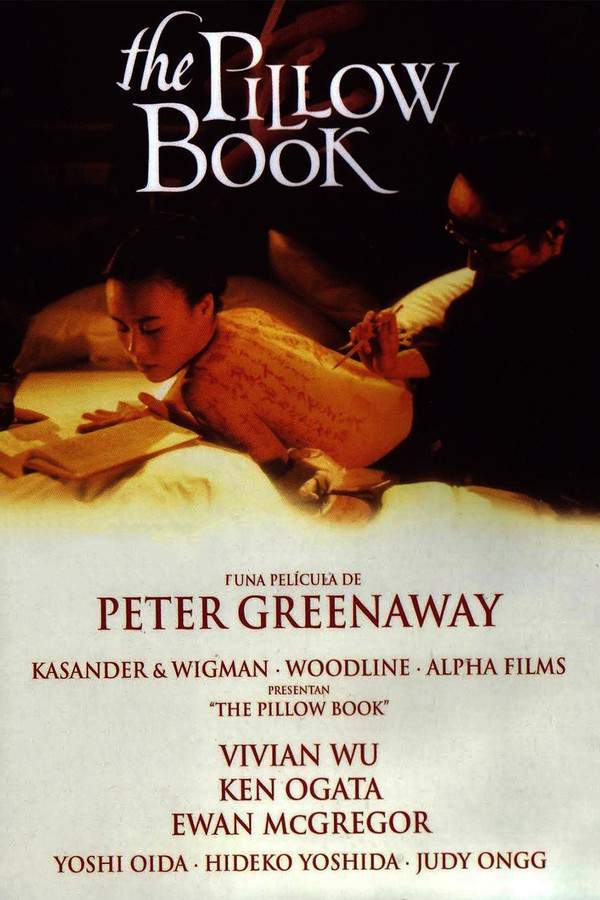
The Pillow Book (1997) movie poster

Plot Summary

The Pillow Book (1997) Plot Summary Explained

Release, runtime and language
1997 · 126 min · English
Directed by
Peter Greenaway
Starring
Ewan McGregor, Vivian Wu

A young girl's life is profoundly affected by the discovery of delicate calligraphy and the intimate secrets within a noblewoman's diary. Years later, these memories resurface when she encounters a man who becomes both a canvas for her artistic desires and an instrument for revenge. Their complex relationship ignites a sensual journey, exploring themes of love, power, and the search for identity.

On this page (7)
  1. 1 Where to watch
  2. 2 What happens: full plot
  3. 3 Plot questions answered
  4. 4 The book behind the movie
  5. 5 Movie threads
  6. 6 Movies like The Pillow Book
  7. 7 Every angle

Where to watch

Where to Watch The Pillow Book (1997)

Where can you watch The Pillow Book? Stream, rent or buy it in the US, including on Fawesome, Hoopla and Plex: current JustWatch availability with up-to-date prices.

Streaming availability powered by JustWatch

Full plot summary · contains spoilers

What Happens in The Pillow Book: Full Plot Summary

The whole story of The Pillow Book (1997) explained, from the opening scene to the final frame: every key event, every twist and what it all adds up to. Read it as a quick recap before the sequel, to check a scene you missed, or to finally understand what really happened.

The movie titled "The Pillow Book" draws its name from an ancient Japanese diary authored by Sei Shnagon, whose real name is believed to have been Kiyohara Nagiko—the very same name adopted by the film's protagonist. The narrative unfolds through the perspective of Nagiko (Vivian Wu), a model of Japanese descent living in Hong Kong. She embarks on a quest for a lover who can satisfy her cravings for both carnal pleasures and artistic expression through poetry and calligraphy.

This deep-seated longing traces back to her childhood in Kyoto, where her father, Ken Ogata, would adorn her face with symbols of good fortune. Celebrating her birthday, he would recount the Japanese creation myth while skillfully inscribing beautiful calligraphy on her skin. Additionally, her aunt, Hideko Yoshida, recites a collection of "beautiful things" from Sei Shnagon’s writings, telling her that once she turns twenty-eight, she will be the same age as Sei Shnagon when the book was penned, forging a unique connection between them.

Tragically, Nagiko learns that her father is at the mercy of his publisher, "Yaji-san" ([Yoshi Oida]), who demands sexual favors for the privilege of publishing his work. Early in the plot, the publisher orchestrates a wedding for Nagiko with his young apprentice, whose inadequacy as a partner becomes evident; he scorns her love for literature and shuns her desires for physical intimacy, even rejecting her plea to inscribe poetry on her body. This leads to a pivotal moment when he discovers her pillow book, igniting conflict that results in the destruction of their home and serves as the catalyst for Nagiko's departure.

Escaping the confines of her past, she relocates to Hong Kong. Though initially resistant to the idea, she learns to type to secure employment and eventually becomes a celebrated fashion model. Nagiko employs a maid, affording her the autonomy to explore her suppressed sexual desires. Yet, despite her newfound freedom, dissatisfaction lingers as her encounters with various lovers fail to meet her expectations—either they possess extraordinary writing skills yet lack passion, or they are ardent lovers but have poor penmanship.

At a local café, Cafe Typo, she meets Jerome (Ewan McGregor), a British translator who piques her curiosity with his linguistic flair. They venture into a private space where Nagiko invites Jerome to write upon her body in multiple languages. Despite her fascination, she cannot accept his handwriting and sends him away. To her astonishment, Jerome turns the tables by inviting her to inscribe on him: “Use my body like the pages of a book. Of your book!” This interaction ignites a revelation within Nagiko, prompting her to contemplate a dynamic she has never considered.

Intrigued yet fearful, she embarks on a series of romantic escapades, exploring her ideas by attempting to write on her lovers, only to find frustration. Hoki ([Yutaka Honda]), a photographer entranced by her, urges her to channel her passions into writing a book, facilitating her journey towards creative expression. However, upon submission, her manuscript faces harsh rejection from Yaji-san, revealing an unexpected and painful connection as it becomes clear that he is involved with Jerome.

Concocting a master plan, Nagiko resolves to utilize Jerome to reach the publisher. Their relationship deepens as they explore the artistic potential of combining their bodies—she writes on him while they indulge in their passions. Yet, strife arises when Jerome's commitment falters, leading him into a romance with the very publisher Nagiko despises. Devastated and betrayed, Nagiko channels her hurt into a series of revenge writings that become increasingly scandalous, capturing the attention and envy of Jerome.

As the plot thickens, Jerome finds himself in a dark place, culminating in a tragic misunderstanding fueled by desperate attempts to win back Nagiko's affections. Ultimately, when Nagiko discovers him lifeless, the weight of unresolved emotions surfaces, prompting her to etch The Book of the Lovers upon his still form.

The unfolding events paint a vivid and tragic narrative tapestry of desire, rejection, revenge, and the quest for identity against the backdrop of art and mortality. As she grapples with grief and loss, Nagiko navigates through her painful journey towards self-realization and artistic expression, leading to her ultimate confrontation with the forces that shaped her past. Finally, she lays her final work—the revelation of her identity and the intricate entanglements one last time—in an explosive climax that connects all her experiences, culminating in a poignant epilogue showcasing her as a mother, embracing the legacy of love and art intertwined with the dreams of her past. In the closing scenes, as she writes on her child's face, the cycle of creativity and love continues, echoing the themes of her father's nurturing touch from her childhood.

Last updated: November 04, 2024 at 00:36

Was this helpful?

Plot questions answered

The Pillow Book Plot Explained: Your Questions Answered

The questions people ask most about The Pillow Book (1997): what happens in the confusing scenes, why the characters do what they do, the twists, hidden details and what the ending means. Each answer contains spoilers.

Q1

Why does Nagiko's father write calligraphy on her face?

Nagiko's father follows a birthday tradition where he decorates her face with symbols of good fortune using beautiful calligraphy. This intimate ritual connects to the Japanese creation myth he recounts, fostering Nagiko's lifelong appreciation for beauty and art. The tradition represents unconditional love and artistic expression, shaping her deep longing for a partner who can merge physical intimacy with artistic passion.

Foreshadowing: This childhood tradition directly inspires her adult quest to find a lover who can write on her body.

  • calligraphy
  • father
  • tradition
  • Kyoto
  • birthday
  • Japanese myth
Q2

What is The Pillow Book and why does it matter to Nagiko?

The Pillow Book is an ancient Japanese diary written by Sei Shonagon, whose real name was Kiyohara Nagiko, the same name as the protagonist. Nagiko's aunt tells her that once she turns twenty-eight, she will be the same age as Sei Shonagon when the book was written, creating a mystical connection. The pillow book represents the ideal merging of love, art, and literature that Nagiko seeks throughout her life.

Foreshadowing: The diary becomes both Nagiko's inspiration and the catalyst for her search for fulfillment.

  • pillow book
  • Sei Shonagon
  • Kiyohara Nagiko
  • diary
  • ancient Japan
Q3

Why is Yaji-san the main antagonist?

Yaji-san is the publisher who exploits Nagiko's father by demanding sexual favors in exchange for publishing his work. He later orchestrates Nagiko's marriage to his young apprentice as part of his control over her family. His manipulation of the publishing industry and his sexual exploitation represent the corrupt power dynamics that destroy Nagiko's childhood innocence and drive her quest for revenge.

Foreshadowing: Yaji-san's control over her family sets the foundation for Nagiko's later obsession with finding a worthy lover.

  • Yaji-san
  • publisher
  • exploitation
  • antagonist
  • sexual favors
Q4

Why does Nagiko marry Yaji-san's apprentice?

Yaji-san orchestrates the wedding as part of his manipulation of Nagiko's family, using his power as publisher to force the marriage. The apprentice proves inadequate; he scorns Nagiko's love for literature and rejects her desire for him to inscribe poetry on her body. When he discovers her pillow book, he destroys their home, forcing Nagiko to leave.

Foreshadowing: This failed marriage establishes Nagiko's exacting standards for a lover who can merge art and passion.

  • marriage
  • apprentice
  • Yaji-san
  • pillow book
  • rejection
Q5

What happens when Nagiko meets Jerome at Cafe Typo?

At Cafe Typo, Nagiko encounters Jerome, a British translator whose linguistic flair captivates her. She invites him to write on her body in multiple languages, but she cannot accept his handwriting and sends him away. This rejection leads Jerome to surprising her by asking her to write on him instead, 'Use my body like the pages of a book!', which sparks a revelation about a dynamic she never considered.

Foreshadowing: This role reversal becomes the turning point that launches Nagiko's exploration of artistic-physical unity.

  • Jerome
  • Cafe Typo
  • translator
  • writing on body
  • role reversal
Q6

Why does Jerome start a relationship with Yaji-san?

After Nagiko submits her manuscript for publishing, Yaji-san harshy rejects her work, revealing he is involved with Jerome, the man she loves. Jerome's commitment falters, and he enters into a romantic relationship with the very person Nagiko despises. This betrayal fuels her rage and compels her to channel her emotions into scandalous revenge writings.

Foreshadowing: The betrayal connects all three characters in a destructive triangle of power and desire.

  • Jerome
  • Yaji-san
  • betrayal
  • relationship
  • revenge
Q7

How does Jerome die in the film?

Jerome dies tragically as a result of a desperate misunderstanding. After betraying Nagiko with Yaji-san, he attempts to win her back, but the escalating drama and unresolved emotions lead to his death. The exact circumstances involve his dark emotional state and desperate attempts to reconcile, though the precise method is left somewhat ambiguous in the summary's description of 'a tragic misunderstanding.'

Foreshadowing: The misunderstanding stems directly from the emotional chaos created by the love triangle.

  • Jerome
  • death
  • tragic
  • misunderstanding
  • overdose
Q8

Why does Nagiko write on Jerome's dead body?

Upon discovering Jerome lifeless, Nagiko succumbs to grief and inscribes 'The Book of the Lovers' on his still form. This final act symbolizes her love, unresolved emotions, and the ultimate merging of art and mortality that she has sought throughout her journey. The act represents the culmination of her artistic-physical identity, transforming death into a canvas.

Foreshadowing: This mirrors her childhood experience of her father's calligraphy, now reversed as she becomes the one who writes.

  • Nagiko
  • writing
  • dead body
  • Book of the Lovers
  • grief
  • art
  • mortality
Q9

What happens in the film's epilogue?

The film ends with Nagiko as a mother, continuing the cycle of love and art. In the closing scenes, she writes on her child's face, just as her father did for her, echoing the nurturing tradition from her childhood in Kyoto. This creates a poignant conclusion where the legacy of creativity and love transcends the trauma, though it's undercut by the profound loss she experienced.

Foreshadowing: The cycle completes: Nagiko now replicates the same tradition her father established, passing it to the next generation.

  • epilogue
  • child
  • Nagiko
  • tradition
  • cycle
  • resolution
  • legacy

Movie threads

More Movies Like The Pillow Book, by Mood & Story

Curated lists built around what makes The Pillow Book tick: the same mood, the same kind of story or the same emotional payoff. Each list explains why these movies belong together.

Movies about dark artistic obsession like The Pillow Book

Sensual stories where the pursuit of art consumes and destroys relationships. For viewers who liked the intense artistic themes in The Pillow Book, this thread gathers movies where the relentless pursuit of a creative vision leads to dark psychological drama, betrayal, and a bittersweet emotional toll. Find similar stories of artistic obsession.

  • artistic
  • obsessive
  • melancholic
  • tragic
  • sensual
  • revenge-driven
  • Tone: dark, melancholic, tragic
  • Pacing: variable, contemplative
Why these movies?

The story pattern: The narratives in this thread often follow a protagonist whose artistic quest becomes intertwined with a powerful, often destructive, personal attachment. The story typically unfolds with a non-linear or complex structure, revealing how past inspirations fuel a present-day obsessive relationship that leads to a tragic climax and a heavy, bittersweet resolution.

Why they belong together: Movies are grouped here for their shared focus on the dark side of artistic passion. They create a similar viewing experience through their melancholic tone, high emotional intensity, and exploration of how the search for beauty can lead to betrayal and loss.

Sensual tragic dramas similar to The Pillow Book

Intense, dreamlike stories where love and desire lead to profound loss. If you liked the sensual and tragic romance in The Pillow Book, this list features movies with a similar dark, dreamlike mood. Discover other heavy dramas where intense romantic and sexual relationships are intertwined with themes of betrayal, grief, and a search for identity.

  • sensual
  • melancholic
  • tragic
  • dreamlike
  • romantic
  • heavy
  • Tone: dark, tragic, sensual
  • Pacing: variable, dreamlike
Why these movies?

The story pattern: Stories in this thread are driven by a powerful, often doomed, romantic or sexual connection. The plot frequently involves a character's search for identity through this relationship, which is complicated by betrayal, manipulation, or a significant loss. The journey is emotionally taxing, blending moments of intense intimacy with a overarching sense of melancholy.

Why they belong together: These films are united by their potent mix of high romance and profound sadness. They share a dark, sensual tone, variable pacing that allows for both reflection and drama, and a narrative complexity that makes the emotional journey feel deeply personal and devastating.

If you liked this

Movies Like The Pillow Book

Similar movies to The Pillow Book: the same genre, themes or kind of story. Each one comes with its own plot summary, timeline and ending explained.

Browse all movie summaries

Every angle

The Pillow Book (1997) Explained: Plot, Timeline & Characters

Everything about The Pillow Book in one place: what happens in the plot summary, the timeline in chronological order, the characters and meaning and a spoiler-free summary. What's After the Movie adds the cast, box office and post-credit scenes.

Coming soon on iOS and Android

The Plot Explained Movie Summary App

Plot summaries, endings explained and timelines on your phone. Catch up on any movie in minutes, save your favorites and never miss a twist again.

Be the first to know when we launch. Your email stays private, always.

Learn more about the app