Plot Explained Spoilers guaranteed!
Plot Explained

Browse by genre

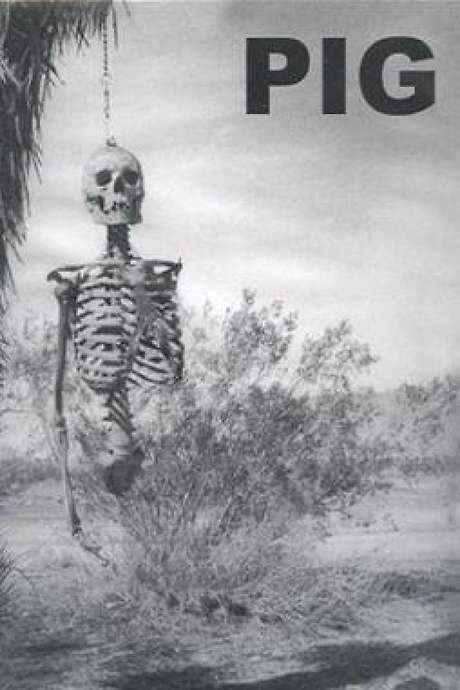
Pig (1999) movie poster

Timeline

Pig (1999) Timeline Explained – Every Event in Order

Release, runtime and language
1999 · 23 mins · English
Loading streaming availability…
Directed by
Nico Bruinsma
Starring
Rozz Williams, James Hollan

A young man crossing a barren desert is seized by a cruel captor wearing a pig mask, who subjects him to harrowing torture. Driven to the brink, he retreats into his imagination, where vivid fantasies collide with the brutal reality of his ordeal, blurring the line between what is real and what is imagined.

On this page (6)
  1. 1 Where to watch
  2. 2 Events in order (12)
  3. 3 Timeline questions answered
  4. 4 Movie threads
  5. 5 Movies like Pig
  6. 6 Every angle
Loading streaming availability…

12 events in order · contains spoilers

Pig Timeline: Events in Chronological Order

Every key event of Pig (1999) in order, scene by scene, with when and where it takes place. Use it to untangle flashbacks, time jumps and parallel storylines, to refresh your memory before the sequel or to find the exact scene you are thinking of.

  1. Killer packs briefcase and departs

    A black-garbed killer finishes packing a briefcase, tucking in a deck of cards, a notebook, and a copy of Mr. Pig and Sonny Too. He steps over the bleeding, half-naked body on the floor, then kicks the corpse aside and heads downstairs. He loads the case into a black car and drives off along a deserted road.

    Where
    small house
  2. Desert journey and ominous signs

    From the car, the killer continues through the empty desert, power lines running along the road. He passes a rock outcrop with an inscrutable inscription that looks like ELLE or ELLIE. A nearby sign reads Dead Man's Point, heightening the sense of danger on the silhouette-filled road.

    Where
    desert road
  3. Hollan appears in bandaged anonymity

    An unidentified man named Hollan, his head wrapped in white bandages, wanders the desert and sits cross-legged by a telephone pole. The driver's car pulls up, and the masked Hollan climbs into the passenger seat. They drive toward a house, the briefcase still in hand.

    Where
    desert by a telephone pole
  4. Arriving at the house with a tied captive

    The car stops at a dilapidated house. The killer leads the masked man by a rope while carrying the briefcase, and they approach the doorway marked with bones and dominoes. Inside, the killer, wearing a pig mask, paces as the captive is brought in.

    Where
    dilapidated house exterior
  5. Doorway hints at a ritualistic setting

    The camera closes in on the doorway marked 1334, surrounded by dominoes, a crucifix, caution tape, a glove, a knife, and various photographs. Through a broken wall, a pig mask peers from a keyhole in a box of dominoes. The killer, still masked, orchestrates the captivity with cold precision.

    Where
    1334 house entrance
  6. Victim bound and moved to the cellar

    The bound victim is hoisted and tied to a rope from the ceiling, then dragged into a cellar. The killer empties the entire briefcase, laying out tools and odd items—pornographic cards, a large metal key, a wig, a chaos-die, a bondage mask, gloves, a chain, a bowie knife, and more. A book titled Why God Permits Evil sits among the belongings, hinting at the killer's motives.

    Where
    cellar
  7. Bandage removal reveals fear

    The killer places a hand on the victim's head and pulls away part of the bandage from the eye, exposing a darting gaze and obvious fear. Surrounding the scene lie pliers, knives, scissors, syringes, and other instruments. The camera lingers on the array of implements as the ritual begins to unfold.

    Where
    cellar
  8. Why God Permits Evil is examined

    Cuts show the killer turning the pages of Why God Permits Evil, revealing graphic art and religious quotes. The victim remains bound to the ceiling, his head still gauzed, while the killer studies the disturbing passages. The stark juxtaposition of sacred text and brutal acts deepens the sense of a larger design.

    Where
    cellar
  9. Liquid punishment begins

    The killer pours what appears to be blood through a funnel into the victim's mouth via a feeding tube. The victim gags and chokes as liquid slides down, spattering onto his naked torso. The scene emphasizes the ritualistic and grotesque nature of the act.

    Where
    cellar
  10. The ritual continues with motif and tools

    The killer maintains a calm, methodical rhythm as he manipulates the tools and surroundings. The pig mask remains a constant motif, reinforcing the ritual's eerie symbolism. The camera lingers on the doorway bones, the dominoes, and other symbols as the acts proceed.

    Where
    cellar
  11. Tension builds as the act persists

    The film cuts between the victim's struggle and the killer's composed ritual, suggesting a larger, chilling design behind the violence. Everyday objects—the deck of cards, the Why God Permits Evil book, and a key—take on symbolic meaning. The sequence remains intentionally unresolved, leaving the viewer with a sense of impending doom.

    Where
    cellar
  12. Final image hints at a larger mystery

    The final images center on the pig mask and the cryptic signs—Dead Man's Point and the bone-marked doorway—hinting at connections between the killer's acts and the surrounding landscape. The desert, the house, and the briefcase are presented as parts of a cold, calculated ritual. The scene ends with an ominous note of what lies beneath the violence.

    Where
    1334 house / surrounding surroundings

Last updated: October 05, 2025 at 11:51

Was this helpful?

Timeline questions answered

Pig Timeline Explained: Your Questions Answered

When does it happen, and why in that order? The questions people ask about the chronology of Pig (1999): time jumps, flashbacks, cause and effect between scenes and the correct order of events, each answered with spoilers.

Q1

Why does the killer wear a pig mask during the torture?

The pig mask serves as the central symbol of the ritual. It transforms the killer into a dehumanized figure, removing any trace of individual identity and reducing him to a brutal, animalistic force. The mask reinforces the film's themes of dehumanization and the reduction of both perpetrator and victim to primitive, ritualistic elements.

Foreshadowing: The pig mask is first visible through the keyhole in the doorway before the killer enters, establishing it as the defining motif of the film.

  • pig mask
  • killer identity
  • ritual symbolism
  • dehumanization
Q2

What is the significance of the number 1334 in the doorway?

The number 1334 appears prominently in the doorway arrangement of bones and dominoes. While the film never explicitly explains the number, it functions as part of the killer's ritualistic signature, a coded symbol that suggests a deeper, possibly occult or numerical significance to the abduction and torture. The number adds to the eerie, calculated atmosphere of the location.

  • 1334
  • bones
  • doorway
  • ritual marking
  • occult symbols
Q3

Why does the killer use the book "Why God Permits Evil" in the ritual?

The killer reads directly from the book "Why God Permits Evil" while performing the torture, using its graphic art and religious quotes to guide his actions. The book provides a philosophical justification, or perversion of justification, for the violence, suggesting the killer sees his acts as some form of twisted theological experiment or punishment. The juxtaposition of sacred text with brutal ritual underscores the film's nihilistic themes.

  • Why God Permits Evil
  • religious symbolism
  • killer motivation
  • torture guide
Q4

What is the blood being poured into the victim's mouth through the funnel?

The killer pours a dark, blood-like liquid through a funnel connected to a feeding tube inserted into the victim's mouth. The liquid causes the victim to gag and spatter crimson onto his naked torso. While never explicitly identified, the substance appears to be blood, possibly animal blood, which the killer forces the victim to consume as part of the ritualistic act. This feeding transforms the torture into a grotesque, perverted communion.

  • blood ritual
  • funnel
  • feeding tube
  • forced consumption
  • grotesque act
Q5

Why is the victim's head wrapped in bandages throughout the film?

The victim Hollan is introduced already wrapped in white bandages covering most of his head, with only his eyes visible through the gauze. The bandages suggest he may have been previously tortured or kept in captivity, or they could serve to further dehumanize him, making him anonymous and reducing his identity to simply another object in the killer's collection of victims. The eye exposure emphasizes his fear and vulnerability.

  • Hollan
  • bandages
  • victim identity
  • captivity
  • dehumanization
Q6

What is the significance of Dead Man's Point as a location?

Dead Man's Point is the ominous location where the killer finds Hollan wandering in the desert. The name itself signals death and danger, reinforcing the barren, hostile environment surrounding the story. The sign's prominence as Hollan waits by the telephone pole establishes the desert as a threshold between life and death, a place where the ritual will unfold far from any help or witnesses.

  • Dead Man's Point
  • desert location
  • ominous signs
  • isolation
Q7

What do the objects in the briefcase represent?

The killer's briefcase contains a deliberately curated collection: playing cards, a children's book (Mr. Pig and Sonny Too), pornographic cards, a large metal key, a wig, a black chaos die, bondage gear, knives, pliers, scissors, and the religious book. Each item serves a specific purpose in the ritual, the cards may represent chance or fate, the key possibly unlocking something symbolic, and the tools enabling various forms of physical torment. Together, they form a twisted toolkit of psychological and physical destruction.

Foreshadowing: The briefcase is packed methodically at the opening, showing the killer prepared with a complete ritual kit before even capturing his victim.

  • briefcase
  • ritual tools
  • cards
  • key
  • bondage gear
  • knives
Q8

What does the inscription "ELLE" or "ELLIE" on the rock mean?

The rocky outcrop bears an inscription that appears to read either "ELLE" or "ELLIE" but remains deliberately ambiguous. This cryptic marking adds to the desert's mysterious, ominous atmosphere. It could be a previous victim's message, a ritual marker, or simply another element of the landscape designed to unsettle. The ambiguity mirrors the film's overall sense of unexplained, lurking evil.

  • ELLE
  • ELLIE
  • inscription
  • rock
  • cryptic message
Q9

Why does the killer pack the children's book Mr. Pig and Sonny Too?

The killer includes a copy of the real 1977 children's book Mr. Pig and Sonny Too by Lillian Hoban among his briefcase items. The ironic inclusion of an innocent children's book alongside torture tools suggests a twisted contrast, perhaps the killer's warped sense of humor, a personal connection to pigs, or another layer of psychological disturbance. The book represents normalcy corrupted by the killer's perverted mindset.

Foreshadowing: The book is packed first among the briefcase items, showing it holds particular importance to the killer.

  • Mr. Pig and Sonny Too
  • children's book
  • ironic object
  • killer psychology
Q10

Is the torture scene actually happening or is it the victim's imagination?

The film presents the torture in stark, unflinching detail without confirming whether all of it occurs in reality or partially in the victim's traumatized mind. The summary notes that vivid fantasies collide with brutal reality, blurring the line between what is real and what is imagined. This ambiguity adds psychological complexity, it's unclear if the victim is experiencing the horror as it happens, reconstructs it through trauma, or if the killer's ritual is entirely real.

  • reality vs imagination
  • psychological trauma
  • blurred lines
  • torture authenticity
Q11

Why does the killer abduct and torture this specific victim?

The killer specifically seeks out Hollan in the desert, forcing him into the car at Dead Man's Point and leading him by rope to the ritual house. The motivation remains deliberately opaque, the victim appears to be a random selection in a remote location. The killer's methodical preparation suggests this is not his first abduction, hinting at a pattern of sadistic, ritualistic violence against unsuspecting travelers in the barren wasteland.

  • killer motive
  • abduction
  • Hollan
  • random victim
  • sadism

Movie threads

More Movies Like Pig, by Mood & Story

Curated lists built around what makes Pig tick: the same mood, the same kind of story or the same emotional payoff. Each list explains why these movies belong together.

Confinement Horror and Psychological Torture Movies Like Pig

Stories where captivity becomes a brutal stage for psychological and physical torment. For viewers who appreciated the harrowing depiction of captivity in Pig, this list features similar movies like Pig. Explore intense thrillers and horror films centered on extreme power dynamics, torture, and psychological abuse, where characters face inescapable situations that test their sanity.

  • claustrophobic
  • harrowing
  • oppressive
  • sadistic
  • desolate
  • unsettling
  • Tone: dark, bleak, unsettling
  • Pacing: slow, methodical
Why these movies?

The story pattern: The narrative typically centers on a confined individual subjected to the whims of a sadistic captor. The plot unfolds through escalating acts of torment, focusing on the victim's psychological degradation and the blurred lines between reality and coping mechanisms as they struggle to survive.

Why they belong together: Movies are grouped here based on their shared focus on captivity as a central plot device, the exploration of extreme power dynamics, and an unflinching, often graphic, portrayal of physical and psychological torture that creates a consistently bleak and unsettling atmosphere.

Slow Burn Descent into Madness Films Similar to Pig

A methodical unraveling of sanity under extreme pressure and isolation. If you liked the psychological unraveling and blurred reality in Pig, discover more slow burn movies like Pig. These films focus on a character's gradual mental breakdown, featuring oppressive atmospheres, surreal imagery, and stories where the line between imagination and grim reality dissolves.

  • unsettling
  • psychological
  • bleak
  • oppressive
  • surreal
  • anxious
  • Tone: dark, psychological, bleak
  • Pacing: slow burn, deliberate
Why these movies?

The story pattern: The narrative follows a protagonist pushed to their absolute limit, causing their grip on reality to weaken. The story structure often interweaves stark reality with the character's increasingly distorted perceptions, creating ambiguity and a deep sense of psychological horror as their sanity decays.

Why they belong together: These films are connected by their shared emphasis on a slow, deliberate pacing that meticulously charts a character's psychological collapse. They prioritize mood and internal turmoil over plot speed, creating a deeply immersive and unsettling experience focused on the fragility of the mind.

If you liked this

Movies Like Pig

Similar movies to Pig: the same genre, themes or kind of story. Each one comes with its own plot summary, timeline and ending explained.

Browse all movie summaries

Every angle

Pig (1999) Explained: Plot, Timeline & Characters

Everything about Pig in one place: what happens in the plot summary, the timeline in chronological order, the characters and meaning and a spoiler-free summary. What's After the Movie adds the cast, box office and post-credit scenes.

Coming soon on iOS and Android

The Plot Explained Movie Summary App

Plot summaries, endings explained and timelines on your phone. Catch up on any movie in minutes, save your favorites and never miss a twist again.

Be the first to know when we launch. Your email stays private, always.

Learn more about the app