Year: 2002
Runtime: 104 min
Language: French
Director: Luis Buñuel
This subversive comedy-drama from Luis Buñuel presents a series of surreal and loosely autobiographical vignettes spanning centuries. A dying patriarch and inept authorities are among the diverse characters whose lives intersect in unexpected ways. The film explores taboo subjects such as mortality, morality, and the complexities of the human condition through a tapestry of chance encounters and dreamlike sequences.
Warning: spoilers below!
Haven’t seen The Phantom of Liberty (re-release) yet? This summary contains major spoilers. Bookmark the page, watch the movie, and come back for the full breakdown. If you're ready, scroll on and relive the story!
Read the complete plot breakdown of The Phantom of Liberty (re-release) (2002), including all key story events, major twists, and the ending explained in detail. Discover what really happened, and what it all means.
The film begins at an auction held in the Paris Opera House, which is currently closed, where various props are being sold to raise funds. A notable item for sale is a stuffed monkey dressed in Persian robes, playing the cymbals while perched on a music box, which an older man in a wheelchair purchases, holding it close to him. As the auction proceeds, a chandelier—previously broken but now restored—is revealed, whisking us back to 1870 during a vibrant performance of Hannibal by Chalemau.
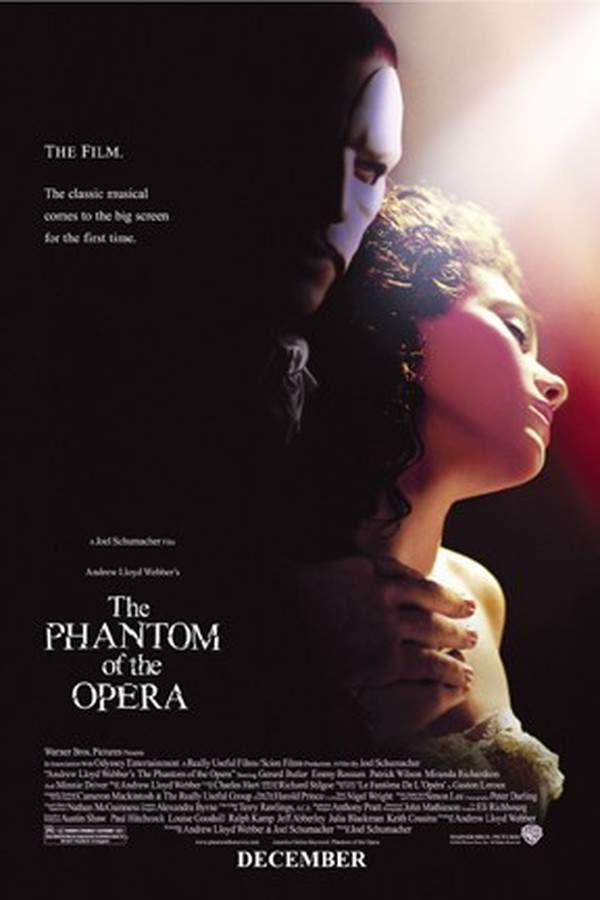
During rehearsals, the Opera manager announces his departure to Australia, leaving the Opera House under the new management of Gilles André and Richard Firmin. Their initial rehearsal is jolted when a prop falls on the lead diva, Carlotta, leading her to storm out and refuse to sing. Subsequently, Madame Giry [Miranda Richardson], the ballet instructor, persuades the new owners to cast Christine Daaé [Emmy Rossum], a gifted dancer, to fill Carlotta’s role. Following a mesmerizing performance of “Think of Me,” Christine retreats to a chapel beneath the Opera House to pray for her late father. There, she is joined by her best friend, Meg [Jennifer Ellison], who inquires about Christine’s newfound singing talent in “Angel of Music.”
Soon enough, Christine’s childhood acquaintance, Raoul, the Vicomte de Changy and a patron of the Opera House, visits her dressing room. After recognizing her from the audience, he invites her to a party before departing to prepare, leaving Christine locked in her room. At this moment, the Phantom [Gerard Butler], enraged by Raoul’s influence over Christine, lures her to a mirror, guiding her to his lair beneath the Opera House, where he confesses his feelings for her in “Music of the Night.” When she unmasks him, revealing his grotesque visage, the Phantom erupts in anger but soon breaks down in vulnerability, expressing a deep sorrow for his appearance with “I wish I didn’t have a loathsome gargoyle face.”
With Christine temporarily away, André and Firmin begin to worry about her absence, just as the Phantom begins to send ominous notes marked “O.G.” (Opera Ghost), demanding Christine’s lead role in the upcoming opera Il Muto. Ignoring his demands, they attempt to reinstate Carlotta, which incites the Phantom’s wrath. When he curses Carlotta’s voice, giving it the sound of a toad, the managers have no choice but to elevate Christine to star status.
As Christine prepares for her new role, Joseph Buquet [Kevin McNally] uncovers the Phantom’s whereabouts but is caught and hanged in front of a horrified audience. This dark event drives Christine, now frightened, to the roof, where Raoul professes his love, assuring her of his unwavering support in “All I Ask of You.” Unfortunately, the Phantom overhears, shattering his hopes.
Three months later, the Opera House is blooming with activity and, during a vibrant masquerade ball, the Phantom crashes the festivities to showcase his new opera, Don Juan, issuing a stern ultimatum to the managers. Deeply affected, Christine pays a visit to her father’s grave, where she encounters the Phantom once more. Tensions escalate when Raoul intervenes, leading to an intense sword battle with the Phantom before fleeing with Christine.
Finally, during the tense performance of Don Juan, the Phantom indeed makes an unforeseen appearance after the murder of Piangi, which allows him to take his place on stage. Christine sings alongside him, confessing her feelings. Meanwhile, Raoul watches helplessly as the unraveling drama reveals Christine’s affection for the Phantom. When the Phantom reveals his face to the audience amidst an inferno caused by a collapsed chandelier, he takes Christine down to his lair, presenting her with a heart-wrenching decision: either stay with him and let Raoul go free or abandon him and condemn Raoul to death.
Choosing compassion, Christine opts to stay with the Phantom momentarily, telling him he is not alone before sealing their moment with a passionate kiss. The Phantom, realizing the weight of his actions, makes the selfless choice to free both Christine and Raoul. Heartbroken, Christine relinquishes the Phantom’s ring as she departs in a boat with Raoul, casting a sorrowful glance back at him, fully aware of the love that lingers.
The narrative then shifts to 1919, revealing the older gentleman, now known as Raoul, leaving the music box monkey at Christine’s grave. He discovers a rose, tied with a black ribbon—an emblem of the Phantom’s enduring love for Christine, reminding Raoul that her heart had always belonged to the Phantom.
Last updated: November 16, 2024 at 15:06
Explore frequently asked questions about The Phantom of Liberty (re-release) (2002) with spoiler-rich answers covering the full plot summary, major story beats, character motivations, hidden details, and ending meaning. This movie summary FAQ helps explain confusing scenes, plot twists, and narrative decisions in clear, searchable detail.
The Phantom is drawn to Christine because she is the first person in years who treats him with kindness rather than revulsion. When Christine unmask him and sees his grotesque face, she does not scream in horror but instead expresses compassion, which deeply affects him. Additionally, Christine's voice represents the beauty and acceptance the Phantom has been denied his entire life due to his disfigurement.
Earlier, the Phantom tells Christine she is his 'angel of music,' revealing his desperate need for connection.
Joseph Buquet discovers the Phantom's secret hideout beneath the Opera House. The Phantom kills him to prevent this knowledge from spreading and to maintain control over the Opera. Buquet had been threatening to expose the Phantom's identity and blackmail him, making him a dangerous liability.
Buquet had been suspiciously asking questions about the Phantom throughout the story.
Christine kisses the Phantom to show him compassion and acknowledge his love for her. She realizes that despite his horrific actions, his feelings were genuine. The kiss is an act of mercy, a moment of genuine human connection before she leaves him forever. It represents her gratitude for his sacrifices and her acknowledgment that he is not simply a monster.
The Phantom's earlier breakdown when he unmasks shows his vulnerability and desperate need for acceptance.
The rose symbolizes the Phantom's enduring, obsessive love for Christine even after her death. The black ribbon represents mourning and the tragic nature of their relationship. The Phantom continued to visit her grave long after the events at the Opera House, proving his love was not merely obsession but genuine, if twisted, devotion that transcended her lifetime.
The Phantom's final selfless act of freeing Christine and Raoul demonstrates his capacity for true love.
The Phantom curses Carlotta's voice to punish the managers for ignoring his demands. When André and Firmin attempted to replace Christine with Carlotta despite the Phantom's explicit warnings, he used supernatural means to make Carlotta's voice sound like a toad. This was meant to demonstrate his power and force them to comply with his wishes to have Christine star in the lead role.
The Phantom had sent multiple notes marked 'O.G.' demanding Christine receive the role.
The Phantom releases them because he realizes that trapping Christine would only perpetuate his loneliness. His love for her is genuine, and he comes to understand that forcing her to stay would make her hate him, exactly what he feared most. By letting them go, he demonstrates that his love is selfless rather than possessive, choosing her happiness over his own desperate need for companionship.
The Phantom tells Christine she is free when she shows him compassion, revealing his capacity for self-sacrifice.
The music box monkey represents the Phantom's only connection to love and companionship throughout his isolated life. He purchased it at the auction at the beginning, holding it close like a cherished companion. Later, Raoul discovers the monkey at Christine's grave, revealing the Phantom had been visiting her grave for years, leaving tokens of his enduring love. The monkey serves as a symbol of the Phantom's loneliness and his need for connection.
The old man in the wheelchair clutches the monkey tightly at the auction, showing its emotional importance from the start.
The Phantom reveals his face during the performance of Don Juan as a final act of defiance and truth. Having killed Piangi and taken his place on stage, the Phantom removes his mask to show his true self to the world without fear. He is tired of hiding and wants everyone to see who he really is, embracing his identity as the outcast rather than continuing to live in shadows. This moment represents his complete rejection of societal standards of beauty and his acceptance of his own monstrosity.
Earlier, the Phantom tells Christine he wishes he didn't have a 'loathsome gargoyle face,' showing his internal struggle with his appearance.
'O.G.' stands for 'Opera Ghost,' the pseudonym the Phantom uses to send his threatening letters to the managers. These notes contain his demands, primarily that Christine must be given the lead role in upcoming productions. The signature establishes his identity as the mysterious figure controlling events from behind the scenes at the Opera House.
The notes become increasingly threatening as the managers ignore his demands.
Christine accepts the Phantom's mentorship because she believes he is the 'Angel of Music' her dying father promised would watch over her. She is vulnerable after her father's death and desperately wants to believe his spirit is guiding her. The Phantom uses this promise to manipulate her, presenting himself as her spiritual mentor while developing romantic feelings for her.
Christine prays in the chapel asking her father to help her, and the Phantom appears shortly after.
Raoul leaves the music box as a final act of respect and closure. Having learned from the Phantom's note that Christine truly loved him, Raoul honors her memory by returning the object that symbolized her connection to the Phantom. It represents his acceptance that their love story was always more complicated than he understood, and his gesture acknowledges the Phantom's genuine devotion.
The older Raoul at the auction knows exactly what the music box means, showing his long-standing connection to these events.
The Phantom crashes the masquerade ball to assert his dominance over the Opera House and deliver his ultimatum in person. He presents his own opera, Don Juan, demanding the managers stage it and give Christine the lead role. This public appearance is meant to humiliate the managers and prove he can access any part of the Opera whenever he wishes, solidifying his control.
The Phantom's earlier notes had been ignored, so he escalates to a direct, confrontational approach.
Discover curated groups of movies connected by mood, themes, and story style. Browse collections built around emotion, atmosphere, and narrative focus to easily find films that match what you feel like watching right now.
Films that weave disconnected, dreamlike stories into a subversive commentary on society.If you enjoyed the dreamlike, episodic structure of The Phantom of Liberty (re-release), explore other movies that use surreal, disconnected vignettes to satirize society and explore the human condition. These films share a similar subversive and philosophical spirit.
Films in this thread often abandon traditional plot in favor of a series of semi-autonomous scenes or chapters. The overall narrative emerges from the thematic connections between these vignettes, which collectively critique morality, authority, and the randomness of existence through a lens of dark humor and surrealism.
These films are grouped together due to their shared structural approach of fragmented storytelling and their thematic focus on satirizing societal conventions. They create a unique, intellectual viewing experience defined by unexpected connections and a dreamlike logic.
Character-driven dramas that explore dark themes with a heavy, bittersweet heart.For viewers who appreciated the heavy emotional weight and exploration of taboo themes in The Phantom of Liberty (re-release), this section features similar character-driven dramas with a melancholic tone and bittersweet conclusions.
Stories in this thread follow characters grappling with profound personal and existential crises. The plots are driven by internal conflict and moral dilemmas rather than external action, often building towards a climax of sacrifice or acceptance that leaves a lasting, complex emotional residue.
These movies are united by their serious engagement with challenging themes, a consistently melancholic atmosphere, and a narrative focus on the human condition. They provide a deeply immersive, emotionally heavy experience that resonates on a philosophical level.
Don't stop at just watching - explore The Phantom of Liberty (re-release) in full detail. From the complete plot summary and scene-by-scene timeline to character breakdowns, thematic analysis, and a deep dive into the ending - every page helps you truly understand what The Phantom of Liberty (re-release) is all about. Plus, discover what's next after the movie.
Track the full timeline of The Phantom of Liberty (re-release) with every major event arranged chronologically. Perfect for decoding non-linear storytelling, flashbacks, or parallel narratives with a clear scene-by-scene breakdown.
Discover the characters, locations, and core themes that shape The Phantom of Liberty (re-release). Get insights into symbolic elements, setting significance, and deeper narrative meaning - ideal for thematic analysis and movie breakdowns.
Discover movies like The Phantom of Liberty (re-release) that share similar genres, themes, and storytelling elements. Whether you’re drawn to the atmosphere, character arcs, or plot structure, these curated recommendations will help you explore more films you’ll love.
The Phantom of Liberty (re-release) (2002) Scene-by-Scene Movie Timeline
The Phantom of Liberty (re-release) (2002) Movie Characters, Themes & Settings
The Phantom of Liberty (re-release) (2002) Spoiler-Free Summary & Key Flow
Movies Like The Phantom of Liberty (re-release) – Similar Titles You’ll Enjoy
The Phantom of the Opera (2004) Ending Explained & Film Insights
Phantom of the Paradise (1974) Spoiler-Packed Plot Recap
Unfaithfully Yours (1984) Movie Recap & Themes
The Phantom of the Opera (1000) Detailed Story Recap
Don Juan, My Dear Ghost (1990) Ending Explained & Film Insights
Escape from the Liberty Cinema (1990) Ending Explained & Film Insights
Phantom of the Ritz (1988) Full Summary & Key Details
Fantômas: In the Shadow of the Guillotine (1000) Plot Summary & Ending Explained
The Phantom of the Opera (1991) Ending Explained & Film Insights
The Discreet Charm of the Bourgeoisie (1972) Plot Summary & Ending Explained
The Phantom of Paris (1931) Film Overview & Timeline
On With the Show! (1929) Full Movie Breakdown
The Phantom Baron (1943) Ending Explained & Film Insights
The Phantom of the Moulin-Rouge (1925) Story Summary & Characters
The Phantom Heart (1996) Plot Summary & Ending Explained