







Plot Explained Spoilers guaranteed!
Plot Explained

Browse by genre

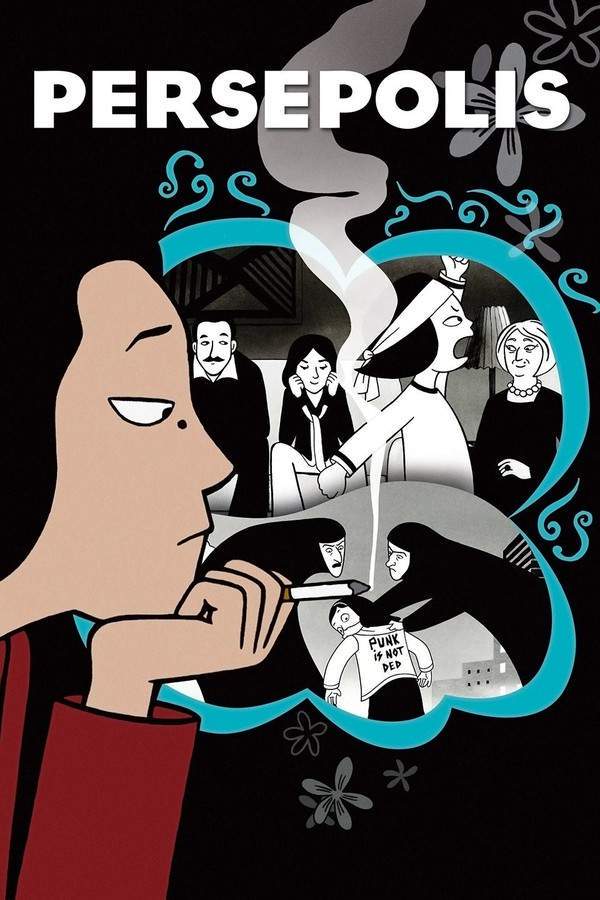
Persepolis (2007) movie poster

Timeline

Persepolis (2007) Timeline Explained – Every Event in Order

Release, runtime and language
2007 · 96 min · English
Directed by
Marjane Satrapi, Vincent Paronnaud
Starring
Catherine Deneuve, Chiara Mastroianni, Gena Rowlands

During Iran’s Islamic Revolution, a young girl named Marjane experiences firsthand the dramatic upheaval reshaping her country. As a spirited 9-year-old, she challenges the increasingly strict religious regime and embraces Western culture, finding solace in punk rock. Growing up amidst political turmoil and war, she witnesses the harsh realities of a society struggling for freedom, forcing her to confront difficult choices and the loss of innocence.

On this page (7)
  1. 1 Where to watch
  2. 2 Events in order (15)
  3. 3 Timeline questions answered
  4. 4 The book behind the movie
  5. 5 Movie threads
  6. 6 Movies like Persepolis
  7. 7 Every angle

Where to watch

Where to Watch Persepolis (2007)

Where can you watch Persepolis? Stream, rent or buy it in the US, including on YouTube Free, Amazon Video and Apple TV Store: current JustWatch availability with up-to-date prices.

Streaming availability powered by JustWatch

15 events in order · contains spoilers

Persepolis Timeline: Events in Chronological Order

Every key event of Persepolis (2007) in order, scene by scene, with when and where it takes place. Use it to untangle flashbacks, time jumps and parallel storylines, to refresh your memory before the sequel or to find the exact scene you are thinking of.

  1. Marjane's Airport Reflection

    The film opens with Marjane Satrapi at an airport, unable to board her flight back to Iran. As she sits down to smoke a cigarette, she engages in deep reflection about her past, pondering her childhood memories and the circumstances that shaped her identity.

    Where
    Airport
  2. Childhood Dreams

    Marjane, at just nine years old in 1978, dreams of becoming a prophet and idolizes Bruce Lee. Her innocent ambitions are set against the background of a significant political uprising in Iran, where her middle-class family is actively involved in protests against the Shah’s oppressive regime.

    When
    1978
    Where
    Iran
  3. Confrontation with Peers

    Marjane experiences a struggle to fit in with her peers' perspectives, whether it is dealing with the children of government officials or longing for acknowledgment of her family's political history. In a moment of teenage rebellion, she and her friends plan to confront a boy whose father is known for his ruthless actions against Communists.

  4. Visiting Uncle Anoush

    One significant evening, Marjane's Uncle Anoush, who has just been released from prison, shares his harrowing escape from government forces due to his Communist beliefs. His stories serve as both a fascinating narrative for Marjane and a cautionary tale about the heavy toll of political dissent.

    Where
    Family Home
  5. Rise of Islamic Fundamentalism

    Post-elections, the hopes of a reformed society dim when Islamic Fundamentalists take control. Marjane’s life begins to feel the immediate, oppressive impact of the regime's new laws, including mandatory dress codes that strip away personal freedoms.

    Where
    Iran
  6. The Iran-Iraq War Begins

    The outbreak of the Iran-Iraq War brings a wave of destruction and horror, forcing Marjane and her family to confront the harsh realities of death and suffering. Marjane particularly grapples with the loss of her uncle, who dies due to lack of medical care in a corrupt system.

    Where
    Iran
  7. Secret Gatherings

    In a bid to cope with the oppressive atmosphere, Marjane's family seeks solace in clandestine gatherings where they indulge in simple pleasures like alcohol, which the government has forbidden. These moments of resistance provide a brief escape from their grim reality.

  8. Departure to Vienna

    As Marjane matures, her rebellious spirit intensifies, leading her parents to send her to a boarding school in Vienna for her safety and better opportunities. However, she arrives in an environment that alienates her and forces her to confront her Iranian identity amidst a culture of freedom she does not fully understand.

    When
    1983
    Where
    Vienna, Austria
  9. Romantic Turmoil

    On her eighteenth birthday, Marjane's romantic relationship with a local man ends in heartbreak when she discovers his betrayal. This experience contributes to her feelings of isolation and despair as she navigates her place in a foreign society.

  10. Return to Iran

    After recovering from a bout of bronchitis and with hopes of a better life, Marjane returns to Iran in 1993, only to find her country in a state of disarray. She grapples with the harsh realities of her homeland as she witnesses the ongoing oppression and her family's struggles.

    When
    1993
    Where
    Iran
  11. Inspirational Visions

    Marjane has a dream in which both God and the spirit of Karl Marx remind her of her values. This encounter reignites her determination to embrace life and fight against the oppressive conditions in Iran, motivating her to pursue her education.

  12. Political Awakening

    As she enrolls in university, Marjane begins to encounter the realities of systemic oppression more acutely. She rebels against her oppressive environment by challenging absurdities within her education and expresses her frustrations regarding gender biases and political injustices.

    Where
    University
  13. Marriage and Misery

    In a quest for safety amid the harsh scrutiny of religious police, Marjane hastily marries her boyfriend. However, her marriage quickly unravels following a tragic incident where a friend's death during a police raid leaves lasting scars on her psyche.

  14. Final Departure from Iran

    In light of the severe danger posed by her outspoken nature and the political climate, Marjane's family decides that she must leave Iran permanently. Although she acquiesces, this decision is marred by the grief of losing her grandmother shortly thereafter.

  15. Present-Day Reflection

    The film concludes with Marjane unable to re-enter Iran at present. The poignant memory of her grandmother tugs at her heart as she reflects on her identity, revealing the lasting influence of her family and culture amidst the lingering ache of displacement.

    Where
    Airport

Last updated: November 16, 2024 at 14:34

Was this helpful?

Timeline questions answered

Persepolis Timeline Explained: Your Questions Answered

When does it happen, and why in that order? The questions people ask about the chronology of Persepolis (2007): time jumps, flashbacks, cause and effect between scenes and the correct order of events, each answered with spoilers.

Q1

Why does Marjane leave Iran for good at the end of the film?

Marjane is forced to leave Iran permanently after a police raid during a party results in her friend's death while attempting to escape. Her family fears for her safety because of her outspoken nature and previous confrontations with religious police. Combined with the collapse of her marriage and the ongoing danger from government persecution, her family determines that she must flee the country to survive.

Foreshadowing: Earlier scenes show Marjane facing increasing danger from the religious police for challenging the regime, including her confrontations about running to class and wearing makeup.

  • iran exile
  • Marjane departure
  • political persecution
  • friend death
  • religious police
Q2

What happened to Uncle Anoush and why was he executed?

Uncle Anoush was a Communist political prisoner who had been arrested multiple times for his political beliefs. After being released from prison, he visited Marjane's family and shared stories of his evasion from government forces. However, after Islamic Fundamentalists took control, he was re-arrested and executed due to his political views. His death highlights the brutal consequences of dissent under the new regime.

Foreshadowing: Uncle Anoush's stories about escaping government forces serve as a warning about the dangers of political opposition.

  • Uncle Anoush
  • execution
  • political prisoner
  • communism
  • Iran regime
Q3

Why did Marjane's parents send her to Vienna in 1983?

Marjane's parents sent her to a boarding school in Vienna because of her increasingly defiant behavior. She was secretly listening to Western heavy metal, wearing non-conformist outfits like denim jackets, and openly challenging her teachers' fabrications about government abuses. Her parents feared for her safety due to her outspoken nature in a regime that punished dissent harshly.

Foreshadowing: Her earlier act of publicly challenging a teacher's lies about government abuses set a precedent for her dangerous defiance.

  • Vienna
  • boarding school
  • Marjane parents
  • exile
  • 1983
  • safety
Q4

What is the significance of Marjane's dream with God and Karl Marx?

When Marjane returns to Iran in 1993, she becomes engulfed in despair over the country's deteriorating state and her family's plight. In a dream, both God and the spirit of Karl Marx appear to her, reminding her of her values and motivation to fight for freedom. This inspirational vision reignites her determination to embrace life and continue resisting oppression, prompting her to enroll in university.

Foreshadowing: This dream connects to her earlier childhood conversations with God about justice and her uncle's political sacrifice.

  • dream
  • God
  • Karl Marx
  • Marjane inspiration
  • values
  • resistance
Q5

Why did Marjane marry her boyfriend in Iran?

Marjane hastily married her boyfriend as a survival strategy to escape scrutiny from the religious police. She had been using tactics like falsely accusing men of harassment to avoid arrest for wearing makeup, and marriage provided a form of legal protection in the oppressive society. However, the marriage quickly crumbled, especially after the traumatic police raid that killed her friend.

Foreshadowing: Her earlier desperate tactics to avoid arrest, like falsely accusing men of harassment, foreshadow her desperate decision to marry for safety.

  • marriage
  • religious police
  • survival
  • Marjane husband
  • escape
Q6

Why can't Marjane return to Iran at the beginning of the film?

The film opens with Marjane at an airport unable to board her flight back to Iran, indicating she has been exiled from her homeland. The circular narrative structure shows this present-day scene as the frame, then reveals throughout the film why she was forced to leave permanently, her activism, her defiance against the regime, and the danger she faced as a result.

Foreshadowing: The timeline shows she ultimately leaves for good after her friend's death in the police raid.

  • airport
  • Iran return
  • exile
  • present day
  • Marjane identity
Q7

What happened during the police raid that killed Marjane's friend?

During a party, religious police raided the gathering. Marjane's friend attempted to escape the police and died in the process. This tragic event, combined with the collapse of her marriage, becomes a turning point that leads to her family's decision that she must leave Iran permanently for her own safety.

Foreshadowing: Earlier scenes show Marjane attending secret parties and gatherings that were always at risk of police discovery.

  • police raid
  • friend death
  • party
  • religious police
  • Marjane trauma
Q8

Why does Marjane abandon her childhood dream of becoming a prophet?

As a young girl, Marjane fantasized about becoming a prophet and emulating Bruce Lee, believing she could bring justice to the world. However, after witnessing the harsh realities of political oppression, the execution of Uncle Anoush, the brutality of the regime, and the limitations placed on her as a woman, she becomes disillusioned and turns away from her prophetic ambitions, forcing herself to adapt to the oppressive new reality.

Foreshadowing: Her early conversation with God about forgiveness and not seeking justice through her own actions hints at this eventual disillusionment.

  • prophet
  • Bruce Lee
  • childhood dreams
  • Marjane ambition
  • disillusionment
Q9

What is the significance of the grandmother's jasmine memory at the end?

At the film's conclusion, Marjane recalls her grandmother telling her how she would tuck jasmine into her brassiere, allowing her to carry a lovely scent with her every day despite the oppression surrounding her. This poignant memory represents the lasting influence of her grandmother's wisdom and resilience, symbolizing how Marjane carries her cultural identity and family heritage with her even in exile.

Foreshadowing: Earlier, the grandmother reminds Marjane of her grandfather's and uncle's sacrifices for freedom, urging her never to abandon her beliefs.

  • grandmother
  • jasmine
  • memory
  • Marjane identity
  • heritage
  • perfume
Q10

Why does Marjane feel ashamed of her Iranian identity in Vienna?

At the boarding school in Vienna, Marjane feels deeply alienated and judged by the nuns and peers who take their freedoms for granted. Her feelings of shame intensify when her passionate romance with a charming local man ends on her eighteenth birthday when she catches him unfaithful. This combination of cultural displacement, rejection in love, and feeling judged for her background makes her self-conscious about being Iranian.

Foreshadowing: This shame contrasts with her earlier pride in her family's political activism and her uncle's sacrifices.

  • shame
  • identity
  • Vienna
  • alienation
  • boarding school
  • Iranian
Q11

How does the Iran-Iraq war affect Marjane and her family?

The outbreak of the Iran-Iraq war brings devastating realities to Marjane's life. She witnesses her father being menaced by armed teenage officials and experiences the agonizing loss of her uncle, who dies because the corrupt government denies him essential medical care. The family copes by seeking solace in secretive gatherings to enjoy forbidden alcohol. The war's destruction and the regime's brutality force Marjane to confront the realities of death and oppression firsthand.

Foreshadowing: The regime's earlier repression and execution of political dissidents set the stage for the compounding tragedies of the war years.

  • Iran-Iraq war
  • death
  • uncle death
  • family struggle
  • destruction
  • oppression

Movie threads

More Movies Like Persepolis, by Mood & Story

Curated lists built around what makes Persepolis tick: the same mood, the same kind of story or the same emotional payoff. Each list explains why these movies belong together.

Animated memoirs of turmoil like Persepolis

Personal life stories told through animation amidst historical upheaval. Find movies like Persepolis that blend animation with biography. These films use the medium to explore personal histories set against political revolutions, wars, and cultural shifts, offering poignant and visually distinct stories of resilience and identity.

  • biographical
  • historical
  • resilient
  • nostalgic
  • somber
  • thoughtful
  • Tone: melancholic, reflective, defiant
  • Pacing: steady, chronological
Why these movies?

The story pattern: Stories in this thread typically follow a linear or reflective biographical arc, charting a character's growth and identity formation within a specific, often turbulent, historical context. The narrative is driven by the intersection of the personal and the political, showing how world events directly impact individual lives, choices, and sense of self.

Why they belong together: Movies are grouped here for their shared foundation in real-life experiences, their use of animation as a narrative tool for memoir, and their central focus on the profound impact of political and social upheaval on an individual's journey.


Coming of age stories during revolution like Persepolis

Young protagonists forging identity amidst societal collapse and rebirth. If you liked Persepolis, explore other movies about young people growing up during revolutions. These films focus on the clash between personal freedom and political oppression, depicting the bittersweet process of finding one's voice in a world turned upside down.

  • defiant
  • oppressive
  • resilient
  • somber
  • lonely
  • thoughtful
  • Tone: somber, defiant, bittersweet
  • Pacing: steady, character-driven
Why these movies?

The story pattern: The narrative pattern follows a young character's adolescence and early adulthood, using their evolving perspective to document the revolution's impact. The journey is marked by traumatic events, ideological conflict with authority figures, and the difficult choice between conformity and rebellion, often leading to exile or a fractured sense of home.

Why they belong together: These films share a core focus on the specific experience of coming of age when societal structures are collapsing. They blend heavy political themes with the intimate emotional journey of youth, creating a powerful sense of melancholy, defiance, and resilience.

If you liked this

Movies Like Persepolis

Similar movies to Persepolis: the same genre, themes or kind of story. Each one comes with its own plot summary, timeline and ending explained.

Browse all movie summaries

Every angle

Persepolis (2007) Explained: Plot, Timeline & Characters

Everything about Persepolis in one place: what happens in the plot summary, the timeline in chronological order, the characters and meaning and a spoiler-free summary. What's After the Movie adds the cast, box office and post-credit scenes.

Coming soon on iOS and Android

The Plot Explained Movie Summary App

Plot summaries, endings explained and timelines on your phone. Catch up on any movie in minutes, save your favorites and never miss a twist again.

Be the first to know when we launch. Your email stays private, always.

Learn more about the app