Plot Explained Spoilers guaranteed!
Plot Explained

Browse by genre

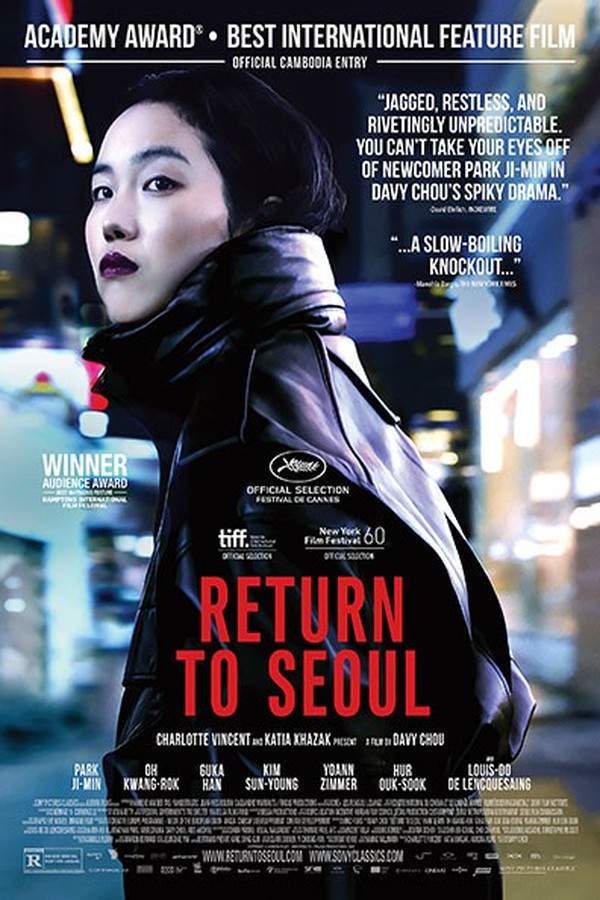
Return to Seoul (2022) movie poster

Plot Summary

Return to Seoul (2022) Plot Summary & Ending Explained

Release, runtime and language
2022 · 115 min · French
Echo score 78
Loading streaming availability…
Directed by
Davy Chou
Starring
Dong Seok Kim, Emeline Briffaud, Guka Han, Hur Ouk-Sook, Kim Sun-young, Kwang-rok Oh
Budget
$2.2M

Freddie, a 25-year-old man living in the United States, unexpectedly returns to South Korea, his country of birth, hoping to discover more about his origins. During his journey, he explores the culture and confronts questions about his identity and place in the world. He navigates unfamiliar surroundings and seeks a deeper understanding of his heritage and family history.

On this page (7)
  1. 1 Where to watch
  2. 2 What happens: full plot
  3. 3 Plot questions answered
  4. 4 How it ends
  5. 5 Movie threads
  6. 6 Movies like Return to Seoul
  7. 7 Every angle
Loading streaming availability…

Full plot summary · contains spoilers

What Happens in Return to Seoul: Full Plot Summary

The whole story of Return to Seoul (2022) explained, from the opening scene to the final frame: every key event, every twist and what it all adds up to. Read it as a quick recap before the sequel, to check a scene you missed, or to finally understand what really happened.

Freddie, a charming 25-year-old woman, finds herself on an unexpected journey of self-discovery. Born in South Korea and adopted by French parents, she arrives in Seoul for a two-week vacation after her flight to Tokyo gets cancelled. During her stay, she quickly forms a bond with Tena, the hotel desk clerk, and has a brief encounter with a man she meets at a restaurant. As she settles into the vibrant city, Tena, along with another friend, introduces Freddie to the Hammond Adoption Center. Although Freddie initially shows no desire to reconnect with her biological parents, her curiosity leads her to visit the agency.

At the center, she learns that while they cannot disclose her parents' identities, they can notify them of her interest up to three times a year through telegrams. Freddie's journey continues as she travels to Gunsan for a tense reunion with her father, with Tena translating their conversations. When she discovers that her mother has not responded to the telegrams, she decides to stay with her father's family for a few nights. Her father's persistent phone calls and messages filled with regret weigh heavily on her, leading her to feel trapped by his attempts at reconciliation.

During a night out, Freddie confides to Tena about her father's incessant contact, calling it oppressive. Their evening takes a sour turn when Freddie mocks the declarations of affection from her first-night companion, and in a moment of vulnerability, she attempts to kiss Tena, who, unfortunately, rejects her, labeling her as "a very sad person." That night, Freddie returns to her hotel accompanied by a DJ, only to face her drunken father, who confronts her about ignoring him. Tena intervenes, but chaos erupts when Freddie screams at her father to let her go.

Fast forward two years, and Freddie has made a new life in Seoul. She goes out with André, a weapons dealer who believes she has a future in the business. As she reflects on her birthday, she expresses her longing for her mother, pondering if she ever thinks of her. At a surprise birthday celebration, Freddie shares with a co-worker, who is also an adoptee, that her mother has finally replied to their telegrams, revealing she does not wish to meet. Though her father continues to email her, Freddie generally ignores him, focusing instead on understanding her roots.

Five years later, Freddie's life takes another turn as she learns some Korean and begins working with André selling missiles. On a business excursion to South Korea, she attends a meeting with her father, where he plays a heartfelt piano piece he composed. His music stirs something within her, but frustration builds when her boyfriend, Maxime, suggests that her role in life is to protect South Korea. After dinner, she makes the difficult decision to break up with him, and the following morning finds herself alone in an alley.

The story comes full circle when Freddie receives an unexpected positive response to a telegram from her biological mother. They meet at a Hammond facility, where an emotional reunion occurs as they embrace, and her mother shares her email address for future correspondence.

A year later, on her birthday, while trying to check into a hotel, Freddie attempts to email her mother, expressing her apologies for the lack of contact and her belief that she is finally happy. However, her joy quickly turns to disappointment when she realizes her mother's email address is no longer valid. Seeking solace, she enters the hotel lobby and is drawn to a piano. Hesitantly, she sits down and begins to play a beautiful melody, attempting to connect with herself once more through music.
Last updated: November 16, 2024 at 18:05

Was this helpful?

Plot questions answered

Return to Seoul Plot Explained: Your Questions Answered

The questions people ask most about Return to Seoul (2022): what happens in the confusing scenes, why the characters do what they do, the twists, hidden details and what the ending means. Each answer contains spoilers.

Q1

Why does Freddie decide to visit the adoption center?

Freddie initially shows no desire to reconnect with her biological parents, but her curiosity leads her to visit the Hammond Adoption Center after Tena and a friend introduce her to it. While at the center, she learns they cannot disclose her parents' identities but can notify them of her interest through telegrams up to three times a year.

Foreshadowing: This decision plant the seeds for the entire emotional journey that unfolds over the following years.

  • adoption center
  • biological parents
  • telegram
  • curiosity
  • Hammond
Q2

Why doesn't Freddie's biological mother respond to the telegrams at first?

Freddie's mother does not respond to the telegrams initially. Years later, when she finally replies, she reveals she does not wish to meet Freddie. The reason for her initial silence and reluctance is never fully explained, adding to the emotional complexity of their relationship.

Foreshadowing: This initial rejection sets up the devastating final moment when Freddie tries to email her mother again.

  • biological mother
  • telegram
  • rejection
  • no contact
Q3

Why does Tena reject Freddie's kiss?

When Freddie attempts to kiss Tena during a night out, Tena rejects her and labels her as "a very sad person." Tena's rejection appears to stem from genuine concern for Freddie's emotional state rather than personal animosity, recognizing Freddie's vulnerability and unresolved trauma.

Foreshadowing: This moment highlights Freddie's pattern of seeking connection in inappropriate ways due to her emotional instability.

  • Tena
  • rejection
  • kiss
  • emotional vulnerability
Q4

Why does Freddie's father keep contacting her despite her wishes?

Freddie's father is consumed by regret and desperately wants to reconcile with his daughter. His persistent phone calls and messages weigh heavily on Freddie, who describes his attempts at reconciliation as oppressive. His guilt and desire for forgiveness drive him to keep reaching out, even though Freddie feels trapped by his intensity.

Foreshadowing: This persistence reflects his deep remorse, which is later symbolized by the piano piece he composes for her.

  • father
  • phone calls
  • reconciliation
  • regret
  • Gunsan
Q5

Why does Freddie start working with André?

Two years after her initial trip, Freddie has established a new life in Seoul and becomes involved with André, a weapons dealer who believes she has a future in the business. Five years later, she is working with him selling missiles. This career choice represents Freddie's drift into a morally ambiguous existence as she searches for identity and purpose away from her roots.

Foreshadowing: This trajectory shows Freddie's growing alienation from conventional life and her willingness to engage with dangerous elements.

  • André
  • weapons dealer
  • missiles
  • Seoul
  • job
Q6

Why does Freddie break up with Maxime?

After a dinner where Maxime suggests that Freddie's role in life is to protect South Korea, she becomes frustrated and makes the difficult decision to break up with him. This breakup reflects Freddie's ongoing struggle to define herself on her own terms rather than accepting roles others assign to her.

Foreshadowing: This decision underscores Freddie's continuing quest for authentic self-definition throughout the film.

  • Maxime
  • breakup
  • South Korea
  • independence
  • self-identity
Q7

What happens when Freddie finally meets her biological mother?

Freddie receives a positive response to a telegram from her biological mother, leading to an emotional reunion at a Hammond facility. They embrace, and her mother shares her email address for future correspondence. However, a year later, when Freddie attempts to email her mother on her birthday, she discovers the email address is no longer valid, resulting in another painful disappointment.

Foreshadowing: The invalid email mirrors her mother's initial silence and reinforces the theme of incomplete reconnection.

  • biological mother
  • reunion
  • Hammond facility
  • email
  • disappointment
Q8

Why does Freddie play piano at the end of the movie?

After discovering her mother's email address is invalid, Freddie seeks solace in the hotel lobby and is drawn to a piano. She sits down and begins to play a beautiful melody, attempting to reconnect with herself through music. This moment represents her ongoing journey toward self-acceptance, using music as a means of introspection and emotional processing.

Foreshadowing: This echoes her father's earlier piano performance, suggesting a possible genetic or emotional connection despite their estrangement.

  • piano
  • hotel lobby
  • self-acceptance
  • music
  • birthday
Q9

Why does Freddie travel to Gunsan to meet her father?

Freddie travels to Gunsan for a tense reunion with her biological father, with Tena serving as translator. The meeting is emotionally charged, especially when Freddie learns that her mother has not responded to the telegrams. Despite the tension, she decides to stay with her father's family for a few nights, though his persistent attempts at reconciliation quickly become overwhelming for her.

Foreshadowing: This visit establishes the complicated dynamic between Freddie and her father that continues throughout the film.

  • Gunsan
  • father
  • reunion
  • Tena
  • translator

Ending explained

What Happens at the End of Return to Seoul?

How Return to Seoul (2022) ends, in short: the final scene, the last twist and what it means for the characters. The full ending explained, with every spoiler, lives on its own page.

Read the full ending explained

Freddie’s journey in Return to Seoul is driven by her search for identity and belonging, haunted by the ambiguity of her origins. Her impulsive arrival in Korea is a subconscious pull toward her past, even as she lives a relatively comfortable life in France with loving parents. Throughout the film, she oscillates between moments of reckless energy and deep vulnerability, revealing her fear of emotional exposure and her struggle to connect authentically. Her relationship with her birth family is fraught; they are both overbearing and unfamiliar, and her discomfort is heightened by her own inner turmoil. This tension culminates when she meets her birth father and his family, but her silence and mixed emotions underline her profound unease and disconnection.

As the story progresses, Freddie’s tumultuous romantic entanglements mirror her internal chaos. Her affection is often manipulative, driven by her need to be loved and validated, as well as her fears of abandonment. Her relationship with Korea itself becomes symbolic—her version of addiction and self-sabotage. She craves the acknowledgment she missed out on, but her fragile ego leads her to lash out at those attempting to care for her, especially when she perceives her father’s happiness or her boyfriend’s attention as threats. Despite her destructive cycles, there’s a hint of hope when she begins to confront her pain, evidenced by her genuine effort to change and her tentative connection with her mother.

Continue reading the ending (1 more paragraphs)

In the film’s closing moments, Freddie adopts her original name, a symbolic step toward reclaiming her identity. She appears to find some peace through this act of self-acknowledgment and the hope for reconciliation with her past. However, the ending leaves us uncertain: she types an email to her mother, claiming she’s happy, but whether she actually sends it remains unknown. The email could represent her wish for closure or an act of denial, as her traumatised psyche might be too fearful or insecure to follow through. The film's conclusion suggests that her future is still open-ended—her journey toward healing is ongoing, and perhaps her growth depends on whether she embraces her true self and allows love to heal her wounds. Ultimately, Return to Seoul leaves us with a hopeful but cautious sense that Freddie’s path to self-acceptance is complex, fragile, and full of unresolved possibilities.

Return to Seoul ending explained in full

Movie threads

More Movies Like Return to Seoul, by Mood & Story

Curated lists built around what makes Return to Seoul tick: the same mood, the same kind of story or the same emotional payoff. Each list explains why these movies belong together.

Bittersweet Journeys of Self-Discovery like Return to Seoul

Emotional pilgrimages that leave characters forever changed but not fully resolved. If you were moved by Return to Seoul's exploration of identity, explore more movies like it. This collection features emotionally heavy dramas about characters searching for their roots, leading to bittersweet endings that are honest and reflective rather than neatly resolved.

  • introspective
  • melancholic
  • yearning
  • bittersweet
  • reflective
  • alienating
  • Tone: melancholic, bittersweet
  • Pacing: steady, reflective
Why these movies?

The story pattern: Stories in this thread typically follow a protagonist, often displaced or alienated, who embarks on a quest to understand their past or their place in the world. The narrative is character-driven, unfolding over time, and built around emotionally charged encounters that peel back layers of identity. The climax is rarely a simple victory but an acceptance of a complex, often unresolved, new reality.

Why they belong together: Movies are grouped here for their shared focus on the emotionally taxing process of self-discovery, a melancholic tone, and a willingness to embrace bittersweet conclusions. They resonate with viewers seeking profound, character-driven stories about belonging, heritage, and the scars of the past.

Quietly Powerful Character Portraits like Return to Seoul

Understated dramas that delve deep into a character's psyche without explosive drama. Fans of the reflective, character-focused style of Return to Seoul will appreciate these similar movies. This thread gathers steady-paced dramas with heavy emotional weight, where the narrative is driven by internal yearning and subtle psychological shifts.

  • introspective
  • reflective
  • melancholic
  • lonely
  • quiet
  • observational
  • Tone: melancholic, introspective
  • Pacing: steady, observational
Why these movies?

The story pattern: The narrative pattern is less about a traditional plot and more about tracing the emotional and psychological arc of a single, complex character. The story unfolds in a linear but unhurried manner, allowing space for the audience to sit with the character's feelings of loneliness, reflection, and alienation. The central conflict is internal—a battle with one's own identity and place in the world.

Why they belong together: These movies are united by their meditative pace, heavy emotional focus, and melancholic atmosphere. They share a commitment to exploring the human condition through quiet observation and psychological depth, appealing to viewers who appreciate nuanced performances and thoughtful storytelling.

If you liked this

Movies Like Return to Seoul

Similar movies to Return to Seoul: the same genre, themes or kind of story. Each one comes with its own plot summary, timeline and ending explained.

Browse all movie summaries

Every angle

Return to Seoul (2022) Explained: Plot, Ending, Timeline & Characters

Everything about Return to Seoul in one place: what happens in the plot summary, the timeline in chronological order, the characters and meaning, the ending explained and a spoiler-free summary. What's After the Movie adds the cast, box office and post-credit scenes.

Coming soon on iOS and Android

The Plot Explained Movie Summary App

Plot summaries, endings explained and timelines on your phone. Catch up on any movie in minutes, save your favorites and never miss a twist again.

Be the first to know when we launch. Your email stays private, always.

Learn more about the app