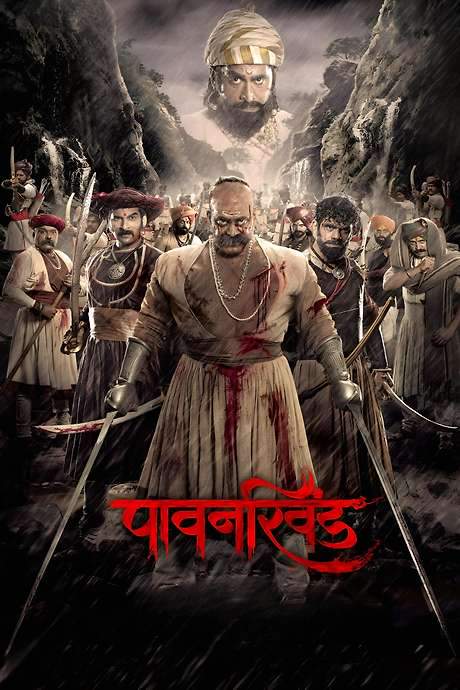
The film opens in 1674 with Chhatrapati Shivaji Maharaj telling the story of the Battle of Pavan Khind to Sambhaji Maharaj. The narrative frequently folds back to 1660, weaving between eras to build the legend around Shivaji’s resistance and the choices that defined his bold strategy.
In the royal court, Badi Begum asks a chilling question: “Who would dare to kill Shivaji?” Siddi Johar answers with cold resolve, declaring, “I dare to kill Shivaji.” The tension is palpable as the stakes are laid bare: loyalty, ambition, and the price of power.
At Panhala Fort, Shivaji’s forces face a ruthless siege that tightens the noose around the mountain fortress. Supply routes are cut off, and the besieging army, led by Siddi Johar, intensifies the bombardment. In a bold and risky move, Siddi Johar’s side purchases grenades from English traders at Rajapur and even hires English specialists to bolster their assault. The pressure mounts as the fortress fights to hold out against overwhelming odds.
To outmaneuver the pursuing forces, Shivaji orders Bahirji Naik to discover a hidden path of Vishalgad. Bahirji uncovers a secret route that allows Shivaji to slip away under the cover of night, preserving the core of his rebellion. The plan hinges on deception and trust, and it sets the stage for a daring departure from the fortress.
In a calculated ruse meant to safeguard the leader, Shivaji volitionally deploys a disguise. A barber named Shiva Kashid, portrayed by Shiva Kashid, is sent in as a decoy to approach Siddi Johar. The ruse works briefly, but Fazal Khan recognizes the impostor, and Siddi Johar’s men quickly end the disguise by killing Shiva Kashid. The encounter underscores the perilous game of cat and mouse that marks Shivaji’s wartime saga.
Meanwhile, Adilshah’s army, a formidable force of about 10,000, presses the chase. The Maratha leadership makes a decisive move by splitting their manpower to blunt the enemy’s momentum. Baji Prabhu Deshpande accepts the challenge of facing the superior numbers with a stubborn, relatively small force of 300 soldiers. Shivaji promises a dramatic signal: cannons will fire five times to mark his safety and return.
The battle at Ghodkhind tests courage and endurance. Baji Prabhu holds the line with his 300 men while the rest of Shivaji’s forces maneuver under pressure. The losses mount: Fulaji, Rayaji Bandal, Shambushingh Jadhav, and Aginya fall in the fighting. Yet Baji Prabhu endures, bearing wounds but refusing to yield as the hours stretch on.
After a tense spell, the five cannon blasts thunder through the air, announcing that Shivaji has safely returned to Vishalgad. The sacrifice and perseverance of those who stood with him become a defining moment in the campaign. In tribute to the courage of the 300 Maratha troops, Shivaji later renames Ghodkhind as Pawankind, etching the event into legend and reinforcing the resolve that fueled the maratha resistance.
This sweeping narrative blends history and homage, tracing a strategic retreat, a daring deception, and a brutal test of loyalty that forged a path for a larger struggle. The film captures the emotional weight of each decision, the cost of leadership, and the enduring memory of a stand that reshaped a nation.