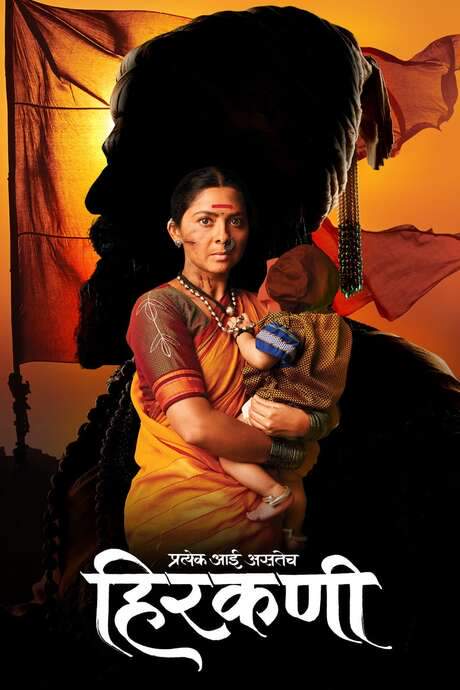
Hirkani lived near Raigad fort, a fortress that Chhatrapati Shivaji Maharaj captured and made its capital in 1674. The fort sits high in the hills of the Western Ghats, ringed by stout ramparts that guard its secrets and its history. The village at the foot of the hill functioned as a daily market for the people who lived inside the fort, and the way in and out of this stronghold depended on a simple rhythm: stalls would set up near the gate to sell wares, and the gates would swing open each morning while they were shut tight at sunset, not to be opened again until the next dawn.
Like many others, Hirkani queued at the main entrance every morning, hoping to reach the fort’s bustling markets and to serve her own regular customers. She sold milk, tending to those familiar faces who depended on her everyday deliveries. On one particular day, she found herself delayed by the needs of her child, and the timing could not have been worse: by the time she hurried toward the gate, sunset had already closed the gates for the night, guarded by Mawla. The gate was shut, and there was no way to plead with the gatekeeper; the weight of the moment pressed on her, and she faced a difficult choice.
With resolve she had never shown before, she made a risky decision. She began the dangerous descent from the fort herself, moving carefully to avoid the peril of the rocky outcrops. The journey down proved painful and taxing—she felt the strain as she brushed against the rough surfaces and even sustained scratches on her hands and face from the uneven terrain.
The following day, Hirkani returned to the gate to resume her routine, and Mawla watched with a mix of surprise and concern as she appeared at the entrance. His reaction shifted quickly from disbelief to a summons to the fort’s ruler. He brought Hirkani before Chhatrapati Shivaji Maharaj to account for what was described as a breach of rules. The story of her late arrival, her risky descent, and the visible marks of her ordeal reached the ears of the wise and just king.
Listening to her account and seeing the scratches that marked her courage, the ruler did not condemn her. Instead, he acknowledged the courage and determination she displayed in defending her family’s livelihood. He praised her, recognizing that the act, though against the simplest of rules, sprang from a place of necessity and devotion. In a gesture that would honor her memory, he ordered a protective wall to be constructed on the unsafe vertical drop from the fort, and he named it after her, ensuring that her bold choice would be remembered as part of the fort’s enduring legacy.
In this story, the quiet persistence of a milk seller near a historic fortress becomes a testament to everyday bravery. It paints a picture of a community living under strict rules and protective walls, where a single act of courage can prompt a lasting improvement to safety and a lasting tribute to a woman who refused to abandon her responsibilities. The tale conveys respect for duty, the strength found in family care, and the idea that local acts of courage can reshape a community’s approach to risk, security, and daily life.