Plot Explained Spoilers guaranteed!
Plot Explained

Browse by genre

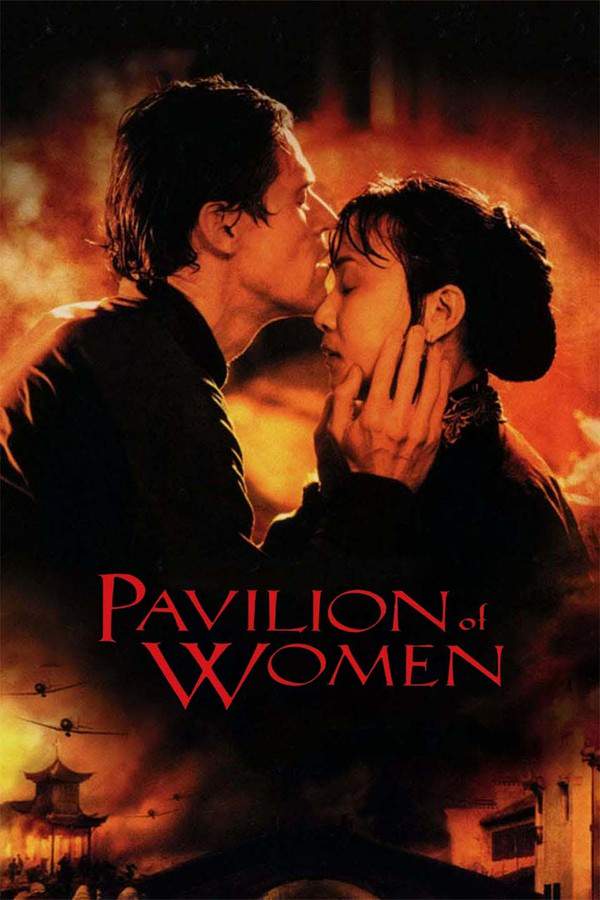
Pavilion of Women (2001) movie poster

Timeline

Pavilion of Women (2001) Timeline Explained – Every Event in Order

Release, runtime and language
2001 · 116 min · English
Loading streaming availability…
Directed by
Ho Yim
Starring
Willem Dafoe

Madame Wu's pursuit of knowledge leads her to question the traditions of her society. While navigating the constraints of an arranged marriage, she finds comfort in her studies and develops a surprising connection with Andre, an American missionary doctor. Their relationship sparks a bittersweet exploration of personal identity, societal expectations, and the complexities of forbidden love.

On this page (6)
  1. 1 Where to watch
  2. 2 Events in order (11)
  3. 3 Timeline questions answered
  4. 4 Movie threads
  5. 5 Movies like Pavilion of Women
  6. 6 Every angle
Loading streaming availability…

11 events in order · contains spoilers

Pavilion of Women Timeline: Events in Chronological Order

Every key event of Pavilion of Women (2001) in order, scene by scene, with when and where it takes place. Use it to untangle flashbacks, time jumps and parallel storylines, to refresh your memory before the sequel or to find the exact scene you are thinking of.

  1. Madame Wu's 40th Birthday and Initial Rebellion

    On her 40th birthday, Madame Wu makes a bold decision to withdraw from her traditional marital duties, shocking her family. She introduces a concubine, Chiuming, into the household to attend to her husband's needs, challenging social norms. This act signifies her rejection of the strict Confucian hierarchy and her personal rebellion against her marriage.

    When
    Her 40th birthday
    Where
    Madame Wu's home, China
  2. Madame Wu Meets Father Andre

    Madame Wu encounters Father Andre, an American Catholic missionary and doctor hired to tutor her son. Their initial conversations reveal mutual respect and curiosity, leading to a deepening philosophical and emotional connection. Madame Wu becomes increasingly intrigued by his progressive views on women and human dignity.

    When
    Shortly after her birthday
    Where
    Madame Wu's home, China
  3. Growing Emotional Bond

    As their interactions continue, Madame Wu and Father Andre develop a profound bond that transcends their initial teacher-student relationship. Their conversations explore ideas of freedom, equality, and spirituality. Madame Wu begins to see him as a source of emotional liberation.

    When
    Following their initial meetings
    Where
    Madame Wu's home and surrounding areas
  4. Suspicion and Jealousy

    Mr. Wu becomes suspicious of Madame Wu's growing closeness to Father Andre. His behavior turns reckless and jealous, causing tension within the household. Meanwhile, her son Fengmo develops feelings for Chiuming, leading to a family scandal when he attempts to elope.

    When
    Several months into Madame Wu's new perspective
    Where
    Madame Wu's home, China
  5. Chiuming's Suicide Attempt

    Chiuming, believing she cannot escape Mr. Wu's predatory behavior, attempts to take her own life. She is rescued by Father Andre, but her emotional breakdown reveals the depth of her despair and desire for freedom. Madame Wu witnesses her suffering and begins to question her own desires.

    When
    Shortly after the family scandal
    Where
    Madame Wu's home
  6. Chiuming Escapes

    With Madame Wu and Father Andre's help, Chiuming escapes on a departing boat, symbolizing her pursuit of a new life free from oppression. Madame Wu witnesses her leave and is moved by her determination for independence. This act highlights the theme of women’s quest for freedom.

    When
    Following Chiuming's rescue
    Where
    Dock, China
  7. Rainstorm and Intimate Moment

    During their return, a heavy rainstorm forces Madame Wu and Father Andre into an abandoned house where she injures her ankle. As he tends to her, they share a tender and passionate moment, marking a pivotal emotional turning point. Their connection deepens into love amidst the chaos.

    When
    During return from the dock
    Where
    Abandoned house, near the dock
  8. Fengmo's Rebellion

    Fengmo witnesses Madame Wu and Father Andre sharing an intimate moment. Feeling betrayed, he storms out and enlists in the Chinese army, symbolizing his rejection of his mother's new choices and his alignment with traditional values. This highlights the personal and social conflicts emerging from her revolution.

    When
    Shortly after the stormy night
    Where
    Madame Wu's home, China
  9. Japanese Invasion and Flight

    As Japanese forces invade China, Madame Wu's family decides to flee. Mr. Wu urges her to escape with him, but she refuses, choosing to stay behind and pursue her path of independence. During chaos, she searches for Father Andre, only to find his lifeless body after he sacrifices himself to protect others.

    When
    During the Japanese invasion
    Where
    City under attack, China
  10. Madame Wu's New Life

    Three years later, Madame Wu has embraced her independence by dedicating herself to teaching and caring for children. She finds peace in continuing Father Andre's legacy and dedicates her life to education and service. Her transformation reflects her journey toward personal fulfillment.

    When
    Three years after the invasion
    Where
    Schoolyard, China
  11. Return of her Son and Chiuming

    In the final scenes, Madame Wu's son returns home from the army, accompanied by Chiuming, who has also joined the military. Their return signifies healing and reconciliation, embracing a future founded on growth and a different understanding of family and purpose.

    When
    At the end of the story
    Where
    Madame Wu's home, China

Last updated: July 24, 2025 at 08:18

Was this helpful?

Timeline questions answered

Pavilion of Women Timeline Explained: Your Questions Answered

When does it happen, and why in that order? The questions people ask about the chronology of Pavilion of Women (2001): time jumps, flashbacks, cause and effect between scenes and the correct order of events, each answered with spoilers.

Q1

Why does Madame Wu bring a concubine into her home on her 40th birthday?

Madame Wu uses her 40th birthday as a pivotal moment to reclaim her autonomy. By introducing a concubine named Chiuming to fulfill her marital duties, she symbolically removes herself from the traditional role of a wife in Confucian society. This act represents her rejection of oppressive expectations and her declaration of personal freedom, allowing her to pursue her own interests in education and intellectual growth instead of remaining confined to domestic subservience.

Foreshadowing: Earlier in the film, Madame Wu is shown spending大量的时间阅读和学习, indicating her dissatisfaction with domestic confinement.

  • Madame Wu
  • concubine
  • 40th birthday
  • rebellion
  • Confucian traditions
  • autonomy
Q2

Why does Madame Wu develop a relationship with Father Andre?

Father Andre challenges Madame Wu's worldview by treating her as an intellectual equal and advocating for women's education and dignity. Unlike anyone in her life, he sees beyond her role as a wife and acknowledges her intelligence and capacity for independent thought. Their philosophical discussions about freedom, equality, and personal fulfillment create an emotional and intellectual bond that awakens desires she never knew she had.

Foreshadowing: Their first meeting establishes Andre's progressive views when he immediately engages Madame Wu in substantive conversation rather than treating her as merely a household matriarch.

  • Father Andre
  • Madame Wu
  • emotional connection
  • intellectual bond
  • missionary
  • equality
Q3

Why does Fengmo enlist in the Chinese army after seeing his mother with Father Andre?

Fengmo discovers Madame Wu and Father Andre sharing a passionate embrace in an abandoned house during a rainstorm. This sight feels like a profound betrayal, as it represents everything he perceives as wrong, his mother rejecting her duties, embracing a foreign man, and abandoning traditional family values. His enlistment represents both a rejection of his mother's choices and his attempt to assert traditional masculine values by serving his country.

Foreshadowing: Earlier, Fengmo already disapproved of his mother's introduction of a concubine and her growing independence, showing his conservative stance.

  • Fengmo
  • enlist
  • Chinese army
  • betrayal
  • mother
  • tradition
  • rebellion
Q4

Why does Chiuming attempt suicide?

Chiuming is trapped in an impossible situation, she is a concubine brought into the household to serve Mr. Wu, but she has developed feelings for Fengmo, who also loves her. When their elopement fails and she is returned to the household, she sees no escape from Mr. Wu's predatory attention and the shame of her failed attempt at freedom. Her suicide attempt represents the desperation of a woman who believes she has no viable path to a dignified life within the constraints of her society.

Foreshadowing: Chiuming's gentle and innocent nature is established early, making her vulnerability and inability to cope with societal pressures more believable and tragic.

  • Chiuming
  • suicide attempt
  • Mr. Wu
  • Fengmo
  • desperation
  • freedom
  • concubine
Q5

Why does Madame Wu refuse to flee with her family during the Japanese invasion?

Madame Wu chooses to stay behind because she has finally broken free from the societal chains that kept her confined. Fleeing with Mr. Wu would mean returning to the oppressive role she spent the entire film rejecting. Additionally, she wants to find Father Andre, believing their connection justifies the risk. Her decision represents the culmination of her character arc, she chooses personal freedom and love over safety and traditional family obligations.

Foreshadowing: Her entire journey has been about claiming autonomy; fleeing would undo everything she fought for.

  • Japanese invasion
  • Madame Wu
  • flee
  • stay
  • freedom
  • independence
  • Mr. Wu
Q6

How does Father Andre die in Pavilion of Women?

During the Japanese air raid on the city, Father Andre remains at the mission school to protect the children. He sacrifices himself by staying behind to ensure the children escape safely, ultimately being killed in the attack. His death represents the ultimate expression of his values, compassion, service, and putting others before himself, mirroring the Christian ideals he embodies as a missionary.

Foreshadowing: Throughout the film, Andre is portrayed as selfless and devoted to helping others, particularly women and children, making his sacrifice consistent with his character.

  • Father Andre
  • death
  • Japanese invasion
  • sacrifice
  • mission school
  • children
Q7

What happens to Chiuming after she escapes with Madame Wu's help?

Chiuming escapes on a boat provided by Madame Wu, who gives her money to start a new life. Three years later, Chiuming has joined the Chinese army and returns to the Wu household alongside Fengmo, who has also enlisted. Her transformation from a vulnerable concubine to a soldier signifies her complete reclamation of agency, she has found freedom and purpose by taking control of her own destiny.

Foreshadowing: Madame Wu's realization after witnessing Chiuming's suicide attempt, that every woman deserves freedom and happiness, directly motivates her decision to help Chiuming escape.

  • Chiuming
  • escape
  • boat
  • army
  • return
  • freedom
  • new life
Q8

Why does Mr. Wu become suspicious and jealous of Madame Wu's relationship with Father Andre?

Mr. Wu notices the growing emotional and intellectual connection between his wife and the foreign missionary. Despite having a concubine in his home, he becomes possessive and threatened by the idea of Madame Wu finding fulfillment outside of him. His jealousy stems from both traditional male ownership of women and his insecurity about being replaced emotionally by another man, particularly a foreigner with progressive ideas that challenge his worldview.

Foreshadowing: Mr. Wu's controlling nature is established when he expects Madame Wu to fulfill her wifely duties without question, making his possessive reaction predictable.

  • Mr. Wu
  • jealousy
  • suspicion
  • Madame Wu
  • Father Andre
  • possessiveness
Q9

What happens between Madame Wu and Father Andre during the rainstorm?

While returning from helping Chiuming escape, Madame Wu and Father Andre are caught in a heavy rainstorm. She injures her ankle, and he helps her into an abandoned house to shelter. In this vulnerable moment, he kisses her hands and they share a passionate embrace. This scene marks the physical culmination of their emotional connection and represents Madame Wu's complete emotional awakening, she finally allows herself to experience love and desire rather than suppression.

Foreshadowing: Their intellectual bond and growing emotional closeness throughout the film builds to this moment, making it a natural progression of their relationship.

  • rainstorm
  • abandoned house
  • intimate moment
  • passion
  • Madame Wu
  • Father Andre
  • embrace
Q10

How does Madame Wu honor Father Andre's legacy after his death?

Three years after Father Andre's death during the Japanese invasion, Madame Wu dedicates her life to education and caring for orphaned children. She transforms her personal loss into purposeful action, running a school where she teaches and nurtures children. By carrying forward his work and values, she keeps his memory alive while finally living the life of intellectual freedom and service that their connection inspired.

Foreshadowing: Father Andre's values of education, dignity, and service for women and children were central to his character, making his legacy a natural path for Madame Wu's transformation.

  • legacy
  • Father Andre
  • education
  • children
  • school
  • memory
  • tribute

Movie threads

More Movies Like Pavilion of Women, by Mood & Story

Curated lists built around what makes Pavilion of Women tick: the same mood, the same kind of story or the same emotional payoff. Each list explains why these movies belong together.

Movies about forbidden love like Pavilion of Women

Romantic connections that defy powerful social conventions and traditions. If you enjoyed the bittersweet romance in Pavilion of Women, explore these other films about forbidden love. Discover stories of characters who brave social scorn and personal risk for a connection that defies the conventions of their world.

  • romantic tension
  • yearning
  • defiant
  • melancholic
  • oppressive
  • claustrophobic
  • Tone: bittersweet, tense, romantic
  • Pacing: steady, deliberate
Why these movies?

The story pattern: These narratives often follow characters trapped by societal duty who find unexpected love with someone from a different class, background, or belief system. The central conflict is between personal desire and external expectations, leading to a journey of self-discovery that is both liberating and costly.

Why they belong together: Movies in this thread are grouped by their exploration of love as an act of rebellion. They share a heavy emotional weight, a steady, character-driven pace, and a tone that balances romantic yearning with the melancholic reality of societal constraints, often resulting in bittersweet conclusions.

Stories of feminine awakening like Pavilion of Women

Stories of women finding their voice and freedom within oppressive structures. For viewers who appreciated Madame Wu's journey in Pavilion of Women, this collection features movies about women's quiet defiance and intellectual awakening. Find similar dramas where female protagonists navigate oppressive systems to discover their own strength and purpose.

  • defiant
  • reflective
  • claustrophobic
  • hopeful
  • melancholic
  • yearning
  • Tone: reflective, bittersweet, hopeful
  • Pacing: steady, character-driven
Why these movies?

The story pattern: The narrative pattern centers on a female protagonist who initially conforms to her role but is sparked by new ideas or a mentor figure. Her rebellion is often subtle—through education, small acts of independence, or an internal shift—rather than overt confrontation, leading to a transformative but costly personal liberation.

Why they belong together: This thread connects films through their focus on a specific character arc: the thoughtful, steady-paced journey of a woman breaking free. They share a reflective mood, a high-stakes personal intensity, and a thematic core of sacrifice and intellectual liberation against a claustrophobic backdrop.

If you liked this

Movies Like Pavilion of Women

Similar movies to Pavilion of Women: the same genre, themes or kind of story. Each one comes with its own plot summary, timeline and ending explained.

Browse all movie summaries

Every angle

Pavilion of Women (2001) Explained: Plot, Timeline & Characters

Everything about Pavilion of Women in one place: what happens in the plot summary, the timeline in chronological order, the characters and meaning and a spoiler-free summary. What's After the Movie adds the cast, box office and post-credit scenes.

Coming soon on iOS and Android

The Plot Explained Movie Summary App

Plot summaries, endings explained and timelines on your phone. Catch up on any movie in minutes, save your favorites and never miss a twist again.

Be the first to know when we launch. Your email stays private, always.

Learn more about the app