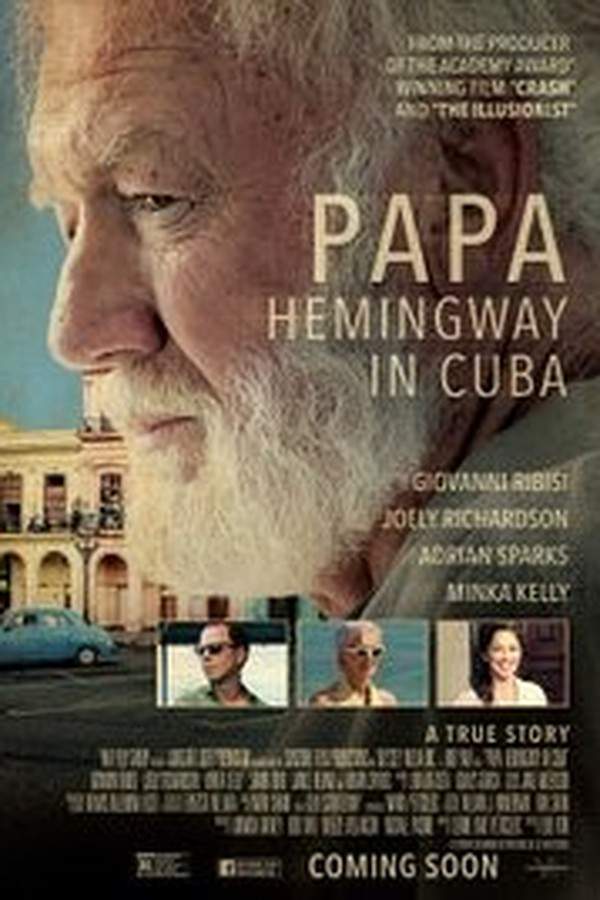
Papa: Hemingway in Cuba

Papa: Hemingway in Cuba

JustWatch#25,7337

Year: 2016

Runtime: 110 min

Language: English

Director: Bob Yari

BiographyDrama

In 1959, as revolution erupts in Havana, a young journalist travels to Cuba hoping to meet the celebrated author Ernest Hemingway. During their encounter, the celebrated writer and the aspiring journalist explore themes of conflict, affection, and the enduring power of literature, blurring the boundaries between reality and storytelling. Hemingway, living in Cuba at the time, offers the journalist a glimpse into his world and provides a unique perspective on the events unfolding around them.

Where to Watch Papa: Hemingway in Cuba?

Find where to stream, rent, or buy Papa: Hemingway in Cuba (2016) in the US with current JustWatch availability, up-to-date pricing, and platform listings for subscription, rental, and digital purchase options.

Warning: spoilers below!

Haven’t seen Papa: Hemingway in Cuba yet? This summary contains major spoilers. Bookmark the page, watch the movie, and come back for the full breakdown. If you're ready, scroll on and relive the story!

Papa: Hemingway in Cuba (2016) – Full Plot Summary & Ending Explained

Read the complete plot breakdown of Papa: Hemingway in Cuba (2016), including all key story events, major twists, and the ending explained in detail. Discover what really happened, and what it all means.

In PAPA, a poignant tale based on true events, we follow the journey of Ed Myers (Giovanni Ribisi), a writer whose life is dramatically shaped by his idol, the iconic Ernest Hemingway. Set against the backdrop of late 1950s Cuba, the film begins with Ed, a young boy who endured abandonment by his father, leading him to grow up in an orphanage. Inspired by Hemingway’s writing, Ed pursues his own career as a journalist for the Miami Globe.

His life takes a turn when his colleague, Debra Hunter (Minka Kelly), encourages him to send a heartfelt letter to Hemingway, which he had hesitated to do. Surprised and thrilled, Ed receives a call from Hemingway, inviting him to Havana. The two soon meet on Hemingway’s boat, where the legendary author shares his wisdom on fishing and storytelling, introduced with the advice on “the power of less” in writing, exemplified by the six-word story he scribbles on a cocktail napkin: > “For sale, baby shoes, never worn.”

As their friendship blooms, Ed makes multiple trips to Finca Vigia (Hemingway’s estate), experiencing the intricacies of the writer’s life. Ed bonds with Mary Hemingway (Joely Richardson), who, alongside Hemingway, welcomes him into their world as they navigate the dangers posed by the Cuban Revolution. Political tensions rise, and Ed becomes more than a visitor; he finds himself entangled in Hemingway’s personal struggles, particularly as Hemingway battles depression and the haunting memories of his past.

The film highlights critical moments as Ed witnesses Hemingway’s brilliance intertwined with fragility, from casual gatherings to the stormy tensions at home. One memorable dinner emphasizes Hemingway’s complex relationship with Mary, where a seemingly innocent family celebration devolves into a bitter argument, showcasing their passionate yet tumultuous love. Amidst their battles, Ed offers support to both Hemingway and Mary as they navigate their emotional storms.

As Ed immerses himself in Hemingway’s world, he grows into a confidant, and under the mounting pressures of a politically charged environment, he finds himself at a crossroads. When an FBI agent (whose motives intertwine with Ed’s newfound loyalty to Hemingway) approaches him about the author’s political beliefs, Ed is torn between professional obligation and personal allegiance.

Hemingway’s decline becomes more apparent, culminating in chilling scenes where he contemplates life and death. The atmosphere thickens as Ed and Mary, fearing for Hemingway’s life, become his lifelines, striving to keep him grounded. In a raw confrontation, Ed steps up, grabbing a pistol from Hemingway’s hand, determined not to let his idol succumb to despair.

In the end, as Hemingway confronts his demons with Ed as his witness, the script draws powerful parallels between life’s triumphs and tragedies. Ed leaves Havana changed, becoming a more insightful writer, while the specter of Hemingway’s struggles lingers in his mind, ultimately leading to the legendary writer’s tragic end in Ketchum, Idaho, a year and a half later.

Through beautifully shot scenes across Cuba, including trips to notable Hemingway locations, PAPA speaks to the intricacies of mentorship, the pain of loss, and the delicate balance between admiration and understanding our heroes as fallible humans. The film concludes with a touching reflection on Ed’s transformative relationship with Hemingway, a bond that transcends time and speaks volumes about the human condition itself.
Last updated: May 12, 2025 at 07:04

Was this helpful?

Papa: Hemingway in Cuba (2016) Plot Questions Answered – Summary FAQ

Explore frequently asked questions about Papa: Hemingway in Cuba (2016) with spoiler-rich answers covering the full plot summary, major story beats, character motivations, hidden details, and ending meaning. This movie summary FAQ helps explain confusing scenes, plot twists, and narrative decisions in clear, searchable detail.

Q1

Why did Ed decide to send a letter to Hemingway?

A.

Ed was inspired by Hemingway's writing after growing up in an orphanage following his father's abandonment in 1935. Hemingway's works shaped his dream of becoming a writer, making reaching out to his childhood idol a natural step in pursuing his own career.

The film's opening scene establishes Ed's abandonment, setting the emotional foundation for his idolization of Hemingway.

Ed MyersHemingwayletterwriterinspirationorphanage
Q2

How did Ed meet Hemingway in Cuba?

A.

After typing a letter to Hemingway but hesitating to send it, Ed's colleague Debra secretly mailed the letter. Hemingway was surprised by the heartfelt message and personally called Ed, inviting him to Havana to meet him on his boat.

Ed MyersHemingwayHavanameetingboat
Q3

What does Hemingway mean by "the power of less" in writing?

A.

At the Floridita bar in Havana, Hemingway demonstrates his minimalist writing philosophy by scribbling a six-word story on a cocktail napkin: "For sale, baby shoes, never worn." He teaches Ed that fewer words can convey deeper emotion and meaning than lengthy descriptions.

writingpower of lessHemingwayFloriditasix-word story
Q4

Why did the FBI approach Ed about Hemingway?

A.

During the 1959 Cuban Revolution, Hemingway's associations with Cuban rebels and his political views attracted government scrutiny. An FBI agent questioned Ed about Hemingway's beliefs, putting Ed in a difficult position between his professional obligations and personal loyalty to his mentor.

Earlier scenes show Ed observing the growing police presence and political tensions around Finca Vigia.

FBIHemingwayCuban Revolutionpolitical beliefsEd Myers
Q5

Why did Hemingway struggle with depression?

A.

Hemingway had a long history of mental health struggles, exacerbated by his experiences with war, the pressures of literary fame, and physical health issues. In the film, Ed witnesses his mentor loading a pistol and contemplating suicide, while Mary calls Ed late at night fearing for Hemingway's life.

The dinner party scene shows Hemingway's volatility and his turbulent relationship with Mary, hinting at deeper emotional struggles.

Hemingwaydepressionsuicidemental healthFinca Vigia
Q6

What happened at Hemingway's birthday party?

A.

Mary organized a grand celebration at Finca Vigia with friends from Hemingway's past. Initially lifted by the festivity, the party deteriorated into a heated argument between Hemingway and Mary, revealing deep-seated marital tensions and the strain caused by his emotional instability.

birthday partyMary HemingwayFinca Vigiaargumentmarriage
Q7

Why did Ed grab the pistol from Hemingway?

A.

When Ed witnessed Hemingway loading a pistol and appearing ready to end his life, he intervened physically, taking the gun from his idol's hand. Ed refused to let his mentor succumb to despair, acting as a lifeline during Hemingway's darkest moment.

Mary's earlier 2:30 AM call to Ed expressing fear for her husband's life directly precedes this crisis point.

Ed MyersHemingwaypistolsuicideintervention
Q8

How did the Cuban Revolution affect Ed and Hemingway's relationship?

A.

The escalating political tensions in 1959 Cuba created a dangerous backdrop for their friendship. Ed witnessed violence between rebels and government soldiers in Havana bars, while Hemingway's rumored connections to Cuban rebels attracted FBI scrutiny, forcing Ed to navigate conflicting loyalties.

The timeline shows Ed observing growing police presence and poverty during his return trips to Havana.

Cuban RevolutionHavanaFinca Vigiapolitical tensionrebels
Q9

Why did Ed move to Idaho after Hemingway's death?

A.

Following Hemingway's suicide in 1961, Ed moved to Ketchum, Idaho, to be close to Mary Hemingway. This final act demonstrates the lasting impact of their mentorship, as Ed carried forward the lessons learned from his relationship with the legendary author.

Throughout the film, Ed forms a bond with Mary as she and Hemingway welcome him into their world.

Ed MyersKetchumIdahoMary Hemingwaydeathmentorship
Q10

What happened between Ed and Debra?

A.

Debra was Ed's colleague at the Miami Globe who encouraged him to send the letter to Hemingway. Their relationship developed throughout the film, culminating in Ed confessing his feelings for her after witnessing Hemingway's struggles, symbolizing his emotional growth beyond idolization.

The scene of them skinny dipping in Miami contrasts with the escalating political violence in Cuba.

DebraEd MyersrelationshiploveMiami Globe
Mobile App Preview

Coming soon on iOS and Android

The Plot Explained Mobile App

From blockbusters to hidden gems - dive into movie stories anytime, anywhere. Save your favorites, discover plots faster, and never miss a twist again.

Sign up to be the first to know when we launch. Your email stays private, always.

Explore Movie Threads

Discover curated groups of movies connected by mood, themes, and story style. Browse collections built around emotion, atmosphere, and narrative focus to easily find films that match what you feel like watching right now.

Mentorship Under a Darkening Sky: Movies like Papa: Hemingway in Cuba

Young idealists learn from aging idols facing personal and political turmoil.If you liked the dynamic in Papa: Hemingway in Cuba, explore more movies about transformative mentorship with aging artists or intellectuals. These films often feature a steady pace, a melancholic tone, and a heavy emotional weight, set during times of personal or historical upheaval.

mentorshipmelancholicinspirationaltumultuousreflectiveintimatesad

Narrative Summary

These narratives typically follow a linear, character-driven path where a protégé gains invaluable wisdom and personal connection from their mentor. The central conflict arises from the juxtaposition of this inspirational growth against the mentor's internal decline due to age, illness, or disillusionment, often leading to a sorrowful but meaningful conclusion.

Why These Movies?

They share a specific emotional mix: the hopeful energy of a student meeting their idol, combined with the profound sadness of watching that idol succumb to their demons. The pacing is steady to allow for deep character study, and the tone is consistently reflective and melancholic.

Literary Lives in Tumultuous Times: Films similar to Papa: Hemingway in Cuba

Intimate portraits of famous authors navigating creative passion and personal crisis.For viewers who enjoyed the biographical focus of Papa: Hemingway in Cuba, this thread collects movies that delve into the lives of famous authors. These dramas are typically intimate, reflective, and set during key historical moments that shape the writer's perspective and work.

writer's lifereflectivemelancholicintimatehistoricalpsychologicalinspirational

Narrative Summary

The plot follows a straightforward, often biographical structure, chronicling a specific chapter in a writer's life. The central tension comes from the conflict between their artistic drive and their human flaws—such as depression, addiction, or ego—amplified by the external pressure of a changing world.

Why These Movies?

This group is defined by its subject matter and mood. They share a deep focus on the creative mind, a reflective and often melancholic atmosphere, and a setting that is as much a character as the writer themselves. The emotional journey is heavy and contemplative.

Unlock the Full Story of Papa: Hemingway in Cuba

Don't stop at just watching - explore Papa: Hemingway in Cuba in full detail. From the complete plot summary and scene-by-scene timeline to character breakdowns, thematic analysis, and a deep dive into the ending - every page helps you truly understand what Papa: Hemingway in Cuba is all about. Plus, discover what's next after the movie.

Papa: Hemingway in Cuba Timeline

Track the full timeline of Papa: Hemingway in Cuba with every major event arranged chronologically. Perfect for decoding non-linear storytelling, flashbacks, or parallel narratives with a clear scene-by-scene breakdown.

Papa: Hemingway in Cuba Timeline

Characters, Settings & Themes in Papa: Hemingway in Cuba

Discover the characters, locations, and core themes that shape Papa: Hemingway in Cuba. Get insights into symbolic elements, setting significance, and deeper narrative meaning - ideal for thematic analysis and movie breakdowns.

Characters, Settings & Themes in Papa: Hemingway in Cuba

Papa: Hemingway in Cuba Spoiler-Free Summary

Get a quick, spoiler-free overview of Papa: Hemingway in Cuba that covers the main plot points and key details without revealing any major twists or spoilers. Perfect for those who want to know what to expect before diving in.

Papa: Hemingway in Cuba Spoiler-Free Summary

More About Papa: Hemingway in Cuba

Visit What's After the Movie to explore more about Papa: Hemingway in Cuba: box office results, cast and crew info, production details, post-credit scenes, and external links - all in one place for movie fans and researchers.

More About Papa: Hemingway in Cuba

Similar Movies to Papa: Hemingway in Cuba

Discover movies like Papa: Hemingway in Cuba that share similar genres, themes, and storytelling elements. Whether you’re drawn to the atmosphere, character arcs, or plot structure, these curated recommendations will help you explore more films you’ll love.