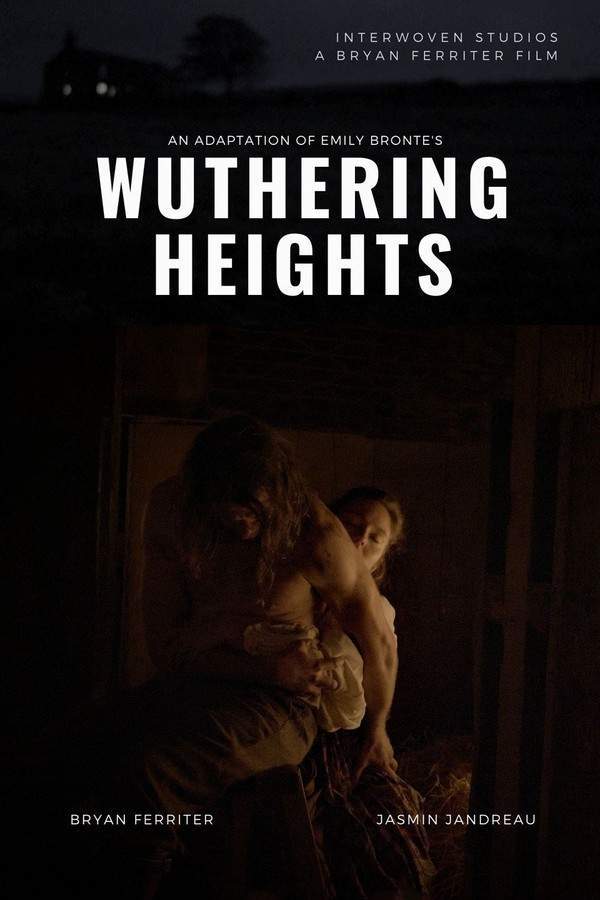
As Emily Brontë lies ill and near death, Charlotte Brontë asks what inspired her to write her novel Wuthering Heights, seeking a window into the fire that fuels her sister’s prose.
Sometime earlier, Charlotte Brontë returns home from school, and Emily’s world unfolds in vivid fragments—fantasies, sketches, and the stubborn belief that fiction can bend the world. The Brontë household is stirred by the arrival of a new curate, William Weightman, whose charm quickly finds fans among the sisters and other young women alike. Yet Emily, with a wary eye and a sharp tongue, keeps him at a distance. In a childhood game rebuilt in the present, the family dresses as characters, and Weightman participates with characteristic seriousness. When Emily, in a moment she later calls a claim of being possessed by the ghost of the Brontë mother, speaks of a spectral influence, a strong wind bursts open the windows and unsettles everyone. The next day, she quietly buries the mask in the ground, signaling a shift that will echo through the years.
Emily and Charlotte later accompany Branwell Brontë on divergent routes—Emily to a course of study and then back home, and Branwell to the Royal Academy of Arts. Both fail to find the path they imagine, and a sense of stalling hangs over the household. Their father, Patrick Brontë, responds by enrolling Weightman to tutor Emily in French, a decision that deepens the tension and the entanglement of loyalties. Branwell, meanwhile, nudges Emily toward risky pleasures, encouraging drinking and dabbling in opium found in a desk. Emily inscribes Freedom in thought on her arm, a bold declaration of intellectual independence that mirrors their shared hobby of peering through the windows of a nearby family and scaring the occupants at night. When the ruse is discovered, Branwell is punished by being sent to tutor the family, only to fall into further immorality when he kisses the mistress and is sent away in disgrace.
The bond between Emily and Weightman intensifies, moving from flirtation to a fuller, intimate connection that unsettles Charlotte once she becomes aware of it. When Charlotte returns and senses the spark, Weightman abruptly ends the affair, leaving Emily bereft and angry at the world she has been maneuvering within. In a bid to move forward, Emily agrees to join Charlotte on a journey to Brussels and even contemplates abandoning writing for a time. Weightman, however, does not give up quietly; he pens a letter urging her to reconsider, but Branwell—a conduit of the moment’s miscommunications—reads the note and never passes the message along.
In Brussels, Emily is haunted by a vision of Weightman, and soon afterward she learns of his death from cholera. The sisters return home to care for ailing Branwell, whose final act is a quiet gesture that reshapes Emily’s future: he gives her Weightman’s letter, the prompt urging her to continue to write. This moment crystallizes a turning point, and upon Branwell’s death Emily writes Wuthering Heights, channeling the storm of experience into the seeds of her enduring fiction.
Now gravely ill again, Emily confesses to Charlotte that she loved Weightman, a truth she asks Charlotte to safeguard by burning the love letters after her passing. Charlotte fulfills this somber request, destroying the correspondence, and with that act begins to shape her own literary path as she waits for her sister’s last breath. The fire of Emily’s revelations and Branwell’s sacrifice leave the Brontë sisters poised to forge their subsequent legacies, with Charlotte ready to translate the family’s history into her own enduring works.