Plot Explained Spoilers guaranteed!
Plot Explained

Browse by genre

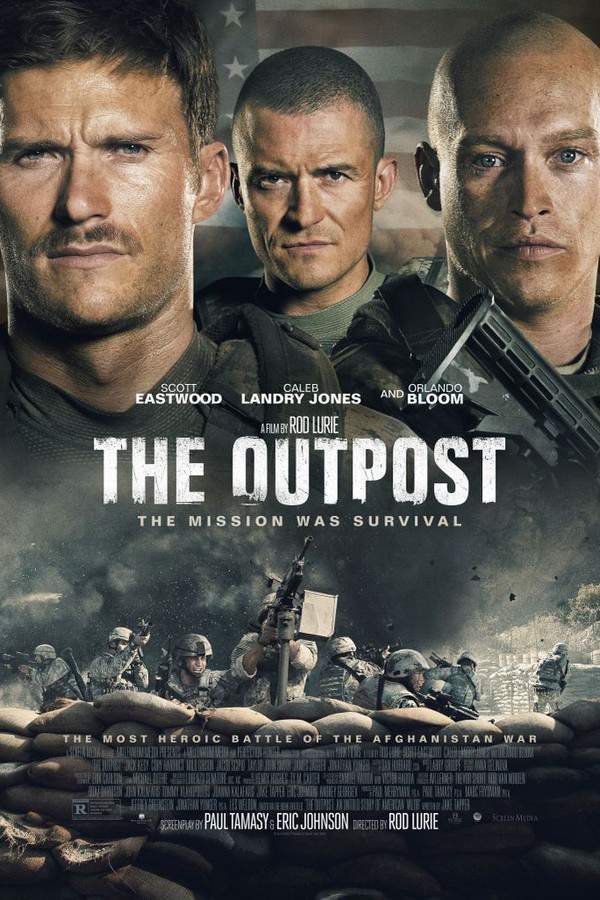
The Outpost (2020) movie poster

Plot Summary

The Outpost (2020) Plot Summary Explained

Release, runtime and language
2020 · 123 min · English
Echo score 74
JustWatch #27,485 5
Directed by
Rod Lurie
Starring
Scott Eastwood, Jack Kesy, Caleb Landry Jones, Bobby Lockwood, Orlando Bloom, Cory Hardrict
Budget
$18M

During a fierce battle in the remote valley of three mountains, a small U.S. military outpost comes under relentless attack by Taliban fighters. The soldiers of Bravo Troop 3-61 CAV find themselves in a desperate fight for survival, facing overwhelming numbers and enduring a brutal conflict that becomes known as the Battle of Kamdesh. Their courage and resilience are tested as they struggle to defend their position and withstand the intense fighting.

On this page (6)
  1. 1 Where to watch
  2. 2 What happens: full plot
  3. 3 Plot questions answered
  4. 4 Movie threads
  5. 5 Movies like The Outpost
  6. 6 Every angle

Where to watch

Where to Watch The Outpost (2020)

Where can you watch The Outpost? Stream, rent or buy it in the US, including on Amazon Prime Video, YouTube TV and VIX : current JustWatch availability with up-to-date prices.

Streaming availability powered by JustWatch

Full plot summary · contains spoilers

What Happens in The Outpost: Full Plot Summary

The whole story of The Outpost (2020) explained, from the opening scene to the final frame: every key event, every twist and what it all adds up to. Read it as a quick recap before the sequel, to check a scene you missed, or to finally understand what really happened.

In Afghanistan, at the Kamdesh outpost, SSG Clint Romesha and a fresh group of soldiers arrive under the tight, watchful eye of CPT Orlando Bloom Ben Keating. The small garrison sits in a precarious position, surrounded by rugged mountains and a thin line of supply routes, where small decisions can mean the difference between routine duty and sudden, life‑altering danger. From the moment the new unit settles in, the film threads together personal courage, tense improvisation, and the friction between strict rules of engagement and the urgent instinct to protect comrades.

Early on, SGT Josh Kirk, Jack Kesy, becomes a focal point as the soldiers confront a string of Taliban attacks. The scene where a dog teeters on the edge of a shooting line highlights the constant stakes of daily patrols and the humanity that persists even under fire. The men learn to read the terrain, share scarce resources, and hold their nerves together as rounds crack overhead. The atmosphere is thick with a blend of resolve, fatigue, and the relentless danger encroaching from every blind corner of the valley.

Tensions within the ranks flare in moments of heat and miscommunication. SGT Justin Gallegos, Jacob Scipio, clashes with PFC Yunger in a tight firefight, underscoring the fragility of trust when fear runs high. At the same time, SPC Ty Carter, Caleb Landry Jones, navigates the stress of leadership under fire and the pressure of keeping his squad alive. The base commander, Vernon Martin, is pulled into micro‑debates about strategy, while the chain of command plays out in a constant push‑pull between precaution and necessity.

Keating, the initial commander, attempts a counterintuitive approach to winning local trust: a shura with village elders to offer infrastructure money in exchange for peace. This decision reflects a complicated blend of diplomacy and pragmatism, as the film shows how every gesture can ripple outward in a landscape where loyalties are negotiated in the shadows of fortified walls and mountainous roads. The search for intelligence becomes a recurring thread, with SGT Kirk uncovering a local paid by elders to photograph the base, a discovery that leads CPT Yllescas to reassess how money is distributed and spent.

When the base’s leadership changes, CPT Robert Yllescas, Milo Gibson, steps in with a different lens on rules of engagement and pursuit of security. A blood‑tinged warning from Mohammed, the Afghan interpreter, about an impending large-scale attack is met with skepticism, illustrating the cultural and communication gaps that complicate simple, clear decisions in the heat of the moment. Romesha, drawing on battlefield experience, describes a rough plan to mount an assault on the vulnerable outpost as the threat level climbs, while the team continues to refine how they operate under a shifting command.

A nighttime assault changes the pace and intensity of the siege. The attackers appear more equipped than before, now with night vision gear and mortars that level the playing field with the American defenders. The next day brings a controversial encounter: the elders present a body they claim was killed by a counterattack, prompting Broward to promise compensation and triggering a grim reminder of the moral complexities at the edge of war. The tension spikes as the troops blow off steam with rough humor and rougher camaraderie, while the leadership grapples with the prospect that the base could be closed—an order that weighs heavily on everyone’s sense of purpose.

As October approaches, Bundermann, the acting commander under the looming shadow of closure, orders the unit to withhold any messages about departure, forcing the soldiers to confront a future that might arrive without a formal send-off. The quiet dread of leaving weighs on the men, who reach out to their loved ones while muscling through the routine of patrols and maintenance under increasing pressure to stay and defend.

Then the weathered day arrives when Mohammed’s warning proves prophetic. By morning, hundreds of Taliban fighters have surrounded the outpost. The clash erupts with brutal intensity: Romesha and his team attempt to reach trapped comrades as the perimeter tightens. The losses begin to mount as Gallegos and SSG Martin are killed, and Romesha fights to reach the vulnerable positions under heavy fire. The survivors learn anew the cost of courage as Kirk is confirmed dead in action, and the unit realizes that retaking the front is no longer a matter of choice but necessity.

The rescue efforts intensify as Carter, along with Hardt and Griffin, press forward to retrieve wounded teammates. A crucial move sees Romesha assembling a force to retake the front gate just as air support arrives, and a B-1 bomber pounds the enemy positions. Through a harrowing sequence of medical acts and improvised care, Mace receives aid from the surgeons who donate their own blood to buy time, and the quick reaction team, including Portis, pushes the last insurgents back. The outpost is eventually demolished to prevent its capture, and the remaining survivors are evacuated by helicopter.

In the aftermath, the toll is clear: 27 Americans wounded and 8 dead. For two soldiers, Romesha and Carter, their acts of extraordinary valor are recognized with the Medal of Honor, marking them as a part of one of the most decorated units of the war. The film closes with a somber reflection on sacrifice, resilience, and the complicated calculus of courage in a place where every decision carries an outsized weight.

Throughout, the cast’s performances anchor a narrative that seeks to honor both the bravery and the burden of those who held the line at Kamdesh, balancing the immediacy of combat with the long shadow of loss and the occasional glimmers of humanity that survived amid the rubble.
Last updated: January 08, 2026 at 12:00

Was this helpful?

Plot questions answered

The Outpost Plot Explained: Your Questions Answered

The questions people ask most about The Outpost (2020): what happens in the confusing scenes, why the characters do what they do, the twists, hidden details and what the ending means. Each answer contains spoilers.

Q1

Why did CPT Keating drive the LMTV off the cliff?

CPT Ben Keating volunteered to drive a large LMTV truck along the narrow mountain roads near Kamdesh to move supplies and respond to emerging threats. The vehicle slipped off the cliff, killing Keating instantly. His death was a tragic accident that changed the command structure at the outpost and left the unit reeling from the loss of their initial leader.

  • Keating death
  • LMTV accident
  • Kamdesh commander
  • mountain road
Q2

Why was Mohammed's warning about the large-scale attack ignored?

Mohammed, the Afghan interpreter, provided a blood-tinged warning about an impending large-scale Taliban attack on the outpost. However, his fears were dismissed by leaders and planners who either doubted the intelligence or underestimated the threat level. This critical misjudgment proved fatal when hundreds of Taliban fighters surrounded the outpost on October 3, 2009.

Foreshadowing: Earlier intelligence failures and cultural communication gaps set the stage for the warning being undervalued.

  • Mohammed warning
  • Taliban attack
  • intelligence failure
  • Kamdesh siege
Q3

How did CPT Yllescas die?

CPT Robert Yllescas was killed during a bridge patrol near Kamdesh in October 2009 when an improvised explosive device (IED) detonated beneath him. The incident occurred while Yllescas was on patrol with PFC Yunger, who was traumatized and nearly attempted suicide afterward before being talked down by Romesha. Yllescas' death marked the second commander lost in a short period.

Foreshadowing: Yllescas had taken command after Keating's death and was pursuing a more aggressive patrol strategy.

  • Yllescas death
  • IED explosion
  • bridge patrol
  • Kamdesh commander
Q4

What happened during the October 3, 2009 attack on the outpost?

On October 3, 2009, hundreds of Taliban fighters surrounded the Kamdesh outpost and launched a coordinated assault. The attack began with intense small-arms fire and progressed to close-quarters combat as the perimeter was breached. Romesha led counterattacks to retake key positions while several soldiers were killed or wounded. Air support arrived in the form of a B-1 bomber that pounded enemy positions, and the surviving troops eventually pushed back the insurgents.

Foreshadowing: Mohammed's earlier warning about a large-scale attack proved prophetic.

  • October 3 attack
  • Battle of Kamdesh
  • Taliban assault
  • outpost siege
Q5

Why was the outpost demolished after the battle?

After the brutal October 3 attack and successful defense of the outpost, the remaining forces demolished the base to prevent its capture by the Taliban. The decision ensured that the militants could not use the strategic position, equipment, or facilities against coalition forces. The demolition marked the end of the Kamdesh outpost's existence.

  • outpost demolition
  • Kamdesh base
  • tactical withdrawal
  • base closure
Q6

How did Clint Romesha earn the Medal of Honor?

SSG Clint Romesha earned the Medal of Honor for his extraordinary heroism during the October 3, 2009 battle. When the outpost was overrun and multiple soldiers were killed or wounded, Romesha led repeated counterattacks under heavy fire to reach trapped comrades and retake key positions. He fought relentlessly to secure the perimeter, assist the wounded, and coordinate the defense that prevented the base from falling to the Taliban.

Foreshadowing: Romesha had previously described plans to mount an assault on the vulnerable outpost as threats increased.

  • Clint Romesha
  • Medal of Honor
  • heroism
  • Battle of Kamdesh
Q7

How did Ty Carter earn the Medal of Honor?

SPC Ty Carter received the Medal of Honor for his actions during the same October 3, 2009 battle. Carter navigated the intense combat to reach wounded teammates, providing medical aid and helping to retrieve injured soldiers from danger zones. His repeated efforts under fire saved lives and contributed significantly to the unit's survival during the siege.

Foreshadowing: Carter had previously navigated leadership pressures while keeping his squad alive during earlier attacks.

  • Ty Carter
  • Medal of Honor
  • wounded rescue
  • Battle of Kamdesh
Q8

How many soldiers were killed and wounded in the Battle of Kamdesh?

The Battle of Kamdesh resulted in 8 American soldiers killed in action and 27 wounded. Among the dead were SSG Vernon Martin, SGT Josh Kirk, SGT Justin Gallegos, and others who gave their lives defending the outpost. The casualties represented a devastating toll for the small garrison unit.

  • casualties
  • killed in action
  • wounded soldiers
  • Kamdesh toll
Q9

What was the purpose of the shura meeting with village elders?

CPT Keating organized a shura with local village elders to offer money for infrastructure projects in exchange for peace. This approach attempted to win local trust and cooperation through economic incentives, reflecting a counterinsurgency strategy of building relationships with the community. However, the move revealed ethical and strategic complexities, as financial distributions became entangled with intelligence gathering and loyalty negotiations.

Foreshadowing: The search for intelligence later led SGT Kirk to discover a local man paid by elders to photograph the base.

  • shura meeting
  • village elders
  • infrastructure money
  • counterinsurgency
Q10

Why was the Kamdesh outpost scheduled for closure?

CPT Broward announced that the Kamdesh outpost would soon be closed, a decision that came from higher command. This news created tension among the soldiers, who were ordered to withhold any messages about departure from their families. The prospect of closure weighed heavily on the unit's sense of purpose, as they faced the possibility of leaving without a formal send-off while still under imminent threat.

  • base closure
  • Kamdesh shutdown
  • military withdrawal
  • unit morale
Q11

What was the significance of the Afghan ID found near the bridge?

An Afghan ID was discovered near the bridge where CPT Yllescas was killed by an IED. This finding suggested potential local involvement in the attack and could have provided intelligence about insurgent operations in the area. However, Broward refused to permit Romesha and others to search nearby villages, limiting the unit's ability to pursue this lead and highlighting the policy constraints faced by the defenders.

  • Afghan ID
  • bridge incident
  • intelligence lead
  • village search denied

Movie threads

More Movies Like The Outpost, by Mood & Story

Curated lists built around what makes The Outpost tick: the same mood, the same kind of story or the same emotional payoff. Each list explains why these movies belong together.

Brotherhood Under Fire: War movies about camaraderie like The Outpost

Stories of unit cohesion and sacrifice in the face of overwhelming odds. Explore movies like The Outpost that focus on the intense bonds of brotherhood formed in combat. This collection features war films where a small unit must rely on each other for survival against overwhelming forces.

  • brotherhood
  • sacrifice
  • tense
  • heroic
  • desperate
  • loyalty
  • Tone: tense, heroic, somber
  • Pacing: fast, relentless
Why these movies?

The story pattern: These narratives typically follow a group of individuals, deeply characterizing their relationships, as they are pushed to their physical and emotional limits. The plot is driven by a sustained external threat, forcing the group to function as one to overcome seemingly insurmountable challenges.

Why they belong together: Movies are grouped here for their profound emphasis on camaraderie as a central theme. They share a heavy emotional weight, high-stakes tension, and a focus on how shared hardship builds unbreakable bonds, making the potential losses deeply tragic.

Harrowing True Survival: Based-on-true-story battle movies like The Outpost

Gripping accounts of real-life groups pushed to the brink of endurance. Find movies similar to The Outpost based on true stories of survival. These films depict real-life groups in desperate combat or survival situations, focusing on courage, sacrifice, and the high cost of resilience.

  • based on a true story
  • gripping
  • desperate
  • tragic
  • resilient
  • historical
  • Tone: gripping, somber, desperate
  • Pacing: fast, procedural
Why these movies?

The story pattern: The narrative follows a linear, often fast-paced escalation of a real-world crisis. The focus is on the procedural and emotional details of the event, building tension through the realistic depiction of stakes and the known, often bittersweet, historical outcome.

Why they belong together: These films are grouped by their foundation in true events, which adds a layer of gravitas and emotional impact. They share a high degree of tension, a somber tone due to the real-life consequences, and a focus on the gritty, unromanticized reality of survival and combat.

If you liked this

Movies Like The Outpost

Similar movies to The Outpost: the same genre, themes or kind of story. Each one comes with its own plot summary, timeline and ending explained.

Browse all movie summaries

Every angle

The Outpost (2020) Explained: Plot, Timeline & Characters

Everything about The Outpost in one place: what happens in the plot summary, the timeline in chronological order, the characters and meaning and a spoiler-free summary. What's After the Movie adds the cast, box office and post-credit scenes.

Coming soon on iOS and Android

The Plot Explained Movie Summary App

Plot summaries, endings explained and timelines on your phone. Catch up on any movie in minutes, save your favorites and never miss a twist again.

Be the first to know when we launch. Your email stays private, always.

Learn more about the app