Plot Explained Spoilers guaranteed!
Plot Explained

Browse by genre

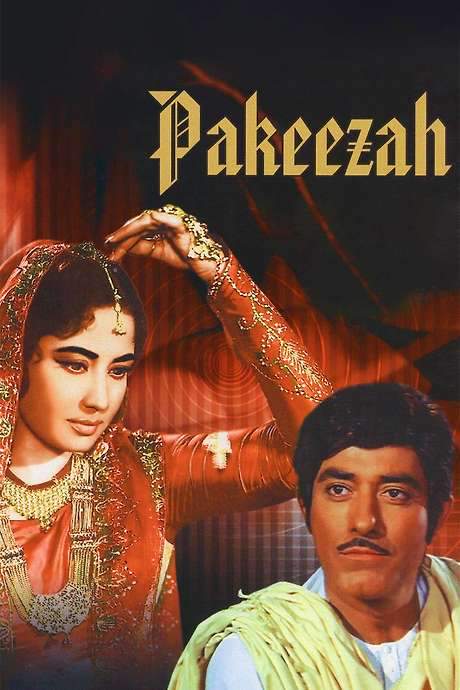
Pakeezah (1972) movie poster

Characters & Themes

Pakeezah (1972) Characters, Setting & Themes Explained

Release, runtime and language
1972 · 153 mins · Hindi
Loading streaming availability…
Directed by
Kamal Amrohi
Starring
Ashok Kumar, Meenakshi, Nadira, Meena Kumari, Raaj Kumar, Kamal Kapoor

A stunning courtesan, trapped in the relentless cycle of prostitution, longs for freedom. When a forest ranger discovers her and falls deeply in love, hope blossoms, but his wealthy, disapproving family stands in the way, threatening any chance of their union.

On this page (8)
  1. 1 Where to watch
  2. 2 Characters explained (6)
  3. 3 Where & when it takes place
  4. 4 Themes & meaning (3)
  5. 5 Character & meaning questions
  6. 6 Movie threads
  7. 7 Movies like Pakeezah
  8. 8 Every angle
Loading streaming availability…

6 main characters · contains spoilers

Pakeezah Characters Explained: Who Is Who

The main characters of Pakeezah (1972), heroes and villains: what drives them, how they change over the course of the story and what each of them reveals about the film's bigger ideas.

  • Nargis / Sahibjaan

    played by Meena Kumari

    An accomplished tawaif from Lucknow who longs for a private life with Shahabuddin but is constrained by social stigma. She endures poverty and separation, later dying after giving birth to their daughter in a cemetery. On her deathbed, she writes a letter to Shahabuddin asking him to come for his child, a plea that drives much of the plot.

    • 🎭 Performer
    • 💔 Forbidden love
    • 🧵 Resilience
  • Shahabuddin

    played by Ashok Kumar

    The man Nargis loves, hampered by Hakim Saab’s opposition and family honor. He is a noble, affectionate figure who hopes for a peaceful life with his beloved, but meets a tragic end while protecting Sahibjaan, leaving behind a dying wish that Salim marry her.

    • 💑 Romantic lead
    • 🛡️ Protector
    • 🎩 Nobility
  • Nawabjaan

    played by Veena

    Nargis's sister who, after discovering her sister's history, retrieves the daughter from the cemetery and brings Sahibjaan into her kotha. She wields social leverage to safeguard the family, even as she becomes entangled in the web of honor and money surrounding Sahibjaan’s future.

    • 👑 Matriarch
    • 🗣️ Social strategist
    • 💎 Wealth
  • Salim Ahmed Khan

    played by Raaj Kumar

    A forest ranger who discovers Sahibjaan after she is separated from Shahabuddin. He falls in love with her, plans to marry, but ultimately conforms to his family's wishes and invites her to perform at his wedding.

    • 🌿 Lover
    • 🗺️ Traveler
    • 💌 Letter writer
  • Hakim Saab

    played by D.K. Sapru

    The family patriarch who views the tawaif with contempt and uses his status to block the union. His power embodies the social norms the plot continually challenges, even as tragedy follows.

    • 🏛️ Authority
    • ❌ Social blocker
    • 💼 Respectability
  • Nawab Zafar Ali Khan

    played by Kamal Kapoor

    A noble patriarch figure in Lucknow’s social world, whose presence frames the family’s decisions and Sahibjaan's fate.

    • 👑 Aristocracy
    • 🧭 Guiding influence
    • 📜 Tradition

Last updated: October 05, 2025 at 08:33

Was this helpful?

Setting

Where and When Does Pakeezah Take Place?

The setting of Pakeezah (1972): the year and time period, the places and locations, and how they shape the characters, the mood and the tension of the story.

Time period

Late 19th to early 20th century, British India

The narrative sits in the colonial era, when Lucknow's aristocratic households and tawaif culture coexisted with rising British influence. Customs around marriage, purity, and reputation governed choices, while trains and river travel started to shrink distances. The timeline spans from Nargis's youth to Sahibjaan's adulthood, highlighting how tradition shapes love and fate. The setting situates itself amid a changing social order that valorizes honor over personal desire.

Location

Lucknow (Muslim quarter), qabristan (cemetery), kotha (performance house), Nawab's boat, riverbank, railway

The story unfolds in the Muslim quarter of Lucknow, a city famed for its courtyards, music, and aristocratic traditions. Key locations shift from the crowded kothas to the quiet qabristan (cemetery), and from bustling railway platforms to the banks of the river where boats and mujras unfold. Performance houses and Nawab-led households anchor the social world, while travel by train and boat marks the characters' movements across space.

  • 🕌 Lucknow
  • 🪦 Cemetery
  • 🎭 Tawaif quarters
  • 🚆 Railways

Last updated: October 05, 2025 at 08:33

Was this helpful?

3 major themes

Pakeezah Meaning: Themes & Message Explained

What is Pakeezah (1972) really about? The emotional, social and philosophical themes the film keeps returning to, its symbolism and the message beneath the surface.

  • Love vs Honor

    A central tension drives the plot: Nargis's love for Shahabuddin collides with Hakim Saab's insistence on preserving family reputation. The tawaif's profession complicates acceptance, forcing choices between personal happiness and social respectability. Marriage is hindered by class and honor codes that view the lover as unsuitable. The film explores what love must endure to survive within a rigid social code.

  • Fate and Sacrifice

    Life is shaped by fate: Nargis dies after giving birth to their daughter in a cemetery, and the letter she writes becomes the catalyst for future steps. The characters sacrifice security and happiness, sometimes even their own safety, for loyalty and duty. The tragedy is mirrored in Shahabuddin's death and Sahibjaan's ongoing struggle for autonomy. The story suggests that individual desires come second to tradition, duty, and family honor.

  • Art and Identity

    Performance art defines who Sahibjaan is and what she can become. Mujra and the kotha serve as livelihood but also imprison her identity within societal expectations. The performances blur lines between performance and genuine emotion, highlighting performers' agency within constraints. Artistic expression becomes a means of survival and a critique of social constraints.

Last updated: October 05, 2025 at 08:33

Was this helpful?

Character & theme questions

Pakeezah Characters & Meaning: Your Questions Answered

The questions people ask about Pakeezah (1972): who the characters really are, their relationships, what the symbols mean, where it takes place and what the movie is really about. Each answer contains spoilers.

Q1

Where is the story set?

The film takes place in Lucknow's Muslim quarter, a city renowned for its courtyards, music, and aristocratic traditions. Key locations include performance houses called kothas, the qabristan (cemetery), riverbanks where mujras are performed, and railway stations. The setting shifts between the opulent world of the tawaif quarters and the more private spaces of Nawab households, reflecting the stark social contrasts of the era.

Foreshadowing: The contrast between the public performance spaces and private emotional moments establishes the film's central tension between visibility and hidden desire.

  • lucknow
  • setting
  • kotha
  • location
  • muslim quarter
Q2

What time period does the film depict?

Pakeezah is set in the late 19th to early 20th century during British India. This was a period when Lucknow's traditional aristocratic households and the tawaif culture coexisted with rising British colonial influence. The era was governed by strict customs around marriage, purity, and family reputation, which form the core social constraints the characters must navigate.

Foreshadowing: The colonial backdrop provides the historical context for the rigid honor codes that drive the tragedy.

  • time period
  • colonial era
  • british india
  • late 19th century
  • early 20th century
Q3

What are the main themes explored in the film?

The film explores several interconnected themes: love versus honor, fate and sacrifice, and art versus identity. The central conflict revolves around a tawaif's pursuit of legitimate love within a rigid social code that values family honor above personal happiness. The narrative examines how tradition and duty often supersede individual desire, leading to tragic consequences.

Foreshadowing: These themes weave throughout the film, creating a tragic tapestry of impossible choices and lasting sacrifices.

  • themes
  • love
  • honor
  • sacrifice
  • fate
  • identity
Q4

How does the film portray the conflict between love and honor?

The central tension shows Nargis's love for Shahabuddin colliding with Hakim Saab's insistence on preserving family reputation. As a tawaif, Nargis faces insurmountable social stigma that makes marriage nearly impossible. The film explores what love must endure to survive within rigid class and honor codes that view the courtesan as unsuitable for respectable marriage.

Foreshadowing: This conflict sets in motion the tragic events that span generations.

  • love
  • honor
  • class
  • social stigma
  • marriage
  • tawaif
Q5

What does the film say about fate and sacrifice?

The narrative emphasizes that life is shaped by fate and that characters often sacrifice security and happiness for loyalty and duty. Nargis dies after giving birth in a cemetery, and her final letter becomes the catalyst for future events. Shahabuddin also meets a tragic end while protecting Sahibjaan. The story suggests individual desires come second to tradition, family honor, and assigned social roles.

Foreshadowing: The tragedy repeats across generations, suggesting an inescapable cycle of sacrifice.

  • fate
  • sacrifice
  • duty
  • tragedy
  • family honor
Q6

How is performance art depicted in the film?

Performance art defines Sahibjaan's identity and possibilities. The mujra dances performed in kothas serve as both livelihood and prison, imprisoning her within societal expectations. The film blurs lines between performance and genuine emotion, highlighting the limited agency performers possessed. Artistic expression becomes both a means of survival and a subtle critique of the social constraints placed on women.

Foreshadowing: The dual nature of performance, as art and as cage, echoes throughout Sahibjaan's journey.

  • mujra
  • performance
  • art
  • kotha
  • dance
  • identity
Q7

Who is the main character Sahibjaan?

Sahibjaan (played by Meena Kumari) is a renowned tawaif (courtesan) from Lucknow who longs for a private life free from the cycle of prostitution. Born to Nargis and Shahabuddin, she was abandoned at birth and raised in the kotha. Throughout the film, she struggles against her predetermined fate, seeking autonomy and respectability while trapped by social stigma associated with her profession.

Foreshadowing: Her birth circumstances in the cemetery establish the tragic cycle she cannot escape.

  • sahibjaan
  • tawaif
  • courtesan
  • protagonist
  • meena kumari
Q8

Who is Hakim Saab and what is his role?

Hakim Saab (played by D.K. Sapru) is the family patriarch who embodies the rigid social norms of the era. He views the tawaif profession with contempt and uses his status to block the union between Shahabuddin and Nargis. His opposition stems from concerns about family reputation and honor, making him the primary obstacle to the lovers' happiness. His power represents the social constraints the plot continually challenges.

Foreshadowing: His role as gatekeeper of family honor sets the tragic events in motion.

  • hakim saab
  • patriarch
  • family honor
  • antagonist
  • authority
Q9

What is a tawaif and what does the profession represent in the film?

A tawaif is a trained courtesan or entertainer in the North Indian tradition, associated with music, dance, and artistic refinement. In the film, the profession represents both artistic mastery and social marginalization. While tawaifs possessed cultural prestige and artistic skill, they were excluded from respectable society and denied the possibility of legitimate marriage. The film uses this profession to explore themes of identity, agency, and societal hypocrisy.

Foreshadowing: The contradictory nature of the tawaif's position, respected artist yet social outcast, drives much of the film's tragedy.

  • tawaif
  • courtesan
  • profession
  • social stigma
  • lucknow culture
Q10

What is a kotha in the context of the film?

A kotha is a traditional performance house or brothel where tawaifs lived and performed mujra dances for patrons. In Pakeezah, the kotha represents both a world of artistic refinement and a cage that traps women in cycles of exploitation. These establishments were part of Lucknow's aristocratic culture, existing alongside Nawab households but existing outside respectable society.

Foreshadowing: The kotha serves as the primary setting that defines Sahibjaan's confined world.

  • kotha
  • performance house
  • brothel
  • mujra
  • lucknow
Q11

What kind of world does the film depict?

The film depicts a world of stark contrasts between opulence and poverty, tradition and desire. It portrays Lucknow's aristocratic Muslim quarter with its musical heritage and strict honor codes. The setting is marked by the tension between the performative world of the kotha, filled with music, dance, and visual richness, and the raw, yearning emotions of its inhabitants. This atmosphere of trapped beauty reflects the film's melancholic tone and bittersweet narrative.

Foreshadowing: The visual contrast between the kotha's splendor and its moral decay mirrors the characters' internal conflicts.

  • lucknow
  • world
  • aristocracy
  • tawaif culture
  • social hierarchy

Movie threads

More Movies Like Pakeezah, by Mood & Story

Curated lists built around what makes Pakeezah tick: the same mood, the same kind of story or the same emotional payoff. Each list explains why these movies belong together.

Movies with forbidden love and social tragedy like Pakeezah

Dramatic tales of impossible love challenged by oppressive social structures. For viewers who liked the tragic romance in Pakeezah, this collection features movies similar in tone and theme. Discover more romantic dramas about star-crossed lovers, where intense emotional yearning clashes with strict societal rules, creating a deeply melancholic and dramatic experience.

  • melancholic
  • tragic romance
  • yearning
  • dramatic
  • oppressive
  • nostalgic
  • Tone: melancholic, tragic, yearning
  • Pacing: steady, deliberate
Why these movies?

The story pattern: The narrative follows a central, often doomed, romance between individuals from different social strata. The conflict is driven by external forces—family, tradition, or societal prejudice—creating immense pressure on the lovers. The journey is characterized by sacrifice, secret meetings, and a persistent, aching hope that is ultimately tempered by the harsh realities of their world.

Why they belong together: These movies are grouped by their shared focus on the pain and beauty of forbidden love. They deliver a heavy emotional weight through a steady, lyrical pacing, creating a melancholic tone that resonates deeply. The visual style is often opulent or dreamlike, contrasting with the characters' internal suffering.

Movies about characters trapped by their fate like Pakeezah

Stories of individuals bound by fate and profession, longing for escape. If you were moved by Sahibjaan's plight in Pakeezah, explore these similar stories of characters confined by their circumstances. These films share a theme of inherited tragedy and secret identity, where the opulent setting contrasts with a profound sense of entrapment and a heavy, dramatic emotional journey.

  • oppressive
  • yearning
  • tragic
  • dramatic
  • melancholic
  • secret identity
  • Tone: oppressive, bittersweet, dramatic
  • Pacing: steady, character driven
Why these movies?

The story pattern: The narrative centers on a protagonist whose identity is shaped by a restrictive, often beautiful, environment—like a courtesan's kotha or an aristocratic household. Their arc involves a growing awareness of their cage and a desperate, often dangerous, pursuit of freedom. This quest for liberation is frequently intertwined with a love that offers a glimpse of a different life, making the conflict between duty and desire intensely personal.

Why they belong together: These films are united by the core theme of entrapment versus the yearning for freedom. They create a powerful, oppressive mood where the protagonist's internal emotional world clashes with their external circumstances. The experience is defined by a bittersweet tone, a steady, character-driven pace, and a focus on the high cost of defiance.

If you liked this

Movies Like Pakeezah

Similar movies to Pakeezah: the same genre, themes or kind of story. Each one comes with its own plot summary, timeline and ending explained.

Browse all movie summaries

Every angle

Pakeezah (1972) Explained: Plot, Timeline & Characters

Everything about Pakeezah in one place: what happens in the plot summary, the timeline in chronological order, the characters and meaning and a spoiler-free summary. What's After the Movie adds the cast, box office and post-credit scenes.

Coming soon on iOS and Android

The Plot Explained Movie Summary App

Plot summaries, endings explained and timelines on your phone. Catch up on any movie in minutes, save your favorites and never miss a twist again.

Be the first to know when we launch. Your email stays private, always.

Learn more about the app