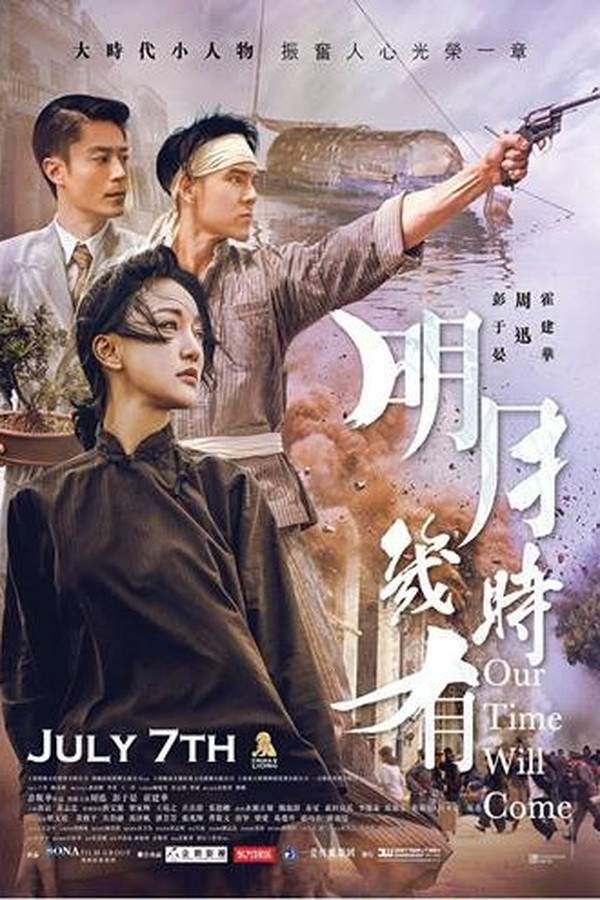
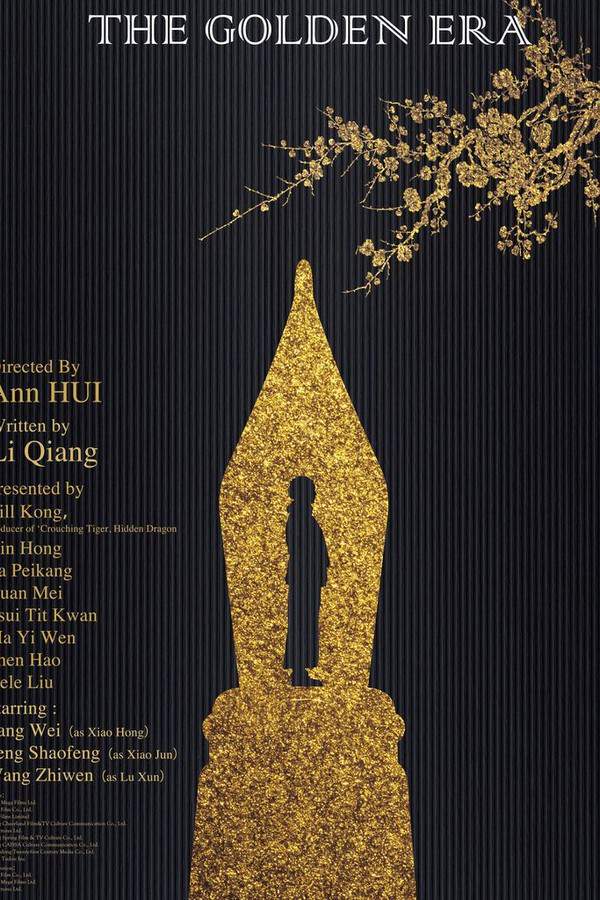
Set during the turbulent era of the 1940s, the story unfolds in Hong Kong during the oppressive Japanese occupation. The narrative is framed as a historical account, told by an elderly taxi driver who is being interviewed for a documentary. As he reflects on his childhood, he recalls the bravery and sacrifice of the people he knew, focusing specifically on the legendary figure known as "Fang Gu," played by Xun Zhou.
In 1942, the woman known as Fang Lan—who would eventually become the legendary Fang Gu—is introduced as a quiet, bookish young woman with a deep poetical streak. She lives with her mother in a home where they rent out rooms to various intellectuals, including the writer Mao Dun. At the start of the story, Fang is engaged to marry Wallace Huo as Lee Gam-wing. However, their relationship fractures when she breaks off the engagement, deeply troubled by Lee's apparent indifference toward the widespread starvation and suffering of the Hong Kong population under enemy rule.
As the Japanese forces plan to execute the city's intelligentsia, a brave resistance movement forms to smuggle targeted intellectuals to "Free China." Fang finds herself drawn into this struggle, assisting the bold resistance leader Blackie Lau, portrayed by Eddie Peng. Together, they work to ensure the safety of Mao and his wife, and they are even tasked with the grim duty of disposing of the body of a collaborator spy who had been executed.
Meanwhile, Lee Gam-wing takes a precarious path, working for the Kempeitai (the feared Japanese military police) under Colonel Yamaguchi. Because Yamaguchi shares a passion for Tang poetry—a subject in which Lee is an expert—the two form an unlikely friendship. Despite his position within the enemy's ranks, Lee is not entirely loyal to the occupiers and occasionally provides assistance to the resistance.
By 1944, Fang has fully embraced her role in the fight for freedom, eventually becoming the leader of the East Hong Kong section of the resistance. This transformation is met with strong opposition from her mother, who wishes for her daughter to embrace the traditional roles of a wife and mother. While Fang rejects these expectations, her mother eventually grows to accept her daughter's commitment to the cause. During this time, a complex love triangle develops; Fang finds herself torn between her lingering feelings for Wallace Huo and her growing attraction to the daring Eddie Peng.
The tension reaches a breaking point when Fang's mother attempts to help the cause by smuggling an important message. This act of bravery leads to her arrest by the Kempeitai. In a desperate bid to save her, Fang and Lau lead a daring attack on the military police station, but the mission ends in tragedy and Mrs. Fang is executed.
The fallout is devastating. Colonel Yamaguchi discovers that Lee had been betraying him by tipping off the resistance about the location of the prisoners, and as a result, Yamaguchi has Lee killed. With the city becoming an impossibly dangerous place for them to remain, Lau and Fang are forced to flee the city via a junk boat under the cover of night. Their ultimate fate is left an open mystery.
The film concludes with a visual transition, as a shot of Hong Kong in 1944 fades into the vibrant, bustling landscape of the modern city. The elderly taxi driver, having finished sharing the haunting memory of Fang Gu, ends his interview and returns to his quiet life as a humble driver, leaving the legacy of the resistance to linger in the air.