Plot Explained Spoilers guaranteed!
Plot Explained

Browse by genre

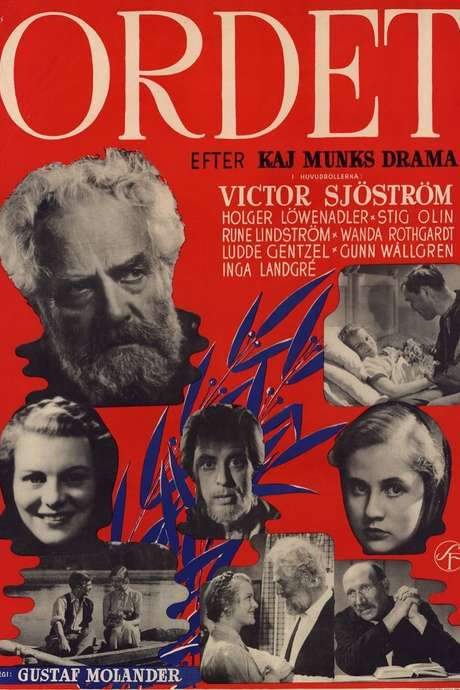
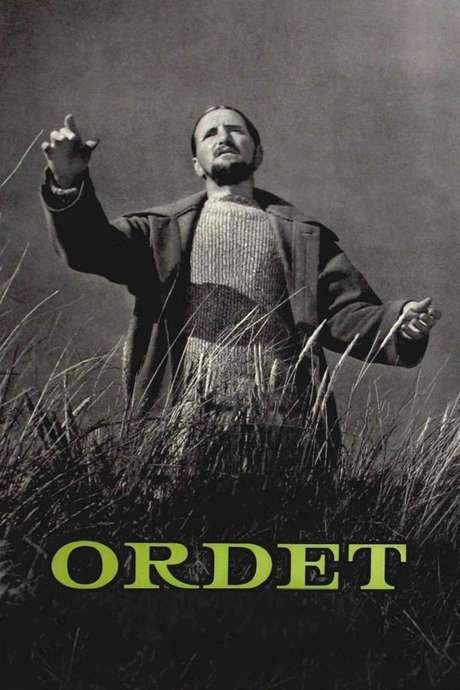
Ordet (1955) movie poster

Timeline

Ordet (1955) Timeline Explained – Every Event in Order

Release, runtime and language
1955 · 125 mins · Danish
Loading streaming availability…
Directed by
Carl Theodor Dreyer
Starring
Birgitte Federspiel, Cay Kristiansen, Preben Lerdorff Rye, Ejner Federspiel, Ove Rud, Henry Skjær

The three sons of devout Danish farmer Morten hold starkly different views of faith. Anders, the youngest, follows his father’s piety; Mikkel, the eldest, has abandoned belief; and Johannes, the middle child, is convinced he is Jesus Christ. When Mikkel’s wife Inger faces a dangerous childbirth, each family member’s convictions are challenged.

On this page (6)
  1. 1 Where to watch
  2. 2 Events in order (10)
  3. 3 Timeline questions answered
  4. 4 Movie threads
  5. 5 Movies like Ordet
  6. 6 Every angle
Loading streaming availability…

10 events in order · contains spoilers

Ordet Timeline: Events in Chronological Order

Every key event of Ordet (1955) in order, scene by scene, with when and where it takes place. Use it to untangle flashbacks, time jumps and parallel storylines, to refresh your memory before the sequel or to find the exact scene you are thinking of.

  1. The Borgen family on the farm

    Autumn 1925 sets the scene on a rural Danish farm. Morten is a devout widower and patriarch, a prominent parish patron who oversees his three sons: Mikkel, who has no faith; Johannes, who believes himself to be Jesus; and Anders, who loves Anne Petersen. The family grapples with faith, duty, and the prospect of marriage within a tight-knit community.

    When
    Autumn 1925
    Where
    Borgen farm, rural Denmark
  2. Anders confesses his love for Anne Petersen

    Anders tells Mikkel and Inger that he loves Anne Petersen, the daughter of the village tailor. The family agrees to try to persuade Morten to consent to the match. The tension sets up a clash between personal longing and communal expectations.

    When
    Autumn 1925
    Where
    Borgen farm
  3. Inger presses Morten to approve the engagement

    Inger urges Morten to permit the marriage, appealing to his sense of family and future grandchildren. Morten initially refuses, but his stance softens when he learns that Peter the Tailor has refused Anders’s proposal as well. The scene highlights the stakes of faith and obedience in the village.

    When
    Autumn 1925
    Where
    Morten's home
  4. Morten and Anders seek Peter’s blessing

    Morten and Anders go to Peter in hopes of a betrothal agreement. Peter insists that the men join his orthodox church as a condition of acceptance. The negotiation is tense and religious lines are drawn, threatening the betrothal even before it begins.

    When
    Autumn 1925
    Where
    Peter's house, village
  5. Inger’s labor and a bitter moment

    As the discussion collapses into sectarian bickering, Inger goes into a difficult labor. The doctor cannot save the baby but can save Inger’s life, while Peter outwardly hopes for tragedy to sway Morten toward his church. The household is plunged into fear and anger as the family faces loss.

    When
    Autumn 1925
    Where
    Inger’s labor at the family home
  6. Johannes prophesies death; Inger dies

    Johannes tells his father that death is near and that only true faith can spare Inger. Morten refuses to listen, clinging to his beliefs. Inger dies suddenly, shattering the fragile peace of the family and community.

    When
    Autumn 1925
    Where
    Morten's home
  7. Inger's funeral wake and a fragile reconciliation

    Before Inger’s funeral, Peter realizes he has wronged Morten and reconciles with him at Inger’s open coffin. He agrees to permit Anne and Anders to marry, seeking a peaceful resolution despite previous conflicts. The family gathers with mixed emotions as the town prepares for the wake.

    When
    Autumn 1925
    Where
    Inger’s funeral wake
  8. Johannes declares a resurrection through faith

    Johannes interrupts the wake and proclaims that the dead can be raised if the family has faith. A childlike belief from Inger’s daughter begs him to try, pushing the moment toward a miraculous test of faith. The family watches with cautious hope as spiritual fervor fills the room.

    When
    Autumn 1925
    Where
    Inger’s funeral wake
  9. The miracle begins as Inger breathes again

    As the faith-filled moment unfolds, Inger suddenly breathes and twitches in her coffin. Johannes praises the daughter’s faith and wins the moment, while Morten and Peter rejoice despite their earlier disagreements. The line between miracle and belief becomes a turning point for the community.

    When
    Autumn 1925
    Where
    Inger’s coffin, funeral wake
  10. Reconciliation and renewed faith

    With Inger alive, Morten embraces his faith, and even Mikkel begins to believe. The brothers and villagers realize that personal conviction can coexist with community tradition. The film closes on a note of hope as faith is reaffirmed and the family begins anew.

    When
    Autumn 1925
    Where
    Borgen farm and parish church

Last updated: October 09, 2025 at 11:05

Was this helpful?

Timeline questions answered

Ordet Timeline Explained: Your Questions Answered

When does it happen, and why in that order? The questions people ask about the chronology of Ordet (1955): time jumps, flashbacks, cause and effect between scenes and the correct order of events, each answered with spoilers.

Q1

Why does Johannes believe he is Jesus?

Johannes became convinced he is Jesus Christ after experiencing a spiritual awakening inspired by Søren Kierkegaard's writings. This conviction fills him with prophetic certainty, and he wanders the farm speaking of death and resurrection. His delusional but sincere belief becomes central to the film's climax when he declares he can raise the dead at Inger's wake.

Foreshadowing: Earlier in the film, Johannes prophetically tells his father that death is near and only true faith can save Inger, establishing his spiritual claims before the miracle.

  • johannes
  • jesus
  • faith
  • delusion
  • spiritual conviction
  • kierkegaard
Q2

Why does Peter the tailor demand conversion for Anne and Anders to marry?

Peter insists that Morten and Anders convert to his orthodox church before consenting to the engagement. This reflects his rigid theological stance and desire for religious conformity. His hard line creates conflict with Morten's own faith and nearly prevents the marriage, though he later recognizes his error when tragedy strikes.

  • peter
  • conversion
  • marriage
  • orthodox church
  • theology
Q3

Why does Inger die during childbirth?

Inger suffers a difficult and dangerous childbirth. The village doctor arrives and manages to save Inger's life through medical intervention, but the baby does not survive. The death occurs suddenly, shocking the family, particularly after Johannes has already prophesied death is near.

Foreshadowing: Johannes has earlier warned his father that death approaches and only true faith can spare her, creating dramatic irony around the tragedy.

  • inger
  • death
  • childbirth
  • labor
  • doctor
  • baby
Q4

How does Inger come back to life at the wake?

At Inger's funeral wake, Johannes interrupts and declares that resurrection is possible if the family prays with genuine faith. Inger's young daughter, driven by childlike belief, asks Johannes to raise her mother. Johannes prays, and Inger's body begins to move, breathing and showing signs of life. The moment is presented as a miracle spurred by the child's pure faith.

Foreshadowing: Johannes has earlier prophesied that only true faith can bring life, and the film establishes his sincere belief in his own divine mission.

  • resurrection
  • miracle
  • faith
  • wake
  • johannes
  • daughter
Q5

Why does Mikkel, who had no faith, finally believe?

Mikkel, the eldest Borgen son, has abandoned all belief in dogma and is the family's skeptic. However, witnessing the apparent resurrection of Inger, seeing her brought back to life through what seems to be genuine faith, overwhelms his skepticism. The miracle directly challenges his materialist worldview and opens him to spiritual possibility.

  • mikkel
  • faith
  • skepticism
  • belief
  • miracle
  • conversion
Q6

Why do Morten and Peter reconcile at Inger's wake?

Morten and Peter have been divided by Peter's demand for religious conversion and his hope that Inger's death might force Morten to convert. However, at Inger's wake, Peter recognizes his misjudgment and approaches Morten to seek reconciliation. He agrees to permit Anne and Anders to marry, setting aside their theological disputes. Their reconciliation is then complete when the miracle occurs and they rejoice together.

  • morten
  • peter
  • reconciliation
  • wake
  • forgiveness
  • marriage
Q7

What triggers Morten to accept Anders and Anne's engagement?

Morten initially refuses to approve Anders's marriage to Anne, likely due to the religious conflict with Peter. However, his stance softens when he learns that Peter himself has refused the betrothal, a reversal that apparently surprises him. This discovery nudges Morten toward compromise, and he and Anders set out to negotiate with Peter.

  • morten
  • anders
  • anne
  • marriage
  • engagement
  • acceptance
Q8

Why is the child's faith significant to the resurrection?

The young daughter of Inger and Mikkel is the one who ultimately triggers the miracle. When Johannes declares resurrection is possible, it is the child's sincere, childlike belief that prompts her to ask Johannes to raise her mother. This pure faith is presented as the key ingredient, the film suggests that adult doubt and theological disputes have blocked faith, while the child's simple belief makes the impossible possible.

  • child
  • daughter
  • faith
  • belief
  • miracle
  • innocence
  • pure faith
Q9

Why does Peter hope Inger will die during childbirth?

During Inger's difficult labor, Peter expresses a cynical hope that her death might trigger Morten to convert to his orthodox church. This reveals Peter's opportunistic nature regarding faith, he views the potential tragedy as a tool to pressure Morten into religious conformity. His harsh reaction contrasts with the family's desperation and highlights the divide between genuine faith and religious point-scoring.

  • peter
  • inger
  • death
  • childbirth
  • conversion
  • hope
  • cynical
Q10

What role does Kierkegaard's philosophy play in the film?

Johannes's spiritual awakening is directly inspired by Søren Kierkegaard's writings, which influence his conviction that he is Jesus Christ. The film incorporates Kierkegaardian themes of faith, doubt, subjective truth, and the leap of faith. This philosophical foundation positions Johannes's beliefs not as mere delusion but as stemming from serious theological thought, giving the miracle deeper intellectual context.

  • kierkegaard
  • philosophy
  • faith
  • inspiration
  • johannes
  • theology
Q11

Why does Johannes's prophecy about death come true?

Johannes tells his father before Inger's labor that death is near and that only true faith can spare her. Morten refuses to listen, clinging to his doctrinal beliefs. Inger then dies during childbirth, making Johannes appear prophetic. This establishes Johannes as someone who, whether through delusion or genuine spiritual insight, perceives truths that the skeptical and orthodox characters miss.

  • johannes
  • prophecy
  • death
  • prediction
  • faith
  • warning
Q12

What happens to Inger's baby during childbirth?

During Inger's difficult labor, the village doctor arrives and attempts to save both mother and child. Despite his efforts, the baby does not survive. The doctor is able to save Inger's life through medical intervention, but she later dies anyway, creating a double tragedy for the family before the miraculous resurrection at the wake.

  • baby
  • death
  • childbirth
  • labor
  • doctor
  • medical intervention

Movie threads

More Movies Like Ordet, by Mood & Story

Curated lists built around what makes Ordet tick: the same mood, the same kind of story or the same emotional payoff. Each list explains why these movies belong together.

Movies about faith and family crisis like Ordet

Heartrending family dramas where personal faith is challenged by a profound loss. If you were moved by the spiritual struggle in Ordet, explore more movies like it. These dramas feature families facing tragedy, where faith is tested and characters are pushed to their emotional limits, often culminating in a bittersweet but hopeful resolution.

  • spiritual
  • familial
  • somber
  • contemplative
  • heartbreaking
  • hopeful
  • Tone: bittersweet, hopeful, contemplative
  • Pacing: slow, deliberate
Why these movies?

The story pattern: Stories in this thread typically unfold around a central family tragedy that acts as a crucible for faith. Characters with divergent beliefs—from devout to atheistic—are forced into a shared emotional experience. The journey often moves from deep sorrow and conflict toward a fragile, wonder-filled resolution that may involve a miracle or a profound change of heart.

Why they belong together: These movies are grouped together because they share a deep focus on the intersection of family bonds and spiritual belief during moments of extreme crisis. They balance heavy emotional themes like grief and doubt with a pace that allows for contemplation, resulting in a tone that is ultimately hopeful despite the pain.

Contemplative rural dramas about faith like Ordet

Slow-paced stories set in rural communities, exploring profound questions of faith and existence. For viewers who appreciated the deliberate pace and rural setting of Ordet, this list finds similar movies. Discover other slow-burn dramas set in rustic communities where characters engage in deep conversations about belief, doubt, and the possibility of miracles.

  • contemplative
  • rural
  • spiritual
  • restrained
  • philosophical
  • somber
  • Tone: somber, restrained, hopeful
  • Pacing: slow, meditative
Why these movies?

The story pattern: The narrative pattern involves characters living a simple, rural life who are confronted with complex theological or existential questions. Conflict arises from clashing worldviews within a tight-knit community. The plot is less about action and more about conversation, reflection, and the quiet, transformative power of the landscape itself.

Why they belong together: These films share a specific mood blend: the contemplative stillness of rural life combined with the intense, cerebral energy of a faith crisis. The setting is not just a location but a character that influences the pacing and tone, creating a unique atmosphere of grounded spirituality.

If you liked this

Movies Like Ordet

Similar movies to Ordet: the same genre, themes or kind of story. Each one comes with its own plot summary, timeline and ending explained.

Browse all movie summaries

Every angle

Ordet (1955) Explained: Plot, Timeline & Characters

Everything about Ordet in one place: what happens in the plot summary, the timeline in chronological order, the characters and meaning and a spoiler-free summary. What's After the Movie adds the cast, box office and post-credit scenes.

Coming soon on iOS and Android

The Plot Explained Movie Summary App

Plot summaries, endings explained and timelines on your phone. Catch up on any movie in minutes, save your favorites and never miss a twist again.

Be the first to know when we launch. Your email stays private, always.

Learn more about the app