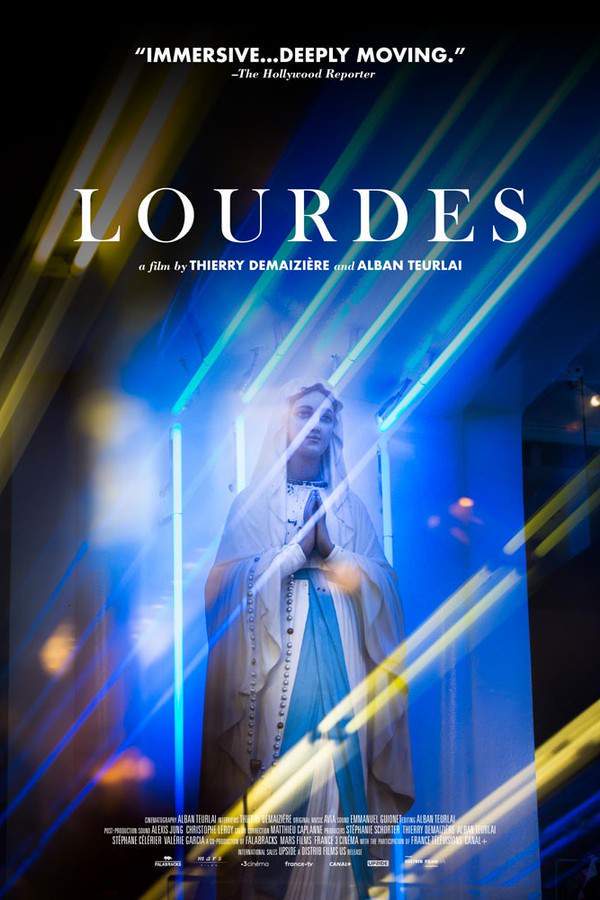
In Lourdes, Christine, a woman confined to a wheelchair by severe multiple sclerosis, joins a group of people with varying disabilities on a pilgrimage to the Sanctuary of Our Lady of Lourdes in Lourdes, France. Though she is not deeply religious, the journey offers her a chance to travel and to move beyond the boundaries of her daily life. Among the group, a volunteer helper named Maria becomes Christine’s primary caretaker, assisting with feeding, dressing, and daily routines. Christine’s pragmatic view of the trip—more about mobility and the experience of moving through the world than about faith—frames her perspective on the pilgrimage.
As the days unfold, the dynamics within the group become more intimate and complicated. Maria develops a crush on Kuno, one of the guards assigned to look after them, and he seems equally attentive to Christine. This budding attraction unsettles the caregiver dynamic: Maria pulls away from her duties, leaving Christine in the care of a roommate who is more mobile, and Christine experiences a small, personal milestone—she is able to move her hand on her own for the first time during that moment.
The atmosphere shifts dramatically when the head helper, Miss Cécile, collapses while preparing for the final party. The group is left shaken, and the next morning Maria discovers Christine already dressed and ready for the day. The other members of the group are stunned by Christine’s marked improvement, and a sense of possibility spreads through the entourage. A doctor evaluates Christine and confirms that, while she still faces challenges with walking, her improvement lies beyond straightforward medical explanation. He tells her that her case will be reviewed by a committee to determine whether it constitutes a miracle.
With the possibility of a miracle on the table, Christine participates in the last-day excursion, a hike reserved for the fittest members of the group. Maria tries to shield her from this physically demanding outing, but Christine persists in joining. Along the trail, the group grapples with questions about why Christine’s sudden ease of movement has occurred while others—perhaps more devout or burdened with stronger beliefs—have not experienced similar changes. Christine herself remains largely unaware of the broader implications of her altered condition, choosing instead to spend quiet moments with Kuno.
The farewell celebration brings a mix of joy and doubt. Christine dances with Kuno, then collapses. Although she recovers, the other members of the group begin to doubt the truth of her cure. Standing at the edge of the party, Christine initially resists sitting back down, but eventually does return to her wheelchair, leaving a lingering ambiguity about what has happened and what it means.
Throughout the film, the story sits at the edge of faith, perception, and human connection. It observes Christine’s journey with a steady, unglamorous lens, focusing on ordinary interactions, personal longing, and the way a sudden improvement can ripple through a community that is both hopeful and skeptical. The result is a slow, respectful meditation on miracle, expectation, and the ways people choose to interpret events that feel inexplicable.